


Executive Summary
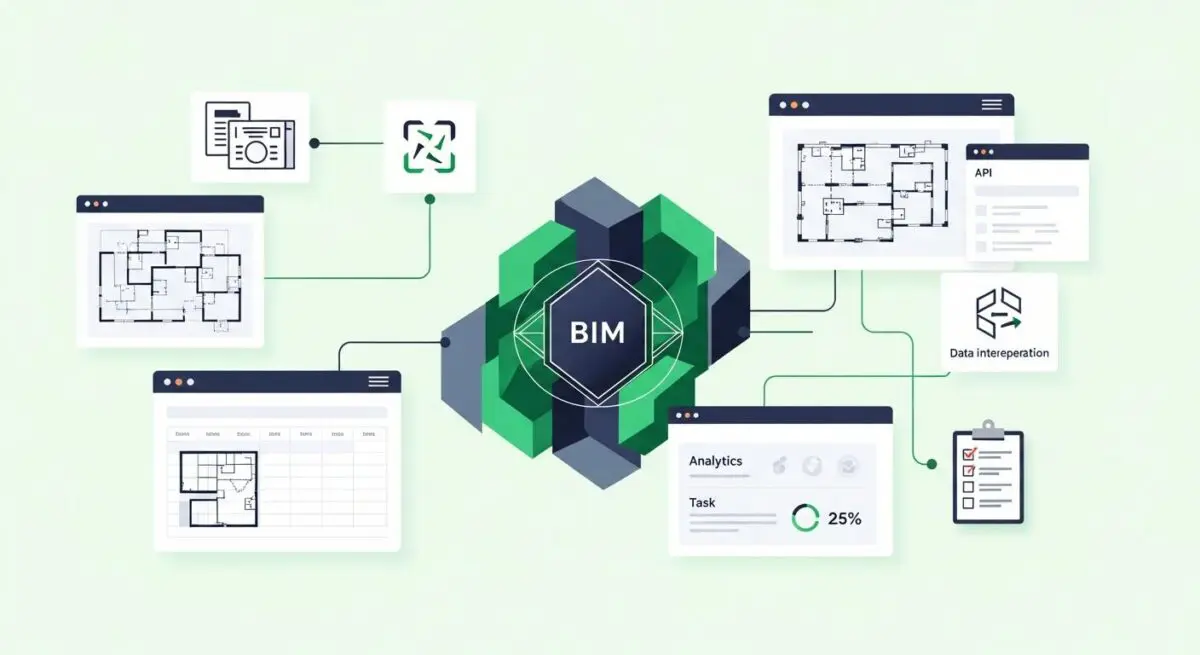
- BIM Integration: Centralizes project data through Building Information Modeling to ensure a single source of truth across the project lifecycle.
- Multidimensional Modeling: Incorporates 4D scheduling and 5D cost estimation to optimize resource allocation and mitigate financial risks.
- Interoperability Standards: Utilizes OpenBIM and IFC protocols to facilitate seamless data exchange between disparate engineering and design platforms.
What is Architecture, Engineering, and Construction (AEC) Software?
Architecture, Engineering, and Construction (AEC) software refers to a specialized suite of digital tools designed to facilitate the design, planning, and execution of physical infrastructure. These platforms integrate Computer-Aided Design (CAD), Building Information Modeling (BIM), and Virtual Design and Construction (VDC) methodologies into a cohesive technical environment.
At its core, AEC software serves as the digital backbone for modern infrastructure projects, enabling professionals to create precise 3D models that contain rich metadata. This metadata includes structural properties, material specifications, and thermal performance data, allowing for advanced simulations before physical ground is broken.
In the context of a modern tech stack, AEC software functions as a data aggregator that bridges the gap between conceptual design and field operations. It enables real-time collaboration through cloud-based Common Data Environments (CDE), ensuring that architects, structural engineers, and contractors operate on the same technical specifications.
The Real-World Analogy
Consider AEC software as a high-fidelity, interactive flight simulator for a multi-billion dollar aircraft that has not yet been built. Just as a simulator allows pilots and engineers to test every mechanical failure, weather condition, and fuel efficiency metric in a risk-free environment, AEC software allows stakeholders to stress-test a building’s structural integrity and operational costs.
Without this software, constructing a skyscraper would be like trying to conduct a massive symphony where every musician has a different version of the sheet music. AEC software ensures that every player—from the architect to the plumber—is reading from the exact same digital score, updated in real-time as the composition evolves.
How Architecture, Engineering, and Construction (AEC) Software Drives Strategic Growth & Market Competitiveness?
AEC software directly influences the bottom line by drastically reducing the frequency of Requests for Information (RFIs) and change orders during the construction phase. By utilizing automated clash detection, the software identifies spatial conflicts between structural elements and mechanical systems during the design phase, preventing costly on-site rework.
Strategic growth is further supported through the implementation of 4D and 5D modeling, which add time and cost dimensions to the 3D geometry. This allows project managers to visualize the construction sequence and cash flow requirements with surgical precision, leading to more competitive bidding and improved profit margins.
From a data analytics perspective, the transition from CAD to BIM allows firms to offer extended value through 6D (sustainability) and 7D (facility management) services. By providing clients with a digital twin of the finished asset, AEC firms create long-term revenue streams centered on operational maintenance and energy optimization.
Market competitiveness in the era of AI-driven construction is defined by the ability to leverage historical project data for predictive modeling. AEC software captures granular performance metrics that can be fed into machine learning algorithms to optimize future design iterations and supply chain logistics, reducing overall customer acquisition costs through proven efficiency.
Strategic Implementation & Best Practices
- Establish a Common Data Environment (CDE): Implement a centralized cloud repository that adheres to ISO 19650 standards to ensure data integrity and version control across all project stakeholders.
- Prioritize Interoperability: Utilize Industry Foundation Classes (IFC) and OpenBIM standards to prevent vendor lock-in and ensure that data remains accessible across different software ecosystems.
- Automate Clash Detection: Integrate automated spatial coordination workflows early in the design phase to identify and resolve geometric conflicts before they reach the field.
- Leverage Reality Capture: Use laser scanning and photogrammetry to create accurate as-built models, ensuring that the digital representation matches the physical site conditions during every phase.
- Standardize Object Libraries: Develop and maintain a centralized library of intelligent BIM objects to ensure consistency in metadata and structural specifications across all firm projects.
Common Pitfalls & Strategic Mistakes
One frequent enterprise error is the creation of data silos where design teams and field contractors use incompatible software versions or disconnected platforms. This lack of synchronization leads to versioning errors, where construction proceeds based on outdated architectural drawings, resulting in significant financial losses.
Another strategic mistake is underestimating the hardware and network infrastructure required to support high-fidelity BIM models. Firms often fail to invest in the necessary GPU processing power or high-bandwidth connectivity, leading to latency issues that hinder real-time collaboration and decrease overall engineering productivity.
Finally, many organizations treat AEC software as a mere drafting tool rather than a strategic data asset. Failing to capture and analyze the metadata generated during the design process prevents firms from gaining the insights needed to optimize future project performance and operational efficiency.
Conclusion
Architecture, Engineering, and Construction (AEC) software is the fundamental framework for digital transformation in the built environment, enabling data-driven design and lifecycle management. Its strategic implementation is essential for firms seeking to minimize risk, maximize ROI, and maintain a competitive edge in an increasingly complex global market.