



Executive Summary
- Blockchain is a decentralized, distributed ledger technology that utilizes cryptographic hashing and consensus mechanisms to ensure data immutability and transparency across a peer-to-peer network.
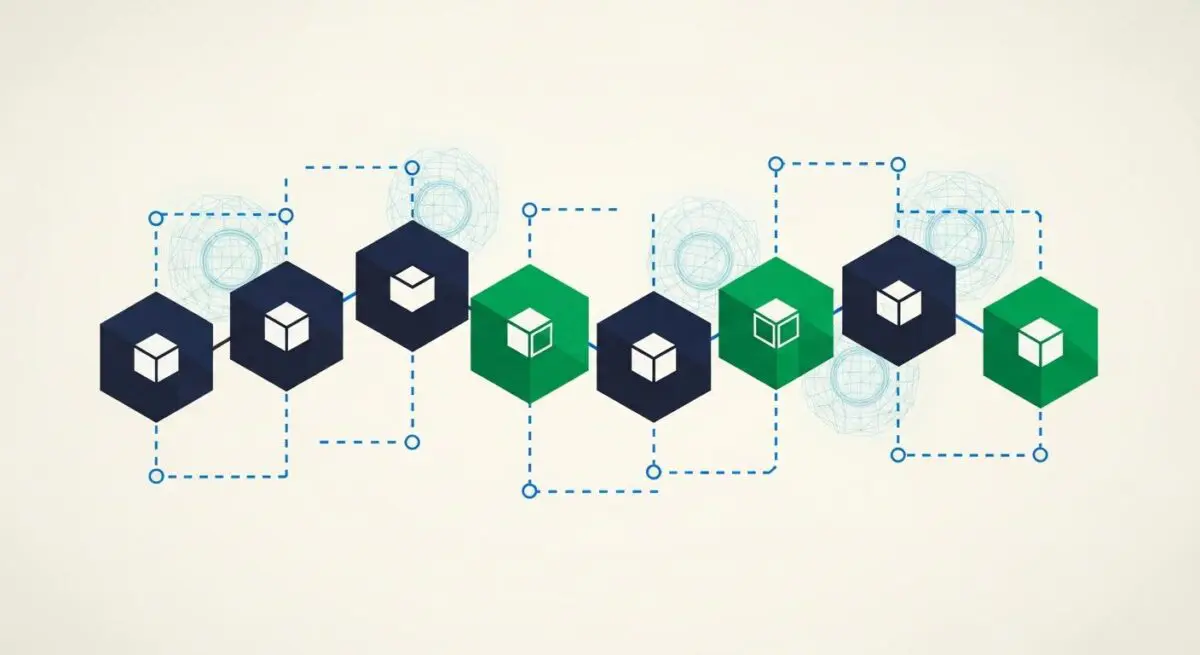
- The architecture relies on a chronological sequence of blocks where each contains a unique hash of the preceding block, creating a tamper-evident record that eliminates the need for central intermediaries.
- Strategic implementation of blockchain enables automated trust through smart contracts, optimizing supply chain integrity, reducing transaction friction, and enhancing data security for AI and enterprise systems.
What is Blockchain?
Blockchain is a decentralized, distributed ledger technology designed to record transactions across a network of computers in a way that ensures the security, transparency, and immutability of the data. At its core, it functions as a chronological chain of blocks, where each block contains a cryptographic hash of the previous block, a timestamp, and validated transaction data.
This architectural design eliminates the requirement for a central authority, such as a financial institution or government body, to validate or store information. Instead, the network relies on distributed consensus mechanisms to agree on the state of the ledger, making it mathematically impossible to alter historical records without compromising the entire network integrity.
In the modern technical stack, blockchain serves as the foundational layer for decentralized applications and smart contracts. It provides a trustless environment where data integrity is maintained through cryptographic proofs rather than institutional trust, enabling new paradigms in digital asset management, identity verification, and secure data exchange.
The Real-World Analogy
Imagine a global, digital accounting ledger that is shared among thousands of independent accountants simultaneously. Every time a new transaction occurs, every accountant must verify the entry and update their personal copy of the ledger at the exact same moment.
Because every participant holds an identical copy of the entire history, no single person can erase or change a past entry without everyone else noticing the discrepancy immediately. This ensures that the history of the ledger remains permanent and truthful without requiring a head office or a master bookkeeper to oversee the process.
How Blockchain Drives Strategic Growth & Market Competitiveness?
Blockchain drives strategic growth by significantly reducing transaction costs and eliminating the friction associated with traditional third-party intermediaries. By automating trust through smart contracts, enterprises can execute complex agreements and financial settlements without the overhead of manual legal or administrative delays.
Furthermore, blockchain enhances data integrity, which is a critical component for AI-driven marketing and predictive analytics. When data is sourced from an immutable ledger, the risk of data corruption or manipulation is mitigated, leading to more accurate customer insights and higher confidence in strategic decision-making.
From a supply chain perspective, blockchain provides end-to-end visibility and provenance tracking. This transparency allows brands to prove product authenticity and ethical sourcing, which directly impacts consumer trust and brand equity in a competitive market where transparency is a key differentiator.
The technology also enables the tokenization of assets, allowing for fractional ownership and increased liquidity in previously illiquid markets. This opens new revenue streams and investment opportunities for enterprises looking to diversify their portfolios and engage with decentralized finance ecosystems.
In the realm of digital marketing and SEO, blockchain-based identity solutions offer a way to combat ad fraud and ensure that marketing budgets are spent on genuine human interactions. By verifying the source of traffic through a transparent ledger, companies can optimize their customer acquisition costs and improve overall return on investment.
Strategic Implementation & Best Practices
- Select the Appropriate Consensus Mechanism: Evaluate the trade-offs between Proof of Work for maximum security and Proof of Stake for scalability and energy efficiency based on the specific requirements of the business application.
- Prioritize Interoperability and Standards: Implement blockchain solutions that adhere to industry standards and offer cross-chain compatibility to ensure that data can flow seamlessly between different decentralized networks and legacy systems.
- Focus on Private or Consortium Chains for Enterprise: Utilize permissioned blockchain architectures when data privacy and high transaction throughput are required, allowing for controlled access while maintaining the benefits of a distributed ledger.
- Integrate with Robust API Layers: Ensure that the blockchain backend is connected to the existing enterprise resource planning and customer relationship management systems through secure and scalable API gateways to maintain data consistency.
Common Pitfalls & Strategic Mistakes
One common pitfall is the tendency to apply blockchain technology to problems that are better solved by traditional relational databases. This often leads to unnecessary technical complexity, higher latency, and increased operational costs without providing the unique benefits of decentralization.
Another significant error is neglecting regulatory compliance and data privacy laws, such as the General Data Protection Regulation. Since blockchain is inherently immutable, the right to be forgotten presents a technical challenge that requires sophisticated off-chain data storage and hashing strategies to remain compliant.
Many organizations also fail to account for the scalability trilemma, which suggests that a blockchain can only prioritize two out of three properties: security, scalability, and decentralization. Failing to choose the right balance for a specific use case can lead to network congestion and prohibitive transaction fees during peak usage.
Conclusion
Blockchain represents a fundamental shift in how data and value are transferred across the digital landscape. By adopting a decentralized approach to trust, businesses can build more resilient, transparent, and efficient systems that are prepared for the next generation of the internet.