Executive Summary
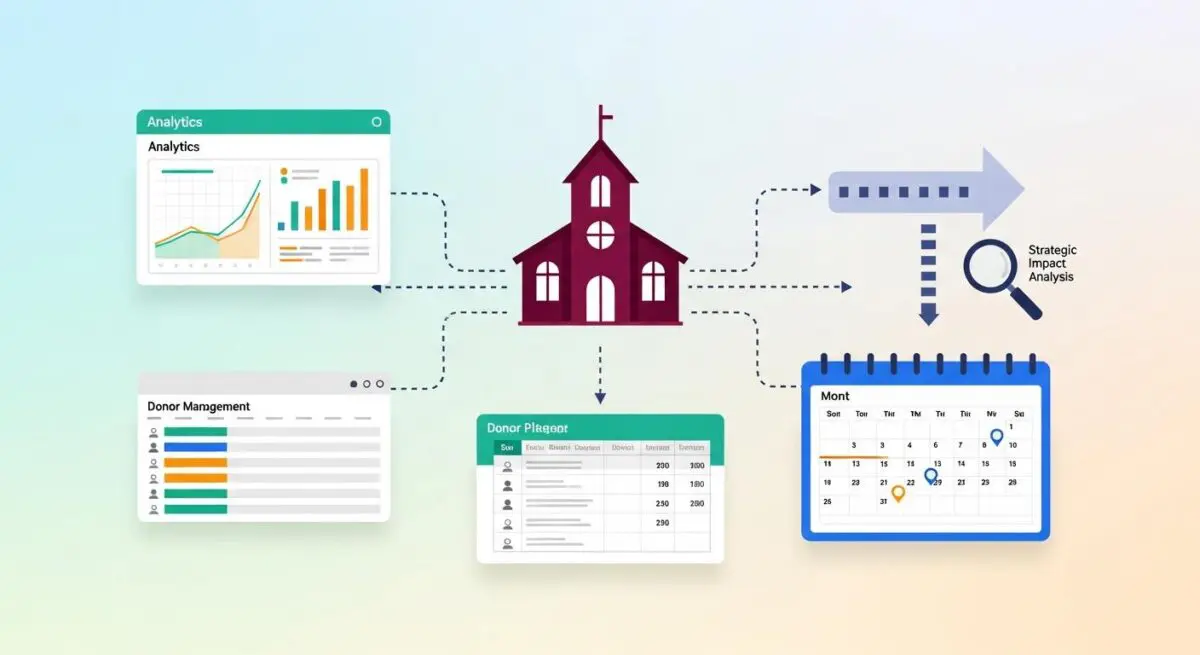
- Centralized Data Architecture: ChMS acts as a specialized ERP, consolidating member demographics, attendance, and financial contributions into a single relational database.
- Automated Financial Workflows: Integration with payment gateways and accounting modules ensures secure, PCI-compliant processing of donations and automated tax reporting.
- Scalable Engagement Modules: Advanced systems utilize API-driven communication tools to automate member outreach based on behavioral triggers and engagement metrics.
What is Church Management Software (ChMS)?
Church Management Software (ChMS) is a specialized category of Enterprise Resource Planning (ERP) software designed to handle the unique operational requirements of religious organizations. At its core, it functions as a centralized relational database that manages member information, attendance tracking, and group dynamics.
Modern ChMS platforms are typically delivered via a Software-as-a-Service (SaaS) model, providing cloud-based access to administrative tools. These systems integrate various functional modules, including financial management, event scheduling, and volunteer coordination, into a unified technical ecosystem.
From a technical perspective, a ChMS serves as the primary system of record for an organization’s data. It enables administrators to leverage data analytics for tracking growth trends and optimizing resource allocation across multiple departments or physical locations.
The Real-World Analogy
Think of Church Management Software as the Air Traffic Control (ATC) system of a major international airport. Just as an ATC coordinates incoming and outgoing flights, ground crew schedules, and passenger safety, a ChMS manages the complex flow of people, finances, and events within an organization.
Without a centralized system, the airport would rely on individual pilots and ground staff communicating via fragmented channels, leading to delays and potential collisions. The ChMS provides the high-level visibility and real-time data necessary to ensure that every “flight” or ministry activity reaches its destination efficiently and safely.
How Church Management Software (ChMS) Drives Strategic Growth & Market Competitiveness?
Implementing a robust ChMS directly impacts an organization’s ability to scale by reducing administrative overhead and improving data integrity. By automating routine tasks such as contribution entry and attendance tracking, staff can focus on high-value strategic initiatives rather than manual data entry.
The software enhances member retention through sophisticated segmentation and automated communication workflows. By analyzing engagement data, organizations can identify at-risk members and trigger personalized outreach, effectively lowering the “churn rate” of the congregation.
Furthermore, ChMS platforms provide critical financial transparency and reporting capabilities. This data-driven approach allows for more accurate budgeting and forecasting, ensuring that capital is deployed effectively to support long-term growth and community impact.
Strategic Implementation & Best Practices
- Data Migration and ETL Integrity: Prioritize a clean Extract, Transform, Load (ETL) process when migrating from legacy systems to ensure that historical data remains accurate and usable within the new schema.
- API and Third-Party Integration: Leverage RESTful APIs to connect the ChMS with external tools such as email marketing platforms, background check services, and specialized accounting software for a seamless data flow.
- Role-Based Access Control (RBAC): Implement strict RBAC protocols to ensure that sensitive member data and financial records are only accessible to authorized personnel, maintaining high standards of data privacy.
Common Pitfalls & Strategic Mistakes
One frequent error is the creation of data silos where the ChMS is not integrated with other digital platforms. This leads to fragmented member profiles and inconsistent reporting, undermining the software’s role as a single source of truth.
Another common mistake is neglecting data hygiene and failing to establish standardized entry protocols. Without regular audits and deduplication processes, the database becomes cluttered with inaccurate information, leading to failed communications and skewed analytics.
Conclusion
Church Management Software is a critical component of a modern religious organization’s tech stack, providing the data infrastructure necessary for scalable growth and operational efficiency. By centralizing member and financial data, organizations can make informed, strategic decisions that drive long-term sustainability.