Key Points
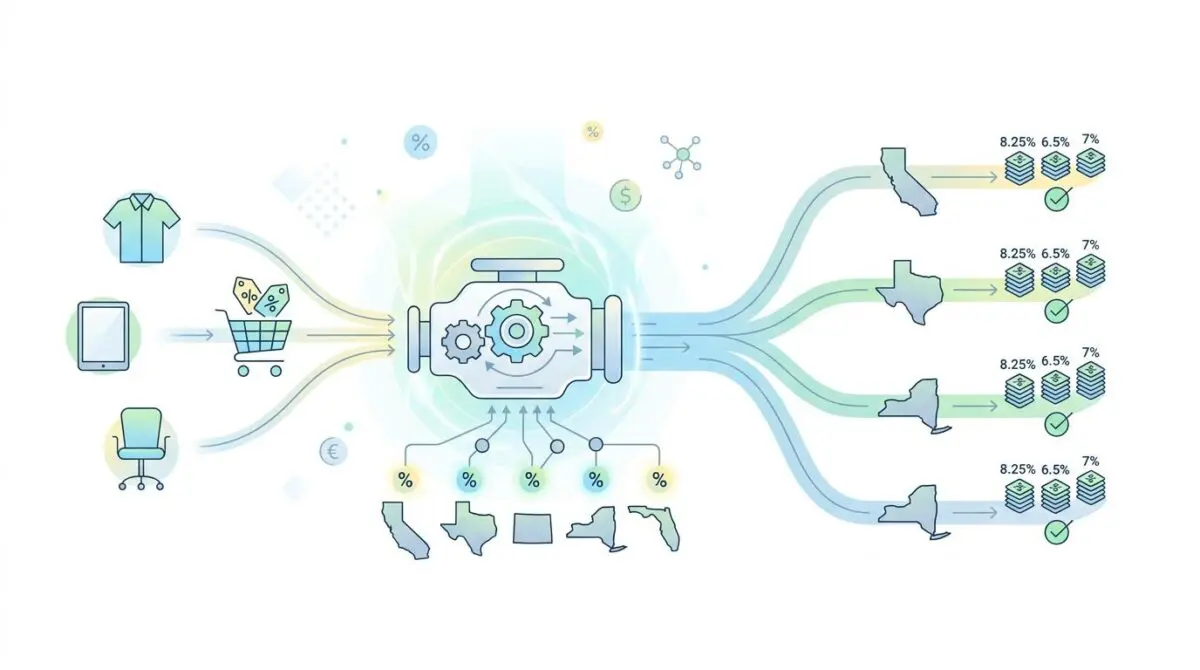
- Edge Calculation Deployment: Modern compliance APIs process tax liabilities in under 200ms at the network edge to eliminate checkout latency and cart abandonment during peak traffic events.
- Agentic AI Integration: Touchless compliance workflows now utilize large language models to autonomously map complex product SKUs to specific tax codes without human intervention.
- Continuous Compliance Architecture: E-commerce platforms are shifting away from periodic filings toward transaction-level data submission via unified APIs for real-time state authority synchronization.
Table of Contents
- The Invisible Checkout Drain
- Decoding the Compliance Metrics
- Surviving the State Rate Drift
- Touchless Mapping with Agentic AI
- Engineering Edge Calculation for Peak Traffic
- Automating the Exemption Certificate Lifecycle
- Erasing the Compliance Revenue Drag
- The Shift Toward Continuous Compliance
- The Dawn of Self-Healing Tax Workflows
The Invisible Checkout Drain
The invisible cost of manual tax management is silently eroding your profit margins with every transaction that clears your checkout. E-commerce platforms that rely on static CSV uploads and manual rate adjustments are fighting a losing battle against a rapidly shifting legislative landscape. Every time a customer adds a digital or physical product to their cart, an entire web of hyper-local tax rules must be instantly evaluated.
When this process relies on human intervention, the result is always delayed checkouts, inaccurate accruals, and systemic audit exposure.
Scaling an online business requires completely removing the human element from jurisdictional tax calculations. The operational burden of monitoring thousands of shifting county, city, and district rates is simply impossible for lean finance teams to manage manually.
If your checkout architecture cannot instantly adapt to a mid-month tax rate change in a remote municipality, you are actively leaking revenue through under-collection penalties.
This is exactly where API-driven Real-time Sales Tax Compliance Engines (Tax-as-a-Service) step in to fundamentally rewire your financial operations. By injecting an intelligent, cloud-based calculation layer directly into your checkout flow, these engines instantly cross-reference customer coordinates with live legislative databases.
The result is a frictionless purchasing experience that guarantees absolute compliance while completely freeing your finance team from the drudgery of manual nexus tracking.
Decoding the Compliance Metrics
Market Intelligence & Data
Sector Growth Velocity
The Sales Tax and VAT software market is projected to maintain a 17.10% CAGR through 2033, reaching a valuation of $52.6 billion according to HTF Market Insights in January 2026.
The Revenue Drag
Benchmark data from Anrok in 2026 shows that unmanaged sales tax liabilities and penalties average 4.3% of total revenue for digital and SaaS businesses.
Projected Audit Hours
California’s CDTFA projected over 1.5 million hours of audit activity for the 2025-2026 period to capture uncollected revenue, according to a May 2026 TaxHero analysis.
Adoption Saturation
According to the 2025 Future of Professionals Report by Thomson Reuters, 97% of retailers have now either fully automated or are actively planning the automation of their tax compliance.
The staggering sector growth velocity of 17.10% highlights a fundamental shift in how digital enterprises handle their financial obligations. As the market races toward a $52.6 billion valuation, it is clear that legacy accounting methods are being rapidly replaced by cloud-native calculation engines.
This massive influx of capital into Tax-as-a-Service platforms is funding the development of ultra-low-latency APIs that can process millions of transactions concurrently. Businesses that fail to adopt these advanced calculation layers will soon find themselves unable to compete with the seamless checkout experiences offered by their automated peers.
The 4.3% revenue drag represents a critical operational failure for digital and SaaS businesses attempting to manage tax liabilities internally. When companies rely on outdated nexus thresholds, they invariably under-collect from customers and are forced to pay the difference out of their own pockets during filing season.
This invisible tax on your gross revenue directly impacts your ability to reinvest in product development and customer acquisition. Implementing an API-driven compliance engine instantly plugs this leak by ensuring every cent of liability is accurately calculated and collected at the exact moment of sale.
With state authorities aggressively ramping up their enforcement capabilities, the projected 1.5 million audit hours in California alone signal a hostile environment for non-compliant merchants. When finance teams are tasked with manually tracking thousands of U.S. tax jurisdictions, human error becomes inevitable and audit triggers become unavoidable.
Automated engines mitigate this massive risk by maintaining an immutable, cryptographically secure log of every transaction and its associated tax logic. This means that when state auditors inevitably knock on your door, your defense is built on mathematically perfect API logs rather than scattered spreadsheets.
The reality of modern e-commerce is that automation is no longer a competitive advantage, but a baseline requirement for survival. According to the 2025 Future of Professionals Report, an overwhelming majority of retailers have recognized that manual compliance is a dead end.
This 97% adoption saturation means that the infrastructure supporting global commerce has fundamentally upgraded its expectations for accuracy and speed. If your checkout architecture is still relying on manual intervention, you are operating in the extreme minority of businesses that are needlessly risking their operational stability.
Surviving the State Rate Drift
The daily friction of e-commerce compliance is rooted in the constant, unpredictable evolution of hyper-local tax legislation. In 2025 alone, 108 new taxing cities were established across the United States, doubling the rate of the previous year.
This creates a state of perpetual rate-drift for any business relying on static checkout systems or monthly CSV uploads. A tax rate that was perfectly accurate on Tuesday can become a liability trap by Thursday if a local municipality passes an emergency funding measure.
Tools like Avalara AvaTax and Vertex are specifically engineered to combat this exact problem by continuously monitoring 12,414 distinct U.S. jurisdictions. When a customer enters their shipping address, the API translates those coordinates into a precise geospatial pinpoint, ignoring outdated zip code boundaries that often overlap multiple tax districts.
This micro-level accuracy ensures that a customer living on the border of two different counties is charged the exact fractional percentage required by their specific street address.
Attempting to manage this level of granularity manually means your rate tables are mathematically obsolete within thirty days of uploading them. API-driven engines eliminate this friction entirely by pulling the most current legislative data directly from the cloud at the exact millisecond the checkout button is pressed.
This seamless integration ensures that your business is never left holding the bag for uncollected fractions of a percent that compound into massive annual penalties.
Touchless Mapping with Agentic AI

One of the most persistent nightmares for e-commerce operators is the complex web of product taxability rules across different states. Classifying a product incorrectly can lead to systemic under-collection, especially when state definitions blur the lines between categories like athletic wear and general clothing.
This SKU mapping hell has historically required teams of tax professionals to manually evaluate every new product launch against thousands of conflicting state definitions.
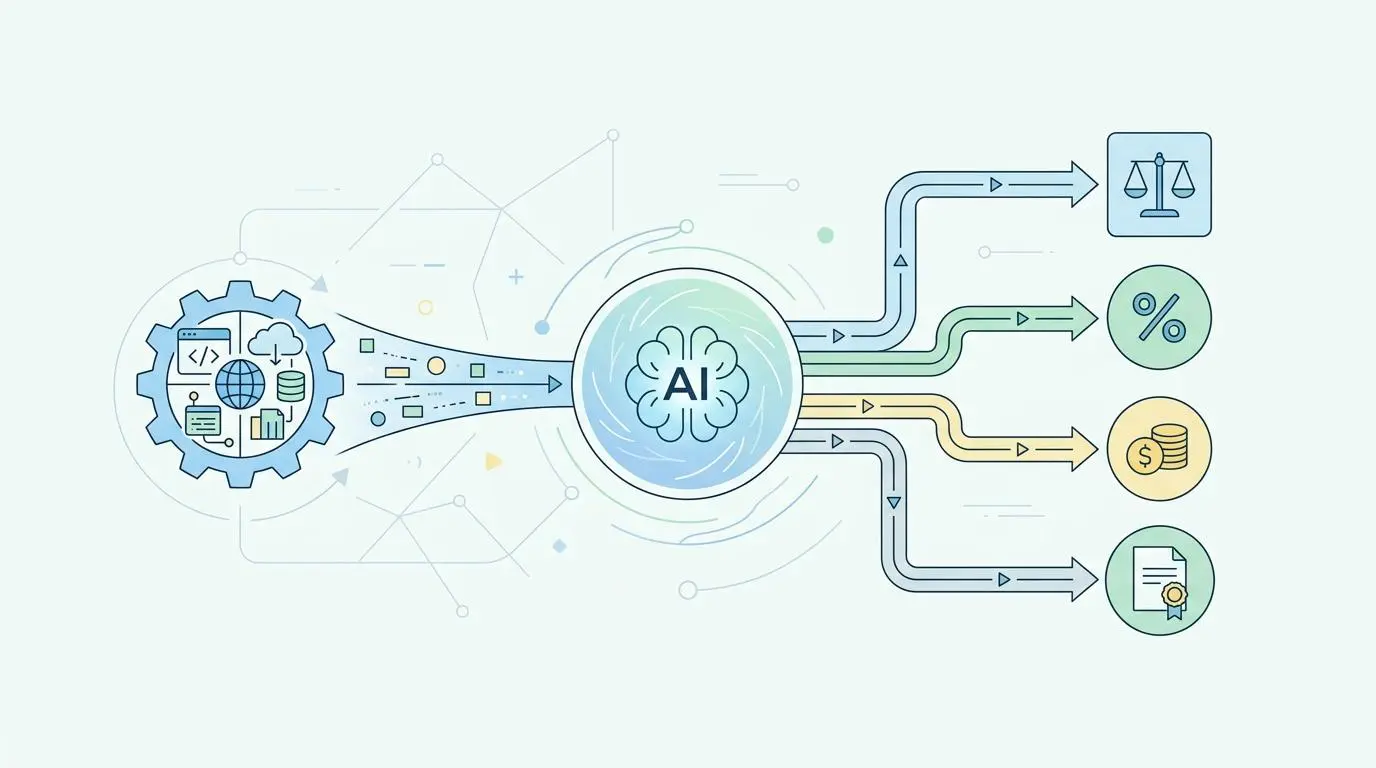
As of February 2026, Agentic AI has moved tax compliance from automated to completely touchless, where systems now proactively validate data and detect anomalies in real-time before a transaction is even finalized. Pioneered by industry leaders like Thomson Reuters and Vertex, these AI agents utilize advanced large language models to read product descriptions, ingredient lists, and delivery methods.
The AI then autonomously maps obscure SKUs to their exact, legally compliant tax codes without any human oversight.
This touchless workflow means that a digital platform selling a software subscription bundled with a physical training manual will have the transaction automatically split and taxed according to the distinct rules of the buyer’s state. By removing the human element from product classification, businesses eliminate the primary source of audit triggers.
The AI agent continuously learns from legislative updates, ensuring that your entire product catalog remains perfectly compliant even as state definitions evolve.
Engineering Edge Calculation for Peak Traffic
The hidden danger of relying on external APIs for checkout calculations is the risk of middleware latency during high-traffic events. When thousands of concurrent users flood a site during Black Friday, traditional calculation engines like Stripe Tax or TaxJar can experience microscopic delays.
If a tax calculation takes longer than 200 milliseconds to resolve, the resulting checkout friction leads directly to massive spikes in cart abandonment.
To solve this broken flow, 2026 e-commerce architectures have heavily prioritized Edge Calculation deployments. By pushing the tax calculation logic out to edge servers located geographically closer to the end-user, businesses bypass the latency of centralized cloud processing.
This ensures that the tax engine responds instantly, regardless of how much traffic is surging through the primary application servers.
Furthermore, modern API integrations are built with asynchronous fallback mechanisms to prevent total sales blockage during rare downtime events. If the primary compliance engine fails to respond, the system can instantly failover to a cached, highly accurate approximation based on historical data, allowing the transaction to complete.
This resilient engineering guarantees that your revenue stream is never choked by the very compliance tools designed to protect it.
Automating the Exemption Certificate Lifecycle
For B2B e-commerce platforms, the highest risk of audit exposure does not come from consumer sales, but from missing or expired tax exemption certificates. California’s CDTFA projected that aggressive auditing of these specific documents would help drive over $701 million in revenue in 2026.
Managing these certificates manually is a logistical nightmare, requiring constant follow-ups with corporate clients to ensure their tax-exempt status remains legally valid on file.
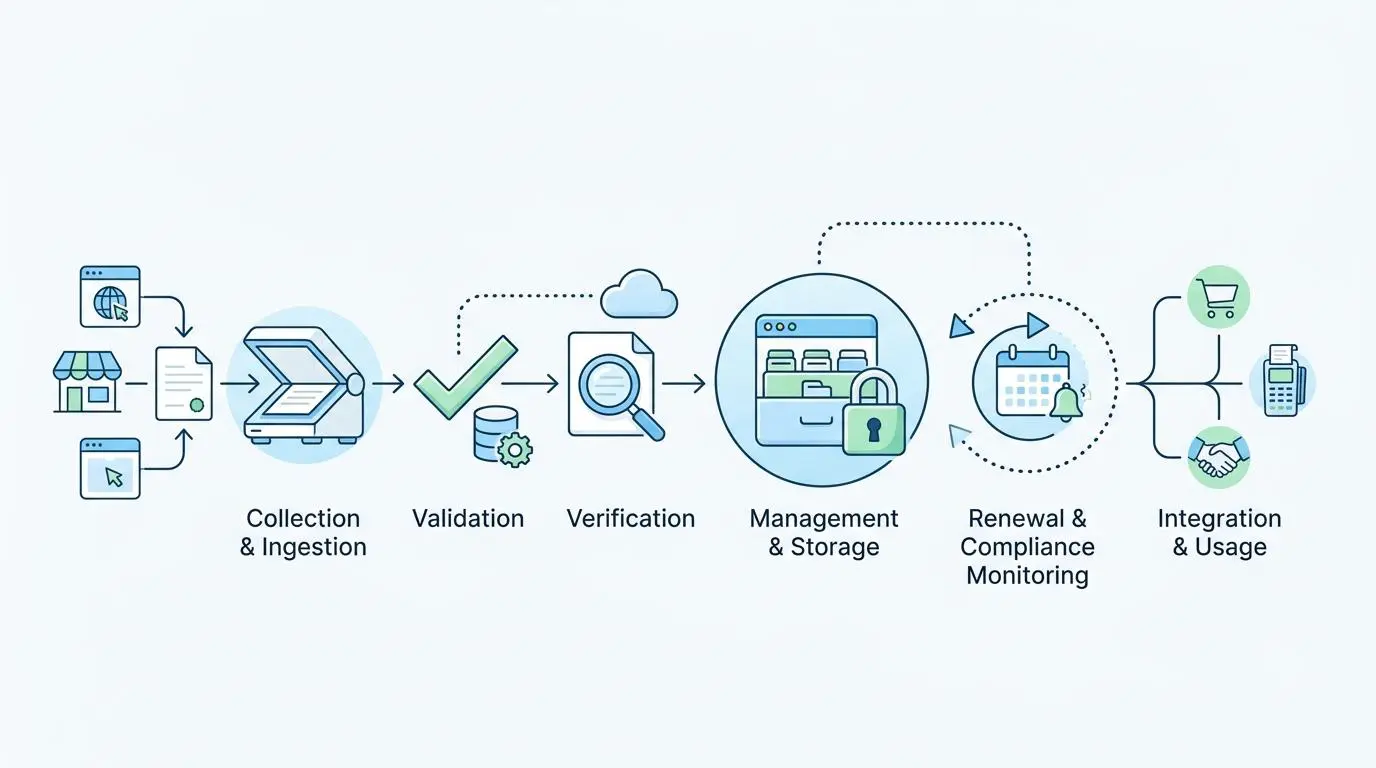
Automation platforms like Anrok and Kintsugi have solved this by introducing the Exemption Certificate Lifecycle (ECLC) management workflow. These systems integrate directly into the checkout and CRM platforms, automatically pinging B2B customers for updated documentation weeks before their current certificates expire.
If a valid certificate is not provided, the API instantly revokes the tax-exempt status at checkout, forcing the collection of standard sales tax.
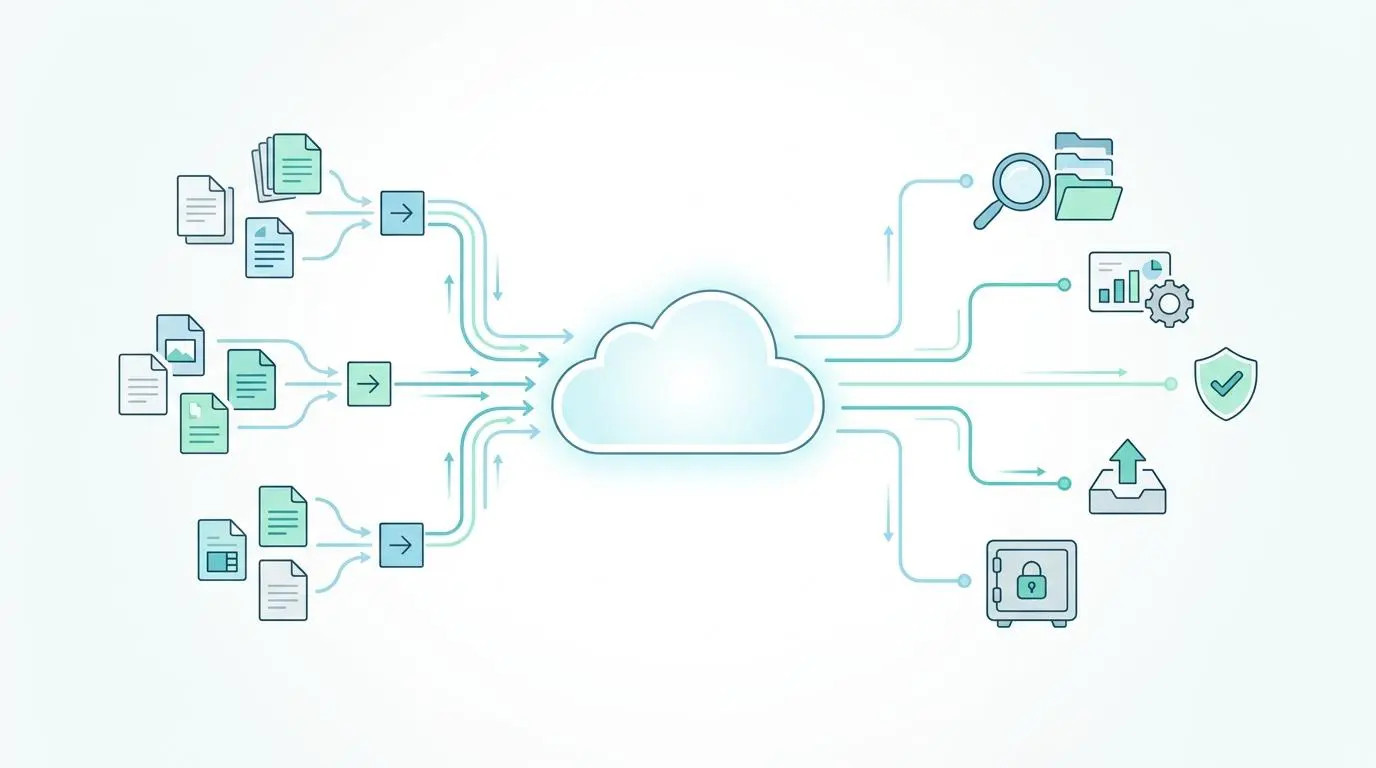
This proactive security measure completely insulates the merchant from liability. The automated workflow provides a secure, centralized vault for all compliance documentation, ensuring that every exempt transaction is mathematically tied to a verified, unexpired certificate.
When auditors request proof of exemption, the platform can instantly generate a comprehensive, cryptographically verified report, turning a potentially devastating audit into a minor administrative task.
Erasing the Compliance Revenue Drag
The ultimate measure of any automation integration is its ability to return time and capital back to the business. Managing nexus thresholds across multiple states requires constant vigilance, and failing to register on time results in immediate financial penalties.
This revenue drag disproportionately affects lean startups and growing digital platforms that cannot afford dedicated, in-house compliance departments.
Modern Filing-as-a-Service (FaaS) integrations directly connect e-commerce platforms like Shopify and ERPs like NetSuite to state filing portals. These systems automatically accrue the collected liabilities in real-time, holding the exact funds in reserve until the state deadline approaches.
This eliminates the cash flow shock that occurs when businesses accidentally spend their collected tax revenue on operational expenses.
By automating the entire accrual and remittance process, these platforms reduce compliance labor by up to 70%. A single finance manager can now oversee and execute 40 separate state filings in under two hours, a process that previously took weeks of manual data entry.
This massive ROI allows businesses to aggressively expand into new territories without the fear of triggering unmanageable compliance overhead.
The Shift Toward Continuous Compliance
The traditional model of periodic tax filing is rapidly becoming obsolete as global tax authorities modernize their own digital infrastructure. The 2026 shift toward Continuous Compliance represents a fundamental change in how financial data is transmitted.
Instead of aggregating a month’s worth of sales into a single summary report, businesses are now required to submit transaction-level data in real-time.
This is achieved through unified APIs that bridge the data silos between payment processors, inventory management, and accounting software. When a transaction clears, the API instantly splits the data stream, sending the revenue to the merchant account and the specific tax liability data directly to the state authority’s digital ledger.
This creates a single source of truth that is synchronized across all platforms simultaneously.
For global operators managing both U.S. Sales Tax and international VAT obligations, this unified approach is revolutionary. It eliminates the end-of-month reconciliation panic by ensuring that the internal ledger perfectly matches the state’s records at all times.
Continuous compliance transforms tax management from a retrospective accounting task into a proactive, embedded feature of the payment ecosystem.
The Dawn of Self-Healing Tax Workflows
As we look toward the immediate future, the architecture of e-commerce compliance is evolving beyond simple automation and entering the era of self-healing systems. By late 2026, AI agents will autonomously monitor state legislative sessions in real-time, analyzing proposed bills and passed laws before they even take effect.
These agents will auto-update nexus thresholds and adjust product taxability rules across your entire database without requiring a single software update or human approval.
This visionary approach to financial operations means that your business will become structurally immune to legislative volatility. The compliance engine will act as a living, breathing component of your tech stack, constantly repairing and optimizing its own logic based on external market data.
E-commerce platforms will scale with absolute confidence, knowing that their tax infrastructure is anticipating changes rather than just reacting to them.
Navigating the intersection of technology, workflows, and operational efficiency requires a sharp strategy. To future-proof your business architecture and scale with precision, connect with Andres at Andres SEO Expert.
Frequently Asked Questions
What is Tax-as-a-Service (TaaS) and how does it function?
Tax-as-a-Service (TaaS) is an API-driven compliance model that integrates a cloud-based calculation layer directly into the e-commerce checkout flow. It instantly cross-references customer geospatial coordinates with live legislative databases to ensure every transaction accurately reflects hyper-local tax rules without manual intervention.
How does automated sales tax software reduce the 4.3% revenue drag?
The 4.3% revenue drag is caused by under-collection penalties and manual management costs. Automation eliminates this by calculating exact liabilities at the moment of sale, ensuring the correct amount is collected from the customer so the merchant doesn’t have to pay liabilities out-of-pocket during audit or filing cycles.
What is touchless SKU mapping with Agentic AI?
Touchless SKU mapping utilizes Agentic AI and large language models to autonomously read product descriptions and ingredient lists. The AI then maps these items to legally compliant tax codes across thousands of jurisdictions, removing the risk of human error in product classification and preventing audit triggers.
Why is edge calculation important for e-commerce checkout speed?
Edge calculation pushes tax logic to servers located closer to the end-user, reducing API latency. This ensures that tax calculations resolve in under 200 milliseconds, which is critical for preventing cart abandonment during high-traffic events like Black Friday where centralized cloud delays could disrupt the flow.
How does the Exemption Certificate Lifecycle (ECLC) management reduce audit risk?
ECLC management automates the tracking of B2B tax-exempt documentation by proactively notifying clients before certificates expire. If a valid certificate is missing, the system automatically revokes the tax-exempt status at checkout, protecting the business from the aggressive auditing aimed at uncollected B2B revenue.
What is the shift toward Continuous Compliance in 2026?
Continuous Compliance represents a transition from periodic summary filing to real-time, transaction-level data reporting. Unified APIs connect payment processors directly to state digital ledgers, ensuring that the merchant’s internal records and the tax authority’s data are synchronized at the exact moment a sale occurs.