Key Points
- Predictive Migration: AI agents analyze historical data to migrate workloads minutes before AWS issues a standard 120-second spot instance interruption notice.
- Automated Arbitrage: Autonomous frameworks execute millisecond bidding and cross-region rebalancing to maintain 99.9% availability without human intervention.
- Maximized ROI: Implementing machine learning survival analysis reduces instance interruption rates by 23.2%, delivering an average ROI of 250% within 18 months.
Table of Contents
- The Two-Minute Nightmare
- The True Cost of Cloud Volatility
- Escaping the Two-Minute Warning Panic
- Deploying Autonomous Agents for Millisecond Migrations
- Calculating the Real Returns of Automated Recovery
- Why Indiscriminate Spot Adoption Fails
- Curing Developer Burnout with Machine Learning
- Pioneering Multi-Cloud Spot Arbitrage
- The Next Era of Autonomous Cloud Economics
The Two-Minute Nightmare
Imagine watching your entire production cluster vanish in exactly 120 seconds.
Picture the chaos as a sudden AWS spot instance interruption notice triggers a frantic scramble. Teams rush to spin up failover capacity before user sessions drop. This is the harsh reality for engineering teams relying on manual oversight to manage cloud infrastructure costs.
The standard two-minute warning is a brutal cliff. It inevitably leads to catastrophic downtime if failover capacity is not immediately available.
Predictive AI-driven spot instance orchestration acts as the ultimate circuit breaker for this volatility. By shifting from reactive scrambling to proactive forecasting, intelligent automation reclaims valuable engineering hours.
It transforms cloud cost management from a high-stress manual chore into a seamless, autonomous operation.
The True Cost of Cloud Volatility
Market Intelligence & Data
AI Spend Dominance
According to the State of FinOps 2026 report, 98% of organizations now actively manage AI-related infrastructure spend as their primary cloud priority.
Workflow Optimization Priority
A 2026 NVIDIA blog post revealed that 42% of enterprise IT leaders rank ‘optimizing AI workflows and production cycles’ as their top spending priority for the year.
The Spot Efficiency Trap
Research from LeanOps in May 2026 shows that spot instances actually lose money 41% of the time if teams do not automate the recovery process to account for interruption overhead.
Operational Cost Reduction
According to 2025-2026 Salesforce and AdAI News data, businesses that successfully implement AI automation report a 35% average reduction in overall operational costs.
The pivot toward intelligent infrastructure is no longer optional. This is clearly evidenced by the State of FinOps 2026 report, which highlights a massive shift in budget allocation.
Organizations are realizing that manually tracking cloud expenses is a losing battle against dynamic pricing algorithms. This near-universal focus on AI-related infrastructure spend proves that legacy cost management tools are fundamentally broken.
Automation is the only way to keep hyperscaler invoices from eroding profit margins.
Simultaneously, the pressure to streamline operations is mounting across enterprise IT departments. Leaders are heavily focused on optimizing AI workflows and production cycles to maintain competitive velocity.
When highly paid engineers spend their days babysitting server fleets, innovation grinds to an absolute halt. Automating the underlying compute layer frees up these brilliant minds to focus on actual product development.
However, the pursuit of discounted compute power carries a dangerous hidden tax. Data shows that spot instances actually lose money a staggering 41% of the time when teams fail to measure the cost of manual recovery.
The headline 90% discount is an illusion if a sudden termination requires hours of human intervention to restore stateful databases. Without automated orchestration, the overhead of managing interruptions completely negates the initial savings.
Fortunately, the financial upside of getting this right is tremendous. Businesses deploying autonomous agents to handle their cloud operations are seeing a 35% average reduction in overall operational costs.
This goes far beyond shaving pennies off an AWS bill. It is about eliminating the costly human errors associated with manual failovers, ensuring workloads remain stable, performant, and highly profitable.
Escaping the Two-Minute Warning Panic
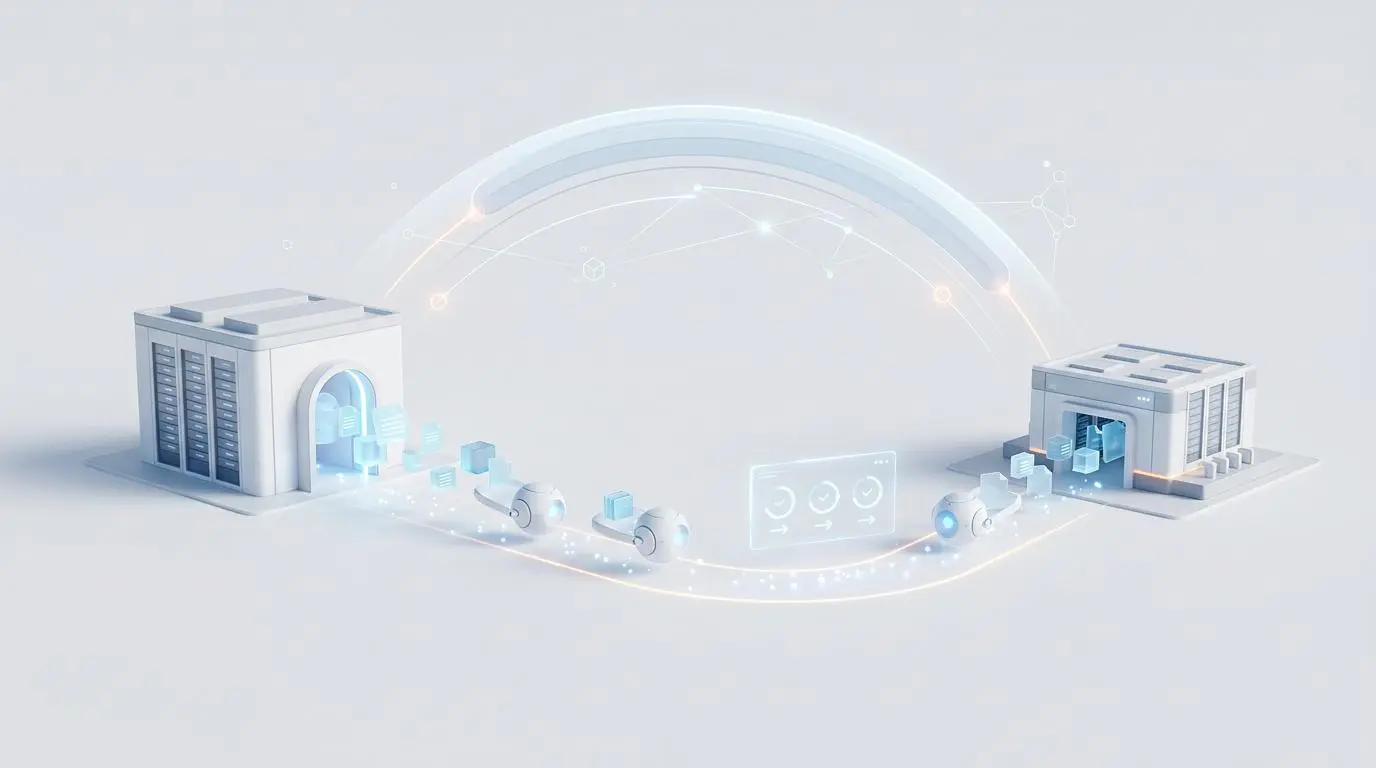
Engineers manually monitoring AWS interruption notices face an impossible battle to maintain 99.9% availability.
The standard 120-second warning is simply not enough time for a human to detect a price spike. Evaluating alternative instance types and executing a flawless migration requires far more runway.
This manual oversight of EC2 pricing fluctuations creates a terrifying two-minute panic when a fleet of spot instances is reclaimed simultaneously. As a result, teams are forced to over-provision expensive on-demand instances just to sleep at night.
By integrating predictive tools like AWS EC2 Capacity Manager and platforms like Sedai, organizations can preemptively migrate workloads. These systems analyze historical pricing trends and capacity pools to predict an interruption minutes or even hours in advance.
This foresight allows the orchestration layer to gracefully drain connections. It can then spin up replacement nodes without dropping a single user request.
Deploying Autonomous Agents for Millisecond Migrations

The lag between detecting a capacity shortage and executing a workload migration is where availability SLAs go to die.
Typically, this process takes several minutes of human intervention. It requires approvals, manual script execution, and frantic dashboard refreshing.
The rise of Agentic AI in cloud infrastructure is completely rewriting this playbook. Autonomous agents, powered by frameworks like AWS Bedrock AgentCore, can now execute complex rebalancing across regions instantly.
These agents operate without human gates, acting on pre-approved logic to find the optimal balance of cost and latency. If a specific availability zone experiences a sudden demand spike, the AI seamlessly shifts the workload to a cheaper, more stable region.
This millisecond decision-making ensures that your infrastructure is always running on the most efficient hardware available.
Calculating the Real Returns of Automated Recovery
The hidden overhead of cloud management is a silent killer of engineering budgets.
Manual spot instance management often costs more in dedicated engineering hours than it actually saves in cloud spend. When teams spend their sprints building custom scripts to handle failovers, they are actively draining company resources.
This is exactly where machine learning survival analysis changes the financial equation.
Enterprises leveraging platforms like Cast AI use statistical models to identify instance types that are significantly more stable. This predictive approach reduces AWS interruption rates by 23.2% compared to standard AWS Spot Placement Scores.
Organizations that fully automate this bid-and-shift cycle are seeing an astonishing average ROI of 250% within just 18 months.
Why Indiscriminate Spot Adoption Fails

Chasing cheap compute without a strategic framework is a recipe for operational disaster.
Many teams fall into the trap of indiscriminate spot adoption, placing stateful workloads on highly volatile hardware. Without AI-driven data persistence or automated draining protocols, a sudden termination results in corrupted databases and lost transactions.
This is exactly why 41% of manual spot deployments end up costing the business money.
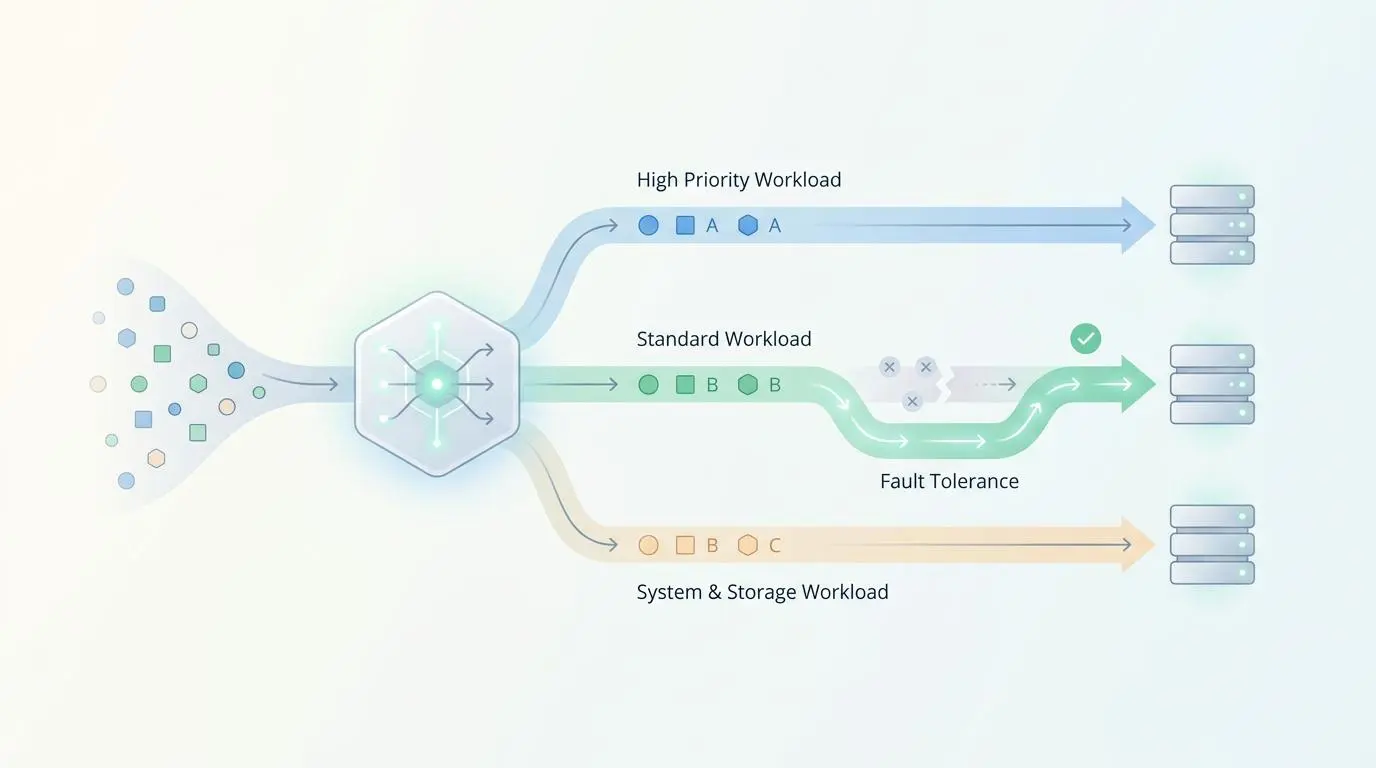
Predictive AI-driven spot instance orchestration solves this by intelligently categorizing workloads based on their fault tolerance. The system ensures that critical, stateful applications are anchored to reliable instances.
Meanwhile, stateless microservices can safely ride the volatile spot market. This nuanced approach guarantees data integrity while still maximizing overall cost efficiency.
Curing Developer Burnout with Machine Learning
Developer burnout is the unspoken casualty of manual cloud infrastructure management.
Waking up to 3:00 AM on-call pages because a high-demand region reclaimed your spot capacity destroys team morale. Manual FinOps is entirely insufficient for the GPU-heavy training workloads required in modern tech environments.
Human-led right-sizing simply cannot match the millisecond pricing shifts occurring across massive AWS fleets.
AI cost management has rapidly become the most critical skillset for modern infrastructure teams. By delegating the heavy lifting to intelligent automation, engineers are freed from the anxiety of unpredictable outages.
The technology acts as a tireless guardian. It ensures that infrastructure scales dynamically while the human team focuses on strategic growth.
Pioneering Multi-Cloud Spot Arbitrage
The future of cloud economics lies in breaking free from vendor lock-in.
Currently, teams are often trapped by regional AWS demand spikes. They remain unable to capture lower spot prices on competing hyperscalers.
The 2026 landscape is rapidly shifting toward multi-cloud spot arbitrage. In this model, AI agents autonomously move workloads between AWS, Azure, and GCP based on real-time pricing and availability.
These agents act as cognitive partners, balancing cost, latency, and even sustainability metrics like Graviton 5 carbon efficiency. They evaluate the entire global cloud market in real-time, executing cross-cloud migrations without human intervention.
This visionary approach transforms cloud infrastructure into a highly fluid, globally optimized commodity.
The Next Era of Autonomous Cloud Economics
We are witnessing the end of manual infrastructure management and the dawn of true technological value.
The days of reacting to interruption notices and scrambling to patch together failover capacity are over. Predictive AI-driven spot instance orchestration empowers organizations to treat cloud pricing volatility as a strategic advantage rather than an operational threat.
By embracing autonomous agents, businesses can achieve unparalleled resilience, massive cost savings, and a renewed focus on innovation.
Navigating the intersection of technology, workflows, and operational efficiency requires a sharp strategy. To future-proof your business architecture and scale with precision, connect with Andres at Andres SEO Expert.
Frequently Asked Questions
What is predictive AI-driven spot instance orchestration?
Predictive AI-driven spot instance orchestration is an automated infrastructure management approach that uses machine learning to forecast AWS interruption notices before they occur. Unlike reactive manual management, this technology proactively migrates workloads to stable capacity, preventing the “two-minute nightmare” of sudden cluster downtime.
Why do spot instances lose money 41% of the time without automation?
According to 2026 data from LeanOps, spot instances result in a net loss for 41% of teams due to the high cost of manual recovery. When highly-paid engineers must manually intervene to restore stateful databases or fix interrupted workflows, the labor costs often exceed the 90% discount provided by the spot market.
How do autonomous agents improve cloud cost management?
Autonomous agents, powered by frameworks like AWS Bedrock AgentCore, can execute millisecond-level workload migrations without human gates. These agents balance cost, latency, and hardware stability in real-time, helping businesses achieve an average reduction of 35% in overall operational costs.
What are the benefits of AI-driven cloud automation for engineering teams?
AI-driven automation cures developer burnout by eliminating the need for 3:00 AM on-call pages related to capacity reclamation. By delegating the heavy lifting of right-sizing and failover to machine learning models, engineers can focus on product development rather than manual infrastructure oversight.
What is multi-cloud spot arbitrage?
Multi-cloud spot arbitrage is an advanced strategy where AI agents move workloads autonomously between different providers like AWS, Azure, and GCP. This model captures the lowest real-time pricing across the global cloud market, ensuring infrastructure remains a fluid, cost-optimized commodity rather than a locked-in expense.