Key Points
- Dynamic Traffic Orchestration: Edge-AI cameras are replacing static timers to utilize millisecond-level adjustments that eliminate pulse friction and reduce commuter congestion.
- Predictive Municipal Routing: AI platforms are eliminating redundant deadhead miles in waste collection to deliver massive fuel savings and optimize fleet deployments.
- Synthetic Stress Testing: Digital twins leverage synthetic data to train city infrastructure for unprecedented black swan events to ensure resilient public safety responses.
Table of Contents
- The Paralysis of Disconnected Infrastructure
- The Tangible Impact of Intelligent Urban Infrastructure
- Curing Urban Pulse Friction
- Giving Cameras Temporal Event Reasoning
- Eliminating Deadhead Miles in Waste Collection
- Simulating Black Swan Events with Digital Twins
- Protecting First Responders with Agentic Triage
- Transitioning to Autonomous Municipal Loops
- The Era of Self-Healing Urban Infrastructure
The Paralysis of Disconnected Infrastructure
Picture this. It is rush hour in a major metropolitan hub, a sudden storm floods a primary intersection, and a sanitation truck breaks down in the only open lane.
Siloed legacy systems create a cascading failure in these moments. Commuters are trapped, emergency vehicles are blocked, and municipal dispatchers are staring at static dashboards that offer zero real-time context.
This operational paralysis leads to cumulative GDP losses of up to four percent annually.
The solution to this compounding chaos is Smart City Physical AI Orchestration. This framework moves beyond isolated smart devices by connecting municipal assets into a single responsive nervous system.
By leveraging edge computing and computer vision, cities can dynamically route traffic, dispatch emergency services, and optimize waste collection in real time.
The Tangible Impact of Intelligent Urban Infrastructure
Market Intelligence & Data
ITMS Market Scale
The global intelligent traffic management system market is projected to reach this value in 2026, driven by rapid AI-based adaptive signal control roll-outs, according to Fortune Business Insights 2026.
Waste Operational Savings
AI-powered waste management solutions now deliver an average 25% reduction in operational costs through route efficiency and predictive maintenance as of the 2026 Industry Analysis by AI Business OS.
Non-Emergency Triage Success
AI tools have successfully reduced non-emergency call volumes in 911 centers by up to 40%, significantly lowering responder burnout according to a 2025/2026 NTIA White Paper.
Active AI Adoption
According to the NVIDIA State of AI 2026 report, 64% of enterprise and municipal organizations have moved past pilots into active, scaled AI deployments in their daily operations.
The staggering valuation of the intelligent traffic management system market highlights a massive shift away from static infrastructure. Cities are no longer relying on pre-programmed light cycles that ignore real-world conditions.
Instead, municipalities are heavily investing in edge-AI cameras integrated with NVIDIA Metropolis for V2X traffic management to dynamically adjust signal phases. This millisecond-level responsiveness directly translates to smoother commutes and reduced carbon emissions.
Achieving a massive reduction in operational costs for waste management proves that intelligent routing is a financial necessity. Legacy waste collection relies on static routes where trucks burn expensive fuel to check empty bins.
By implementing AI-driven optimization, sanitation departments can dynamically alter paths based on fill-level predictions. This eliminates unnecessary stops and drastically lowers fleet maintenance expenses.
Improving the success rate in non-emergency call triage is a monumental victory for public safety infrastructure. Dispatch centers have historically been overwhelmed by administrative queries that delay critical emergency responses.
By deploying agentic AI voice bots to manage non-emergency 911 calls, agencies are freeing up human operators. This technological buffer ensures life-saving personnel can focus entirely on high-stakes situations.
The reality that a vast majority of enterprise and municipal organizations are now running active AI deployments signals the end of the pilot-program era. City managers are moving past experimental sandbox environments and embedding machine learning directly into daily operations.
This widespread adoption proves that physical AI orchestration is no longer a futuristic concept but a baseline requirement for modern governance.
Curing Urban Pulse Friction

Modern cities suffer from a condition known as pulse friction. This occurs when physical infrastructure cannot adapt to sudden surges in population movement or vehicle density.
Commuters currently lose an average of over sixty hours annually to avoidable congestion because static signal timers simply ignore reality.
To combat this, platforms like Miovision are replacing outdated timers with advanced edge computing. These intelligent cameras analyze vehicle-to-everything data instantly.
They adjust traffic light phases millisecond-by-millisecond to keep intersections flowing naturally.
Giving Cameras Temporal Event Reasoning
Traditional sensors are fundamentally flawed because they provide raw data without any contextual awareness. A standard camera might detect that a vehicle has stopped in an intersection, but it requires a human dispatcher to manually verify the feed to understand why.
This manual verification creates dangerous delays during critical incidents.
The introduction of the upcoming Cosmos Reason vision language model changes this dynamic by enabling temporal event reasoning. These advanced models can differentiate between a vehicle stalled due to a medical emergency and one that is simply parked illegally.
Once the context is understood, the system automatically triggers the appropriate public safety workflows without human intervention.
Eliminating Deadhead Miles in Waste Collection
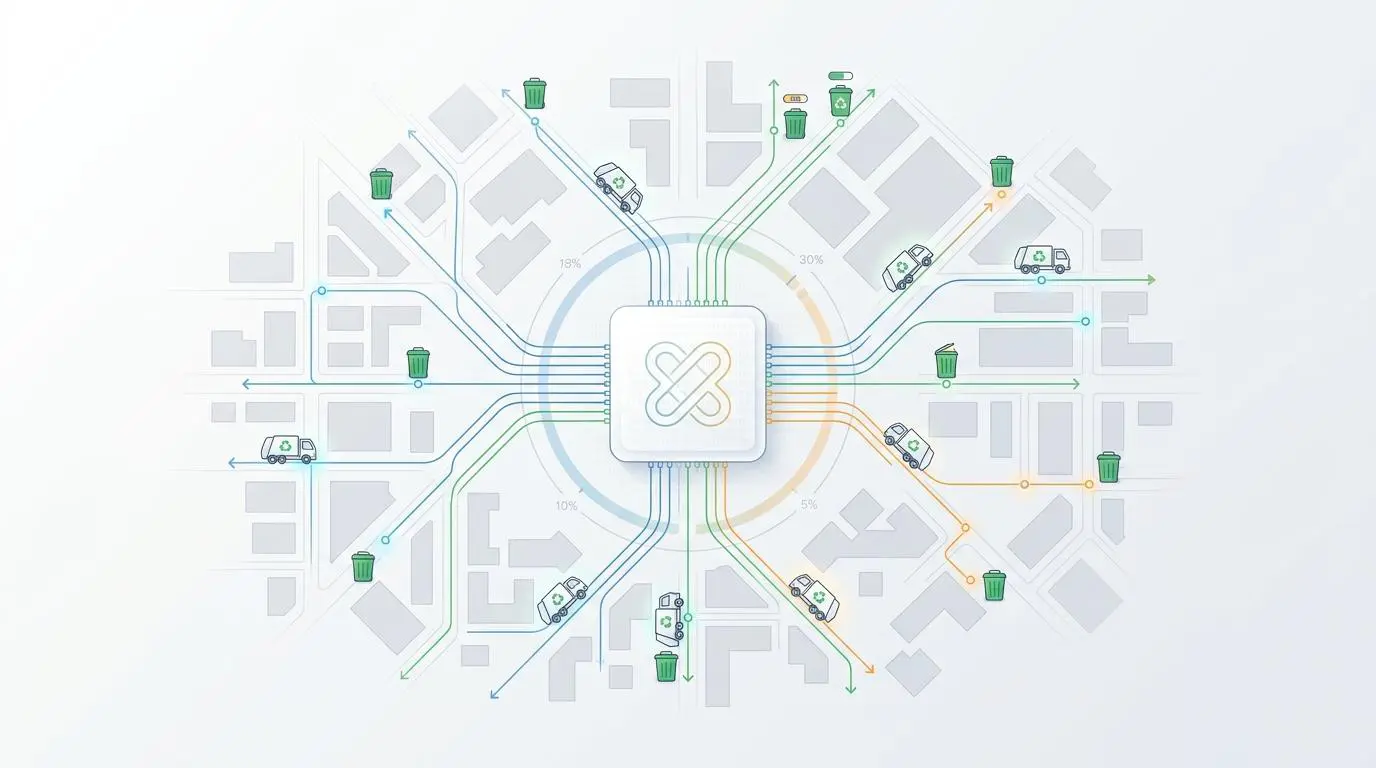
Fixed municipal routing is a massive drain on local budgets. Traditional waste collection forces trucks to follow the exact same path every week, resulting in vehicles stopping at entirely empty bins.
This outdated approach wastes up to thirty percent of municipal fuel and labor budgets annually.
Artificial intelligence routing platforms like RouteOptix and AMCS are completely restructuring how sanitation fleets operate. By analyzing historical data and predictive fill rates, these systems eliminate redundant deadhead miles from the daily schedule.
This intelligent orchestration delivers average fuel savings of thousands of dollars per municipal vehicle every single year.
Simulating Black Swan Events with Digital Twins

Public safety agencies frequently struggle during unprecedented black swan events because high-stakes coordination is impossible to practice safely in the real world. Flash floods, stadium surges, and multi-vehicle pileups overwhelm standard protocols instantly.
If first responders are experiencing a scenario for the first time during the actual disaster, the failure rate skyrockets.
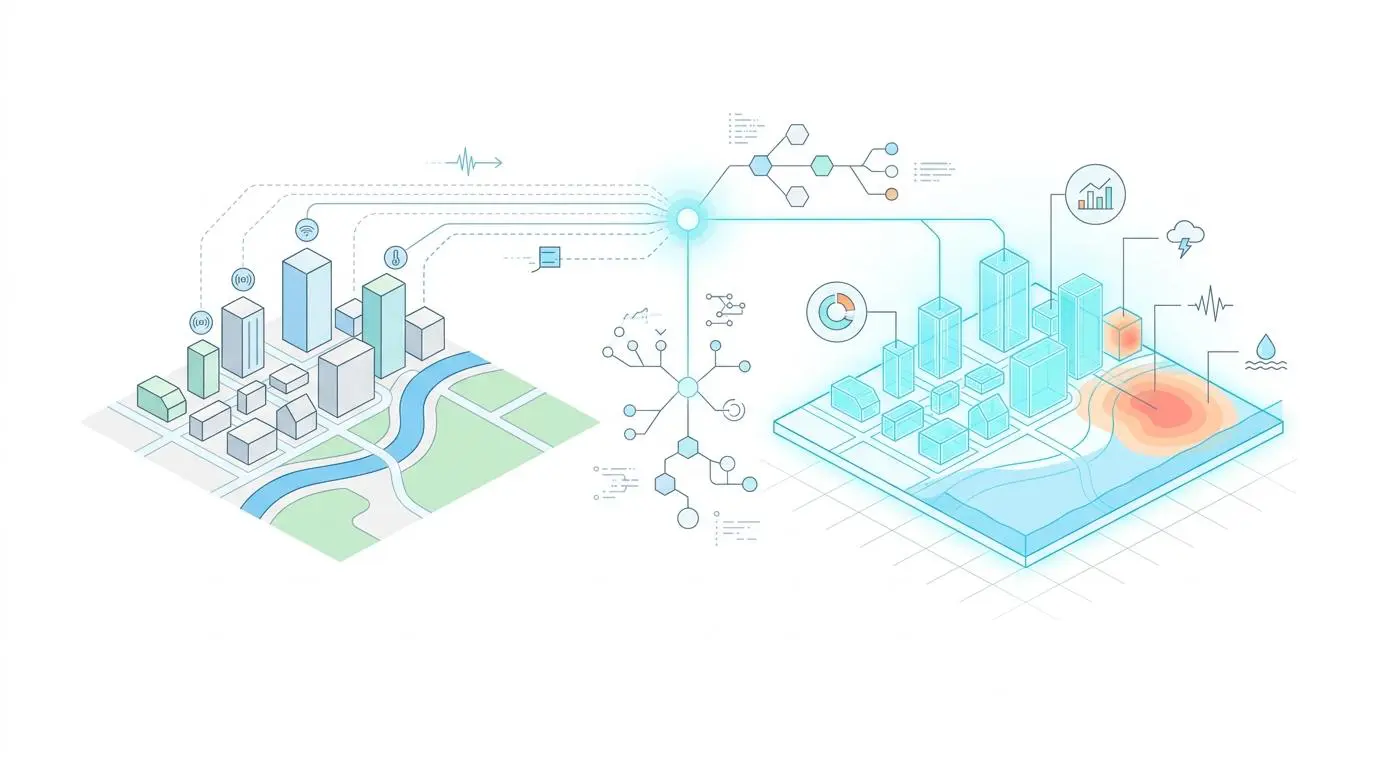
The Omniverse Blueprint solves this by allowing cities to build highly accurate digital twins of their infrastructure. NVIDIA’s 2026 Physical AI framework allows for the generation of physically accurate synthetic data to train vision-AI models on rare accident scenarios that lack real-world footage.
This effectively teaches city cameras to recognize and manage disasters they have never seen before, stress-testing emergency responses in a risk-free virtual environment.
Protecting First Responders with Agentic Triage
The unseen crisis in urban management is the severe mental health toll on emergency dispatchers. First responders face a staggering burnout rate, with nearly sixty percent reporting exhaustion due to relentless and high-volume call cycles.
When telecommunicators are overwhelmed by noise complaints and parking disputes, their ability to handle actual emergencies degrades.
Artificial intelligence is now being deployed directly into dispatch centers to handle agentic triage. By routing non-emergency inquiries to intelligent voice bots, human operators are shielded from administrative fatigue.
This strategic filtering allows dispatchers to reserve their cognitive bandwidth exclusively for life-critical emergencies.
Transitioning to Autonomous Municipal Loops
The primary barrier to improving urban survival rates is the devastating ten-minute gap between incident detection and resource arrival. Human dispatch chains are inherently slow, relying on sequential communication that costs precious time.
To close this gap, the industry is rapidly shifting toward fully autonomous municipal service loops.
By late 2026, self-sorting waste bins and AI-driven traffic signals will communicate directly with fleet vehicles. This will allow infrastructure to instantly prioritize green wave corridors for approaching emergency and sanitation fleets.
By removing the human dispatcher from the middle of the data flow, cities can achieve instantaneous resource allocation.
The Era of Self-Healing Urban Infrastructure
The transition from merely smart cities to fully autonomous urban environments is actively rewriting the rules of municipal management. AI factories are now producing real-time intelligence as a fundamental public utility.
This evolution moves urban operations away from reactive signal-switching and toward predictive, self-healing infrastructure resilience.
Navigating the intersection of modern technology, software architecture, and business growth requires a sharp strategy. To future-proof your tech stack and scale with precision, connect with Andres at Andres SEO Expert.
Frequently Asked Questions
What is Smart City Physical AI Orchestration?
Smart City Physical AI Orchestration is an advanced framework that connects siloed municipal assets into a single, responsive nervous system. By leveraging edge computing and computer vision, it enables cities to move beyond static infrastructure and dynamically manage traffic, emergency services, and waste collection in real time.
How does AI improve traffic management and reduce pulse friction?
AI reduces pulse friction by replacing legacy signal timers with edge-AI cameras and V2X (vehicle-to-everything) communication. Systems like NVIDIA Metropolis and Miovision adjust traffic light phases millisecond-by-millisecond based on real-world vehicle density, significantly reducing congestion and carbon emissions.
What is the role of digital twins in urban disaster management?
Digital twins, such as those created with the Omniverse Blueprint, allow cities to build physically accurate virtual models of their infrastructure. These twins use synthetic data to simulate “black swan” events like flash floods or major accidents, training AI models to recognize and manage rare disasters that lack sufficient real-world footage.
How does AI-driven waste management reduce operational costs?
AI-driven waste management platforms like RouteOptix and AMCS use predictive fill-level data to eliminate “deadhead miles”—redundant travel to empty bins. This intelligent route optimization delivers average operational savings of 25% and reduces municipal fuel and labor budgets by thousands of dollars per vehicle annually.
What is temporal event reasoning in smart city infrastructure?
Temporal event reasoning, powered by vision language models like Cosmos Reason, provides cameras with contextual awareness. It allows systems to differentiate between various scenarios, such as a vehicle stopped for a medical emergency versus one parked illegally, automatically triggering specific public safety workflows without manual dispatcher verification.
How does agentic triage help prevent 911 dispatcher burnout?
Agentic AI voice bots manage non-emergency 911 calls, such as parking disputes or administrative queries, reducing call volumes by up to 40%. This automated triage filters out noise, allowing human operators to reserve their cognitive bandwidth for high-stakes, life-saving situations, thereby reducing the 60% burnout rate among dispatchers.
What are autonomous municipal loops?
Autonomous municipal loops are self-operating service cycles where infrastructure components, such as self-sorting bins and AI-driven signals, communicate directly with fleet vehicles. By removing human dispatchers from the middle of the data flow, these loops achieve instantaneous resource allocation and create “green wave” corridors for emergency and sanitation fleets.