



Key Points
- Relevance Decay: Manual media monitoring suffers a 70% drop in journalist engagement if competitor mentions are not actioned within a 4-hour window.
- Agentic QA Workflows: Integrating Claude 4 sentiment analysis within n8n prevents automated outreach disasters by filtering out negative competitor coverage.
- Instant Indexing Pipelines: Utilizing the IndexNow API ensures reactive content is crawled immediately, securing placement in AI Overviews alongside breaking news.
Table of Contents
The Hidden Tax of Relevance Decay
The hidden tax of manual media monitoring isn’t just the hours your team wastes refreshing Google Alerts; it is the silent evaporation of link equity happening right under your nose. When a competitor lands a high-tier media placement, the clock immediately starts ticking on your window of opportunity. Every minute that passes without a strategic, reactive pitch diminishes your chances of intercepting that news cycle.
We call this critical bottleneck Relevance Decay. Industry data shows a brutal reality for digital PR teams relying on manual workflows. If a competitor’s media mention is not addressed with a reactive pitch within a strict 4-hour window, journalist engagement plummets by 70%.
By the time a human PR specialist discovers the article, drafts a response, finds the journalist’s email, and hits send, the reporter has already moved on to their next assignment. The news cycle is ruthless, and legacy outreach methods simply lack the velocity required to compete.
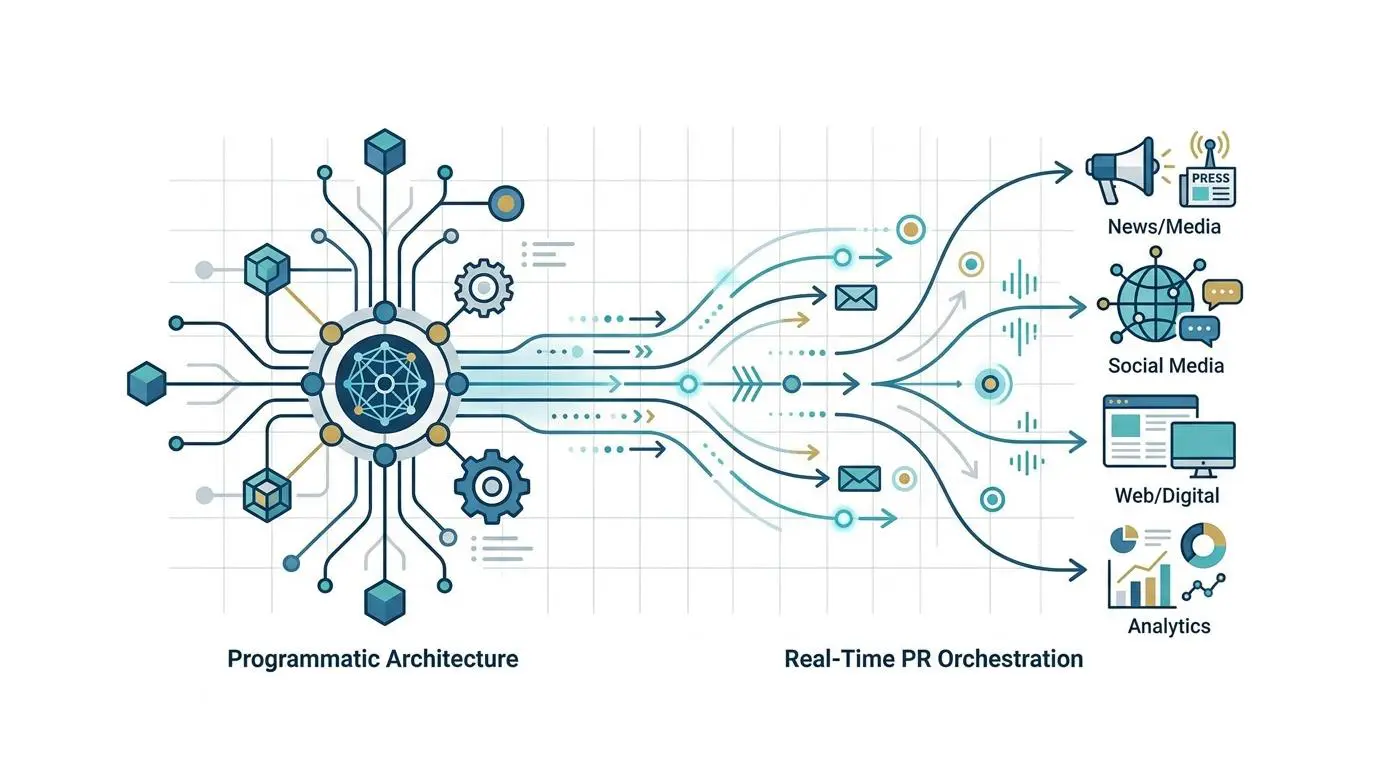
This is where Automated Reactive Digital PR Orchestration changes the entire architectural paradigm. Instead of relying on human discovery, we architect a programmatic infrastructure that listens, analyzes, and executes outreach at machine speed. By integrating advanced APIs with workflow automation, we can completely eliminate the manual gap between a competitor’s media mention and our brand’s reactive pitch.
The Citation Dominance Metrics

To understand why building this programmatic architecture is non-negotiable, we must look at how modern search engines and Large Language Models (LLMs) construct their answers. The era of ten blue links is rapidly being overshadowed by generative AI summaries. These AI Overviews do not pull information randomly; they rely heavily on trusted, authoritative editorial seeds.
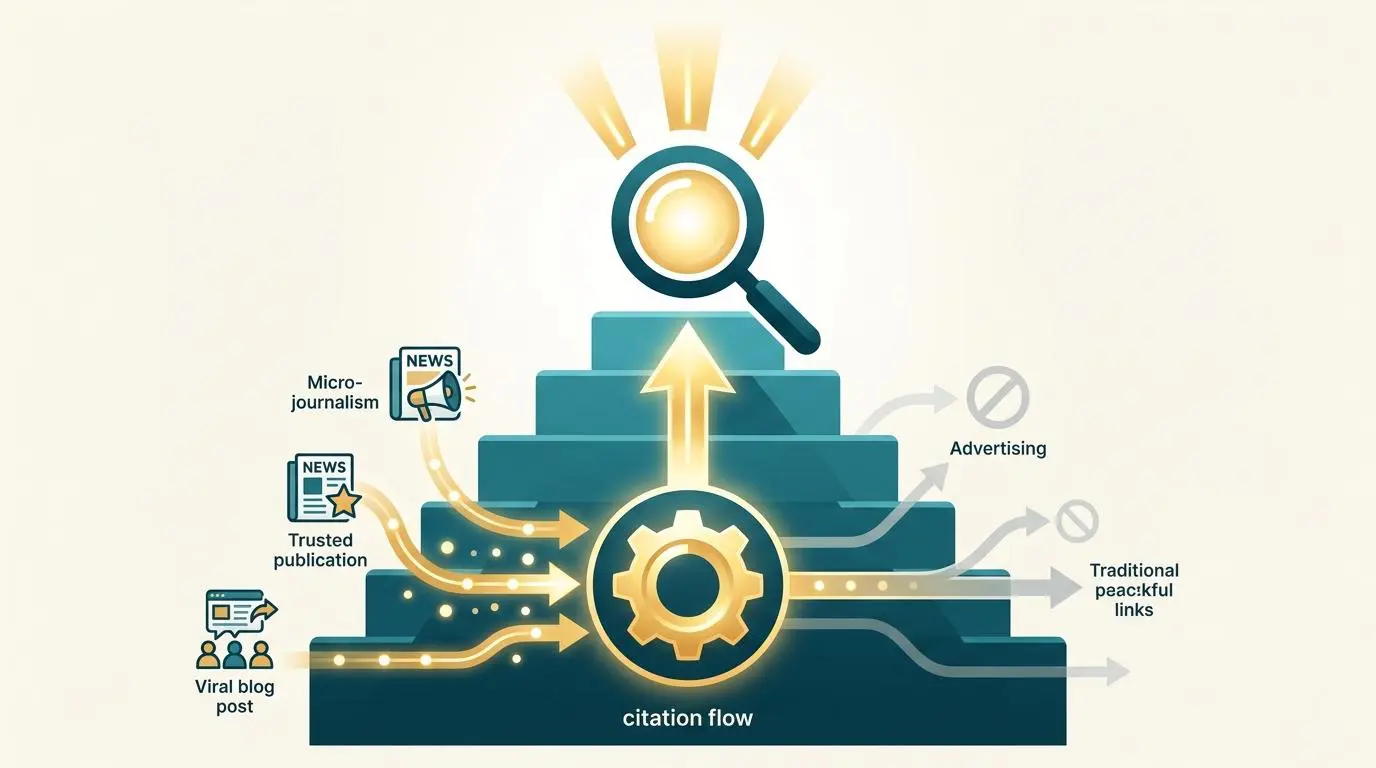
According to the 2026 State of AI in PR report, a staggering 82% of all citations in Google’s AI Overviews and ChatGPT responses now originate directly from earned media editorial placements. This metric exposes a massive vulnerability for brands relying on static content. If your competitors dominate the earned media cycle, they achieve Citation Dominance within LLM ecosystems.
Automated PR monitoring is no longer just a link-building tactic; it is a critical defensive SEO strategy. You must intercept the media narrative before the LLMs solidify their contextual understanding of an industry topic. To achieve this interception, your automation infrastructure must process massive amounts of data without buckling under the load.
This brings us to the operational reality of processing thousands of PR data points daily. High-concurrency media monitoring requires serious server-side muscle. The recent n8n 2.0 release introduced new SQLite pooling drivers, delivering a 10x faster database performance for these exact types of high-volume tasks. This architectural upgrade ensures that when a major news event triggers hundreds of competitor mentions simultaneously, your automation pipeline processes them instantly without database locking or thread starvation.
Semantic Webhooks and Instant Trigger Outreach
The foundation of this automated orchestration relies on capturing the right data at the exact right moment. For years, SEOs and PR professionals relied on legacy Boolean alerts. These primitive tools were notorious for delivering noisy, irrelevant data hours or even days after publication.
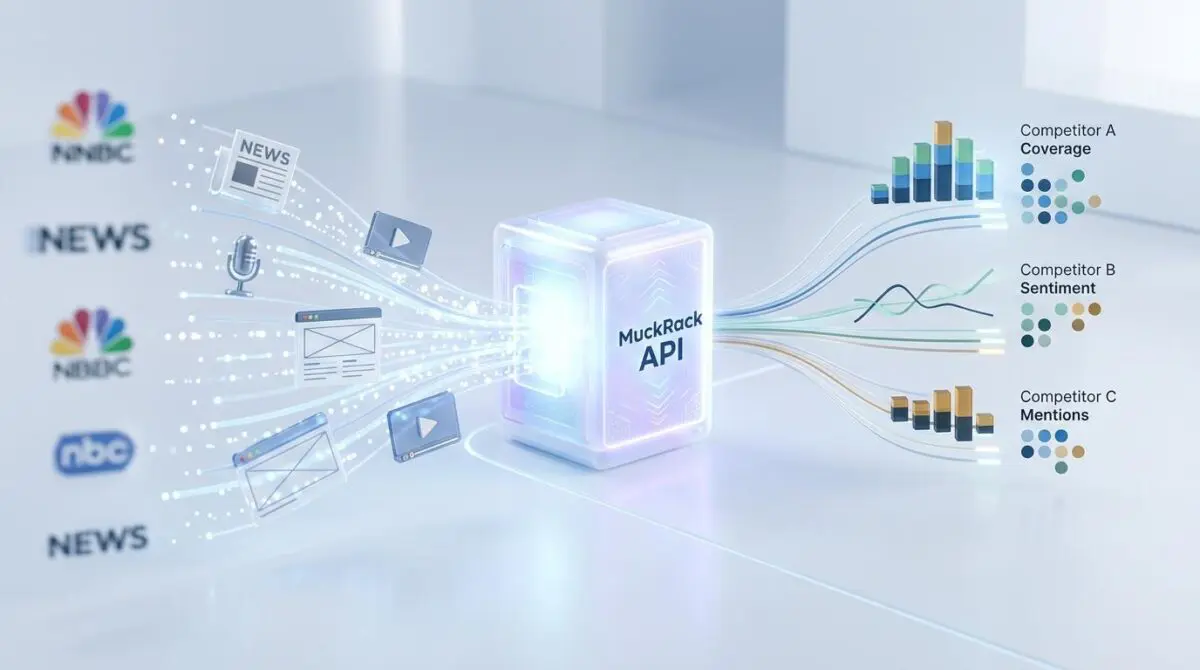
The introduction of the MuckRack Curation Engine API fundamentally shifted this dynamic. Instead of relying on delayed RSS feeds, this API utilizes semantic webhooks. These webhooks act as real-time event listeners, pushing data to your server the millisecond a competitor is mentioned in a relevant context.
We capture these semantic webhooks using n8n, an advanced node-based automation platform. Within n8n, we configure Instant-Trigger workflows that catch the incoming JSON payload from MuckRack. This payload contains everything we need: the article URL, the journalist’s name, the publication’s domain authority, and the specific context of the competitor mention.
Once the payload is caught, the n8n workflow instantly routes the data. It maps the journalist’s profile to tools like Hunter.io to verify contact information in real-time. Simultaneously, it pushes the structured data into outreach platforms like Pitchbox. What used to take a PR team half a day of manual prospecting now occurs in sub-60 seconds, capturing high-authority unlinked mentions before the ink is even dry.
Overcoming JSON Payload Timeouts
Scaling this programmatic architecture introduces significant server-side friction. When you are monitoring dozens of competitors across global news cycles, the volume of incoming webhook data can be overwhelming. Modern PR platforms transmit incredibly complex, deeply nested JSON payloads.
Traditional consumer-grade automation tools like Zapier fundamentally struggle with this level of data density. They operate on synchronous execution models with strict memory limits. When a major news cycle breaks, the sudden influx of massive JSON payloads causes these legacy tools to choke, resulting in timeout errors and dropped webhooks.
This is why transitioning to n8n 2.0 is a mandatory architectural decision for enterprise SEO. The introduction of Task Runners allows for asynchronous, decoupled processing. When a massive payload arrives via the MuckRack REST API, the Task Runner offloads the heavy lifting to background processes.
This decoupled architecture ensures the main webhook receiver remains lightweight and responsive. Even if thousands of PR data points flood the system simultaneously, the SQLite pooling efficiently manages the database writes. The result is a highly resilient pipeline that never drops a critical media mention, regardless of the news cycle’s volatility.
Deploying Agentic QA for Sentiment Safety
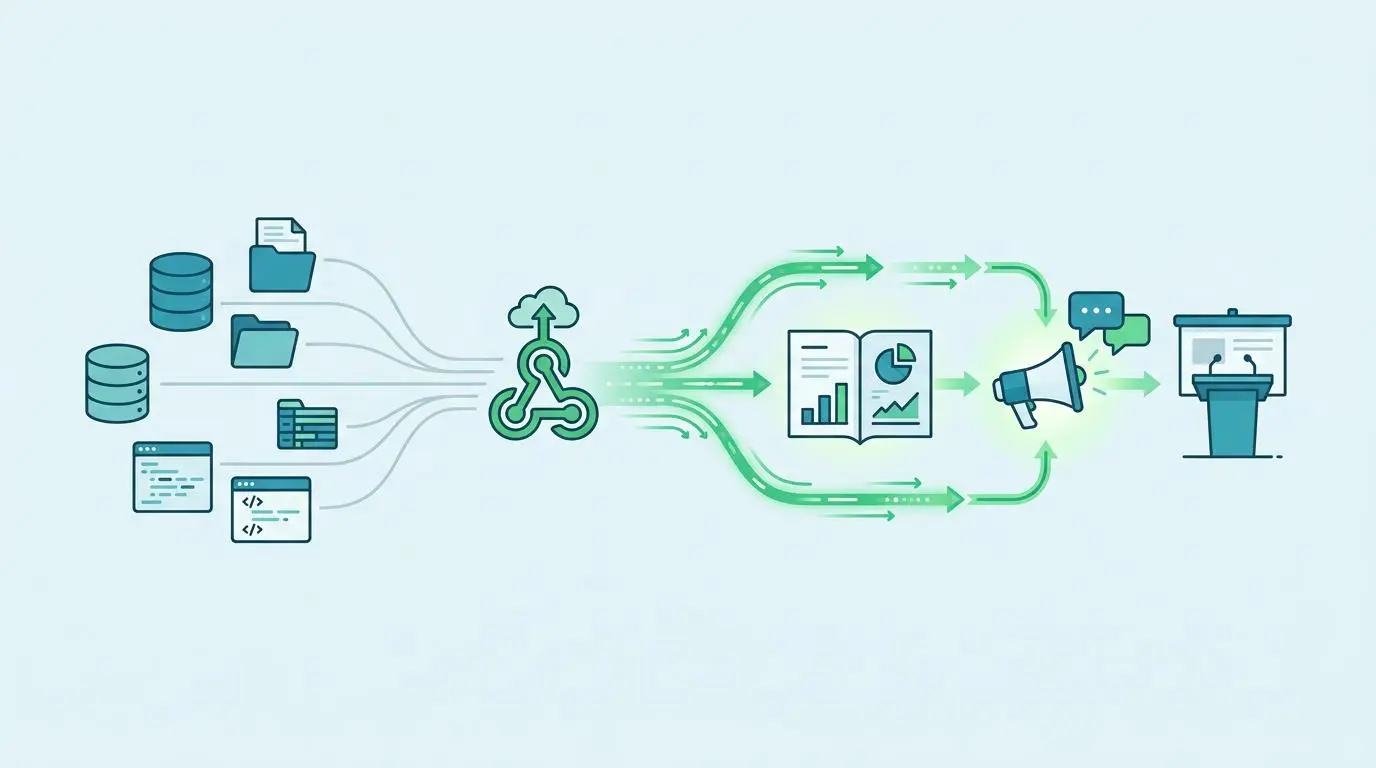
Velocity without accuracy is a recipe for brand disaster. The greatest risk in automated reactive PR is the lack of human contextual understanding. If a competitor is mentioned in a highly negative article—such as a data breach or a corporate scandal—sending a chipper, automated pitch to that journalist asking for a link is a catastrophic mistake.
Automated systems cannot inherently tell the difference between a product success story and a reputation crisis. To solve this, we must build a contextual firewall within our n8n pipeline. We achieve this by integrating Agentic QA nodes powered by advanced LLMs like Claude 4 or GPT-5.
Before any data is pushed to Pitchbox, the n8n workflow routes the article’s text to the Agentic QA node. We prompt the LLM to act as a seasoned PR director. Its sole job is to analyze the sentiment, tone, and context of the competitor’s mention.
If the AI detects negative sentiment, controversy, or a crisis context, it instantly flags the payload and halts the outreach sequence. It routes the alert to a Slack channel for manual human review. Only when the Agentic QA node verifies a positive or neutral editorial context does the automated pitch proceed, ensuring your brand reputation remains completely protected.
Instantaneous IndexNow Pinging
Executing the perfect reactive pitch is only half the battle. Often, a reactive PR strategy involves publishing a rapid-response blog post, a data study, or expert commentary on your own domain to serve as the destination for the newly acquired link. However, a severe indexing bottleneck often neutralizes this effort.
Search engine crawlers operate on their own schedules. If you publish a brilliant reactive piece, Googlebot might not discover it for days. By the time the content is indexed, the trending news window has completely closed, and your chance to appear in AI Overviews alongside the original breaking news is lost.
To bypass this rendering and crawling bottleneck, we integrate the IndexNow API directly into the end of our n8n workflow. IndexNow acts like a digital flare gun for search engines. It allows you to programmatically notify search engines the exact second a URL is created or updated.
As soon as your CMS publishes the reactive content, the n8n workflow fires a POST request to the IndexNow endpoint. This forces search engines to prioritize crawling your new URL immediately. This automated indexing pipeline ensures your brand’s response is injected into the search ecosystem while the topic is still peaking in user demand.
The Dawn of Predictive PR Agents
The current state of Automated Reactive Digital PR Orchestration is highly effective, but it is still fundamentally reactive. We are responding to events that have already occurred. However, the programmatic architecture we are building today lays the groundwork for a massive paradigm shift expected by 2027.
We are rapidly moving toward the era of Predictive PR Agents. By feeding historical journalist trend data, seasonal coverage patterns, and social sentiment velocity into advanced machine learning models, we will no longer wait for a competitor to be mentioned. These agents will predict media cycles before they happen.
Imagine an n8n workflow that anticipates a journalist’s upcoming topic based on their past publication cadence. The system will pre-draft the pitch, generate the supporting data visualization, and queue the outreach sequence days before the competitor even realizes the narrative is shifting. The brands that master reactive automation today will be the ones capable of deploying predictive orchestration tomorrow.
Navigating the intersection of technical SEO, programmatic architecture, and workflow automation requires a sharp strategy. To future-proof your site’s architecture and scale with precision, connect with Andres at Andres SEO Expert.
Frequently Asked Questions
What is relevance decay in digital PR?
Relevance decay refers to the silent evaporation of link equity and journalist interest that occurs shortly after a competitor mention is published. Data suggests that if a reactive pitch is not sent within a 4-hour window, journalist engagement plummets by 70%.
Why are earned media placements critical for AI Overviews?
Earned media editorial placements are the primary seeds for Large Language Models. Statistics show that 82% of citations in Google AI Overviews and ChatGPT responses originate from these trusted editorial sources, making automated PR essential for citation dominance.
How do semantic webhooks improve reactive PR speed?
Semantic webhooks, such as those provided by the MuckRack Curation Engine, push data to servers the millisecond a mention is detected. This eliminates the delay found in legacy Boolean alerts and RSS feeds, enabling outreach sequences to execute in sub-60 seconds.
How does n8n 2.0 handle high-concurrency PR monitoring?
n8n 2.0 utilizes new SQLite pooling drivers and Task Runners to achieve 10x faster database performance. This architectural upgrade allows the system to process hundreds of simultaneous media mentions without database locking or thread starvation during volatile news cycles.
What is Agentic QA in automated outreach workflows?
Agentic QA uses advanced LLMs like Claude 4 or GPT-5 to act as a contextual firewall. The agent analyzes the sentiment and tone of an article before outreach is triggered, ensuring that automated pitches are only sent for positive or neutral coverage and not during reputation crises.
How does IndexNow solve the crawling bottleneck for reactive content?
IndexNow allows brands to programmatically notify search engines the instant a new URL is created. By integrating this into an automation workflow, search engines are forced to prioritize crawling reactive content while the news topic is still peaking in user demand.