




Key Points
- Transitioning to intent-based AI agents reduces the cost per loan decision by over 70 percent.
- Integrating VPC-hosted LLMs ensures sensitive financial data remains strictly within banking security perimeters.
- Automated ETL pipelines directly connect unstructured loan data extractions to core ledger systems like Finastra.
Table of Contents
- The Heavy Toll of the Manual Reading Tax
- Quantifying the Shift in Credit Operations
- Transitioning to Intent-Based Autonomous Agents
- Eradicating the Grid and MAC Clause Bottlenecks
- Defending Margins Through Radical Time Savings
- Securing PII with Perimeter-Bound Cloud Models
- Bridging the Last Mile to Core Ledger Systems
- High-Speed Verification and Citation Traceability
- The Dawn of Autonomous Margin Monitoring
The Heavy Toll of the Manual Reading Tax
Every day, financial institutions quietly pay an invisible tax measured in thousands of lost hours and delayed settlements. Highly paid analysts and administrative agents are forced into the grueling task of manually parsing 200-page syndicated credit agreements just to find standard pricing grids. This structural bottleneck traps critical information in data silos and pushes settlement times to a sluggish T+20.
The resulting operational risk during margin adjustments is a liability that modern capital markets can no longer afford.
To break this cycle, forward-thinking lenders are deploying Agentic LLM Pipelines for Syndicated Loan Data Extraction. These sophisticated automation frameworks do more than just read text on a page. They actively hunt, cross-reference, and structure complex covenants across multi-document portfolios in real time.
By replacing static OCR with dynamic, intent-driven workflows, firms can finally reclaim their time and scale their operations with unprecedented precision.
Quantifying the Shift in Credit Operations
Market Intelligence & Data
Decision Speed Gain
According to 2026 benchmarks from Floowed, automated document workflows have reduced the time-to-decision for complex credit facilities by 85%.
AI Lending Market Cap
Intel Market Research reported in June 2026 that the global AI lending platform market reached $8.3 billion, driven by the expansion of cloud-based automated workflow engines.
Extraction Precision
Google Cloud verified in April 2026 that financial services firm Fluna achieved 92% accuracy in real-time data extraction from complex legal agreements using Gemini 1.5 Pro.
Executive Agent Adoption
A June 2026 industry survey published by Plus found that 53% of financial executives have now successfully deployed AI agents to replace manual document processing pipelines.
The dramatic 85 percent reduction in decision times verified by Floowed highlights a fundamental shift in how credit facilities are managed. By removing the manual review bottleneck, administrative agents can process complex syndicated agreements in a fraction of the time.
This acceleration directly impacts liquidity, allowing capital to flow faster between syndicates and borrowers. Advanced portfolio management tools are instrumental in this shift, integrating AI to automate issuer name resolution and notice activity seamlessly.
An $8.3 billion market capitalization for AI lending platforms underscores the massive capital rotation toward automated workflow engines. Financial institutions are aggressively investing in cloud-based infrastructure to handle the sheer volume of unstructured credit data.
This is not merely an IT upgrade; it is a strategic repositioning to maintain competitiveness in a high-velocity lending environment. The integration of robust platforms like Harvey’s 2026 platform proves that institutional appetite for autonomous extraction of complex covenants is rapidly accelerating.
Achieving 92 percent precision in real-time data extraction represents a critical threshold for institutional trust in artificial intelligence. Historically, legacy OCR struggled with the nuanced legal language embedded within credit agreements.
The success of Fluna using Gemini 1.5 Pro demonstrates that modern LLMs can accurately parse highly unstructured legal jargon. This level of precision eliminates the downstream errors that typically plague manual data entry into core banking systems.
With over half of financial executives now deploying AI agents, the transition from manual processing to automated pipelines is officially mainstream. This 53 percent adoption rate signals that the industry has moved past the experimental phase of generative AI.
Leaders recognize that static, single-document prompts are insufficient for modern loan portfolios. They are instead embracing interconnected agentic networks that autonomously manage entire document lifecycles.
Transitioning to Intent-Based Autonomous Agents
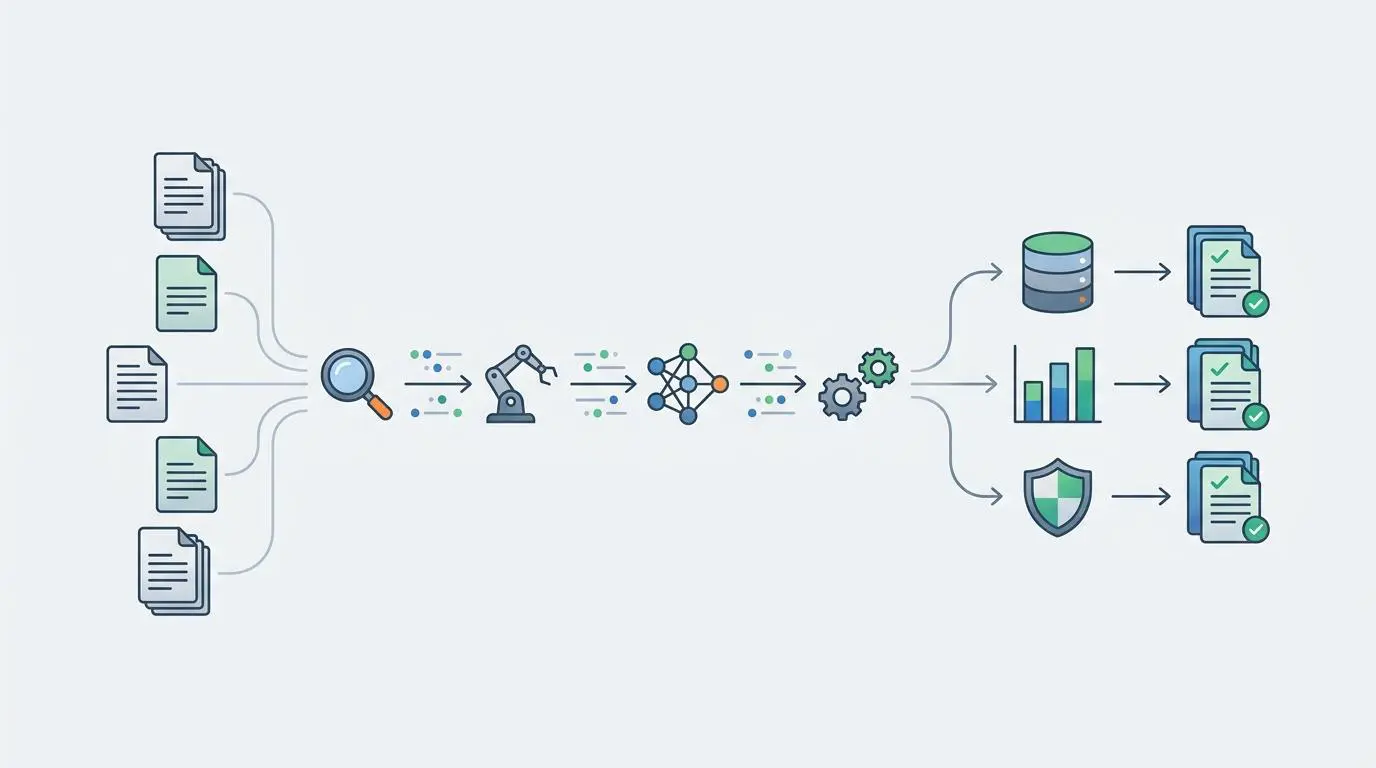
The evolution of financial automation is rapidly moving away from rigid, instruction-based prompts. Modern systems now rely on intent-based AI agents orchestrated through frameworks like LangChain.
These agents do not just answer isolated questions; they actively interpret the overarching goal of a loan review. They can autonomously navigate thousands of documents simultaneously to extract complex covenants.
This shift fundamentally solves the limitations of traditional OCR and early-generation LLMs. Older technologies frequently failed when asked to handle multi-document context or perform bulk cross-referencing.
By leveraging advanced models like Gemini 1.5 Pro, institutions can deploy agents that understand the intricate relationships between different credit agreements. The result is a highly dynamic extraction process that adapts to varying document structures without requiring constant human intervention.
Eradicating the Grid and MAC Clause Bottlenecks

On any given day, lenders and administrative agents waste up to six hours per document hunting for specific clauses. Identifying the pricing tiers within a grid and locating Material Adverse Change stipulations are notoriously tedious tasks.
This manual search process is not only slow but highly susceptible to human fatigue.
Agentic LLM pipelines target this exact daily friction by autonomously scanning unstructured PDF notice files. They extract the necessary pricing and covenant data with high fidelity, formatting it for immediate downstream use.
This eliminates the dangerously high error rate associated with manual data entry into core banking systems, ensuring that margin adjustments are calculated using flawless foundational data.
Defending Margins Through Radical Time Savings

The financial impact of deploying Agentic RAG systems is staggering when viewed through the lens of operational costs. Standardized benchmarks reveal that firms adopting these architectures reduce their cost per loan decision by over 70 percent.
This massive reduction is achieved while simultaneously processing significantly higher document volumes.
Importantly, this allows banks to maintain static headcounts even as their lending portfolios expand. It directly counteracts the rising costs associated with hiring paralegals and junior analysts for rote document review.
By automating the heavy lifting, financial institutions can comfortably maintain aggressive T+3 settlement targets without sacrificing their profit margins.
Securing PII with Perimeter-Bound Cloud Models
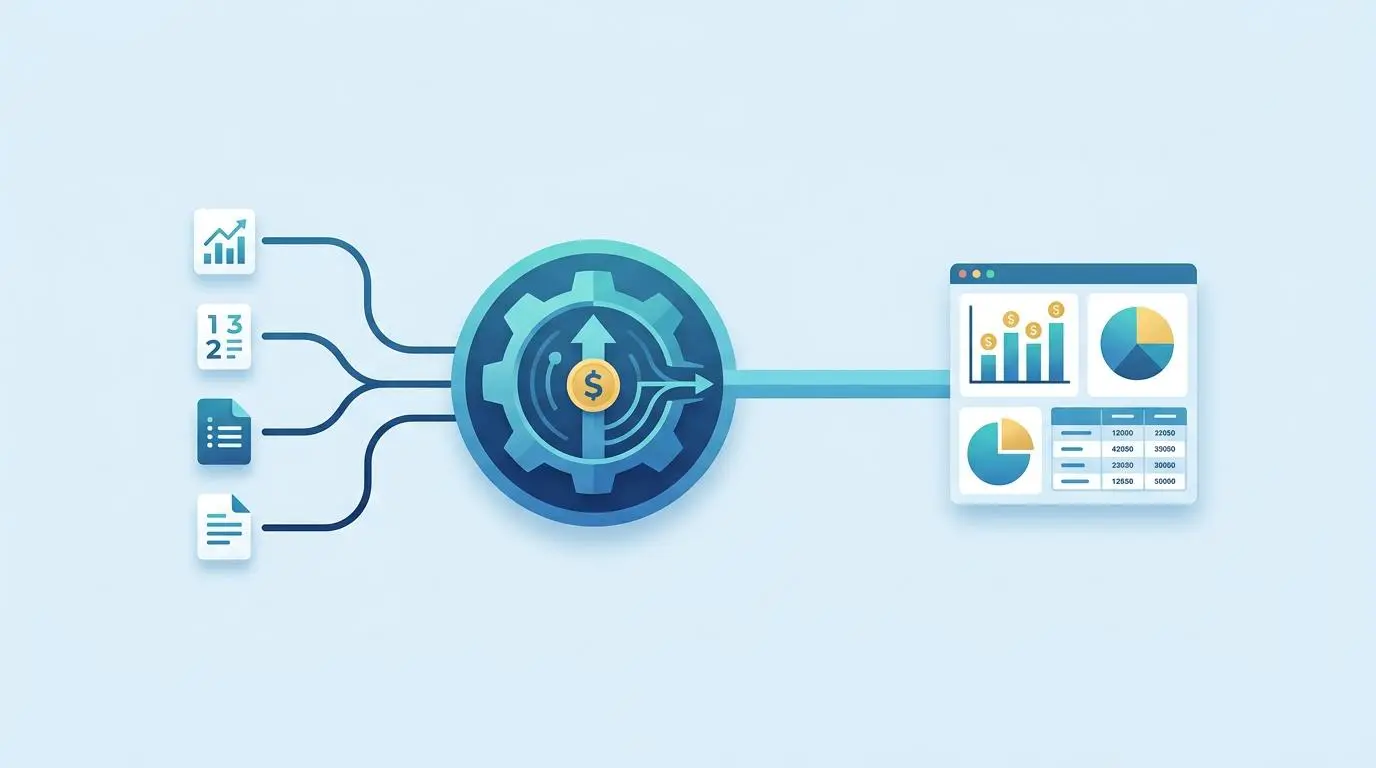
Handling sensitive loan terms and personally identifiable information requires an uncompromising approach to data security. Modern financial workflows now utilize VPC-hosted LLMs through environments like Azure AI Studio or AWS Bedrock.
This architecture ensures that all proprietary credit data remains strictly within the bank’s established security perimeter.
By keeping the data localized within virtual private clouds, institutions easily meet stringent Basel III risk data aggregation requirements. This localized approach directly addresses the hallucination and data leak anxieties that previously hindered cloud AI adoption.
Top-tier investment banks can now leverage cutting-edge extraction models without compromising their regulatory standing.
Bridging the Last Mile to Core Ledger Systems
Extracting data is only half the battle; the true value is realized when that data flows seamlessly into operational systems. Integration platforms like n8n are now used to build customized ETL pipelines for financial workflows.
These pipelines connect the output of LLM extractions directly to core ledger systems like FIS or Finastra.
The data is transmitted via strictly validated JSON payloads, ensuring perfect compatibility with legacy banking software. This automated synchronization bridges the critical last-mile gap between AI analysis and actual treasury execution.
It guarantees that money movement and settlement processes are triggered by accurate, real-time data rather than delayed manual inputs.
High-Speed Verification and Citation Traceability
Despite the power of autonomous agents, senior credit officers still require absolute confidence in the data before authorizing massive capital movements. Modern extraction pipelines incorporate sophisticated citation traceability systems to build this trust.
These interfaces allow human reviewers to click any extracted data point and instantly view the highlighted source paragraph.
This high-speed verification process ensures complete auditability across the entire credit agreement. It overcomes the traditional trust barrier associated with AI black boxes by keeping a human firmly in the loop.
Officers can sign off on AI-generated data rapidly, knowing they can trace every metric back to its original legal context.
The Dawn of Autonomous Margin Monitoring
The trajectory of financial automation points toward a future where passive data extraction evolves into proactive intelligence. By late 2026, the industry will fully transition to autonomous monitoring agents that continuously scan the macro-financial environment.
These systems will automatically trigger margin calls or covenant violation alerts based on the real-time interpretation of complex credit documents.
This shift from instruction-based computing to intent-based computing means AI will not just answer questions, but autonomously direct research to formulate approval recommendations. Embracing this evolution is no longer optional for firms looking to dominate the syndicated loan market.
It is the definitive blueprint for building a resilient, high-velocity financial architecture.
Navigating the intersection of technology, workflows, and operational efficiency requires a sharp strategy. To future-proof your business architecture and scale with precision, connect with Andres at Andres SEO Expert.
Frequently Asked Questions
What is the manual reading tax in syndicated loan processing?
The manual reading tax refers to the significant loss of productivity and capital caused by analysts manually parsing lengthy credit agreements. This bottleneck often results in T+20 settlement times and increases operational risk due to delayed margin adjustments and data silos.
How do Agentic LLM pipelines improve credit decision speed?
Agentic LLM pipelines use intent-driven workflows to reduce time-to-decision for complex credit facilities by up to 85%. By leveraging models like Gemini 1.5 Pro, institutions can achieve 92% extraction precision, drastically accelerating liquidity and capital flow.
What are intent-based autonomous agents in financial automation?
Unlike traditional instruction-based bots, intent-based agents interpret the overarching goal of a financial task. They can autonomously navigate thousands of documents simultaneously, performing bulk cross-referencing and covenant extraction without constant human intervention.
Can AI automate the extraction of complex pricing grids and MAC clauses?
Yes, Agentic LLM pipelines are specifically designed to scan unstructured PDF notice files to extract pricing tiers and Material Adverse Change (MAC) stipulations. This eliminates the manual search process that typically wastes up to six hours per document.
How is data security managed for sensitive loan agreements in the cloud?
To protect PII and sensitive terms, firms utilize VPC-hosted LLMs within environments like Azure AI Studio or AWS Bedrock. This ensures all proprietary data remains within the bank’s security perimeter, fulfilling Basel III risk data aggregation requirements.
How does AI-extracted data integrate with core banking systems like FIS or Finastra?
Extracted data is synchronized using ETL platforms like n8n, which bridge the gap between AI analysis and treasury execution. Data is transmitted via validated JSON payloads, ensuring compatibility with legacy ledger systems and automating money movement processes.