Key Points
- Replacing manual quarterly business reviews with real-time ROI dashboards instantly neutralizes blind customer churn.
- Agentic AI and Reverse ETL pipelines autonomously translate raw product usage into executive-level financial summaries.
- Automating client reporting reclaims thousands of lost productivity hours and paves the way for outcome-based pricing models.
Table of Contents
The Silent Revenue Killer
The invisible cost of manual reporting is quietly draining your most talented customer success managers. Every quarter, highly skilled professionals transform into copy-paste administrators, frantically pulling usage logs to justify their platform’s existence before a renewal call. This administrative bottleneck creates a massive value gap where clients simply cannot see the financial impact of your tool in real-time.
When customers only receive performance metrics every ninety days, you are practically inviting blind churn. A client might be utilizing your software perfectly, but without immediate, tangible proof of return on investment, they will view your invoice as an expendable cost. The disconnect between high platform utility and perceived value is the leading cause of enterprise contract cancellations.
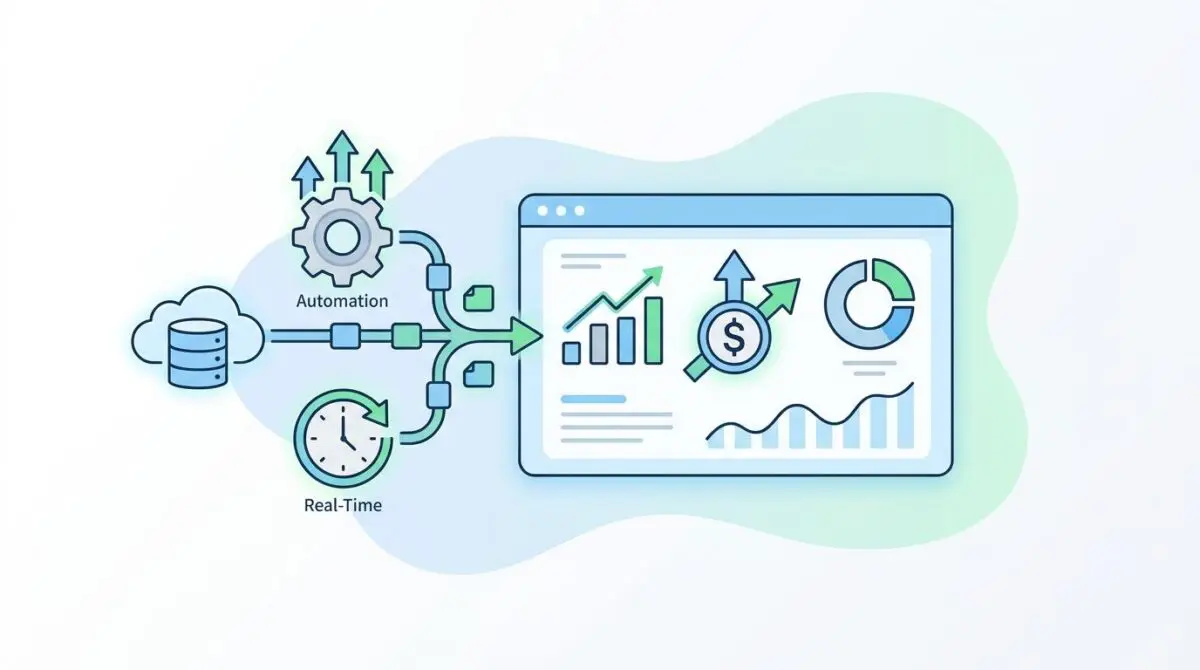
Real-time SaaS ROI Reporting Automation is the definitive solution to this operational disconnect. By connecting live product usage data directly into client-facing portals, you eliminate the latency of human analysis. This shift transforms account management from a reactive defense into a proactive, undeniable showcase of continuous value.
The Data Behind the Dashboard
Market Intelligence & Data
Reporting Labor Drain
According to a 2026 report by Automation Superstars, SaaS employees spend an average of 15 hours per week on manual data entry and report generation tasks that could be fully automated.
Automated Retention Lift
Research from Coworker AI in 2026 found that companies centralizing usage signals into automated ROI playbooks see a 30% average reduction in customer churn.
Agentic AI Multiplier
The 2026 CIO AI Adoption Report states that early adopters of agentic AI workflows for data interpretation see a median 171% return on their automation investment.
Manual Data Inaccuracy
A 2026 Gartner Data Quality Index reveals that error rates for manual data handling in reporting are 67% higher than their automated counterparts, leading to significant downstream financial forecasting errors.
The staggering loss of fifteen hours per week to manual reporting represents a critical operational failure for modern software companies. Instead of building strategic relationships or upselling new features, customer success teams are buried under mountains of raw CSV files. This labor drain forces organizations to over-hire just to maintain basic communication cadences with their user base.
Centralizing usage signals into automated playbooks directly combats this inefficiency and yields a massive thirty percent reduction in customer churn. When clients receive instant, personalized dashboards highlighting their exact wins, they no longer question the platform’s utility. This proactive transparency builds deep trust and essentially sells the renewal long before the contract end date.
The financial impact of this transparency is drastically amplified when companies integrate Agentic AI platforms like Salesforce Agentforce into their workflows. These intelligent systems do not just move numbers around; they actively interpret complex usage logs and generate plain-language executive summaries. Early adopters are seeing a median return of 171 percent because these agents completely remove the human bottleneck from data translation.
Finally, relying on humans to compile these reports introduces a severe risk of data inaccuracy, which currently sits sixty-seven percent higher than automated pipelines. A single copy-paste error in a quarterly business review can destroy a client’s confidence and derail an entire financial forecast. To prevent these catastrophic mistakes, modern engineering teams utilize Reverse ETL to sync data from central warehouses directly into secure, live-updating client portals.
Escaping Spreadsheet Purgatory
Customer success managers currently lose up to sixteen hours a week trapped in what can only be described as spreadsheet hell. They manually extract raw event logs from platforms like Segment or Mixpanel, clean the data, and build static slide decks for quarterly business reviews. This tedious extraction process is highly prone to formatting errors and version control nightmares.
This high-latency workflow means customers only see their return on investment every ninety days. Ninety days is an eternity in the software world, and it is far too slow to intercept mid-quarter churn signals. By the time a customer success manager identifies a drop in usage, the client has already started looking at competitor software.
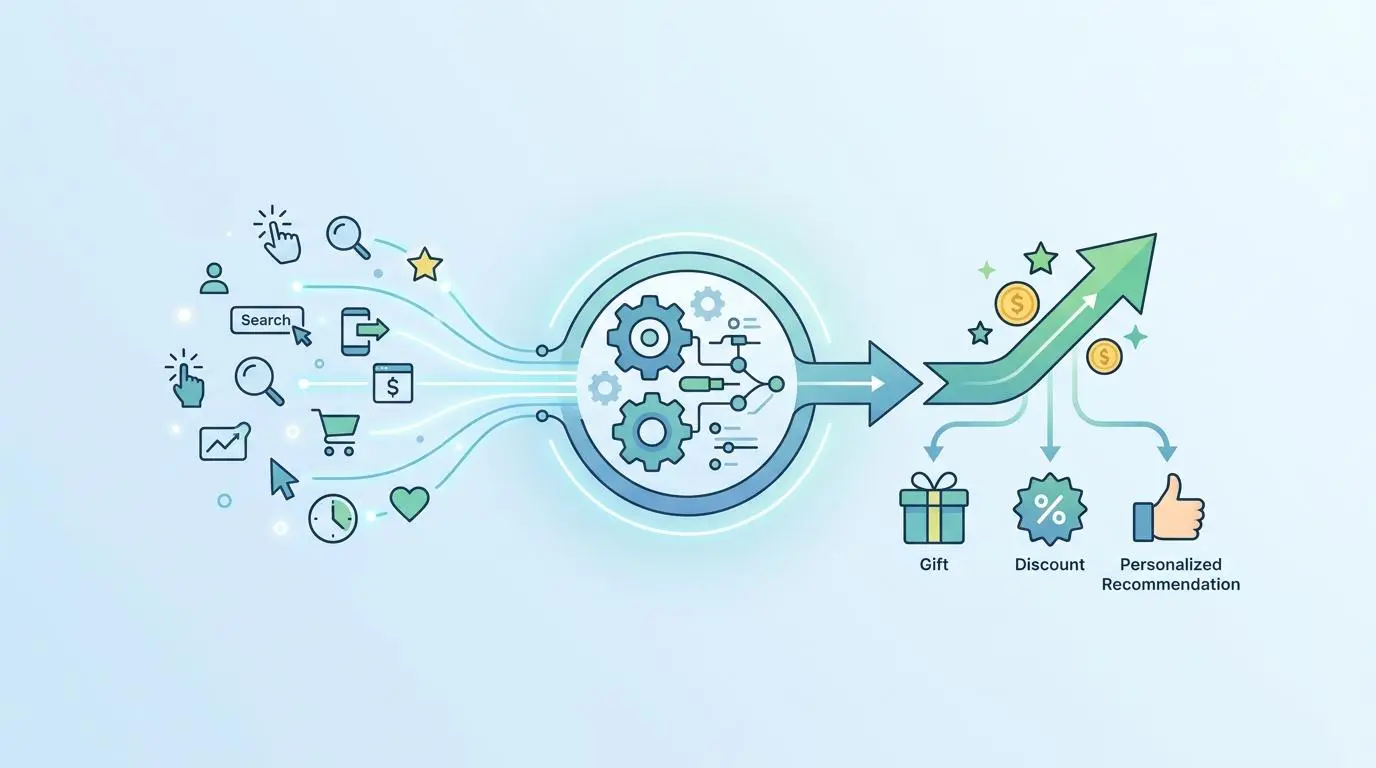
Automation platforms like ChurnZero and Vitally are actively replacing these archaic workflows with real-time health scores and automated SuccessBLOCs. These tools instantly map raw product usage to specific business outcomes without requiring a single human keystroke. The platform automatically generates a personalized dashboard showing exactly what the client is missing, turning a potential cancellation into a strategic intervention.
Proactive Value Triggers

The traditional model of passive account management relies heavily on reactive ticketing and scheduled renewal calls. Teams wait for a customer to open a support ticket or complain before they actively engage with the account’s health. This outdated approach leaves revenue retention entirely up to chance.
Modern platforms like Gainsight and Planhat are shifting the paradigm toward proactive value triggers based on live behavioral data. For example, if a client’s usage of a premium feature drops by twenty percent over a week, the system immediately notices the anomaly. It does not wait for a human to run a report or flag the account.
Instead, an automated ROI dashboard is instantly generated and emailed directly to the client stakeholder. This dashboard highlights the specific financial value they are leaving on the table by underutilizing the feature. It is a highly targeted, automated nudge that re-engages the client before they ever consider churning.
The Autonomous Translation Layer
Raw usage data is incredibly complex and often looks like an unintelligible wall of code to a non-technical executive. Client stakeholders do not want to see API call volumes or session durations; they want to see dollars saved and hours reclaimed. Historically, translating this raw data into a compelling business narrative required a skilled human analyst.
The rise of agentic artificial intelligence is completely eliminating this translation bottleneck. Autonomous agents can now read raw product logs, understand the context of the user’s contract, and interpret the data into plain-language executive summaries. These AI-generated insights are injected directly into the client’s live dashboard.
This means the C-suite gets a perfectly formatted, easily digestible narrative of their success without a human ever touching a keyboard. The AI bridges the gap between technical product metrics and high-level financial outcomes, making the platform’s value instantly obvious to the people signing the checks.
Fluid Data Pipelines

A dashboard is only as valuable as the accuracy and freshness of the data it displays. Historically, client-facing reports suffered from stale data caused by batch-processing limitations and siloed product databases. When a client logs in to check their metrics, seeing week-old data instantly erodes their trust in the system.
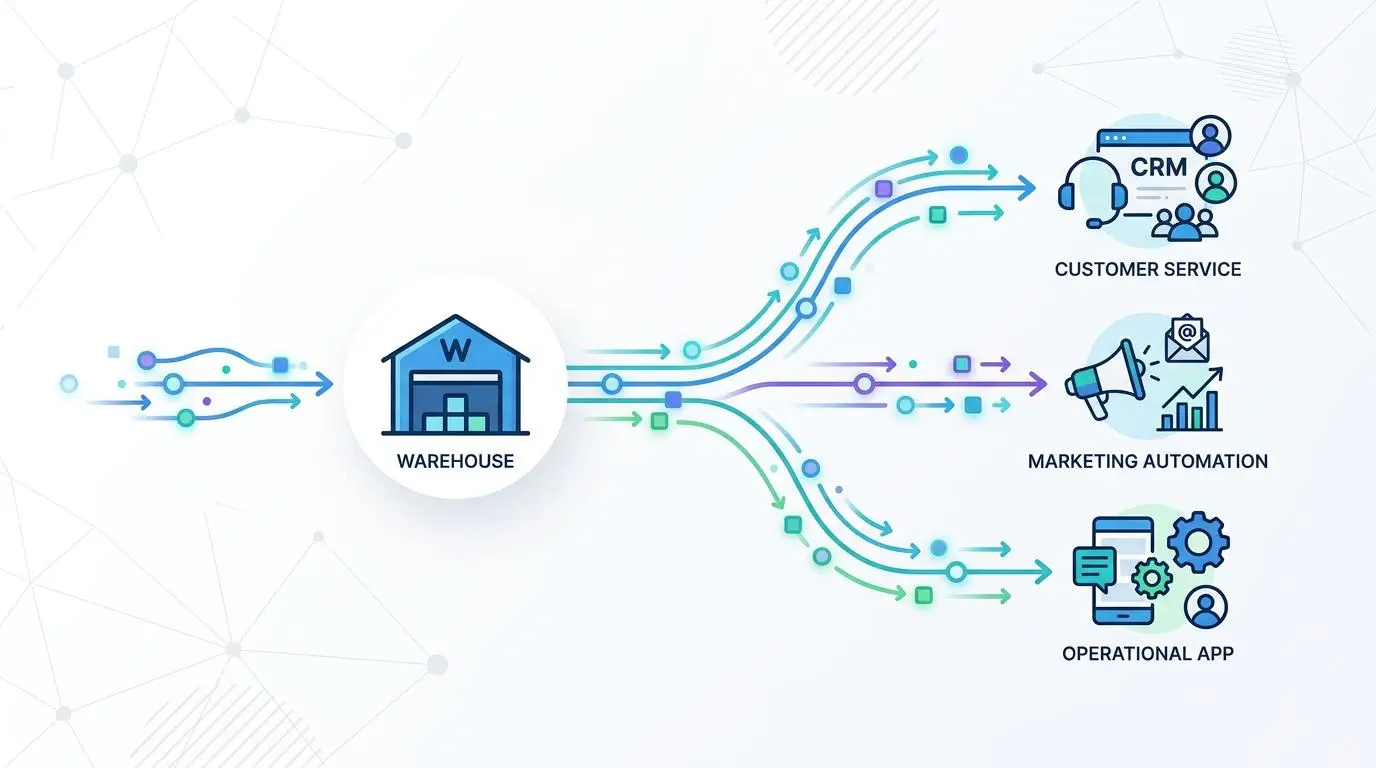
Modern data stacks solve this latency issue through Reverse ETL pipelines using automated synchronization. This architecture relies on a few critical components:
- Central Data Warehouses: Repositories like Snowflake or BigQuery that store enriched, verified product logs.
- Reverse ETL Connectors: Tools like Census or Hightouch that extract the data and push it outward.
- Client-Facing Portals: Dashboards like Domo or Databox that display the live metrics to the end user.
This ensures that the personalized ROI dashboard is never more than fifteen minutes behind actual user activity. When a client executes a high-value action in your software, they can refresh their dashboard and immediately see the financial impact of that action reflected in their metrics.
The Invisible Productivity Tax
The financial burden of manual reporting extends far beyond just annoyed employees. A 2026 IDC study revealed that forty percent of a knowledge worker’s week is consumed by mechanical tasks like data formatting and cross-referencing spreadsheets. This is an invisible tax on your company’s operational budget.
In a standard fifty-person software company, this repetitive administrative labor costs approximately $756,000 annually in lost productivity. You are essentially paying premium salaries for highly educated professionals to act as human data routers. Furthermore, this mundane work is a primary driver of employee burnout and high turnover in customer success roles.
By automating the generation of ROI dashboards, you instantly reclaim hundreds of thousands of dollars in wasted payroll. Your team is freed from the burden of data entry, allowing them to focus entirely on high-leverage relationship building and strategic account expansion. In fact, seventy-eight percent of SMBs that deploy real-time dashboards report significantly higher long-term satisfaction and achieve a median twenty-three-minute response time to KPI anomalies within their first thirty days.
Outcome-Based Horizons
The future of software billing is rapidly shifting away from arbitrary per-seat licensing models. Charging a flat fee for access often creates a massive disconnect between the price a customer pays and the actual financial value they receive. By late 2026, the industry is moving aggressively toward Outcome Engineering.
In this new paradigm, pricing is tied directly to the return on investment metrics displayed on these automated dashboards. If your software saves a client ten thousand dollars in a month, your billing system automatically calculates your fee based on a percentage of that verified success. The product’s performance and its billing mechanism become entirely unified.
This total convergence means customers only pay for the verified business impact autonomously tracked and reported by AI agents. It completely eliminates billing friction and aligns your company’s revenue directly with your client’s success.
The Autonomous Future of SaaS Value
The era of manual quarterly business reviews and static spreadsheet reporting is officially over. Real-time SaaS ROI Reporting Automation is no longer a luxury; it is the baseline requirement for retaining modern enterprise clients. By transforming raw usage data into instant, undeniable proof of value, you eliminate blind churn and build unbreakable trust with your user base.
As artificial intelligence and automated data pipelines continue to converge, the ability to proactively prove your worth will dictate your market dominance. Companies that embrace this autonomous transparency will scale effortlessly, while those clinging to manual reporting will drown in administrative overhead.
Navigating the intersection of technology, workflows, and operational efficiency requires a sharp strategy. To future-proof your business architecture and scale with precision, connect with Andres at Andres SEO Expert.
Frequently Asked Questions
What is real-time SaaS ROI reporting automation?
Real-time SaaS ROI reporting automation is the process of connecting live product usage data directly to client-facing portals. This eliminates the latency of manual human analysis and provides customers with an immediate, undeniable showcase of continuous platform value.
How much time do CSMs typically waste on manual reporting?
According to industry reports, SaaS employees spend an average of 15 to 16 hours per week on manual data entry and report generation tasks. This administrative bottleneck prevents customer success managers from focusing on strategic relationship building and account expansion.
Can automated ROI playbooks reduce customer churn?
Yes, research indicates that companies centralizing usage signals into automated ROI playbooks see a 30% average reduction in customer churn. Real-time dashboards provide proactive transparency, building trust and proving utility long before the contract renewal date.
What is the benefit of using Agentic AI for reporting automation?
Agentic AI platforms like Salesforce Agentforce act as an autonomous translation layer, interpreting complex product logs into plain-language executive summaries. Early adopters of agentic workflows for data interpretation see a median 171% return on their automation investment.
How do Reverse ETL pipelines ensure reporting accuracy?
Reverse ETL pipelines utilize tools like Hightouch or Census to sync data from central warehouses (Snowflake or BigQuery) directly into client portals. This automation reduces error rates, which are 67% higher in manual data handling, and ensures metrics are updated within minutes.
What is Outcome Engineering in SaaS billing?
Outcome Engineering is a future-facing pricing model where billing is tied directly to the return on investment metrics displayed on automated dashboards. Instead of flat seat-based fees, customers only pay based on the verified business impact autonomously tracked by AI agents.