Key Points
- Agentic Workflows: AI-driven platforms now autonomously analyze transcripts, select high-retention hooks, and execute zero-click publishing across all major social networks.
- Brand Safety & Quality Gates: Implementing automated Slack checkpoints and predictive virality scoring ensures high-volume syndication without risking AI hallucinations.
- Hyper-Localized Scaling: Modern repurposing stacks drastically reduce production costs while enabling multi-language, culturally adapted distribution from a single YouTube upload.
Table of Contents
The Repurposing Tax Eating Your Creative Bandwidth
The hidden tax of modern content creation isn’t the expensive camera gear or the premium studio space. It is the grueling, invisible hours lost to manual resizing, captioning, and platform-specific formatting.
Every time you finish a brilliant long-form video, your creative team is immediately punished with the tedious reality of slicing it into dozens of vertical formats. Instead of crafting original stories, talented creators are trapped functioning as human middleware.
Multi-Channel Video Syndication & AI-Driven Repurposing Workflows offer the ultimate escape hatch from this endless cycle of operational drag. By automating cross-platform publishing triggered by a single YouTube upload, you can reclaim your time and scale your digital footprint effortlessly. This is not just about doing things faster; it is about fundamentally restructuring how your media is distributed across the internet.
The Data Behind The Content Volume Explosion
Market Intelligence & Data
Enterprise Video Adoption
According to the 2026 Wyzowl State of Video Marketing report, video is now considered table stakes for 91% of businesses, reaching an all-time high as AI lowers the barrier to entry.
Production Cost Compression
A 2026 report by Digital Applied states that AI-powered editing and repurposing tools have reduced median video production costs by 40% compared to 2024 levels.
Reach Multiplication
Data from VFX AI in 2026 indicates that businesses doubling their content volume through automated repurposing see an average reach increase of up to 240% across social platforms.
AI Video Market Scale
The global AI video generator market is projected to hit $2.56 billion by late 2026, driven by the massive shift toward automated social media content (Source: Quantumrun 2026 Market Analysis).
The corporate landscape has shifted dramatically, making visual storytelling a non-negotiable asset for survival and audience retention. It is no surprise that 91% of businesses now consider video marketing a standard practice, as AI lowers the barrier to entry.
This massive adoption rate means that simply producing a video is no longer a competitive advantage; the true differentiator is how efficiently you can distribute that asset. Teams that still rely on manual uploads are actively losing market share to competitors who automate their syndication.
Trimming the fat from creative budgets has historically meant sacrificing quality, but modern automation flips this paradigm entirely. AI-powered editing suites have successfully compressed median production costs by 40%, freeing up capital that was previously trapped in tedious post-production tasks.
This financial liberation allows brands to reinvest in high-tier creative talent and strategy rather than paying hourly rates for someone to manually adjust aspect ratios. You can now programmatically automate complex video editing tasks using creative APIs to stretch your budget further than ever before.
The algorithm consistently rewards volume, and the underlying data validates the sheer power of digital omnipresence. Businesses that leverage automation to double their content output are experiencing a staggering 240% increase in reach across social platforms.
This multiplication effect happens because a single core message is being algorithmically tested across TikTok, Shorts, and Reels simultaneously without extra effort. It proves that aggressive content volume, when executed through smart repurposing workflows, directly correlates with exponential audience growth.
The sheer velocity of capital flowing into the AI video sector highlights a permanent shift in how modern media is manufactured. With the market projected to hit $2.56 billion by late 2026, the infrastructure supporting automated social media content is becoming incredibly robust.
This financial backing ensures that tools will only get faster, smarter, and more integrated, leaving manual editors further behind in the dust. Adopting these workflows now is not just a tactical upgrade; it is a strategic necessity to stay relevant in a billion-dollar ecosystem.
Engineering The Automated Content Pipeline
The Rise Of Agentic Platforms And Zero-Click Publishing

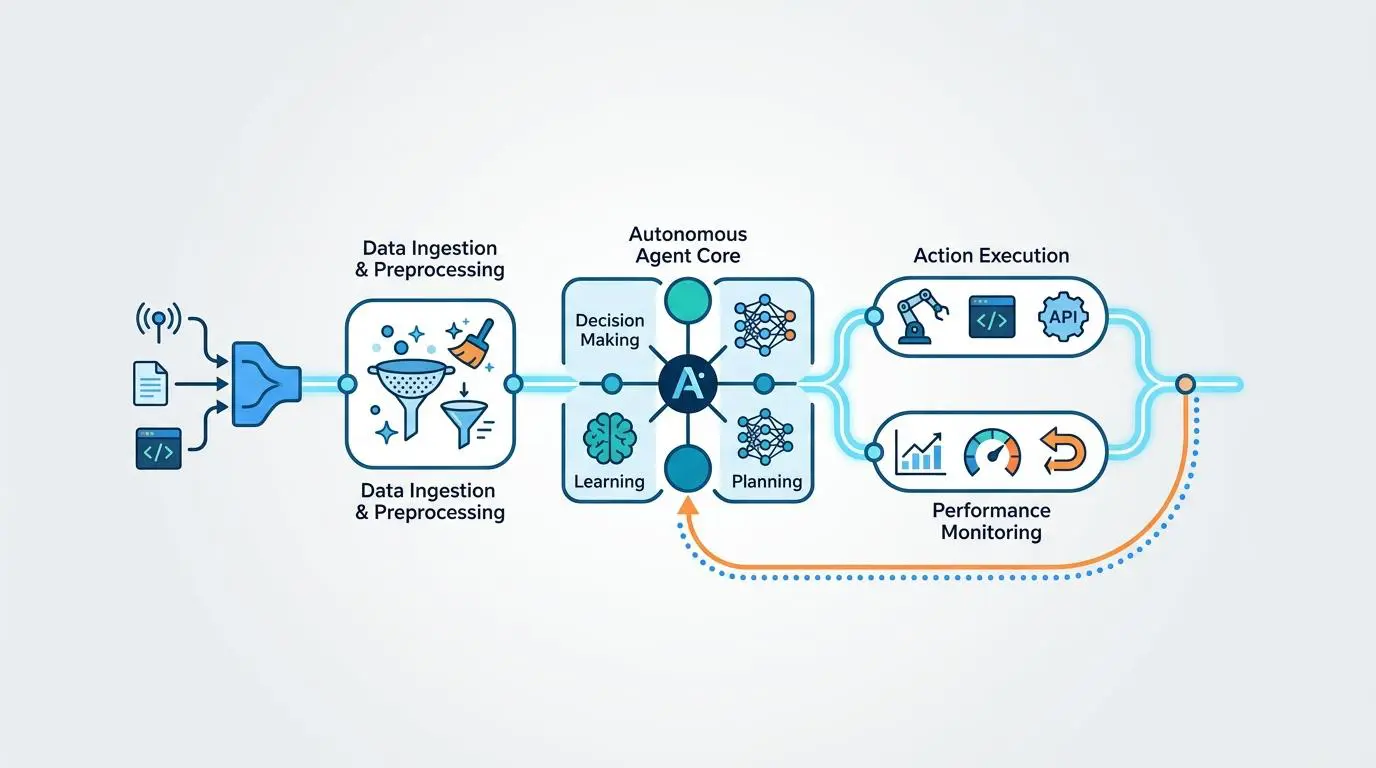
The era of simple trigger-and-action logic is officially behind us. In 2026, low-code platforms like Zapier and Make have evolved into fully Agentic ecosystems that think and act on your behalf. Workflows now utilize AI to perform sentiment analysis on your video transcripts, instantly identifying the most emotionally resonant moments.
These autonomous agents browse your long-form content and independently select the top three high-impact hooks without requiring any human intervention. From there, tools like Repurpose.io leverage advanced 2026 API integrations to push these clips directly to TikTok and Instagram via zero-click publishing.
This completely eliminates the painful middleware gap where human editors previously had to verify safe zones and caption formatting. Your videos are perfectly optimized for each platform’s unique UI the second they leave your automated pipeline, allowing your team to focus purely on the next big idea.
Predictive Virality In Modern Content Pipelines

Guessing what the algorithm wants is a fool’s errand in today’s hyper-competitive social feed. Platforms like OpusClip and Munch have introduced Virality Scoring 2.0, which uses real-time social signal data to predict a clip’s performance before it ever goes live.
These sophisticated pipelines connect a single YouTube URL to an automated stack that effortlessly generates ten or more vertical clips in minutes. Each clip is paired with SEO-optimized descriptions and platform-native tags generated by tools like Blotato, ensuring maximum discoverability across all search engines.
This intelligent routing solves the age-old volume versus quality trade-off that plagues modern marketing departments. Brands can now maintain a relentless publishing frequency without ever needing to increase their internal headcount or sacrifice their creative standards.
Curing The Boring Talking Head With Autonomous AI Agents
One of the biggest criticisms of automated clipping has always been the endless sea of visually stagnant talking heads. The rise of Agentic Video Workflows via tools like Agent Opus and Gumloop has completely eradicated this glaring issue.
These agents no longer follow a rigid, linear path; they use advanced LLMs to evaluate the visual aesthetic consistency of every single frame. If a scene feels too static or lacks visual pacing, the system automatically intervenes to keep the viewer engaged.
By tapping into Gen-3 Alpha models, the workflow autonomously layers context-aware B-roll and dynamic visual overlays to maintain high retention rates. This intelligent intervention breathes life into dry corporate content, turning a standard monologue into a highly engaging visual experience.
Building Quality Gates To Prevent AI Hallucinations

No automation system is entirely flawless, and scaling too fast without safeguards can expose critical operational bottlenecks. A major hurdle in 2026 is API Rate Limiting for high-volume accounts, which can abruptly halt a massive syndication campaign mid-launch.
Equally dangerous is the phenomenon of Caption Hallucination, where AI generates wildly incorrect subtitles when processing complex industry-specific jargon. To combat this, successful flows now implement mandatory Quality Gates into their architecture to ensure brand safety.
These gates act as automated pauses, pinging a dedicated Slack channel for a quick human-in-the-loop approval before the final video is pushed live. This simple checkpoint prevents severe brand reputation damage caused by unsupervised AI-generated errors or offensive clip selections.
Reclaiming Budgets And Slashing Production Cycles
The financial impact of transitioning from manual editing to an AI-repurposing stack is nothing short of transformative for scaling businesses. By late 2026, organizations have successfully reduced the cost per finished video minute from $4,200 down to a highly efficient $2,500.
Automation is no longer just a tool for speed; it is the ultimate lever for financial and creative liberation in modern media production.
Agencies leveraging these automated stacks report an astonishing average 18-hour reduction in their weekly production cycles for omni-channel campaigns. This newfound efficiency perfectly solves the stagnant creative budget crisis, where teams are routinely expected to produce five times more content with zero budget increases.
Furthermore, Adobe’s 2026 Dynamic Graphics Render API allows Firefly Services to programmatically ingest a YouTube transcript and adjust After Effects motion graphics to fit aspect ratios. This ensures that text stays within platform-specific safe zones autonomously, further driving down the cost of premium post-production.
The Hyper-Localized Future Of Automated Media
As we look toward the horizon, the concept of a single, monolithic global video is rapidly becoming obsolete. By late 2026, automation is shifting toward hyper-localized repurposing, where a single YouTube upload undergoes a massive cultural transformation.
Using APIs from platforms like Synthesia and HeyGen, videos are not just clipped—they are seamlessly AI-dubbed and visually localized into over 15 different languages. The system even swaps out background music to match culture-specific preferences, all triggered by the exact same initial webhook.
This level of personalized syndication ensures that your core message resonates deeply with diverse global audiences without requiring expensive localized production teams. The future belongs to those who can distribute their ideas everywhere, instantly, and in the native tongue of the viewer.
Navigating the intersection of technology, workflows, and operational efficiency requires a sharp strategy. To future-proof your business architecture and scale with precision, connect with Andres at Andres SEO Expert.
Frequently Asked Questions
What is the repurposing tax in digital content creation?
The repurposing tax refers to the significant creative bandwidth and hours lost to manual tasks like resizing, captioning, and platform-specific formatting. By adopting AI-driven workflows, creators can eliminate this operational drag and focus on original storytelling rather than functioning as human middleware.
How much can AI automation reduce video production costs?
AI-powered editing and repurposing tools have successfully reduced median video production costs by 40% compared to previous levels. This financial efficiency allows organizations to scale content output while reinvesting savings into high-tier strategy and creative talent.
What are agentic platforms in video syndication?
Agentic platforms are advanced automation ecosystems that use AI to identify emotionally resonant moments in long-form video. These autonomous agents handle everything from hook selection to zero-click publishing, ensuring content is perfectly optimized for each social platform’s unique interface.
Can automated video repurposing significantly increase reach?
Yes, businesses that use automation to double their content volume see an average reach increase of up to 240% across social platforms. This occurs because automated pipelines allow a single core message to be algorithmically tested across multiple channels like TikTok, Reels, and Shorts simultaneously.
What are quality gates in automated content pipelines?
Quality gates are mandatory human-in-the-loop approval steps integrated into automated workflows. They serve to prevent brand safety issues, such as AI caption hallucinations or incorrect clip selection, by requiring a final verification before the video is pushed to live social feeds.
How does AI facilitate hyper-localized video distribution?
AI-driven syndication allows a single video upload to be autonomously dubbed, localized into over 15 languages, and culturally adapted with specific background music. This ensures global relevance without the high costs associated with traditional localized production teams.