




Key Points
- Contextual Disambiguation: Utilizing JSON-LD ‘IsPartOf’ attributes prevents LLMs from conflating AI and ML as parallel entities.
- Semantic Chunking: Structuring content into 134-167 word passage chunks aligns with Google’s ‘folsrch’ endpoint retrieval metrics.
- Query Fan-Out: Content must satisfy 5-7 automated sub-queries generated by LLM reasoning chains to maintain multi-surface visibility.
Table of Contents
The Invisible Tax of Contextual Collapse
The hidden tax of unstructured AI comparisons currently costs enterprise publishers a staggering 61% drop in organic click-through rates. When users prompt LLMs to compare Artificial Intelligence and Machine Learning, legacy search architecture fails completely.
Search engines experience Cross-Surface Contextual Collapse during these specific retrieval tasks. They treat these distinct technical fields as synonymous parallel entities rather than recognizing the required nested taxonomy.
The ultimate architectural solution to this disambiguation crisis is Hierarchical Semantic Entity Resolution. By explicitly defining parent-child relationships at the code level, search architects can force LLMs to understand ML as a strict subset of AI.
This structural clarity restores multi-surface visibility across generative engines. It transforms ambiguous text blobs into highly structured, machine-readable knowledge nodes.
Decoding Citation Triggers and Search Sensitivity

Understanding how modern language models retrieve and cite technical data requires a deep dive into recent generative metrics. According to the 2026 Passionfruit SEO Data Report, technical comparison prompts trigger a live web search 100% of the time on current GPT-5.4 and Claude 3.7 models.
This absolute retrieval sensitivity means that queries comparing AI and ML bypass static training weights entirely. Instead, the LLM actively hunts for real-time hierarchical definitions across the web to synthesize an accurate response.
If your content lacks semantic structure, it is immediately discarded during this live retrieval phase. Conversely, the reward for proper architectural structuring is massive for enterprise visibility.
Analysis from Mike Khorev in 2026 confirms that pages successfully cited within Google’s AI Overviews receive 35% more organic traffic than traditional top-10 results lacking a citation.
This AI Citation ROI proves that Generative Engine Optimization is no longer optional. It is the primary driver of top-of-funnel technical traffic in the modern search ecosystem.
Engineering Knowledge Graph Automation
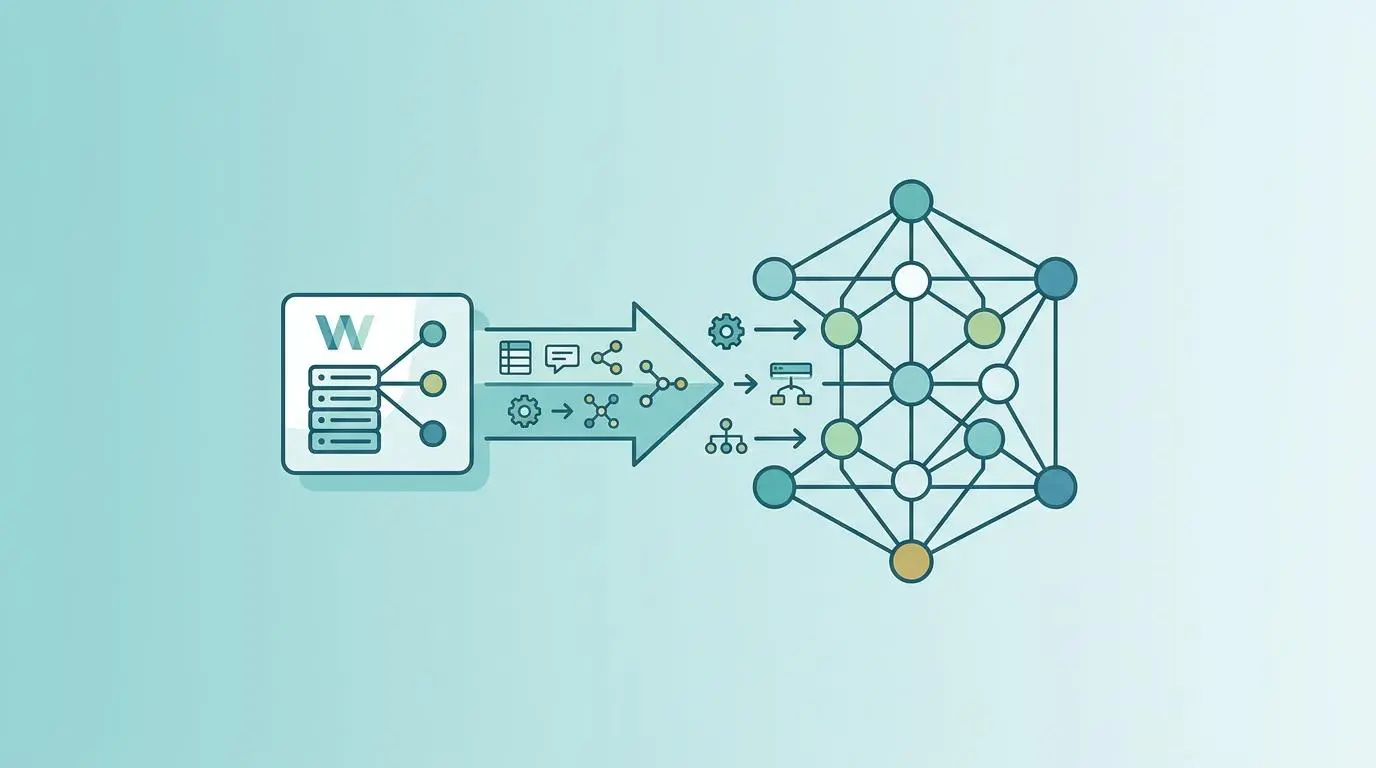
As of mid-2026, Google’s AI Mode and Perplexity Pro rely heavily on structured linked data to understand complex relationships. They specifically look for JSON-LD attributes to map the taxonomic relationship between AI and ML.
Automating these injections via Wikidata URIs ensures LLMs do not conflate parent-child entity relationships. By utilizing precise schema markup, search architects provide a definitive source of truth for vector databases.
Without explicit entity linking, RAG systems frequently hallucinate Machine Learning as a parallel field to Artificial Intelligence rather than a subset. This fundamental misunderstanding leads to low-authority scores in generative summaries.
To solve this real-world friction, engineering teams must deploy automated knowledge graph pipelines. These pipelines dynamically inject relational schema into every technical comparison page published.
Architecting for RAG and Semantic Chunking
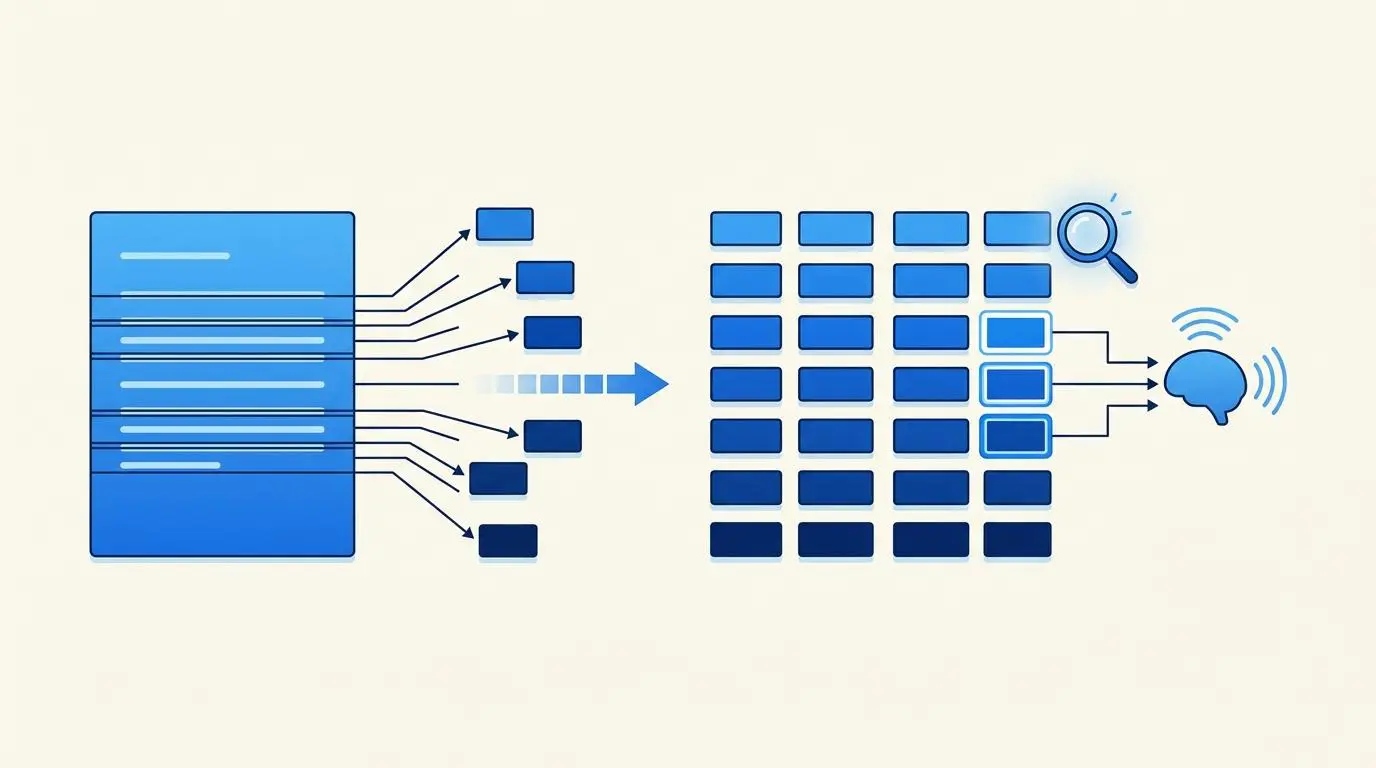
Retrieval-Augmented Generation benchmarks in 2026 show that the specific endpoints governing Google AI Overviews have strict length preferences. The ‘folsrch’ endpoint actively prioritizes passage chunks between 134 and 167 words for technical comparison queries.
Long-form comparisons that lack clear, atomic chunks are often skipped entirely during the asynchronous retrieval phase. LLMs simply struggle to extract discrete definitions from undifferentiated, massive text blocks.
OpenAI’s GPT-5.4 ‘Thinking’ models have introduced an even more specific constraint for technical visibility. These models now prioritize atomic answers of 40 to 60 words placed directly under H2 headers for comparison queries.
This specific formatting increases the likelihood of a brand being the primary citation by 2.4x, according to the Writesonic 2026 AI Search Performance Audit. Structuring your content to meet these precise semantic chunking requirements is critical for RAG ingestion.
Mapping Conversational Query Fan-Outs
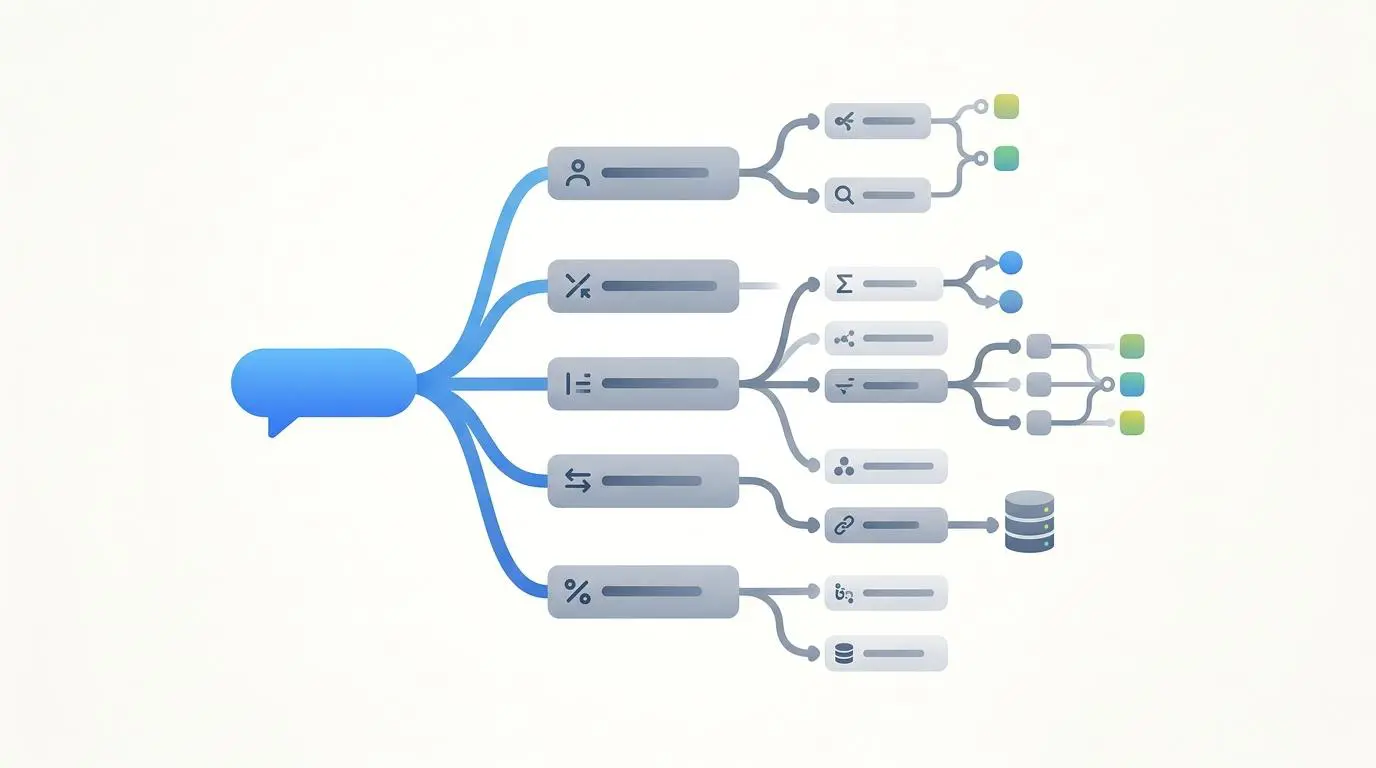
Recent Google I/O updates introduced a complex retrieval mechanism known as Query Fan-Out. Under this system, a single prompt comparing AI and ML is immediately decomposed into multiple sub-queries by the search engine.
These automated sub-queries explore mathematical differences, hardware requirements, and evolutionary timelines simultaneously. The engine then synthesizes the answers to these disparate queries into a single unified overview.
Traditional SEO content targeting single keywords fails completely under this new architecture. A page optimized solely for a head term cannot survive the multi-faceted retrieval process.
Content must now be structured to satisfy the 5 to 7 sub-queries generated by an LLM’s internal reasoning chain. This comprehensive mapping is the only way to maintain multi-surface visibility across different AI interfaces.
Building Automated Source Authority Pipelines
Research from AuthorityTech in 2026 indicates a massive divide in attribution success based on content type. Original research and proprietary datasets on technical comparisons achieve a 38 to 65% citation rate.
In stark contrast, standard marketing blogs drop to citation rates as low as 3%. The modern Citation Economy creates a severe bottleneck for generic, unverified content.
High-ranking organic content is frequently ignored by AI search agents if it lacks verifiable, unique data points. Search engines prioritize mathematical certainty and novel statistics over generalized summaries.
You must provide proprietary data that justifies an attribution link within the generative output. Building automated pipelines that inject real-time data into your content is the most effective way to secure these citations.
The 2027 Agentic Ontology Horizon
By 2027, the evolution of Ad-hoc Agentic Ontologies will fundamentally change how search engines process technical hierarchies. They will enable AI systems to synthesize personalized, real-time local knowledge graphs on the fly.
These advanced systems will explain technical hierarchies through interactive, multi-modal architectural diagrams rather than static text summaries. Preparing for this shift requires immediate adoption of semantic entity frameworks today.
Navigating the intersection of Generative Engine Optimization, AI Search architecture, and workflow automation requires a sharp strategy. To future-proof your brand’s visibility in LLMs and scale with precision, connect with Andres at Andres SEO Expert.
Frequently Asked Questions
What is Contextual Collapse in generative search architecture?
Contextual Collapse occurs when search engines fail to distinguish hierarchical relationships between technical fields, such as treating Artificial Intelligence and Machine Learning as synonymous. This failure can cost enterprise publishers up to a 61% drop in organic click-through rates, making Hierarchical Semantic Entity Resolution essential for maintaining visibility.
How do models like GPT-5.4 and Claude 3.7 handle technical comparisons?
In the 2026 search ecosystem, technical comparison prompts trigger a live web search 100% of the time on models like GPT-5.4 and Claude 3.7. These LLMs bypass static training data to hunt for real-time hierarchical definitions, prioritizing content with clear semantic structure and architectural clarity during the retrieval phase.
What are the specific content length requirements for RAG and AI Overviews?
Google AI Overviews prioritize technical passage chunks between 134 and 167 words. Meanwhile, OpenAI’s GPT-5.4 ‘Thinking’ models prefer atomic answers of 40 to 60 words positioned directly under H2 headers. Aligning with these specific semantic chunking constraints can increase the likelihood of being the primary citation by 2.4x.
How does Query Fan-Out affect modern SEO strategy?
Query Fan-Out is a mechanism where a single prompt is decomposed into 5 to 7 sub-queries covering various technical facets. Traditional single-keyword optimization fails under this architecture; content must now be structured to satisfy the entire reasoning chain of an LLM to maintain multi-surface visibility across generative engines.
Why is proprietary data important for AI Citation ROI?
Original research and proprietary datasets achieve citation rates between 38% and 65%, whereas generic blog content drops to 3%. Pages successfully cited within Google’s AI Overviews receive 35% more organic traffic, proving that unique data points are the primary driver of top-of-funnel technical traffic in the Citation Economy.
What is the future of technical search with Agentic Ontologies?
By 2027, Ad-hoc Agentic Ontologies will enable AI to synthesize personalized, real-time local knowledge graphs. This shift moves search away from static summaries toward interactive, multi-modal architectural diagrams, requiring immediate adoption of semantic entity frameworks and automated knowledge graph pipelines to stay competitive.