




Key Points
- Proactive Risk Mitigation: Implementing prospective hindsight shifts teams from reactive autopsies to strategic resilience, identifying 31% more specific risk factors before capital is deployed.
- Dismantling Echo Chambers: Structured dissent neutralizes executive echo chambers, reducing forecasting bias by 30% and fostering genuine psychological safety among frontline staff.
- Financial Protection: By running virtual failure sprints, organizations can aggressively filter out zombie projects to save millions in wasted operational expenditure.
Table of Contents
- The Optimism Trap Destroying Good Strategy
- The True Cost of Strategic Blind Spots
- Shifting From Autopsies to Proactive Resilience
- Dismantling the HiPPO Effect in Boardrooms
- Running Virtual Failure Sprints for Innovation
- Psychological Safety as a Growth Engine
- Killing Zombie Projects Before They Drain Capital
- The Rise of Autonomous Red-Teaming
- Entering the Era of Continuous Strategic Simulation
The Optimism Trap Destroying Good Strategy
Imagine sitting in a polished boardroom where a visionary CEO has just unveiled the company’s next multi-million dollar pivot. The room erupts in applause, but beneath the surface, your lead engineers and frontline managers are silently panicking.
They see the glaring operational flaws, yet the corporate culture inadvertently silences skeptics during this fragile planning phase. This is the Optimism Bias Gap in action, where critical dependencies are ignored in favor of maintaining unbridled enthusiasm.
When the project inevitably derails six months later, leadership calls it a surprising market shift, but the failure was entirely foreseeable. To break this cycle, organizations must adopt Pre-Mortem Analysis, also known as Strategic Prospective Hindsight.
This framework forces teams to assume a project has already failed spectacularly and work backward to identify exactly why it happened. It transforms passive anxiety into active, strategic problem-solving and ensures that blind spots are exposed before they become financial disasters.
The True Cost of Strategic Blind Spots
Market Intelligence & Data
Bias Reduction
According to a 2026 study published via ResearchGate, pre-mortem architectures reduce executive overconfidence and forecasting bias by up to 30%.
Global Project Waste
Data from TaskFino in early 2026 reveals that organizations waste $1 million every 20 seconds globally due to poor risk anticipation and project management failures.
GenAI Scaling Failure
An MIT Project NANDA report from July 2025 indicates that 95% of Generative AI initiatives fail to reach measurable ROI, largely due to a lack of pre-launch risk alignment.
Success Rate Boost
Research updated by LSA Global in late 2025 confirms that teams using prospective hindsight identify 31% more specific risks than those using traditional retrospective methods.
Executive overconfidence is a silent killer of corporate innovation and sustainable scaling. When leaders fall in love with their own ideas, they often overlook glaring operational risks that junior staff see clearly. By utilizing prospective hindsight, organizations can reduce executive overconfidence and forecasting bias by up to 30%.
In fact, neurological research shows that the medial prefrontal cortex treats the ‘future self’ as a stranger, effectively bypassing personal ego and allowing for a highly objective analysis of project flaws.
The financial bleed caused by poor risk anticipation is staggering and deeply damaging to long-term viability. Data from TaskFino in early 2026 reveals that organizations waste $1 million every 20 seconds globally due to project management failures.
This is not just about delayed timelines; it is about pouring resources into initiatives that were fundamentally flawed from day one. It is no wonder that 70% of organizational transformations fail when critical dependencies and operational friction are completely ignored during the planning phase.
Innovation without risk alignment is just expensive corporate theater. An MIT Project NANDA report highlights that 95% of Generative AI initiatives fail to reach measurable ROI.
This massive failure rate occurs largely due to a lack of pre-launch risk alignment, where teams build complex models without understanding real-world data readiness or integration bottlenecks. A structured pre-mortem forces innovation teams to identify these scaling hurdles early on.
Shifting from a reactive to a proactive mindset fundamentally changes project outcomes and market positioning. Research confirms that teams using prospective hindsight identify 31% more specific risks than those using traditional retrospective methods.
Instead of waiting for a post-mortem autopsy to figure out what went wrong, teams can anticipate the friction in advance. This massive boost in risk identification allows leaders to patch holes in the ship before it ever leaves the harbor.
Shifting From Autopsies to Proactive Resilience

Traditional risk assessments often fail because they are viewed as mere compliance hurdles rather than creative problem-solving sessions. This leads to a dangerous checkbox mentality that completely misses systemic, interconnected threats.
Teams end up going through the motions, documenting obvious risks while ignoring the subtle operational fractures that actually sink projects. The 2025 RIMS Executive Report identifies the pre-mortem method as the primary tool for shifting away from these reactive autopsies.
By utilizing prospective hindsight, teams generate 30% more specific risk factors than a standard SWOT analysis. It changes the psychological framing from asking what might go wrong to declaring that the project has already failed and asking why.
This subtle shift unlocks creative problem-solving and builds genuine risk resilience across the entire organization.
Dismantling the HiPPO Effect in Boardrooms

The Highest Paid Person’s Opinion, or the HiPPO effect, often creates a toxic echo chamber within ambitious organizations. Junior staff and frontline managers are frequently afraid to point out flaws in a leader’s visionary strategy until it is far too late.
This dynamic artificially inflates project viability and leaves the company vulnerable to massive execution failures. A May 2026 study published in ResearchGate found that CEO overconfidence significantly elevates corporate risk-taking, which is directly measured by EBITDA volatility.
Pre-mortems serve as a vital governance guardrail against this dangerous overconfidence. By formally mandating structured dissent, the process gives everyone in the room permission to critique the plan without fear of insubordination.
It democratizes strategic input and ensures that the loudest voice does not automatically dictate the operational reality.
Running Virtual Failure Sprints for Innovation

The modern mantra of failing fast is frequently misinterpreted as an excuse for sloppy planning and rushed execution. While agility is critical, failing fast in the real world burns through capital, destroys team morale, and damages client trust.
As of 2026, 95% of Generative AI pilots fail to reach production scale because teams rush to build without testing the foundational logic.
Forward-thinking innovation teams are now embedding failure sprints into their development lifecycle. These specialized pre-mortems allow teams to fail mentally and iterate virtually before real-world resources are ever wasted.
By identifying data readiness and integration bottlenecks upfront, companies can pivot their prototypes without the painful financial fallout.
Psychological Safety as a Growth Engine

Employees rarely experience severe burnout just from working hard; they burn out from pouring their energy into projects they knew were doomed from the start. Feeling powerless to stop a failing initiative creates deep cynicism and drives top talent out the door.
Psychological safety is the absolute bedrock of an effective pre-mortem analysis.
To combat the fear of speaking up, modern teams are leveraging tools like Asana and Anthropic to facilitate anonymous risk voting. This ensures that the most critical, uncomfortable concerns reach the top of the agenda without any social repercussion.
When employees see their early warnings taken seriously, morale skyrockets and a culture of mutual trust is forged.
Killing Zombie Projects Before They Drain Capital
The sunk cost fallacy is a powerful psychological trap that keeps zombie projects alive long after they should have been terminated. Leaders often refuse to cut their losses, hoping that just a little more budget will fix fundamental strategic flaws.
Gartner’s 2026 IT Spend Analysis suggests that this poor project planning accounts for nearly $1.8 trillion in annual global waste.
Pre-mortems act as an aggressive financial filter early in the budget cycle. They force a 2.4x higher identification rate of money-pit dependencies before the first dollar is even spent.
Armed with this predictive data, executives can confidently kill high-risk initiatives and reallocate critical reserves to projects with genuine growth potential.
The Rise of Autonomous Red-Teaming
Humans are naturally limited by their own lived experiences, making it incredibly difficult to anticipate unprecedented market shocks. We simply cannot predict what we have never seen or experienced firsthand.
By late 2026, autonomous red-teaming is expected to become the gold standard for strategic planning.
Generative AI agents are being integrated into pre-mortem sessions to act as synthetic skeptics. These AI twins simulate thousands of complex failure permutations that human teams may lack the data to imagine.
This AI-augmented approach bridges our cognitive gaps, surfacing Black Swan events from global data sets and bulletproofing business strategies against the unknown.
Entering the Era of Continuous Strategic Simulation
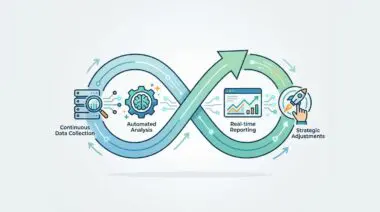
The future of organizational growth lies in the evolution of the pre-mortem into continuous strategic simulation. Real-time market data will soon feed directly into AI twins of business projects, constantly predicting failure points and triggering automated pivot alerts before a plan goes off-track.
Companies that embrace this proactive mindset will not just survive market volatility; they will weaponize it to outmaneuver slower competitors.
Navigating the complexities of business growth, team leadership, and market positioning requires a sharp strategy. To scale your operations and build a resilient brand architecture, connect with Andres at Andres SEO Expert.
Frequently Asked Questions
What is a pre-mortem analysis in business strategy?
Pre-mortem analysis, or strategic prospective hindsight, is a framework where teams assume a project has already failed and work backward to identify the causes. This proactive approach helps reduce executive overconfidence and forecasting bias by up to 30%, exposing blind spots before they lead to financial disasters.
How is prospective hindsight different from a traditional project post-mortem?
Unlike a post-mortem, which is a reactive autopsy performed after a failure occurs, prospective hindsight is a proactive exercise. Research confirms that teams using prospective hindsight identify 31% more specific risks than traditional methods by shifting the psychological frame from asking what might go wrong to declaring that the project has already failed.
Why do 95% of Generative AI initiatives fail to achieve ROI?
According to an MIT Project NANDA report, the high failure rate of GenAI initiatives is primarily due to a lack of pre-launch risk alignment. Teams often rush into complex model building without using pre-mortems to identify real-world data readiness issues or integration bottlenecks before scaling.
What is the HiPPO effect and how does it damage corporate strategy?
The HiPPO effect (Highest Paid Person’s Opinion) occurs when junior staff are hesitant to challenge a leader’s vision, creating a toxic echo chamber. This dynamic artificially inflates project viability. Pre-mortems dismantle this effect by mandating structured dissent and democratizing strategic input across the organization.
How can pre-mortem sessions prevent zombie projects and financial waste?
Pre-mortems act as a financial filter by identifying high-risk dependencies at a 2.4x higher rate than standard planning. This allows executives to kill zombie projects—initiatives kept alive by the sunk cost fallacy—before they contribute to the estimated $1.8 trillion in annual global project waste.
What is autonomous red-teaming in modern risk assessment?
Autonomous red-teaming involves using Generative AI agents to act as synthetic skeptics during pre-mortem sessions. These AI twins simulate thousands of complex failure permutations, helping human teams bridge cognitive gaps and anticipate Black Swan events that are often missed in traditional risk assessments.