Key Points
- RAG-powered assistants eliminate documentation debt by grounding AI responses in verified company data for 99% accuracy.
- Integrating Model Context Protocol (MCP) enables bots to securely pull live data from SaaS tools without custom APIs.
- Automating routine queries reduces contact center labor costs and allows support agents to become strategic AI content curators.
Table of Contents
- The Hidden Cost of Static Help Centers
- Quantifying the Shift to Autonomous Resolution
- Breaking the Information Tombstone
- Anchoring AI with Retrieval-Augmented Generation
- Exponential Support Capacity at Fixed Costs
- Contextual UX and the End of Infinite Loops
- Real-Time Data Access via the Integration Ecosystem
- Elevating Agents to Experience Managers
- The Era of Self-Healing Knowledge Bases
The Hidden Cost of Static Help Centers
The invisible tax draining your operational budget is the thousands of hours customers spend endlessly clicking through fragmented knowledge bases.
This phenomenon, known as Documentation Debt, occurs when critical business knowledge remains trapped in unstructured, siloed, and unsearchable help centers.
Consequently, users abandon self-service entirely and flood expensive human support channels with basic questions.
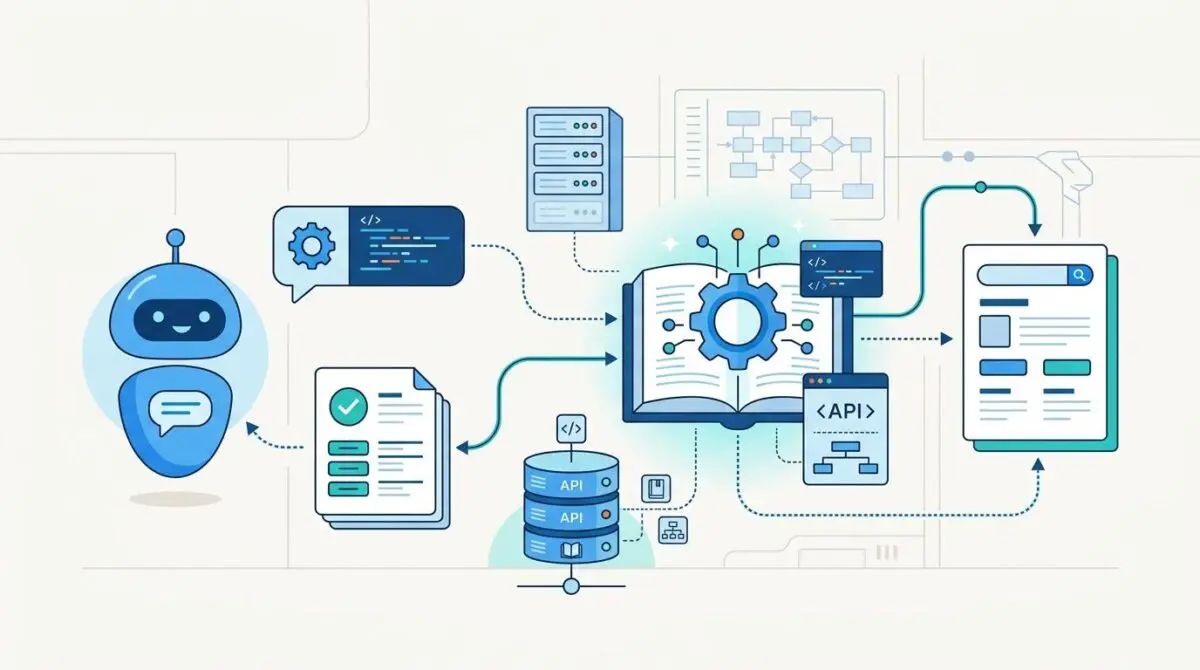
The definitive solution to this compounding operational drag is deploying RAG-powered Conversational Documentation Assistants.
These intelligent systems transform static pages into dynamic, conversational engines that deliver precise answers instantly.
Quantifying the Shift to Autonomous Resolution
Market Intelligence & Data
Autonomous Resolution
According to a 2026 Gartner report, 80% of routine customer interactions are now fully handled by AI without any human intervention.
Labor Cost Savings
A 2026 projection from Gartner indicates that conversational AI deployments will reduce global contact center labor costs by $80 billion this year.
Churn Risk Metric
The Zendesk CX Trends 2026 report found that 85% of CX leaders believe a single unresolved documentation issue is enough to lose a loyal customer.
AI Agent Spending
Juniper Research forecasts that global enterprise spend on AI-driven customer experience agents will grow 400% between 2025 and 2027.
The reality of 80% autonomous resolution means the vast majority of tier-one support tickets no longer require human intervention. Organizations are rapidly adopting open-source RAG frameworks built on vector databases like Pinecone to transition from legacy keyword search to deep, semantic understanding. This allows bots to process complex natural language queries and deliver immediate, accurate responses.
The projected $80 billion in labor cost savings represents a massive structural shift in how enterprises allocate their operational budgets. By offloading routine inquiries to automated systems, companies can drastically reduce their reliance on expanding contact center headcounts. This financial efficiency allows business leaders to reinvest capital into product development and proactive customer success initiatives.
A churn risk metric of 85% highlights the severe business consequences of poor documentation and frustrating self-service experiences. Modern consumers have zero tolerance for dead-end searches or outdated help articles. If a user cannot find a frictionless solution to their problem, they will quickly abandon your software for a competitor.
The forecasted 400% surge in AI agent spending indicates that conversational interfaces are no longer optional upgrades, but mandatory infrastructure. This massive investment is heavily directed toward implementing open-source Model Context Protocol (MCP) servers that connect disparate enterprise tools seamlessly. Businesses that fail to match this spending velocity risk falling permanently behind in customer experience standards.
Breaking the Information Tombstone
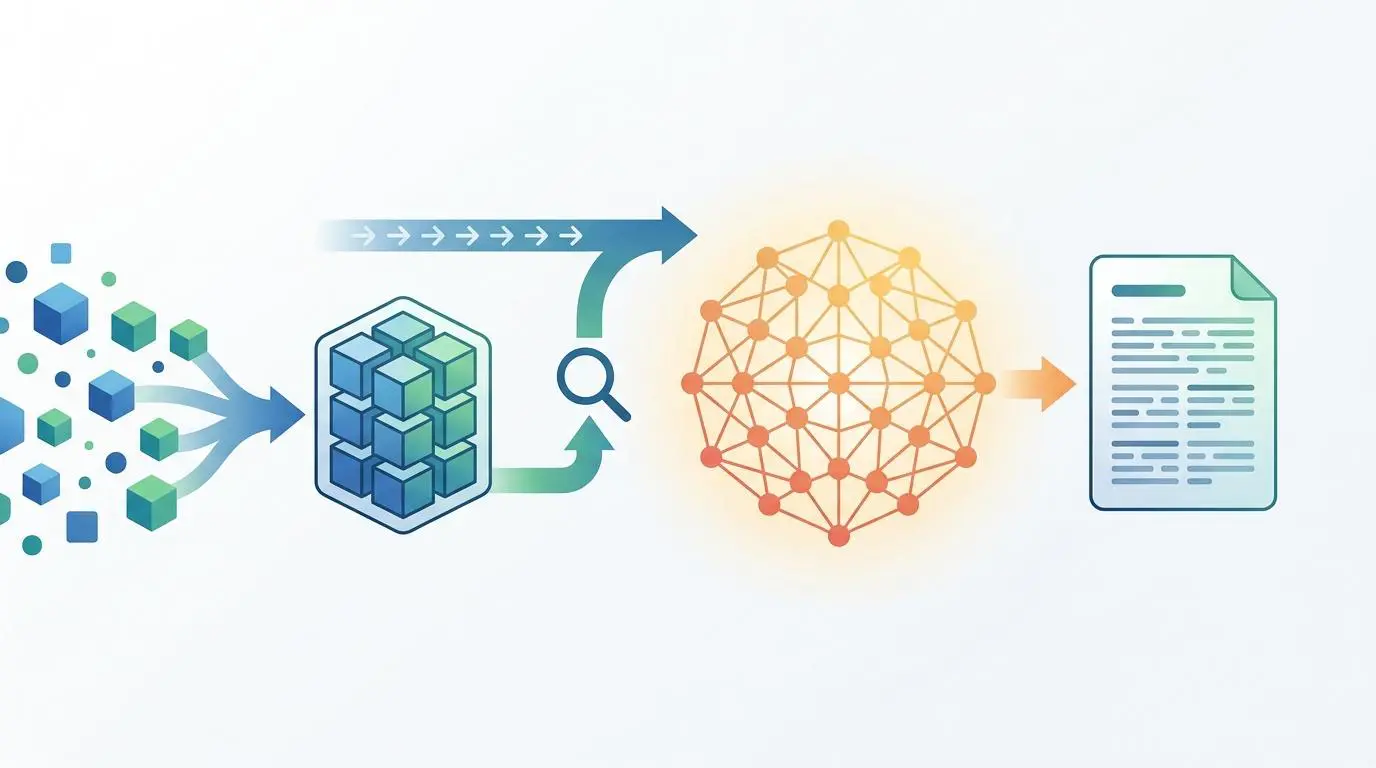
Legacy help centers have effectively become information tombstones.
They are static, hierarchical folders that require users to know exactly what specific keywords to use to find a solution. This rigid structure fundamentally ignores how modern users actually seek help.
In 2026, 72% of users demand immediate, conversational answers rather than browsing nested sub-pages.
The real-world friction is severe, with users wasting an average of 2.5 hours per day searching for information across disjointed documentation platforms.
RAG-powered Conversational Documentation Assistants solve this by allowing users to simply describe their problem naturally. The system instantly parses the intent and surfaces the exact procedural steps required, bypassing the folder hierarchy entirely.
Anchoring AI with Retrieval-Augmented Generation
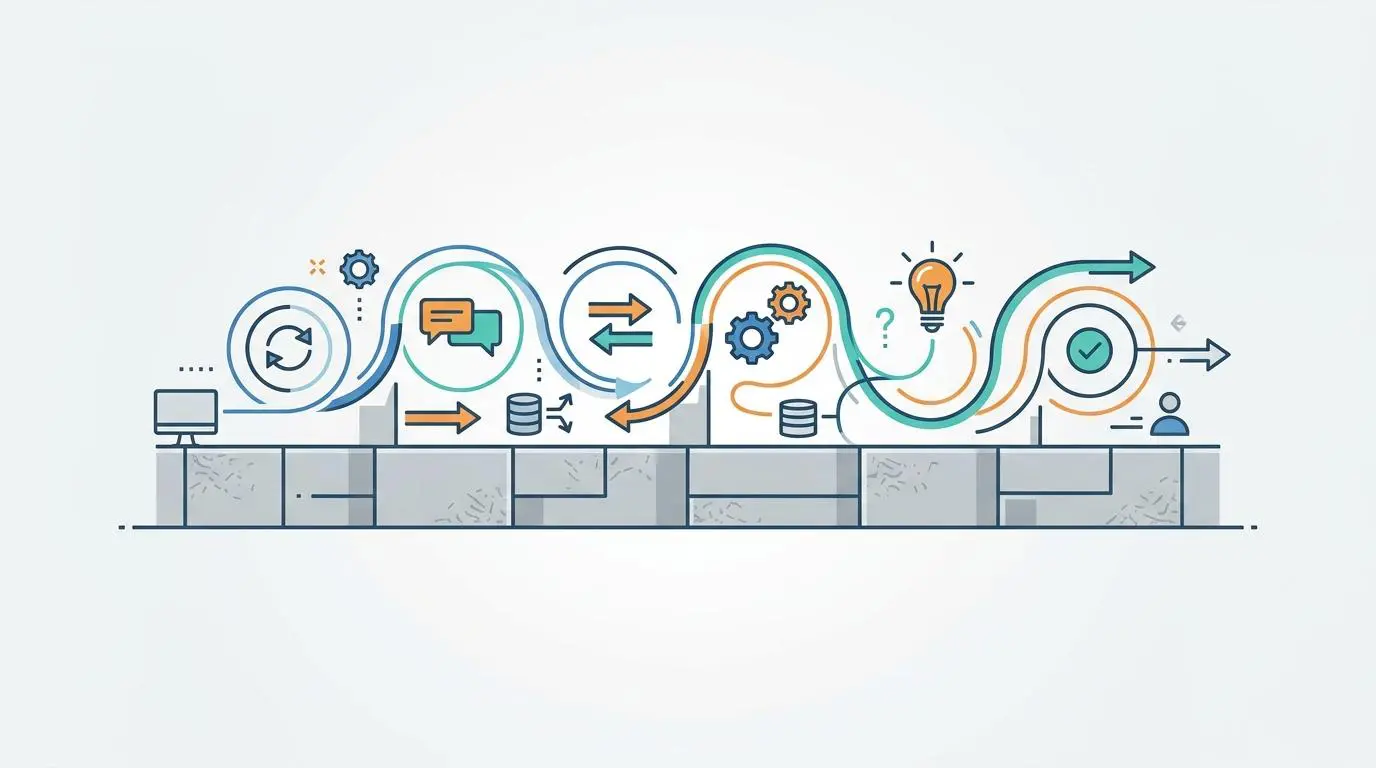
Standard large language models are notorious for hallucinating or fabricating technical instructions when they lack specific context.
This makes them inherently dangerous for enterprise documentation where precision is non-negotiable. Retrieval-Augmented Generation (RAG) and Vector Databases like Pinecone or Weaviate solve this critical flaw.
RAG anchors the AI to specific, cited documentation passages within your own proprietary data to ensure 99% accuracy.
When a user asks a question, the system retrieves only verified company data before generating an answer. Modern features now include Multi-Hop Reasoning, which connects facts across disparate documents to solve highly complex queries seamlessly.
Exponential Support Capacity at Fixed Costs

Scaling a traditional support team to match rapid customer growth is a linear, highly expensive endeavor.
Every new cohort of users typically requires hiring more agents, purchasing more software licenses, and expanding management overhead. AI flips this economic model completely.
The cost of a human-handled support ticket in 2026 remains stubbornly high, averaging between $20 and $25 per interaction.
Conversely, an AI-automated interaction costs mere pennies, typically between $0.50 and $0.70. By routing the bulk of inquiries through intelligent bots, companies report a structural repricing of their support overhead by up to 70%.
This allows for exponential support capacity with a virtually fixed infrastructure cost.
Contextual UX and the End of Infinite Loops

Traditional intent-based bots often fail spectacularly when a user’s phrasing does not perfectly match a pre-programmed rule.
This brittle architecture traps frustrated users in an infinite loop of unhelpful, canned responses. Modern documentation bots eliminate this friction by utilizing Contextual Intelligence.
These advanced systems carry conversation history across multiple channels, ensuring users never have to repeat themselves.
If a user transitions from a web chat to an email thread, the bot remembers the exact troubleshooting steps already attempted. Currently, 81% of consumers expect this level of conversational continuity as a baseline standard.
Real-Time Data Access via the Integration Ecosystem
Enterprise documentation is notoriously stale, often falling out of sync with rapid software updates.
RAG-powered bots overcome this by tapping directly into the modern integration ecosystem. The emergence of the Model Context Protocol (MCP) in 2026 has become the universal translator for help centers.
This protocol allows documentation bots to securely access and synthesize information from over 8,000 different SaaS applications in real-time.
Alongside Agent2Agent (A2A) protocols, bots can instantly pull live data from Jira, GitHub, and Slack without requiring custom API connectors. This enables the assistant to check real-time system status or recent code commits to supplement static help articles effortlessly.
Elevating Agents to Experience Managers
The rise of autonomous support does not mean the elimination of the human workforce.
Instead, it represents a massive shift in how human capital is deployed. Support teams historically suffer from high burnout due to the relentless, repetitive handling of basic FAQs.
AI offloads these Groundhog Day queries, instantly increasing job satisfaction by 71%.
Rather than replacing staff, 84% of organizations are actively upskilling their support agents. These professionals are evolving into AI Content Curators and Experience Managers who handle the complex, high-empathy cases that automation simply cannot resolve.
The Era of Self-Healing Knowledge Bases
The market is rapidly shifting toward a future of Self-Healing Knowledge Bases.
In this new paradigm, agentic AI proactively identifies documentation gaps by analyzing failed user queries in real-time. The system then automatically drafts new help articles for human approval, closing the feedback loop autonomously.
Navigating the intersection of modern technology, software architecture, and business growth requires a sharp strategy. To future-proof your tech stack and scale with precision, connect with Andres at Andres SEO Expert.
Frequently Asked Questions
What is Documentation Debt and how does it affect operational costs?
Documentation Debt refers to the hidden tax on operational budgets caused by critical business knowledge being trapped in unstructured, unsearchable help centers. This forces customers to abandon self-service and flood expensive human support channels, leading to higher labor costs and fragmented user experiences.
How does Retrieval-Augmented Generation (RAG) eliminate AI hallucinations?
RAG anchors large language models to specific, cited passages within proprietary company data using vector databases like Pinecone. This ensures the system only generates answers based on verified facts, achieving up to 99% accuracy and preventing the AI from fabricating technical instructions.
What is the cost difference between human support and AI-automated interactions?
In 2026, a human-handled support ticket averages between $20 and $25 per interaction. In contrast, an AI-automated interaction costs between $0.50 and $0.70, allowing enterprises to reduce their support overhead by up to 70% while scaling capacity exponentially.
How does the Model Context Protocol (MCP) improve help center functionality?
The Model Context Protocol (MCP) acts as a universal translator that allows documentation bots to securely synthesize information from over 8,000 SaaS applications in real-time. This enables bots to access live data from tools like Jira and GitHub to provide context-aware answers that static articles cannot match.
Will AI documentation assistants replace human support agents?
No, AI is shifting the role of human capital from handling repetitive FAQs to becoming Experience Managers and AI Content Curators. By offloading routine tier-one tickets to automation, organizations report a 71% increase in job satisfaction for their human support teams.
What are self-healing knowledge bases?
Self-healing knowledge bases use agentic AI to proactively identify gaps in documentation by analyzing failed user queries in real-time. The system then automatically drafts new articles for human approval, ensuring the help center remains accurate and up-to-date without manual intervention.