



Key Points
- Eradicating Compliance Fatigue: Modern GRC platforms replace fragmented spreadsheet silos with direct API integrations to AWS and GitHub, automating 90% of evidence collection.
- Deploying Synthetic Auditors: Generative AI agents now perform continuous control monitoring, simultaneously mapping single security controls across multiple global frameworks like GDPR and HIPAA.
- Achieving Predictive Resilience: Future-proof systems are evolving from static documentation to self-healing architectures that autonomously execute remediation scripts the moment a vulnerability is detected.
Table of Contents
- The Reality of Fragmented Risk
- The Hidden Cost of Disconnected Systems
- Shattering the Spreadsheet Illusion
- Deploying Synthetic Auditors for Global Scale
- Surviving the Regulatory Crosshairs
- Building the Connective Tissue with Cloud GRC
- Reclaiming the Hidden Compliance Tax
- Entering the Era of Self-Healing Frameworks
- Pioneering Autonomous Trust
The Reality of Fragmented Risk
Picture your compliance team frantically emailing forty department heads for cloud configuration screenshots just days before a major SOC2 audit. This is the painful reality for organizations trapped in outdated operational silos. Managing risk through disconnected documents creates a massive bottleneck that drains resources and leaves critical security gaps wide open.
The manual effort required to chase down evidence guarantees that your compliance posture is already outdated by the time the auditor arrives. This fragmented approach is no longer just an administrative headache; it is a severe operational liability.
When data lives in isolated pockets, leadership lacks the visibility needed to make swift, strategic decisions. The sheer volume of overlapping global regulations makes it impossible for human teams to manually map and monitor every control effectively. Organizations need a fundamental shift in how they approach governance and risk.
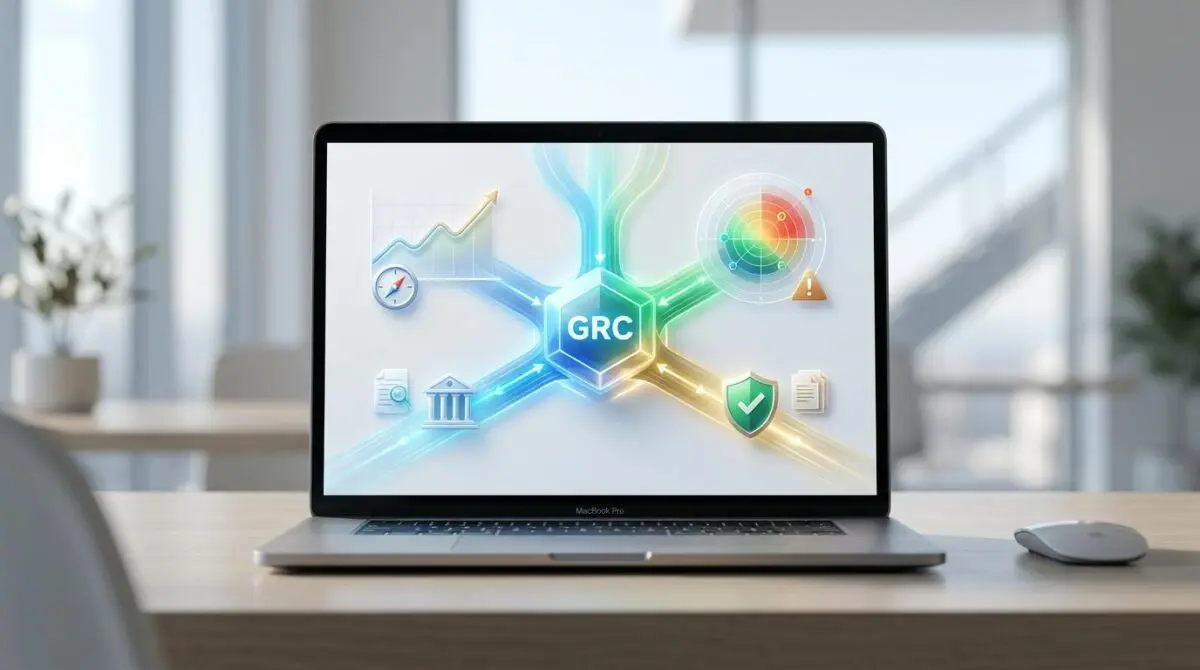
Enter AI-driven integrated GRC platforms. These modern architectures act as the central nervous system for your entire compliance operation. By connecting directly to your existing tech stack, they replace reactive scrambling with continuous, automated oversight.
Adopting these platforms allows businesses to modernize their systems and secure their data. It empowers them to scale operations without the traditional compliance headache.
The Hidden Cost of Disconnected Systems
Market Intelligence & Data
GRC Market Valuation
According to the Governance Risk And Compliance Platform Market Report 2026, the global market is expected to reach $65.86 billion by the end of 2026.
The Non-Compliance Multiplier
A 2026 Globalscape and Ponemon Institute study found that the cost of non-compliance is now 2.71 times higher than the cost of maintaining a centralized automation platform.
Spending Surge
Gartner research from late 2025 indicates that global legal and compliance departments will increase their spending on integrated GRC tech by 50% through 2026.
Audit Efficiency Gain
Internal benchmarks from AuditBoard’s 2026 State of Risk report show that AI-centralized platforms reduce the total time spent on audit preparation by 40%.
The explosive trajectory toward a $65.86 billion valuation underscores a massive shift in enterprise priorities. Businesses are realizing that manual risk management is fundamentally unscalable in today’s threat landscape.
This valuation represents a mass migration away from legacy spreadsheets toward intelligent, interconnected software ecosystems. Companies are investing heavily to build digital resilience from the ground up.
This urgency is driven by a harsh financial reality that penalizes outdated methods. Research shows that relying on manual processes is mathematically a losing battle, as the cost of non-compliance is 2.71 times higher than implementing proper automation.
This multiplier highlights the severe fines, operational downtime, and reputational damage that occur when human error inevitably leads to a security breach. Centralized platforms are no longer a luxury; they are a critical financial shield.
Recognizing this vulnerability, leadership teams are drastically reallocating their budgets. Analysts project that forward-thinking departments will increase spending on integrated GRC tech by 50% to bridge the gap between risk detection and remediation.
This spending surge is not about buying more software; it is about buying speed, accuracy, and peace of mind. It reflects a strategic pivot toward proactive governance.
The return on this investment is immediate and measurable on the front lines of operations. By eliminating the manual chase for evidence, organizations are seeing a 40% reduction in the time spent preparing for audits.
This massive efficiency gain frees up highly skilled professionals to focus on strategic threat mitigation rather than administrative busywork. The result is a leaner, faster, and infinitely more secure enterprise.
Shattering the Spreadsheet Illusion

Most mid-market firms are unknowingly trapped in the spreadsheet illusion. They attempt to manage complex enterprise risk through disconnected Excel files and manual checklists.
This fragmented approach inevitably leads to severe compliance fatigue, where teams burn out just trying to keep documentation afloat. The data collected is merely a point-in-time snapshot, completely obsolete the moment a new code deployment occurs.
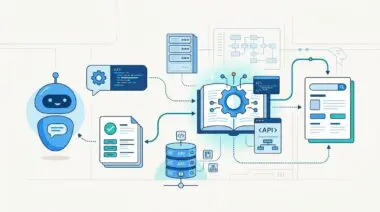
Modern AI-driven integrated GRC platforms completely dismantle this outdated workflow. Tools like Drata and Vanta act as a digital vacuum, connecting directly to your core infrastructure environments. By hooking into AWS, GitHub, and Jira, these platforms automatically extract the exact configuration states required by auditors.
This direct API connectivity automates up to 90% of the evidence-gathering process. Human error is virtually eliminated because the data is pulled straight from the source of truth without manual intervention. Your compliance posture transforms from a static, stressful annual event into a continuous, invisible background process.
Deploying Synthetic Auditors for Global Scale

As regulatory landscapes grow increasingly complex, the concept of a manual audit is becoming obsolete. The sheer impossibility of humans mapping thousands of overlapping global regulations in real-time has birthed a new technological standard.
We are now seeing the rise of synthetic auditors within modern GRC platforms. These AI agents work tirelessly in the background, performing continuous control monitoring without ever taking a coffee break.
Platforms like RegScale and MetricStream leverage generative AI to perform incredible feats of framework mapping. A single security control, such as password complexity, can be automatically mapped across HIPAA, GDPR, and the EU AI Act simultaneously. This means you only have to secure a system once, and the AI translates that effort into compliance for a dozen different global standards.
This continuous oversight has profound business implications beyond just passing audits. A 2026 research highlight from the Cloud Security Alliance reveals that continuous control monitoring has become a massive competitive differentiator. Companies that automate their GRC frameworks close enterprise sales 30% faster because they can provide real-time trust telemetry to cautious prospects.
Surviving the Regulatory Crosshairs
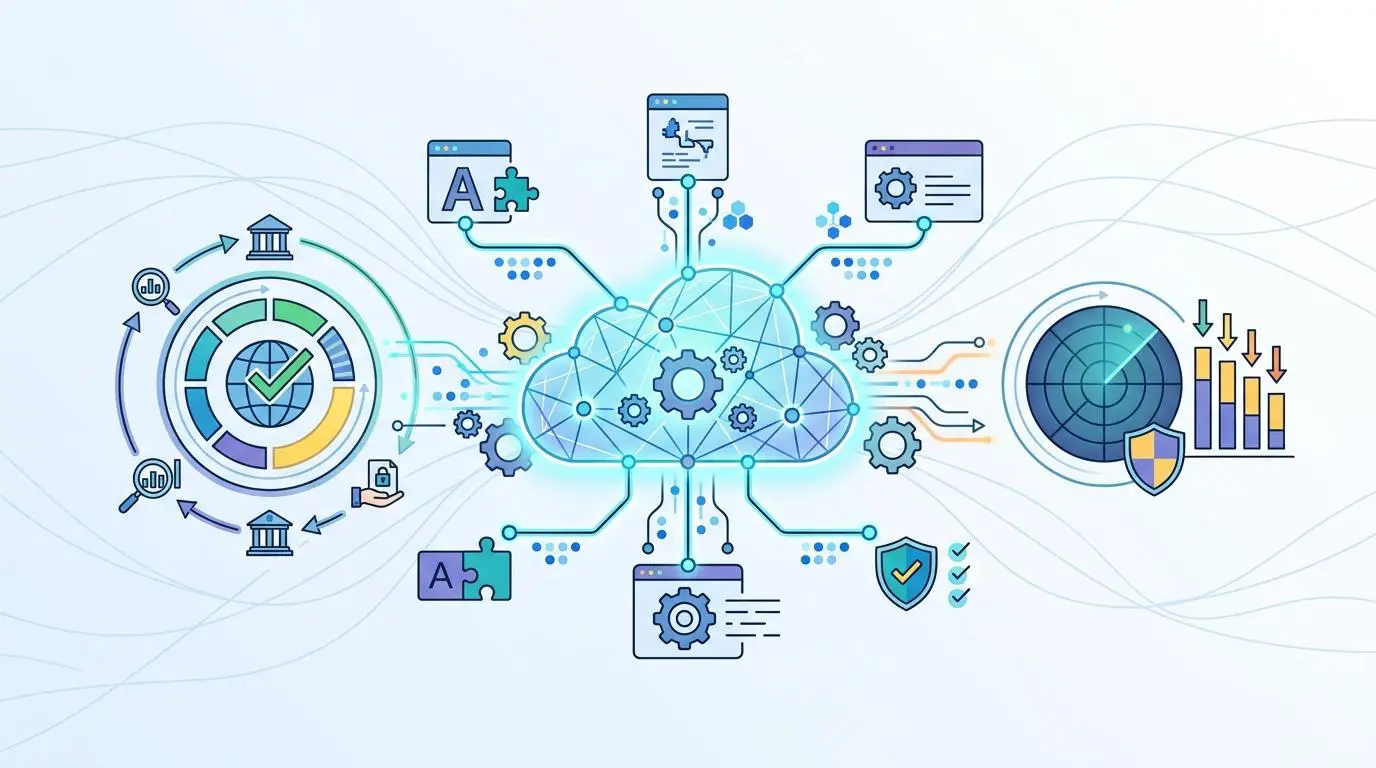
Relying on static documentation is no longer just inefficient; it is a direct legal liability. Regulators have lost patience with compliance theater, where companies show a binder of policies that hold no bearing on their actual daily operations.
Today, authorities demand mathematical proof of continuous oversight. They want to see that your controls are active, monitored, and effective every single second of the year.
The financial penalties for failing this standard are staggering. Firms caught relying on outdated, manual systems face penalties averaging $5.94 million per incident.
This is not just a fine; it is a devastating blow to market capitalization and brand trust. The cost of ignorance has never been higher, making the spreadsheet approach a gamble no modern business can afford.
Conversely, the Department of Justice’s new Corporate Enforcement Policy actively rewards technological modernization. Firms that utilize centralized, automated GRC platforms are eligible for potential declinations of prosecution during an incident. Regulators recognize that automated systems represent a genuine commitment to security, transforming modern GRC software into a literal get-out-of-jail-free card.
Building the Connective Tissue with Cloud GRC
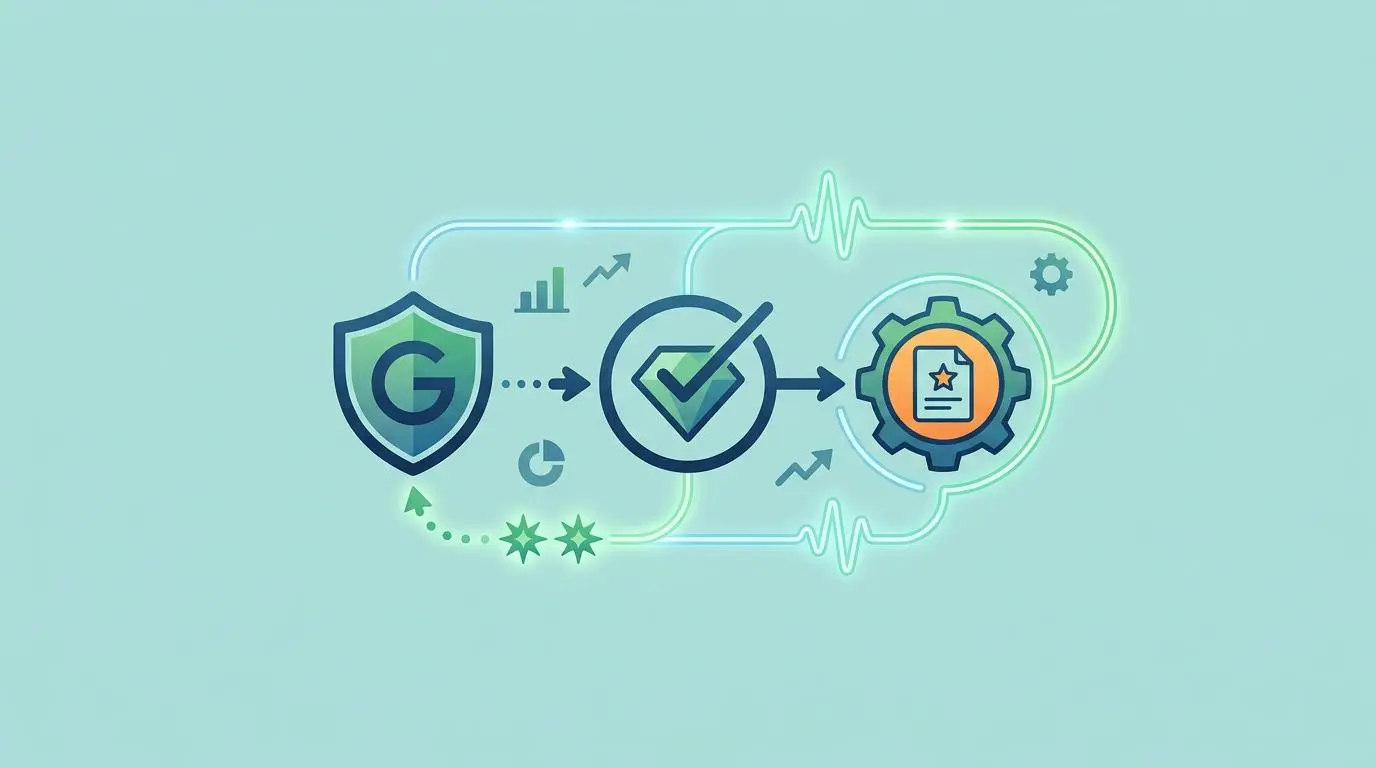
The era of legacy GRC is officially over. Monolithic, on-premise systems that operate in total isolation are being rapidly decommissioned across the enterprise landscape.
These outdated behemoths require expensive, manual data pulls that stall business operations and frustrate technical teams. They are roadblocks to agility in a cloud-first world.
The transition to connected cloud platforms like LogicGate and AuditBoard represents a fundamental shift in software architecture. These modern solutions are built with an API-first mindset. They are designed to act as the connective tissue between IT, HR, and Legal departments, ensuring that risk data flows freely and securely across the organization.
This architectural evolution brings several strict operational advantages:
- API-First Architecture: Ensures seamless data flow between disparate enterprise tools.
- Automated Telemetry: Pulls real-time configuration states without human intervention.
- Cross-Departmental Sync: Aligns legal requirements with immediate IT execution.
By breaking down these silos, cloud GRC platforms enable a unified defense strategy. Every department operates from the exact same real-time dashboard, eliminating the friction of misaligned priorities.
Reclaiming the Hidden Compliance Tax
There is a massive, hidden compliance tax draining the profitability of mid-market enterprises. Currently, 34% of companies miss out on lucrative business opportunities simply because their manual risk reviews are too slow to meet procurement deadlines. When your sales team is waiting weeks for a security questionnaire to be manually verified, your competitors are already signing the contract.
Automated reporting flips this dynamic entirely. By reducing audit preparation time by 40%, organizations reclaim thousands of hours of lost productivity.
This is not just about saving money on auditor fees; it is about accelerating the velocity of your entire business operation. Trust becomes a product you can deliver instantly.
The true ROI of these platforms lies in human capital reallocation. You are no longer paying expensive, high-level security engineers to chase down PDF documents.
Instead, these brilliant minds are shifted toward strategic risk mitigation and architectural improvements. You stop paying for administration and start investing in actual defense.
Entering the Era of Self-Healing Frameworks
Looking toward 2026 and beyond, the automation of risk management is crossing a new frontier. We are entering the era of self-healing GRC.
The primary window for cyber exploits has always been the dangerous delay between risk detection and human remediation. Future platforms are designed to eliminate this window entirely by removing the human from the immediate response loop.
When a compliance drift occurs, such as an engineer accidentally leaving an S3 bucket open to the public, the system will not just send an alert. It will autonomously execute secure remediation scripts to close the gap within seconds of detection. The platform acts as both the auditor and the mechanic, fixing the engine while the car is still driving.
This evolution transforms GRC from a reactive, check-the-box function into predictive resilience. Platforms will use advanced machine learning to forecast regulatory shifts and simulate the financial impact of potential risks before they ever manifest. Your compliance posture will dynamically adapt to the future, rather than just reporting on the past.
Pioneering Autonomous Trust
The journey from manual spreadsheets to AI-driven ecosystems is the defining operational upgrade of this decade. Centralizing and automating your risk management is no longer just about passing an audit; it is about building a resilient, high-velocity enterprise. By embracing continuous monitoring and self-healing architectures, businesses can finally transform compliance from a costly burden into a formidable competitive advantage.
Navigating the intersection of modern technology, software architecture, and business growth requires a sharp strategy. To future-proof your tech stack and scale with precision, connect with Andres at Andres SEO Expert.
Frequently Asked Questions
What is the financial cost of non-compliance versus automated GRC platforms?
The financial impact of non-compliance is significantly higher than the investment required for automation. Research indicates that the cost of non-compliance is 2.71 times greater than maintaining a centralized platform, with regulatory penalties for failing to provide continuous oversight averaging $5.94 million per incident.
How do AI-driven GRC platforms improve audit efficiency?
AI-driven GRC platforms connect directly to infrastructure environments like AWS and GitHub via APIs, automating up to 90% of evidence collection. This transition from manual screenshots to automated telemetry reduces total audit preparation time by approximately 40%, freeing teams for strategic risk mitigation.
Why are manual spreadsheets considered a risk in modern compliance?
Relying on spreadsheets creates the “spreadsheet illusion,” where data is merely a point-in-time snapshot that becomes obsolete the moment a system change occurs. This fragmented approach leads to compliance fatigue, increased human error, and a lack of real-time visibility for leadership decision-making.
What role do synthetic auditors play in framework mapping?
Synthetic auditors are AI agents that perform continuous control monitoring across multiple global standards. By using Generative AI, these systems can map a single security control to several frameworks simultaneously, such as HIPAA, GDPR, and the EU AI Act, ensuring a unified compliance posture.
What are the advantages of an API-first architecture in GRC systems?
An API-first architecture serves as the connective tissue between IT, HR, and Legal departments. It enables seamless data flow and real-time telemetry from disparate enterprise tools, ensuring that all departments operate from a unified dashboard and eliminating the friction of manual data pulls.
How does self-healing GRC reduce cyber exploit windows?
Self-healing GRC technology identifies compliance drifts in real-time and autonomously executes remediation scripts to secure systems within seconds. By removing the delay inherent in human response cycles, these platforms transform reactive compliance into predictive resilience.