Key Points
- Transitioning from passive retrieval to predictive intent eliminates choice overload and prevents severe customer loss.
- Modern composable CDPs allow modular integration of AI engines without the need for total platform overhauls.
- Agentic commerce and zero-trust personalization are setting new consumer expectations and driving unprecedented ROI.
Table of Contents
- The Endless Aisle Dilemma
- Quantifying the Personalization Shift
- Curing the Static Storefront Syndrome
- Generative UI and Smart Merchandising
- Maximizing Lifetime Value and ROI
- Navigating Zero-Trust Consumer Expectations
- Unbundling the Monolithic Tech Stack
- The Dawn of Autonomous Shopping Agents
- Orchestrating the Future of Retail
The Endless Aisle Dilemma
Picture this: a highly motivated buyer lands on your digital storefront, credit card in hand, only to be buried under an avalanche of ten thousand irrelevant products. This scenario plays out millions of times a day across the internet, creating a phenomenon known as choice overload. When shoppers are forced to manually sift through endless category pages, cognitive fatigue sets in rapidly.
The result of this friction is devastating to the bottom line, leading to a staggering 77% customer loss rate before checkout. Retailers have historically relied on passive retrieval systems that merely show users what they already looked at yesterday. However, the modern consumer demands a frictionless journey that anticipates their needs before they even click.
This is where deploying the best E-commerce Personalization Engines becomes a critical business imperative. By shifting from passive tracking to active predictive intent, these systems act as digital concierges. They instantly reorganize the virtual store shelves to match the exact psychological profile of the buyer, turning a chaotic warehouse into a curated boutique.
Quantifying the Personalization Shift
Market Intelligence & Data
Personalization Strategy Overhaul
According to the Twilio Segment 2026 State of Personalization report, nearly 9 in 10 digital businesses have updated their personalization tech stack in the last 24 months to support real-time data.
Retailer ROI Benchmarks
Accenture research from 2026 found that 70% of retailers investing in advanced AI personalization engines report a return on investment exceeding 400%.
Consumer Frustration Rate
A 2026 Kantar global survey of 14,500 shoppers revealed that over three-quarters of consumers experience frustration when a brand fails to provide a tailored interaction.
AI E-commerce Market Growth
The global market for AI-enabled e-commerce solutions reached $10.5 billion in 2026, driven by the rapid adoption of generative search and recommendation features, per SQ Magazine and Precedence Research.
The digital marketplace is currently undergoing a massive foundational shift in how customer data is processed. According to the Twilio Segment State of Personalization report, nearly 9 in 10 digital businesses have updated their personalization tech stack in the last 24 months to support real-time data. This staggering adoption rate proves that relying on stale, batched customer data is no longer a viable operational strategy.
This technological upgrade directly translates to massive financial windfalls for brands willing to invest. Accenture research reveals that retailers deploying advanced AI engines are seeing returns exceeding 400%. By drastically reducing customer acquisition costs and boosting lifetime value, these smart systems pay for themselves almost immediately.
Conversely, the cost of ignoring this trend is mounting rapidly as consumer patience wears thin. With 76% of shoppers expressing outright frustration when faced with generic experiences, brands are losing market share to more agile competitors. A tailored interaction is no longer a premium feature; it is the baseline requirement for brand loyalty.
This technological arms race has pushed the global market for AI-enabled e-commerce solutions to a staggering $10.5 billion. The financial upside of this growth is monumental for early adopters who leverage generative search and recommendation features. In fact, leading global consulting firms project this shift will influence $1 trillion in US retail revenue by 2030.
Curing the Static Storefront Syndrome

Most online stores currently suffer from a debilitating condition known as the endless aisle syndrome. They present generic shopping experiences that treat a returning high-value customer and a first-time window shopper exactly the same. This one-size-fits-all approach inevitably results in immediate site abandonment.
Tools like Nosto and Kibo are actively solving this friction by dismantling static category pages. Instead of a rigid grid of products, these engines deploy dynamic, interest-based layouts that adapt in milliseconds. They read the digital body language of the user, adjusting the visual hierarchy based on the current session vibe rather than just relying on historical purchase data.
This means a shopper looking for winter gear on a Tuesday might see a completely different homepage layout than when they return on Friday looking for gifts. The storefront effectively rebuilds itself around the user, ensuring that relevance is always front and center.
Generative UI and Smart Merchandising
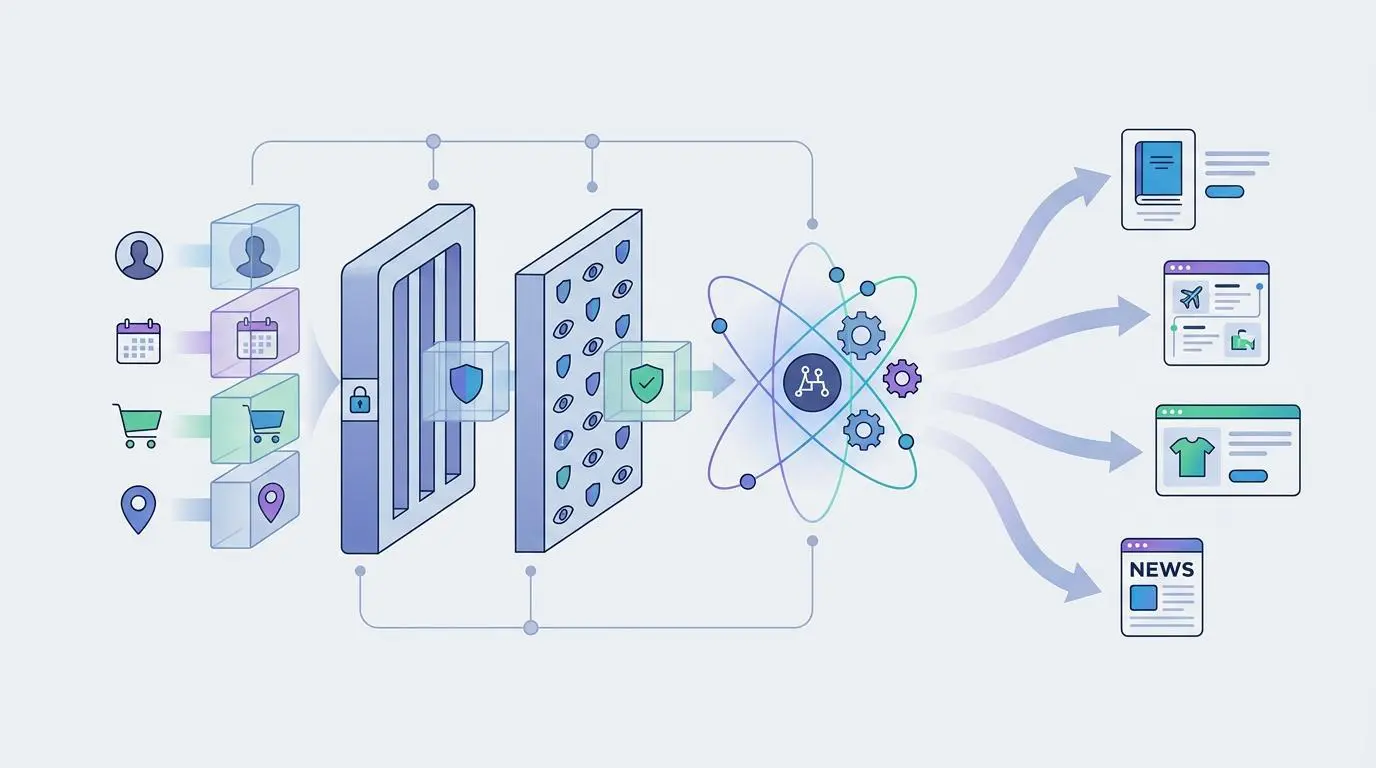
Manual merchandising teams simply cannot keep up with millions of unique SKUs and individual shopper contexts. Attempting to manually curate collections for every possible demographic creates a massive bottleneck in content relevance. To solve this, the industry is pivoting toward Agentic Commerce and Generative UI.
Engines like Algolia and Dynamic Yield now utilize Large Language Models to build customized landing pages on the fly. These systems create unique product descriptions and visuals tailored specifically to the shopper’s psychological profile and real-time location data. It is the equivalent of having a master salesperson instantly rewrite the product brochure for whoever walks through the door.
In April 2026, Algolia launched Recommendation Analytics to solve the infamous black box problem of AI merchandising. This update provides merchandisers with precise dashboards that link AI-driven carousel performance directly to clicks, conversions, and revenue per session. It empowers teams to trust the automation while maintaining strategic oversight.
Maximizing Lifetime Value and ROI
Skyrocketing customer acquisition costs have made traditional broad-reach marketing fundamentally unsustainable. Businesses can no longer afford to pour money into top-of-funnel ads without extracting maximum value from the traffic they already have. E-commerce Personalization Engines are the ultimate tool for plugging this leaky bucket.
Mature AI personalization programs are delivering an average of 520% ROI in 2026. Top-tier fashion brands are seeing even more dramatic results, exceeding 700% when factoring in the massive improvements to Customer Lifetime Value. By anticipating needs, these engines turn one-time buyers into recurring revenue streams.
Global brands are already reaping the rewards of this predictive architecture. Companies like Swarovski have reported that AI recommendations now contribute up to 10% of their total web sales. This proves that smart personalization is not just a marketing gimmick, but a core pillar of modern retail revenue generation.
Navigating Zero-Trust Consumer Expectations
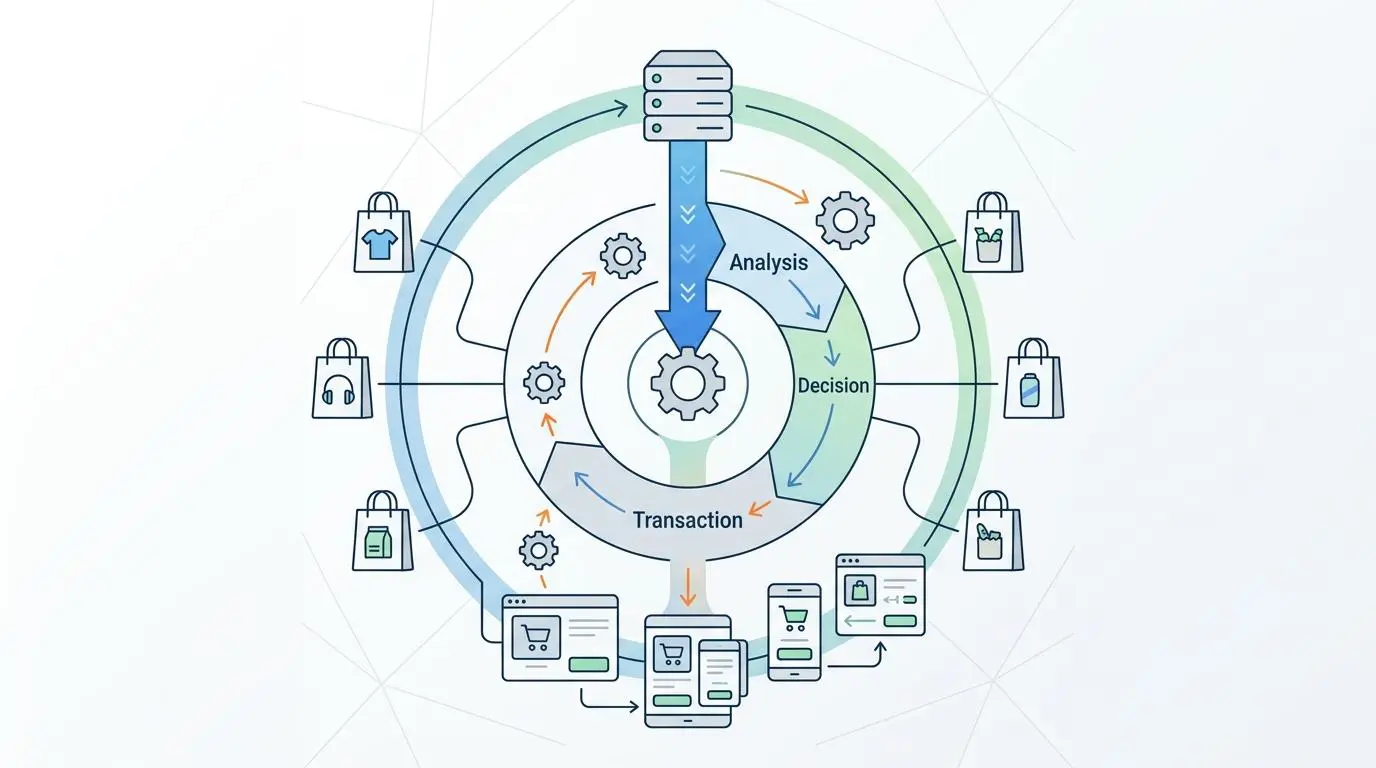
Personalization has officially shifted from a nice-to-have luxury feature to a strict baseline expectation for 83% of consumers. However, privacy-conscious shoppers are simultaneously rejecting traditional, creepy tracking methods. This paradox forces brands to rethink how they gather and deploy user data.
The solution lies in consent-driven data models, championed by platforms like Insider One. They prioritize zero-trust personalization, allowing users to unlock tailored results based entirely on zero-party data they voluntarily share. Shoppers willingly trade their preferences in exchange for better rewards and a smoother experience.
This transparent exchange of value builds immense trust while still feeding the AI engines the high-quality data they need to function. It creates a symbiotic relationship where the consumer feels in control, and the brand achieves hyper-relevance without violating privacy boundaries.
Unbundling the Monolithic Tech Stack
Legacy walled garden platforms have long plagued digital retailers by creating impenetrable data silos. In these outdated systems, web behavior is rarely communicated to email or mobile app teams in real-time. This fragmentation shatters the illusion of a seamless customer journey.
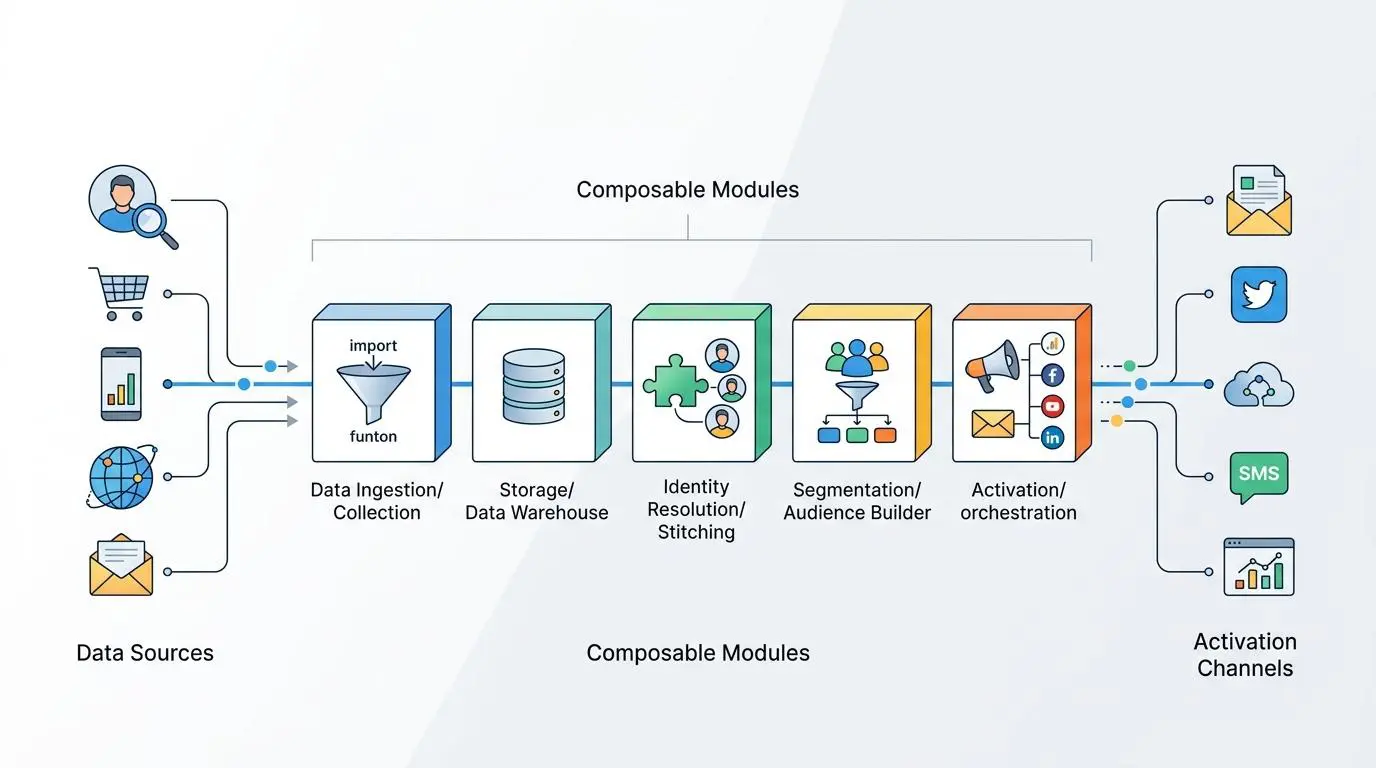
To combat this, the market is rapidly moving toward unbundling complex clouds. Instead of being locked into monolithic suites, brands are migrating to Composable Customer Data Platforms. These agile architectures allow businesses to swap out recommendation engines or search modules without undergoing a painful, multi-year re-platforming process.
As of 2026, 93% of high-growth businesses have overhauled their tech stack to embrace this modularity. By treating their e-commerce infrastructure like digital Lego blocks, they can integrate the best-in-class AI tools the moment they hit the market.
The Dawn of Autonomous Shopping Agents
We are rapidly approaching the human limit on decision-making time. Consumers are exhausted by the endless options available online and are increasingly outsourcing the research phase of shopping to trusted technology. The next evolution in this space is Agentic Shopping.
In this new paradigm, AI does not just recommend products on a screen. It acts as an autonomous digital assistant capable of researching, comparing, and even executing low-risk purchases on behalf of the user. Imagine an AI that knows your preferred coffee brand and automatically restocks it when your smart pantry senses you are running low.
This shift transforms the e-commerce engine from a passive display case into an active participant in the consumer’s daily life. Brands that optimize their data feeds for these autonomous agents will capture a massive share of the automated retail market.
Orchestrating the Future of Retail
By late 2026, personalization engines will fully evolve into Commerce Orchestrators that manage the entire customer lifecycle. This will be driven by a concept known as vibe coding, allowing non-technical merchandisers to describe a campaign’s intent in natural language. The AI will then automatically generate the necessary search logic, UI components, and inventory triggers.
This represents the ultimate democratization of advanced retail technology. When the barrier to entry for hyper-personalization drops to zero, the only differentiator left will be the creativity and strategic vision of the brand itself. The future belongs to those who can seamlessly blend human intuition with machine precision.
Navigating the intersection of modern technology, software architecture, and business growth requires a sharp strategy. To future-proof your tech stack and scale with precision, connect with Andres at Andres SEO Expert.
Frequently Asked Questions
What are the primary business benefits of E-commerce Personalization Engines?
E-commerce Personalization Engines drive significant revenue growth by converting generic shopping experiences into tailored boutiques. Key benefits include a return on investment (ROI) often exceeding 400%, a reduction in the 77% customer loss rate associated with choice overload, and an increase in long-term customer loyalty through predictive relevance.
How does AI-driven personalization solve the ‘Endless Aisle’ dilemma?
AI solves choice overload by acting as a digital concierge that reorganizes virtual store shelves in real-time. By reading ‘digital body language’ and session intent, these engines prioritize products that match a buyer’s psychological profile, preventing cognitive fatigue and site abandonment.
What is Agentic Commerce and how will it change online shopping?
Agentic Commerce is the next evolution of retail where autonomous AI agents act on behalf of consumers to research, compare, and even execute low-risk purchases. This shifts the shopping experience from a passive display case to an active, automated lifecycle management system.
How do brands handle consumer privacy while using advanced personalization?
Modern personalization platforms utilize consent-driven, zero-trust data models. This allows shoppers to voluntarily share their preferences (zero-party data) in exchange for a more tailored and rewarding experience, maintaining privacy boundaries while still enabling hyper-relevance.
What are Composable Customer Data Platforms (CDPs) in e-commerce?
Composable CDPs are modular tech architectures that allow retailers to ‘unbundle’ monolithic suites. By treating infrastructure like digital Lego blocks, brands can easily integrate best-in-class AI search or recommendation modules without the need for a total platform overhaul.
What is Generative UI in the context of smart merchandising?
Generative UI uses Large Language Models (LLMs) to create unique product descriptions, landing pages, and visual layouts on the fly. This technology allows the storefront to rewrite its own interface in real-time to match the specific context and location of the individual shopper.