Key Points
- Ambient AI Integration: Generative AI tools are actively eliminating manual data entry by listening to encounters and drafting clinical notes in real-time.
- Seamless Interoperability: Unified networks and standardized APIs are breaking down information silos to provide complete patient histories instantly across competing hospital systems.
- Revenue Cycle Optimization: Automated, AI-driven coding algorithms are drastically reducing insurance claim denials and accelerating hospital cash flow.
Table of Contents
- The Administrative Trap
- The Data Driving the Healthcare Migration
- Eradicating Pajama Time with Ambient AI
- Dismantling Information Silos via Unified Networks
- Curing Software Fatigue Through Ambient UX
- Accelerating Cash Flow with Revenue Intelligence
- Ending the Redundant Testing Loop for Patients
- Transitioning to Predictive Health Engines
- The Dawn of the Autonomous Medical Resident
The Administrative Trap
The hidden tax of modern medicine is paid in keystrokes, forcing doctors to click through endless drop-down menus while patients wait for eye contact.
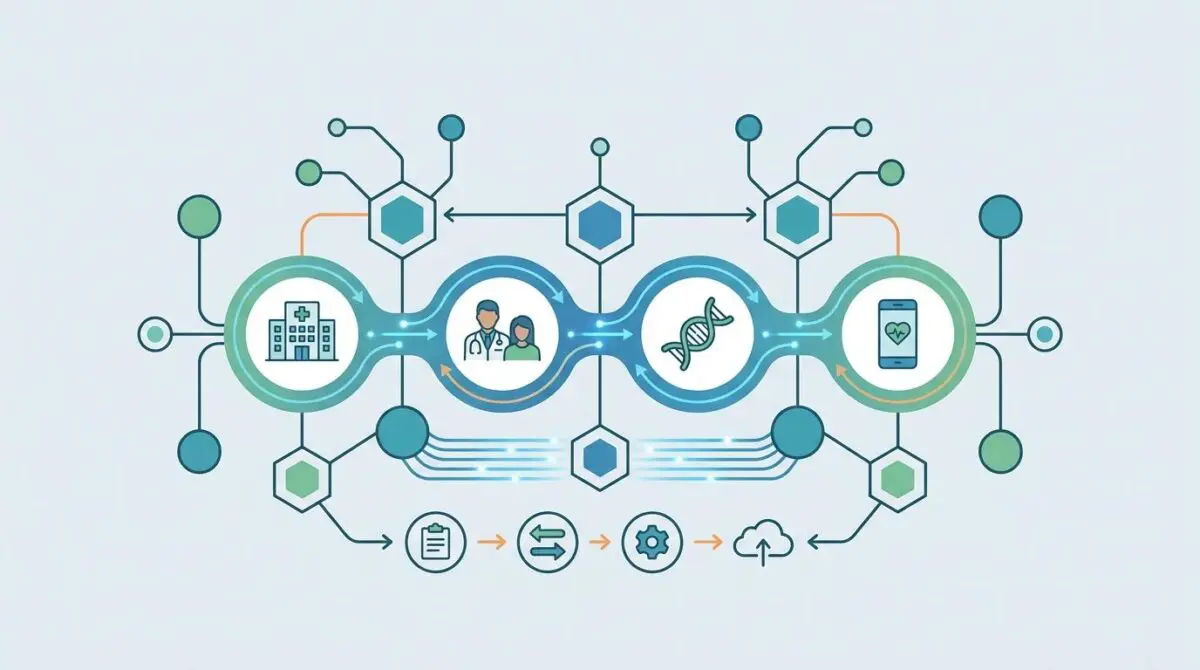
For years, the promise of digitized medical records turned highly trained physicians into highly paid data entry clerks. This critical bottleneck of clinician burnout and fragmented patient data has pushed the healthcare industry to a breaking point.
Fortunately, the market has responded by engineering next-generation interoperable EHR and EMR ecosystems.
These advanced platforms are fundamentally restructuring how medical institutions capture, share, and monetize clinical data. By replacing rigid software silos with fluid, AI-driven networks, hospitals are finally returning their focus to direct patient care and scalable operational efficiency.
The Data Driving the Healthcare Migration
Market Intelligence & Data
Global EHR Market Valuation
The worldwide electronic health records market reached a valuation of $33 billion in 2026 as healthcare systems accelerated their migration to cloud-native platforms, according to Straits Research 2026.
Physician Burnout Rate
Recent 2026 data shows that 42% of U.S. physicians still report burnout symptoms, with ‘too much bureaucratic work’ and EHR documentation remaining the primary drivers, as reported by the American Medical Association.
Hospital Ambient AI Adoption
As of mid-2026, 62.6% of hospitals utilizing the Epic EHR platform have successfully implemented or are deploying ambient AI documentation tools, according to the American Journal of Managed Care.
Epic Market Dominance
Epic Systems Corporation holds a 43.9% share of the U.S. hospital EHR market in 2026, solidifying its position as the industry leader over Oracle Cerner and Meditech, per Definitive Healthcare analysis.
The massive $33 billion valuation of the global electronic health records market highlights a definitive shift away from legacy, on-premise servers. Healthcare systems are aggressively migrating to cloud-native platforms to secure their infrastructure and scale operations seamlessly.
This financial pivot is largely driven by a desperate need to rescue the medical workforce from severe operational fatigue. With 42% of physicians reporting burnout, it is clear that legacy systems are failing. This is especially true when providers spend nearly 13 hours per week on administrative documentation instead of treating patients.
To combat this administrative bloat, hospitals are rapidly integrating generative AI directly into their clinical workflows. The fact that 62.6% of Epic-enabled hospitals are deploying ambient AI documentation tools proves that voice-driven data entry is no longer a luxury. It has become an operational standard.
At the center of this technological revolution is a fierce battle for market supremacy among a few massive software vendors. Epic Systems Corporation continues to dictate the pace of innovation, solidifying its position as the industry leader over Oracle Cerner and Meditech, per Definitive Healthcare analysis.
Eradicating Pajama Time with Ambient AI

The era of physicians manually typing out clinical encounters is rapidly coming to an end. In 2026, the market has aggressively shifted toward ambient clinical intelligence to capture data organically.
Tools like Nuance DAX Copilot and athenaAmbient are now native features within the best electronic health record and electronic medical record systems. These tools use generative AI to actively listen to patient encounters and draft complete SOAP notes in real-time.
Epic has also joined the revolution, integrating over 150 generative AI features to automate in-basket messaging and clinical summaries. This automation completely eliminates the dreaded pajama time friction, where doctors previously spent hours after their shifts manually typing notes.
A major market shift occurred in February 2026 when athenahealth launched athenaAmbient as a free, native feature for all users. This bold move effectively ended the era of charging high per-provider monthly fees for AI scribe technology, forcing competitors to adapt or perish.
Dismantling Information Silos via Unified Networks
For decades, patient data was trapped within the proprietary walls of individual hospital networks. The full operationalization of the Trusted Exchange Framework and Common Agreement in 2025 and 2026 has mandated Qualified Health Information Network participation.
This regulatory push allows disparate systems like Oracle Health and Meditech to exchange data seamlessly via FHIR R5 APIs. By standardizing the communication protocols, the national healthcare system is beginning to operate as a single, searchable database.
This interoperability directly solves the dangerous information blocking problem that has plagued emergency rooms for years. Clinicians can now instantly view a patient’s complete medical history, even if that patient was previously treated at a rival hospital network across the country.
Curing Software Fatigue Through Ambient UX

Clunky, drop-down-heavy interfaces have been a primary driver of staff turnover in private practices. Modern 2026 EHRs, including Meditech Expanse and Oracle’s Data-First platform, have entirely reimagined the clinician interface.
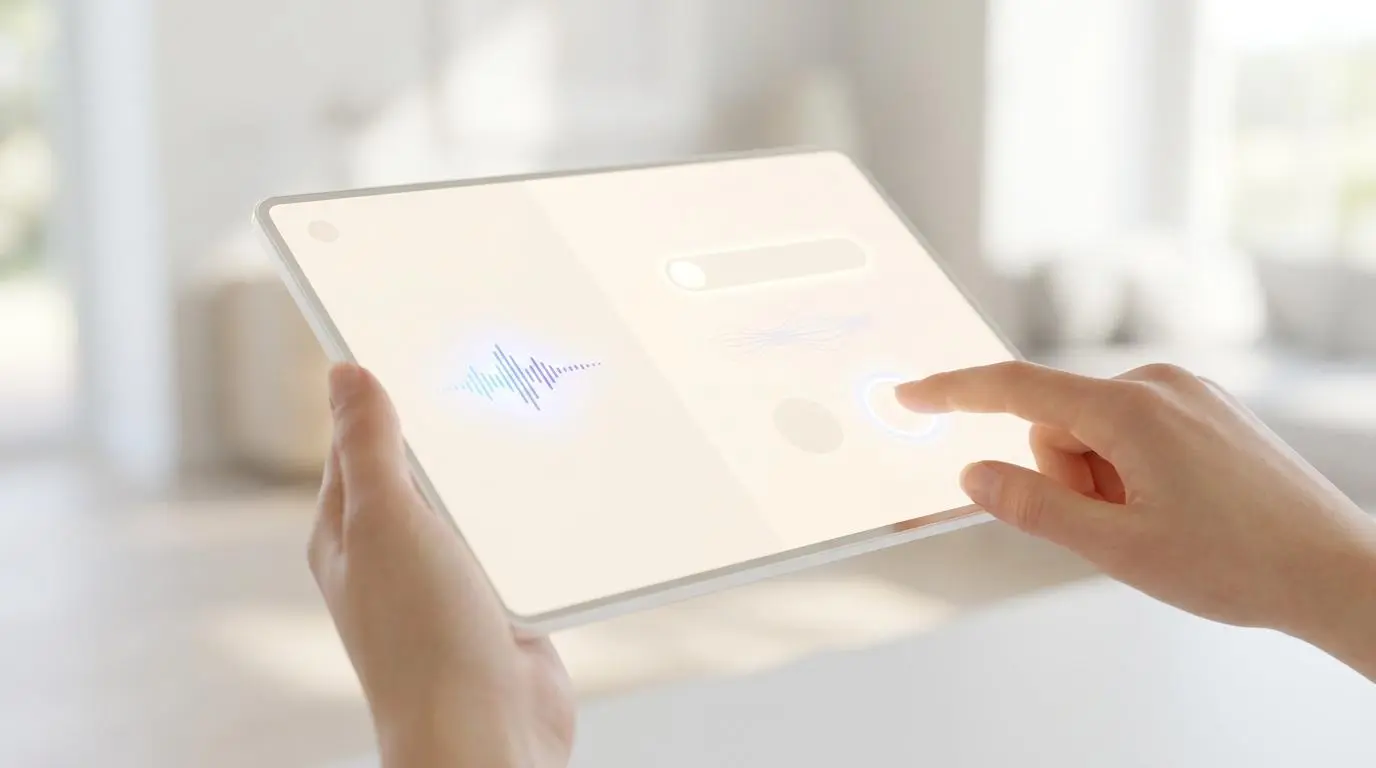
These systems have moved to voice-first, touch-optimized web interfaces designed specifically for mobile and tablet usage. They employ a concept known as ambient UX, which dynamically adapts to the specific context of the patient visit.
By proactively surfacing relevant lab results before a clinician even asks, this intelligent design reduces the number of clicks required for a single order by up to 40%. It directly addresses EHR fatigue by flattening the steep learning curve that previously hindered new staff onboarding.
Accelerating Cash Flow with Revenue Intelligence

Enterprise EHR implementations for large healthcare systems can easily exceed $500 million, making rapid ROI a critical business imperative. In 2026, the financial justification for these massive upgrades is centered entirely on revenue cycle intelligence.
AI-driven coding algorithms run continuously in the background of the EHR, identifying missing documentation and billing codes in real-time. This proactive auditing ensures that clinical notes perfectly match the required billing criteria before the patient even leaves the building.
This automated precision reduces insurance claim denials by an astonishing 22% and accelerates the overall billing cycle by 15 days. By mitigating manual coding errors, hospitals can effectively resolve the cash-flow crises caused by lengthy payer-provider dispute cycles.
Ending the Redundant Testing Loop for Patients
The evolution of next-generation interoperable EHR and EMR ecosystems is not just a backend operational upgrade. For the average patient, this technological leap means the end of repeating their medical history to every new specialist they visit.
Unified patient portals now aggregate data from multiple providers into a single, cohesive longitudinal timeline. Patients can securely access their complete health narrative directly from their mobile devices, empowering them to take control of their care.
This seamless data sharing solves the massive friction of redundant diagnostic testing. By ensuring that previous lab results and imaging are always available, these systems save the US healthcare system an estimated $20 billion annually in wasted resources.
Transitioning to Predictive Health Engines
As we move through late 2026, electronic health records are fundamentally changing their core utility. They are transitioning from passive digital filing cabinets into active predictive health engines.
These advanced platforms are now ingesting real-time biometric data from consumer wearables like Apple Health and the Oura Ring. By integrating this continuous stream of data into the clinical record, the software can monitor patient baselines around the clock.
This allows the system to automatically flag early warning signs of sepsis or cardiac distress up to 24 hours before clinical symptoms appear. It represents a monumental shift from reactive treatment to proactive intervention, drastically improving survival rates for acute conditions.
The Dawn of the Autonomous Medical Resident
The next great evolution in healthcare technology is the rise of the autonomous EHR. Soon, the software will not just record data, but act as an AI medical resident that actively participates in the diagnostic process.
These autonomous systems will pre-draft comprehensive treatment plans and identify complex drug interactions across global databases before the physician even enters the exam room. The future of medicine belongs to institutions that embrace these intelligent ecosystems to augment their human talent.
Navigating the intersection of modern technology, software architecture, and business growth requires a sharp strategy. To future-proof your tech stack and scale with precision, connect with Andres at Andres SEO Expert.
Frequently Asked Questions
What is the primary driver of physician burnout in 2026?
According to the American Medical Association, 42% of U.S. physicians report burnout symptoms, primarily driven by excessive bureaucratic work and manual EHR documentation. Next-generation interoperable ecosystems aim to mitigate this by automating data entry and streamlining administrative workflows.
How does Ambient Clinical Intelligence reduce manual documentation?
Ambient AI tools, such as Nuance DAX Copilot and athenaAmbient, use generative AI to listen to patient encounters and automatically draft complete SOAP notes in real-time. This technology eliminates “pajama time” by allowing physicians to focus on patients rather than manual data entry during and after shifts.
How do FHIR R5 APIs and QHINs improve data sharing?
The implementation of FHIR R5 APIs and participation in Qualified Health Information Networks (QHIN) allow disparate systems like Oracle Health and Meditech to communicate seamlessly. This interoperability enables clinicians to view a patient’s complete history instantly, regardless of where previous care was delivered.
What are the financial benefits of Revenue Cycle Intelligence in EHRs?
AI-driven coding algorithms identify missing documentation and billing errors before patient discharge. This proactive approach reduces insurance claim denials by 22% and accelerates the billing cycle by 15 days, helping hospitals recover investment costs for expensive EHR implementations.
How are EHRs transitioning into Predictive Health Engines?
Modern EHRs are now ingesting real-time biometric data from consumer wearables like the Oura Ring and Apple Health. By monitoring these data streams, platforms can automatically flag early warning signs of conditions like sepsis or cardiac distress up to 24 hours before clinical symptoms appear.
Which vendors lead the 2026 EHR market?
Epic Systems Corporation continues to dominate the U.S. hospital EHR market with a 43.9% share. Other major players include Oracle Cerner and Meditech, all of which are aggressively integrating generative AI and cloud-native infrastructure to maintain market relevance.