Key Points
- Automated Fact-Checking: Replace manual QA bottlenecks with n8n AI agents that act as a strict publish gate for your headless CMS.
- Cost-Efficient API Usage: Leverage Anthropic’s prompt caching to slash verification costs by 90% while maintaining rigorous quality thresholds.
- Algorithmic Protection: Prevent indexing of low-confidence AI drafts to safeguard your domain from Google’s strict EEAT-centric Core Updates.
Table of Contents
The Invisible Tax of Fluent Hallucinations
The invisible tax of manual content review is quietly bankrupting high-velocity SEO teams. Every minute spent reading an AI-generated draft to ensure it hasn’t fabricated a statistic is a minute stolen from actual strategic growth. We call this the Discernment Deficit.
It happens when content teams simply cannot keep up with the sheer volume of AI outputs. They eventually let fluent but factually flawed articles slip into production. This deficit is a ticking time bomb for your search visibility.
As Google’s 2026 EEAT-centric Core Updates ruthlessly suppress unverified, low-effort content, relying on human editors to catch every subtle AI hallucination is no longer a viable workflow. Anthropic’s 2026 AI Fluency Index revealed a fascinating paradox in modern content creation.
As LLM outputs become more polished and structurally perfect, human fact-checking frequency actually drops by 3.7 percent. This makes automated API-based verification not just a luxury, but a critical technical necessity for SEO survival.
The ultimate architectural solution is building a Pre-Publish AI Verification Pipeline. Think of this pipeline as an automated border patrol for your website.
Instead of hoping a human editor catches a mistake, you deploy a programmatic system. It automatically interrogates, verifies, and scores every piece of content before it ever reaches your CMS.
Decoding the Factual Error Floor

To truly understand why automated verification is critical, we must look at the raw data governing modern large language models. The reality is that no AI model is perfectly accurate out of the box. Even the most advanced systems have a baseline error rate that you must architect around.
Industry data proves this limitation. For instance, Vectara’s hallucination benchmark reports a factual error rate floor of 3.3% on controlled reasoning tasks. This means that even in the best-case scenario, at least three out of every hundred claims your AI generates will be entirely fabricated.
When an AI model generates a 3.3 percent error rate, those errors aren’t just typos. They are logical failures that require heavy editorial intervention. If these errors reach the rendering phase, your server wastes valuable resources building pages that ultimately harm user experience.
Fixing them post-publish requires costly cache invalidation and server-side regeneration. This is why shifting the verification process to the pre-publish phase is an architectural masterstroke.
By utilizing new API features, developers can run extensive multi-stage verification workflows without breaking the bank. In fact, Anthropic’s ephemeral prompt caching feature reduces input token costs by 90% for repeated context blocks.
This allows your pipeline to rigorously cross-examine drafts against large source documents for pennies on the dollar. It saves both API budget and server rendering costs.
Automating the Quality Assurance Gate
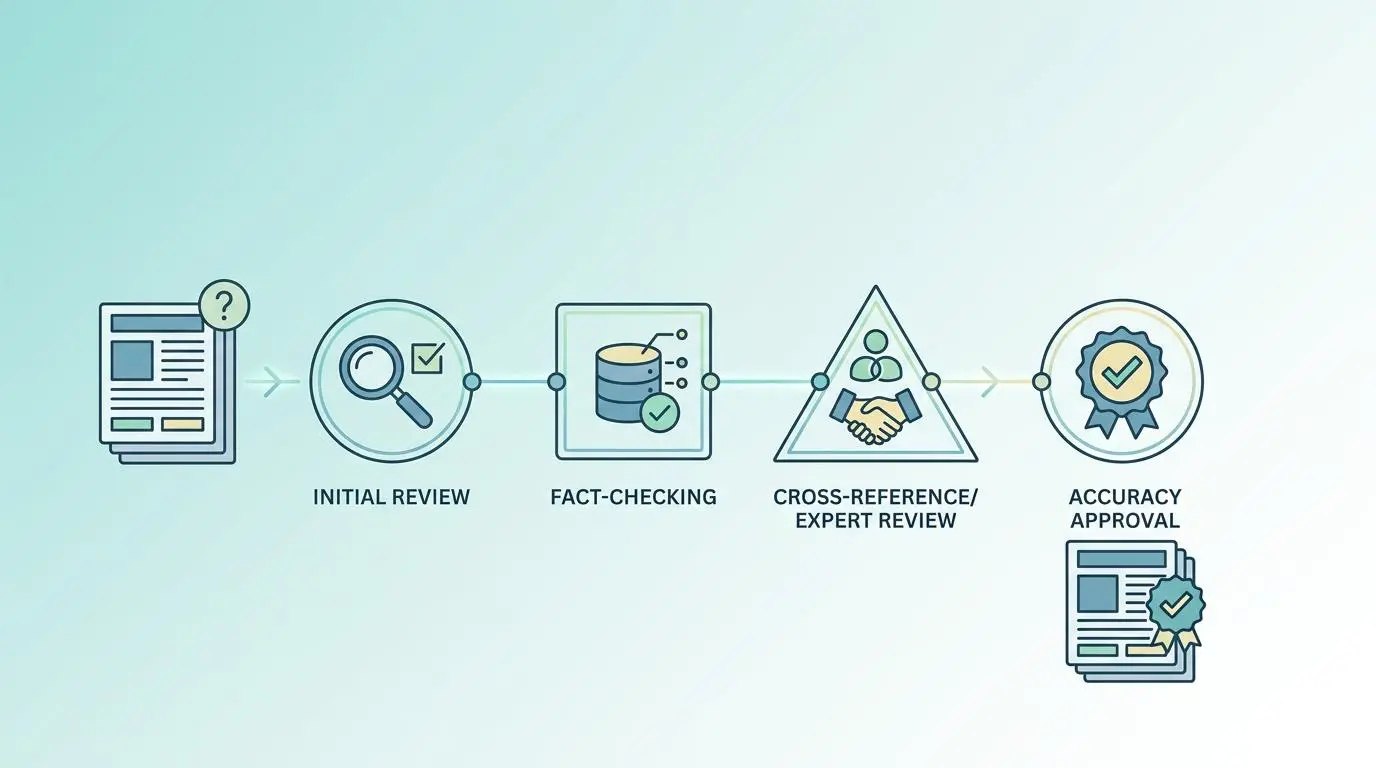
Manual fact-checking is the ultimate bottleneck in programmatic SEO. Research shows that as AI outputs become more polished and articulate, human reviewers drop their guard.
This leads to a dangerous scenario where over 91 percent of users fail to manually verify AI claims before hitting publish. To fix this, we must remove the human from the immediate verification loop.
By utilizing Anthropic’s Claude 4.7 within an automated workflow, we can deploy a Chain-of-Verification prompting strategy. This technique forces the AI to break down its own generated draft into individual factual claims and verify each one independently.
Think of it like a defense attorney cross-examining a witness on the stand. The model questions its own output, searching for logical inconsistencies, broken links, or fabricated data points.
When combined with prompt caching, this rigorous interrogation happens in seconds. It catches the fluent hallucinations that tired human editors inevitably miss.
This creates a self-healing content loop. Errors are identified and corrected before the draft ever leaves the n8n environment.
Centralizing the Publish Logic

Fragmented tech stacks are the enemy of content quality. When your generation scripts push directly to your headless CMS like Strapi or Contentful, unvalidated drafts inevitably leak into your live production environment.
You need a centralized checkpoint to enforce strict quality thresholds. This is where n8n shines as the ultimate middleware proxy.
By positioning n8n AI Agent nodes between your content generation tools and your CMS, you create an unbreakable digital tollbooth. Every single draft must pass through this n8n workflow before it is granted a publishing ticket.
The n8n agent communicates directly with Anthropic’s Messages API to evaluate the draft against a strict rubric. If the content fails to meet your predefined quality and accuracy standards, the n8n workflow instantly halts the process.
The draft is flagged and routed to a dedicated Slack channel for human review. This ensures that low-confidence, unverified content never sees the light of day, keeping your CMS pristine and your indexing signals strong.
Injecting Reality with Semantic Enrichment
Standard language models suffer from a fundamental flaw. They rely on static, outdated training data. If your programmatic SEO strategy depends solely on a model’s internal memory, your content will quickly suffer from factual drift.
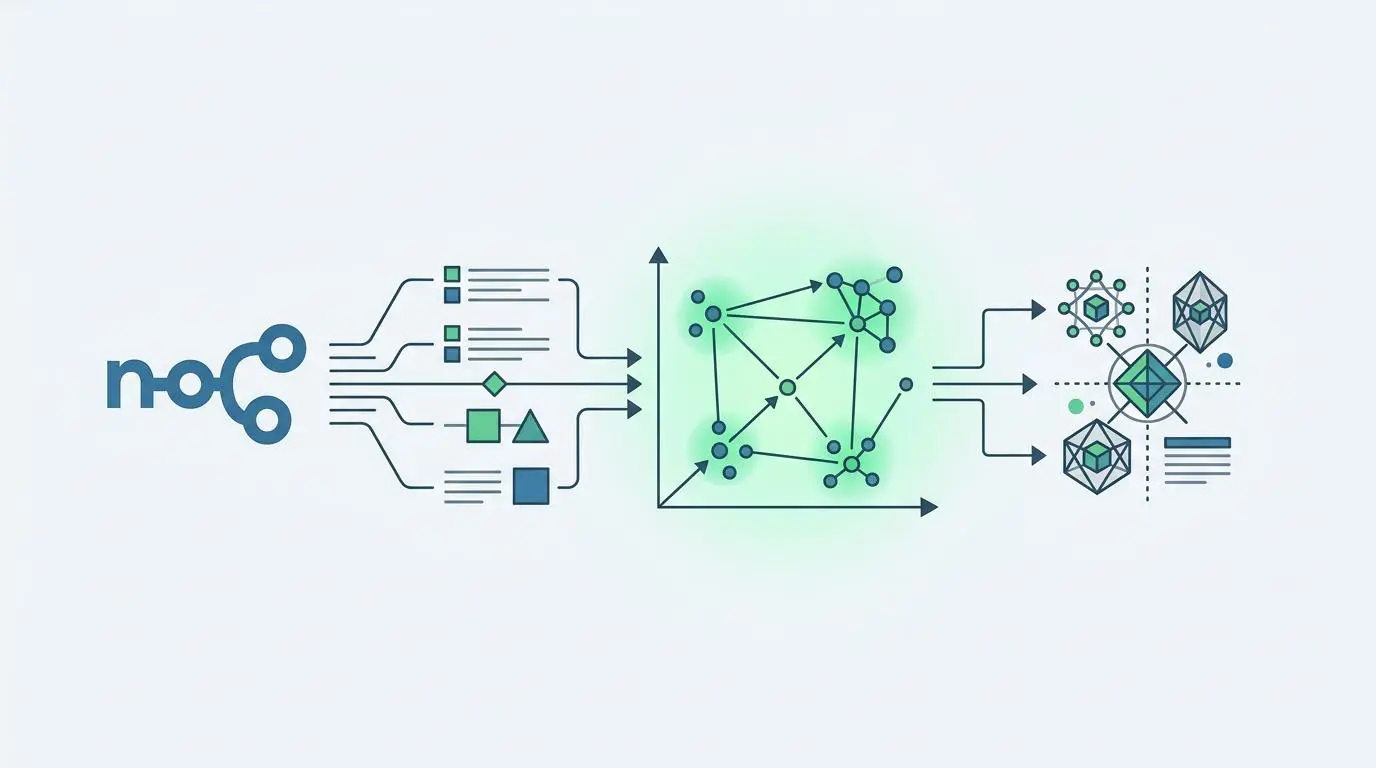
You need a mechanism to ground the AI in absolute, real-time reality. Integrating n8n Vector Store nodes directly into your verification pipeline solves this problem.
This allows you to inject proprietary brand data, internal wikis, and updated PDFs directly into the AI’s context window. We call this Retrieval-Augmented Generation, or RAG.
By forcing the Anthropic evaluator node to verify the draft against your verified vector database, you anchor the content in 2026 reality. The AI is no longer guessing based on historical knowledge cutoffs.
It is actively citing your own trusted documentation to validate every sentence. This semantic enrichment process not only kills hallucinations but dramatically increases the topical depth and entity relevance of your final published page.
Protecting Crawl Budget with Smart Indexing
Wasting your precious crawl budget on low-quality, hallucinated AI content is a guaranteed way to invite site-wide thin content penalties. Search engines allocate a finite amount of resources to crawl your domain.
If Googlebot repeatedly encounters unverified garbage, it will simply stop crawling your site entirely. Your Pre-Publish AI Verification Pipeline acts as a shield for your technical authority.
Within n8n, you can build conditional logic that ties directly to the IndexNow API. This creates a hyper-efficient, real-time indexing strategy.
The workflow only triggers the IndexNow API ping after a content piece achieves a Hallucination Score below 3 percent from the Claude evaluator node. This guarantees that search engines are only ever invited to crawl your absolute best, factually bulletproof content.
By strictly controlling the indexing pipeline, you train Googlebot to associate your domain with uncompromising quality. This results in faster indexing times and higher initial ranking placements.
The Era of Autonomous Content Governance
The future of technical SEO is rapidly shifting toward autonomous content governance. By 2027, static publishing will be obsolete.
Instead, AI agents will perform real-time, SERP-aware re-validation of your live content. They will update facts dynamically as the external world changes.
Building a robust verification pipeline today is the foundational step toward that autonomous future. It transforms your SEO operation from a reactive, manual struggle into a proactive, programmatic powerhouse.
You stop fighting hallucinations and start scaling absolute authority. Navigating the intersection of technical SEO, programmatic architecture, and workflow automation requires a sharp strategy.
To future-proof your site’s architecture and scale with precision, connect with Andres at Andres SEO Expert.
Frequently Asked Questions
What is a Pre-Publish AI Verification Pipeline in SEO?
A Pre-Publish AI Verification Pipeline is an automated programmatic system that interrogates, verifies, and scores AI-generated content before it reaches a CMS. By using tools like n8n and Anthropic’s Messages API, it acts as a digital border patrol to catch hallucinations that human editors might miss during high-velocity production.
What is the typical hallucination rate for modern AI language models?
According to data from the Vectara hallucination benchmark, even the most advanced large language models (LLMs) maintain a factual error rate floor of approximately 3.3 percent. This means that in a standard reasoning task, roughly three out of every hundred claims generated are likely to be entirely fabricated.
How does the Discernment Deficit impact AI content strategy?
The Discernment Deficit occurs when the volume of AI output exceeds the capacity of human editors to verify accuracy. As LLM outputs become more fluent and polished, research suggests human fact-checking frequency actually drops by 3.7 percent, allowing subtle but dangerous factual errors to slip into live production environments.
What is the Chain-of-Verification (CoVe) prompting technique?
Chain-of-Verification is an AI prompting strategy where a model is forced to break down its own draft into individual factual claims and verify each one independently. This internal cross-examination identifies logical inconsistencies and data fabrication before the content leaves the automated workflow environment.
How does Retrieval-Augmented Generation (RAG) reduce AI hallucinations?
RAG reduces hallucinations by grounding the AI in a specific, verified dataset—such as internal brand wikis or updated PDFs—rather than relying solely on static training data. By injecting this real-time context via vector stores, the AI is forced to cite trusted sources to validate its output, preventing factual drift.
How does automated verification protect search engine crawl budget?
Automated verification ensures that search engines only crawl high-quality, factually accurate content. By integrating verification scores with APIs like IndexNow, site owners can ensure that only pages meeting strict accuracy thresholds are submitted for indexing, training search bots to associate the domain with uncompromising technical authority.