



Key Points
- Token Efficiency: Implementing the llms.txt standard bypasses heavy HTML parsing, reducing LLM token consumption by up to 10x for faster agentic retrieval.
- RAG Optimization: The llms-full.txt companion file embeds semantic chunks into a single fetch, enabling real-time retrieval without multi-hop crawling.
- B2A Routing: It acts as a Business-to-Agent signal, ensuring real-time AI search visibility even when training bots are blocked via robots.txt.
Table of Contents
The Signal in the Noise
Think of traditional search engines as a dusty library catalog cluttered with sticky notes and scribbles. Generative Engine Optimization changes this dynamic by handing a perfectly typed executive summary directly to a brilliant but easily distracted personal assistant.
When AI agents from OpenAI or Perplexity visit your website, they face a massive technical hurdle known as the HTML Noise problem. These bots waste up to 90% of their limited context window reading navigation menus, pop-up ads, and tracking scripts.
This massive token waste leaves very little room for your actual high-signal content to be processed. To fix this inefficiency, forward-thinking websites are adopting a new protocol to speak directly to these machines.
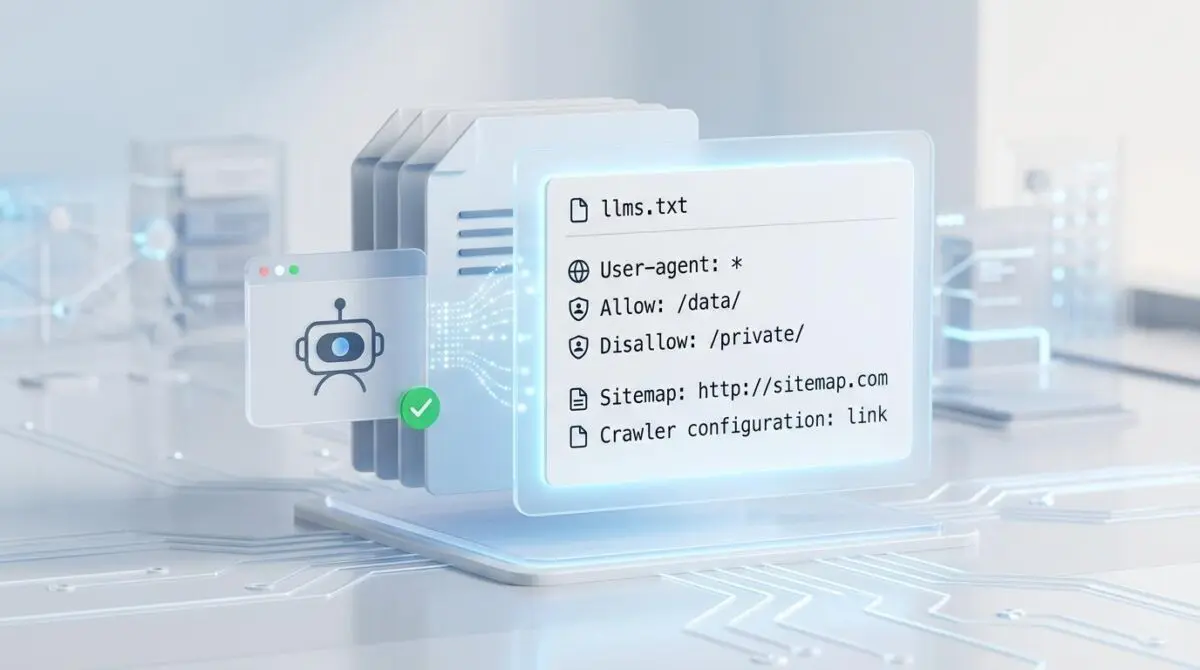
By executing an llms.txt standard implementation, you provide a clean and structured map that tells AI exactly what matters. It becomes the ultimate translation layer between human-friendly design and machine-driven logic.
Without this file, your brand forces the smartest AI models to dig through digital trash just to understand your business. With it, you serve your core expertise on a silver platter.
Measuring the AI Retrieval Impact

The shift toward machine-readable content is happening faster than most brands realize. This creates a massive divide between optimized and invisible websites. A recent study of 300,000 domains by SE Ranking confirmed that roughly one in ten websites has implemented the llms.txt standard to guide AI retrieval.
This adoption rate among top domains highlights a quiet race to become the preferred source for AI answers. Brands implementing this protocol actively lower the computational cost for AI engines crawling their sites.
However, we are still in the early days of this architectural transition. A massive analysis of over 500 million LLM bot events by Limy.ai revealed that only a fraction of visits specifically targeted the llms.txt file.
This fascinating discrepancy indicates that major AI search engines still heavily prioritize traditional HTML parsing over this emergent standard. The infrastructure is being built, but crawlers are just beginning to adapt their behavior to look for it.
Yet, the rewards for early adopters who bridge this gap are staggering. Research shows that providing structured content and clear citations can lift source visibility in AI engines by up to 40%.
By giving AI models exactly what they want in a format they can easily digest, brands secure their spot in AI Overviews and chat-based answers. It is a pure competitive advantage hidden in plain text.
Bypassing the HTML Tax
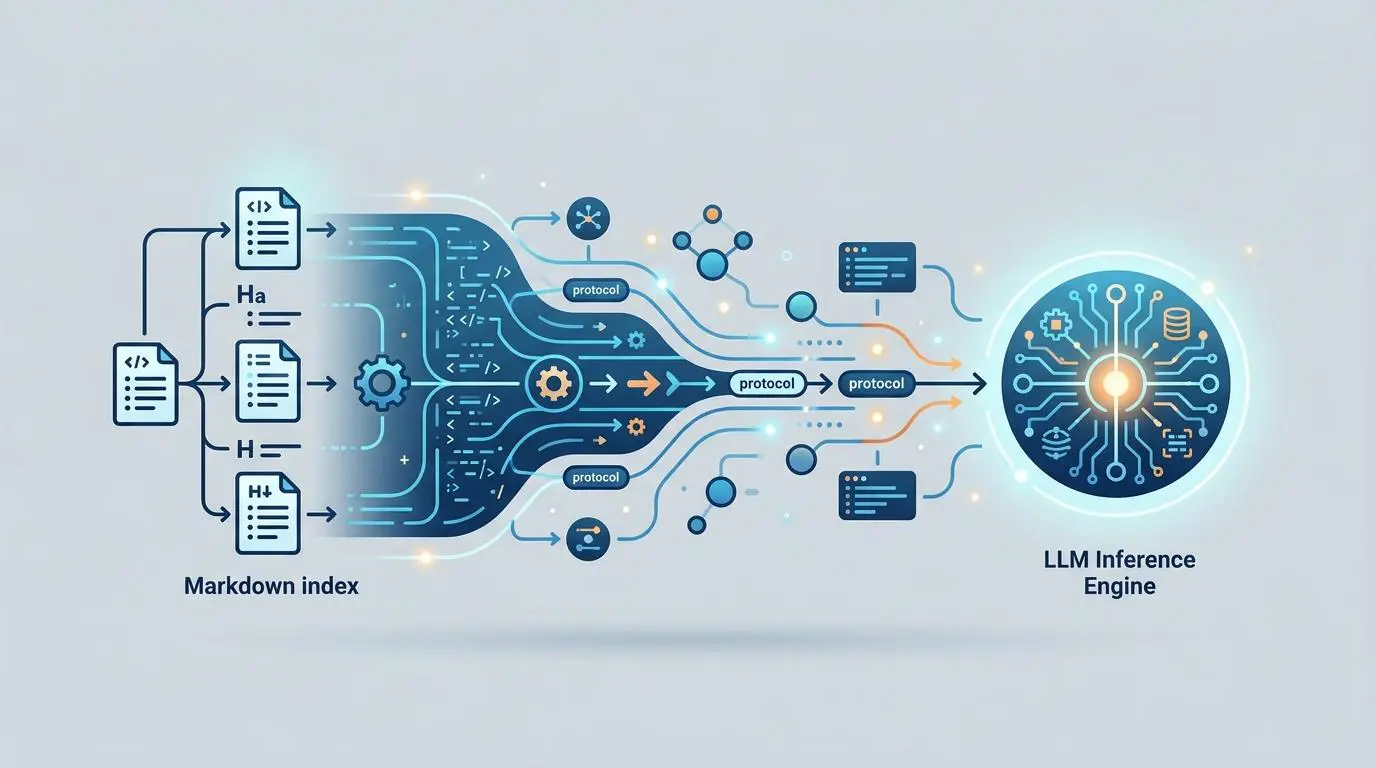
The llms.txt protocol serves as a curated Markdown index located right at your site’s root directory. It is specifically designed for LLM inference-time navigation via APIs from major players like OpenAI and Anthropic.
Think of it as a VIP entrance for AI crawlers. Instead of forcing a bot to parse complex web design, it hands over a clean and text-only menu of your most important pages.
Standard HTML parsing requires significant token overhead, which slows down the AI and increases computing costs. Every structural tag, CSS class, and JavaScript function is a distraction from your core message.
The llms.txt file solves this by reducing token consumption by up to 10x. It provides clean and structured summaries optimized entirely for agentic retrieval rather than human eyeballs.
This efficiency makes your site incredibly attractive to platforms like Perplexity that rely on speed and accuracy. When you remove the HTML tax, you drastically increase the likelihood of being selected as a primary source.
Serving Pre-Chewed Data
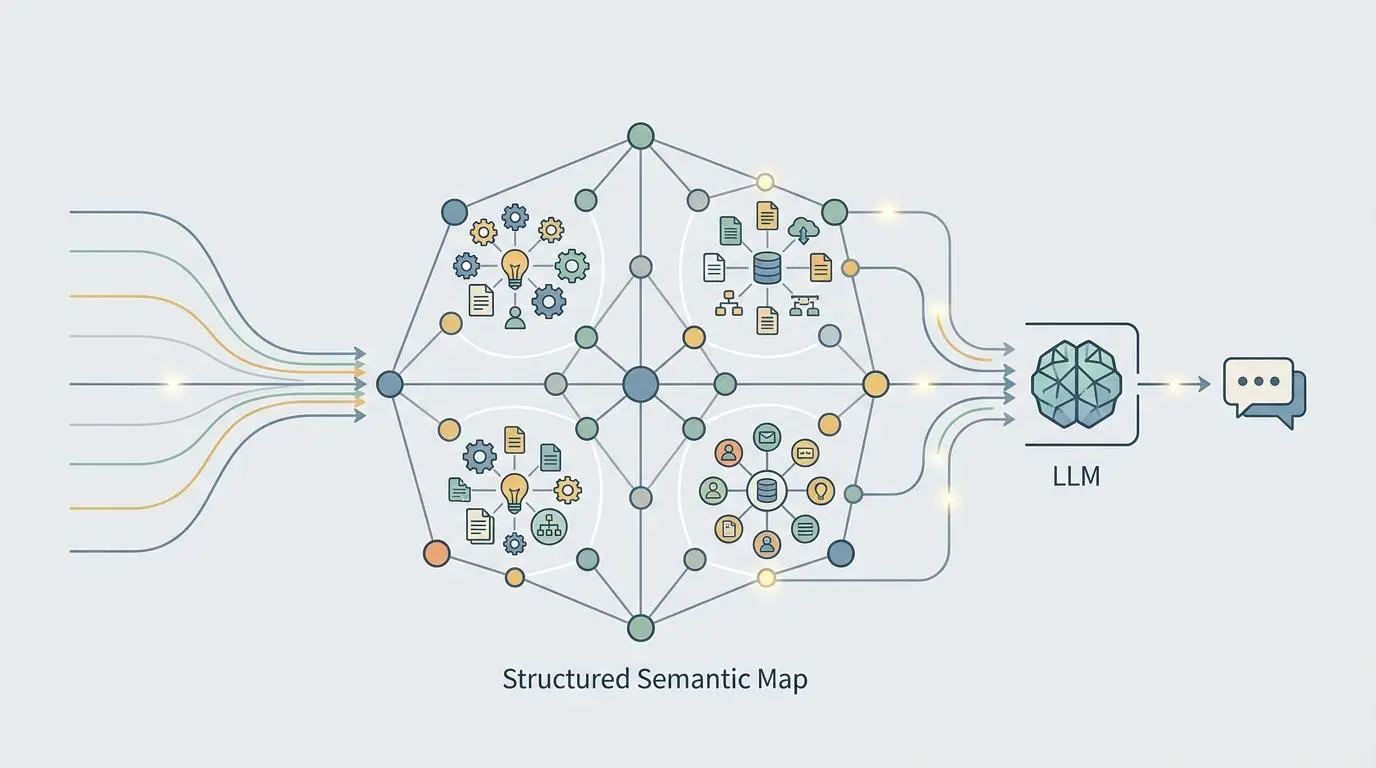
Traditional XML sitemaps were built for old-school crawlers and provided nothing more than a blind list of URLs. Today, AI agents require pre-chunked and high-density semantic maps to truly understand context.
Without this semantic mapping, AI models risk hallucinating during real-time user session research. They need immediate access to dense facts rather than just a roadmap of where those facts might live.
This is where the companion file, llms-full.txt, changes the game entirely. It embeds actual page content into a single fetch, acting like a compressed archive of pure knowledge.
This brilliant architecture facilitates immediate retrieval-augmented generation without the need for multi-hop crawling. The AI does not have to click through your site to piece together an answer.
By serving this pre-chewed data, the AI can instantly digest your core concepts. This drastically improves the chances of your brand being featured accurately and prominently in a generated response.
Directing the Agentic Traffic
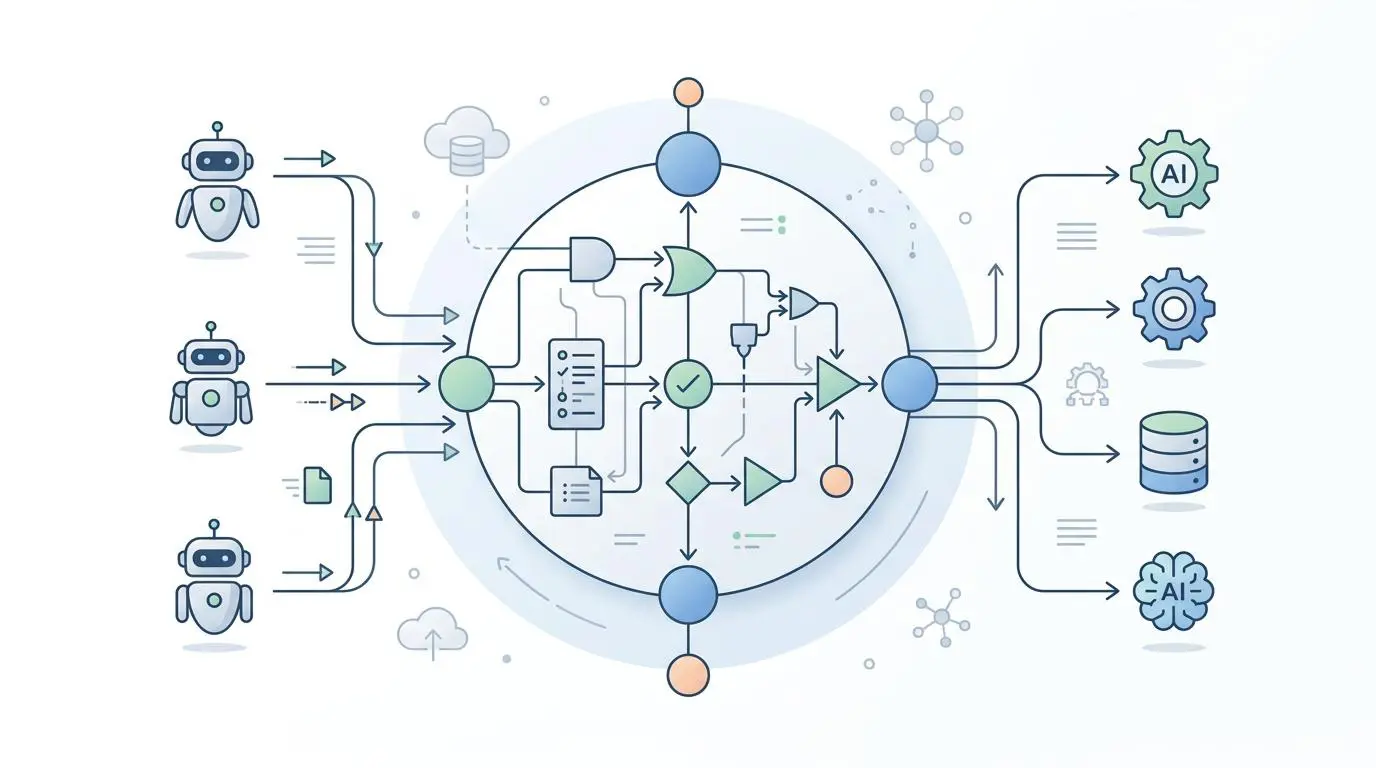
Managing bot traffic has become incredibly nuanced as the web transitions to an AI-first ecosystem. Distinct crawler logic now strictly separates training bots from live search bots.
Many webmasters panic about their data being scraped for training and block everything via their robots.txt file. Unfortunately, these misconfigured files often block search citations accidentally and make brands completely invisible to AI users.
The llms.txt file provides a crucial routing layer for agentic bots to navigate this complex permissions landscape. It functions perfectly even when your main robots.txt restricts broad training access.
It acts as a secondary Business-to-Agent signal that whispers directly to the search bots. It essentially tells the bot that it cannot use the data for training, but it can absolutely quote the brand for a user’s question.
This strategic routing ensures that your intellectual property is protected while your real-time search citations remain fully active. It is the ultimate balance between brand safety and digital visibility.
Becoming the Ultimate Source
AI models are notorious for citing outdated or low-authority third-party sources when answering technical questions. They often grab the first piece of information they find, even if it is an old forum post instead of your official documentation.
Major platforms use the llms.txt standard implementation to solve this exact attribution problem. They understand that AI coding agents need absolute precision.
These tech giants use the file to ensure AI agents cite the most relevant and current technical documentation rather than legacy versions scattered across the web. They take full control of the narrative.
By offering a verified and machine-readable cheat sheet, you force the AI to prioritize your brand’s truth over random internet noise. You eliminate the guesswork from the retrieval process.
This creates an automated pipeline of authority directly from your servers to the user’s screen. You are no longer hoping the AI finds the right answer because you are guaranteeing it.
The Dawn of Dynamic Agent Endpoints
The Agentic Web will soon evolve the llms.txt standard from a simple static file into a highly dynamic API endpoint. It will no longer just be a text file sitting on a server, but a living and breathing communication channel.
This dynamic endpoint will serve personalized and real-time context windows to autonomous agents based entirely on their specific mission intent. If an AI wants to buy a product, it gets pricing data, and if it wants to learn, it gets tutorials.
This means your website will actively negotiate with AI agents to provide the exact data they need to close a sale or answer a query. The static web is fading, and the conversational, agent-driven web is taking its place.
Navigating the intersection of Generative Engine Optimization, AI Search architecture, and workflow automation requires a sharp strategy. To future-proof your brand’s visibility in LLMs and scale with precision, connect with Andres at Andres SEO Expert.
Frequently Asked Questions
What is the llms.txt standard and how does it improve AI visibility?
The llms.txt standard is a machine-readable Markdown file located at a website’s root directory that provides a clean map for AI agents. It improves visibility by serving high-signal content directly to LLMs, ensuring brands are accurately cited in AI Overviews and chat-based responses.
What is the “HTML Noise” problem in Generative Engine Optimization?
The HTML Noise problem refers to AI agents wasting up to 90% of their memory or context window parsing non-essential elements like navigation menus, tracking scripts, and ads. GEO solves this by providing a text-only translation layer that eliminates token waste.
How does implementing llms.txt reduce token consumption for AI crawlers?
By bypassing the “HTML Tax” of complex web design, an llms.txt file can reduce token consumption by up to 10x. This efficiency makes a website more attractive to AI search engines like Perplexity and OpenAI, as it lowers their computational costs during retrieval.
What is the difference between llms.txt and llms-full.txt?
While llms.txt acts as a summary index for AI navigation, llms-full.txt embeds actual page content into a single fetch. This pre-chewed data format facilitates immediate retrieval-augmented generation (RAG) without the need for the AI to perform multiple crawl hops.
Can llms.txt help protect intellectual property while maintaining AI search citations?
Yes, llms.txt functions as a Business-to-Agent (B2A) signal that can direct search bots even when robots.txt restricts training bots. This ensures that a brand’s real-time search visibility remains active while protecting data from being used to train new models.
How much can optimized content lift a source’s visibility in AI search engines?
According to research from Princeton and Georgia Tech, websites that provide structured content and clear citations to AI models can see a lift in source visibility of up to 40% compared to non-optimized sites.