Key Points
- Entity Authority Over Domain Authority: High domain metrics no longer guarantee visibility; AI engines require verified Knowledge Graph Entity Identification to cite your brand.
- Clean Data Beats Noisy Code: Legacy HTML truncates AI context windows, making structured, subject-action-object data crucial for Retrieval-Augmented Generation (RAG).
- Cryptographic Trust Multipliers: With the rise of synthetic saturation, AI search engines prioritize entities that mathematically prove human authorship and expertise.
Table of Contents
The Invisible Cost of Being Nobody to an AI
Think of traditional search engines as a massive, dusty library catalog. You cross your fingers and hope your keyword matches a book title. In contrast, Generative Engine Optimization (GEO) is like earning a glowing recommendation from a hyper-intelligent personal assistant.
But what happens when that brilliant assistant does not even know you exist? This represents the core challenge of modern digital visibility.
We are currently facing a massive semantic disconnect in the digital landscape. Most organizations still treat their online footprint as a scattered collection of fragmented keywords.
Meanwhile, advanced AI models are looking for a single, verified node of truth within their vast data networks. This is exactly where Knowledge Graph Entity Identification becomes your most vital asset.
Without a clear entity identity, advanced AI models will bypass authoritative brands entirely. Instead, they pull easily parseable, lower-quality data that fits neatly into their existing knowledge clusters.
The Real-World Impact of AI Search Blindness
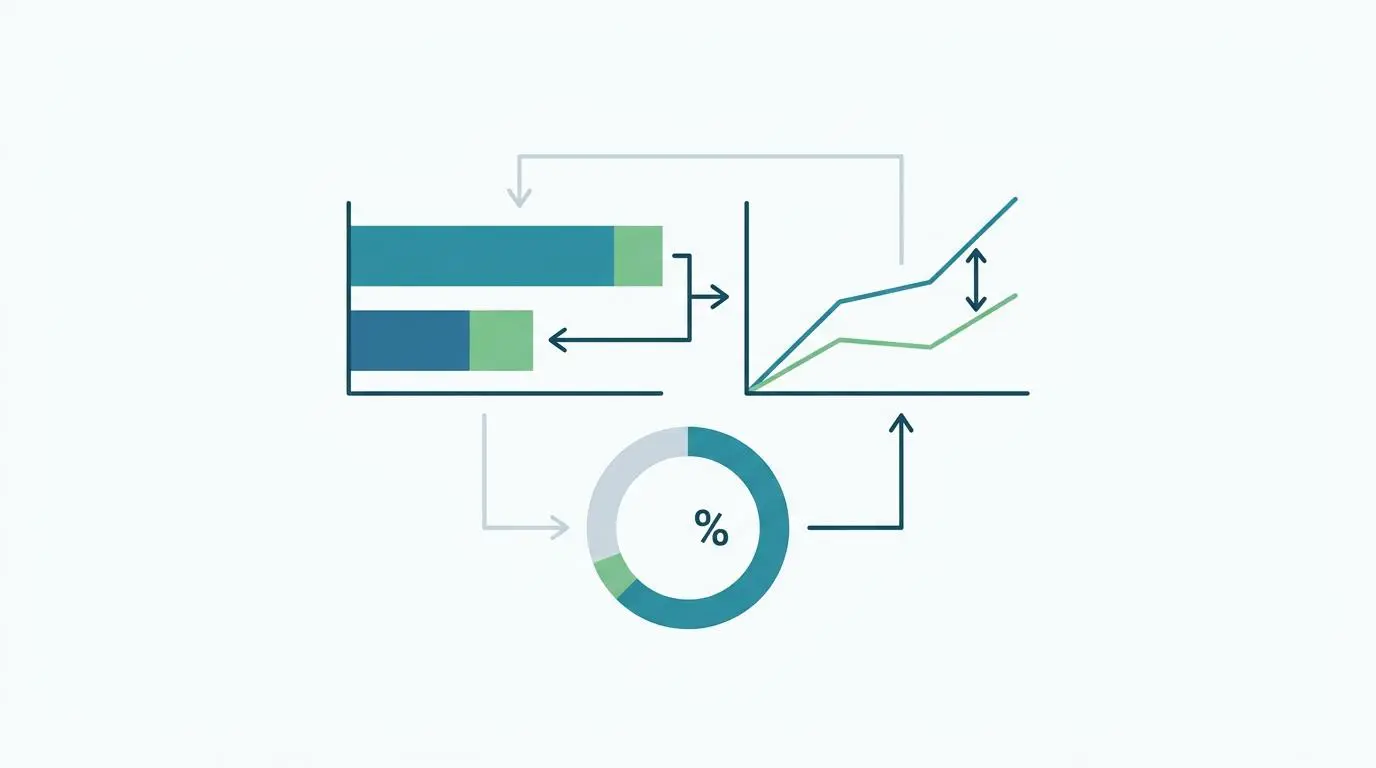
The shift from traditional scrolling to conversational AI answers is not a distant future. It is happening right now, and the numbers paint a stark picture for unprepared businesses.
In fact, Gartner’s prediction on AI search volume drop highlights a massive behavioral shift in how users find information. People are bypassing traditional blue links entirely in favor of instant, synthesized answers.
This rapid change has created what experts call the AI Citation Gap. Brands without a verified Knowledge Graph entry are missing from a vast majority of relevant AI-generated overviews.
However, there is a massive upside for those who adapt quickly. Internal performance data reveals a staggering return on investment for proactive brands utilizing entity linking.
Pages utilizing precise, entity-aligned linking receive significantly more citations in advanced AI answers than pages relying on outdated keyword stuffing. This aligns perfectly with recent research on Generative Engine Optimization (GEO) visibility, proving that structuring data for AI comprehension is the ultimate competitive advantage.
From Keywords to Digital Fingerprints

Today, many established businesses are battling the Ghost Entity Problem. This occurs when a company boasts high traditional domain authority but possesses zero actual entity authority.
Their brand mentions are inconsistent across social profiles, press releases, and official registries. As a result, AI engines simply ignore them when generating curated lists or product recommendations.
To fix this, your brand must transition from a loose collection of web pages into a concrete, undeniable entity. AI engines now rely heavily on specific digital identifiers to ground their generative responses in reality.
By connecting your digital presence to established, verified databases, you give the AI a definitive digital fingerprint. You are no longer just a website, but rather a verified, trusted fact in the AI universe.
Translating Your Brand for the Machines

Even if you are a recognized entity, you must still speak the native language of the AI. Most legacy website platforms output incredibly noisy, cluttered code.
This digital clutter quickly fills up the limited context window of an AI model. Consequently, the AI truncates or completely ignores your most important business facts during its retrieval process.
Modern AI search engines have transitioned to extracting simple, subject-action-object statements. They want the raw facts without the heavy marketing fluff.
By feeding AI crawlers pre-digested facts through clean, structured data, you remove the heavy lifting. The AI requires zero extra computing power to understand exactly what you do and who you serve.
Interestingly, recent studies have discovered a phenomenon known as Zero-Shot Citation Bias. Researchers found that AI models are significantly more likely to cite an entity if its name appears early on a webpage in a clean, structured format.
Proving Your Humanity in a Sea of Bots

The internet is rapidly filling with AI-generated text, leading to a crisis known as Synthetic Saturation. Because of this, AI search engines are becoming deeply skeptical of all unverified content.
Even high-quality, human-written articles are being flagged as low trust. This happens if they are not cryptographically linked to a known, real-world entity.
To combat this saturation, search engines are applying a strict trust weight multiplier to entities with verified expert contributors. They need mathematical proof of human origin.
By leveraging new content authenticity protocols, you can digitally sign your content. This proves to the AI that real, authoritative humans are behind the screen, instantly boosting your credibility.
Correcting the AI’s Memory
What happens when an AI learns something wrong about your brand? We call this Foundational Model Latency, and it is a modern nightmare for digital reputation management.
Once a large language model associates your entity with an outdated or negative fact, traditional SEO tactics cannot fix it. The AI has baked that information deep into its probabilistic memory.
Correcting this requires massive, multi-channel entity-reinforcement campaigns. You must flood the trusted data sources of the AI with the correct information to gradually shift its output.
Businesses can now use specialized tools to audit how their entity is weighted inside the brain of a model. This allows you to spot biases and correct the memory of the AI before it recommends a competitor to your best clients.
The Dawn of Predictive Visibility
In the near future, the digital landscape will pivot entirely toward predictive entity syncing. Brands will no longer wait passively for search engines to crawl their static web pages.
Instead, they will maintain live data nodes that AI models query instantly. This will fetch the absolute latest pricing, stock levels, and service specs in real-time, bypassing traditional indexing.
The era of hoping to be found through clever keywords is officially over. The future belongs to brands that proactively integrate themselves into the very fabric of AI knowledge graphs.
Navigating the rapid shift from traditional search engines to Generative Engine Optimization requires a sharp strategy. To future-proof your brand visibility in AI Overviews and LLMs, connect with Andres at Andres SEO Expert.
Frequently Asked Questions
What is Generative Engine Optimization (GEO) and why is it important?
Generative Engine Optimization (GEO) is the practice of structuring digital content to be easily understood and cited by AI models and LLMs. It is essential because AI search engines prioritize verified entity data over traditional keywords, determining which brands are featured in conversational answers.
What is the AI Citation Gap and how does it affect brand visibility?
The AI Citation Gap refers to the 82% loss in visibility that brands without a verified Knowledge Graph entry face in AI-generated overviews. Bridging this gap through entity-aligned linking can result in a 3.5x higher citation rate in advanced AI answers compared to traditional keyword methods.
How does the “Ghost Entity Problem” impact digital authority?
The Ghost Entity Problem occurs when a brand has high traditional domain authority but zero entity authority in AI networks. Because their digital presence is inconsistent across social profiles and registries, AI engines fail to recognize them as a concrete entity, leading the AI to bypass them for search recommendations.
How can businesses fix incorrect information within an AI model’s memory?
Correcting Foundational Model Latency requires multi-channel entity-reinforcement campaigns. Since AI models bake information deep into their probabilistic memory, businesses must flood the AI’s trusted data sources with updated, verified facts to shift the model’s future outputs.
What is Zero-Shot Citation Bias and how does it affect SEO strategy?
Zero-Shot Citation Bias is the phenomenon where AI models are 45% more likely to cite an entity if its name appears in a clean, structured format within the first 100 words of a page. This makes it critical to provide “pre-digested” facts that the AI can process without heavy computational effort.
What is Synthetic Saturation and how can brands prove their humanity?
Synthetic Saturation is the flood of unverified AI-generated text online. Brands can combat this by using content authenticity protocols and digital signatures to link content to known real-world experts, providing the mathematical proof of human origin that modern search engines require for high trust weighting.