Key Points
- Intelligent Filtering: Utilize the ListenNotes Global Score and Zapier webhooks to automatically qualify top-tier podcast targets.
- Programmatic Scaling: Leverage similar-podcast endpoints to expand prospect lists while carefully managing API rate limits.
- Automated Structured Data: Dynamically inject PodcastSeries and Speakable JSON-LD into your press pages upon episode publication.
Table of Contents
The Hidden Tax of Manual Podcast Prospecting
The invisible cost of manual SEO execution is quietly devouring your digital PR budget. Every hour spent clicking through podcast directories to find the perfect guest spot is an hour lost to inefficiency. Vetting a show’s true authority versus its topical relevance remains a massive labor sink.
This manual friction inevitably leads to low-quality backlink profiles and high bounce rates on outreach emails. Fatigued outreach teams often resort to generic templates that high-profile founders simply ignore. Pitching a SaaS marketing podcast with a supply chain management angle instantly burns valuable bridges.
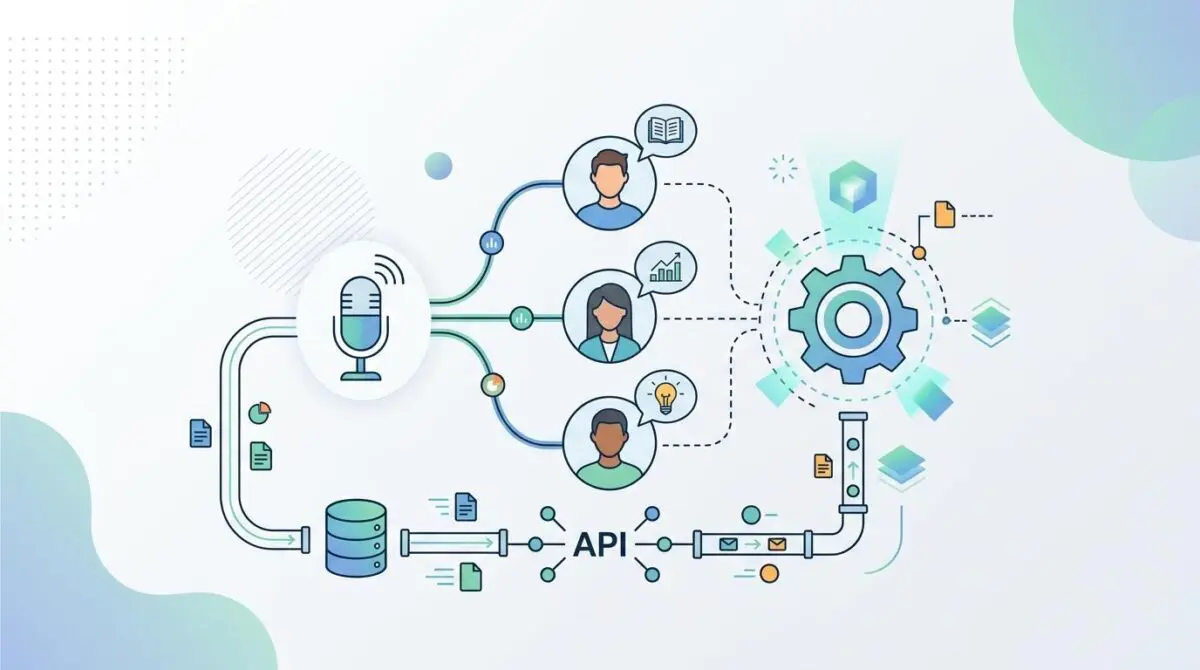
The ultimate architectural solution to this bottleneck is API-driven audio outreach automation. Connecting rich podcast databases directly to your outreach pipelines completely eliminates the guesswork. It is like replacing a hand-held magnifying glass with an automated, high-speed sorting machine.
Instead of manually verifying listener counts and episode topics, your system programmatically filters out the noise. You can instantly pinpoint shows that align perfectly with your core SEO entities. This allows your team to focus entirely on building relationships rather than wrestling with spreadsheets.
The Anatomy of a High-Converting Pitch
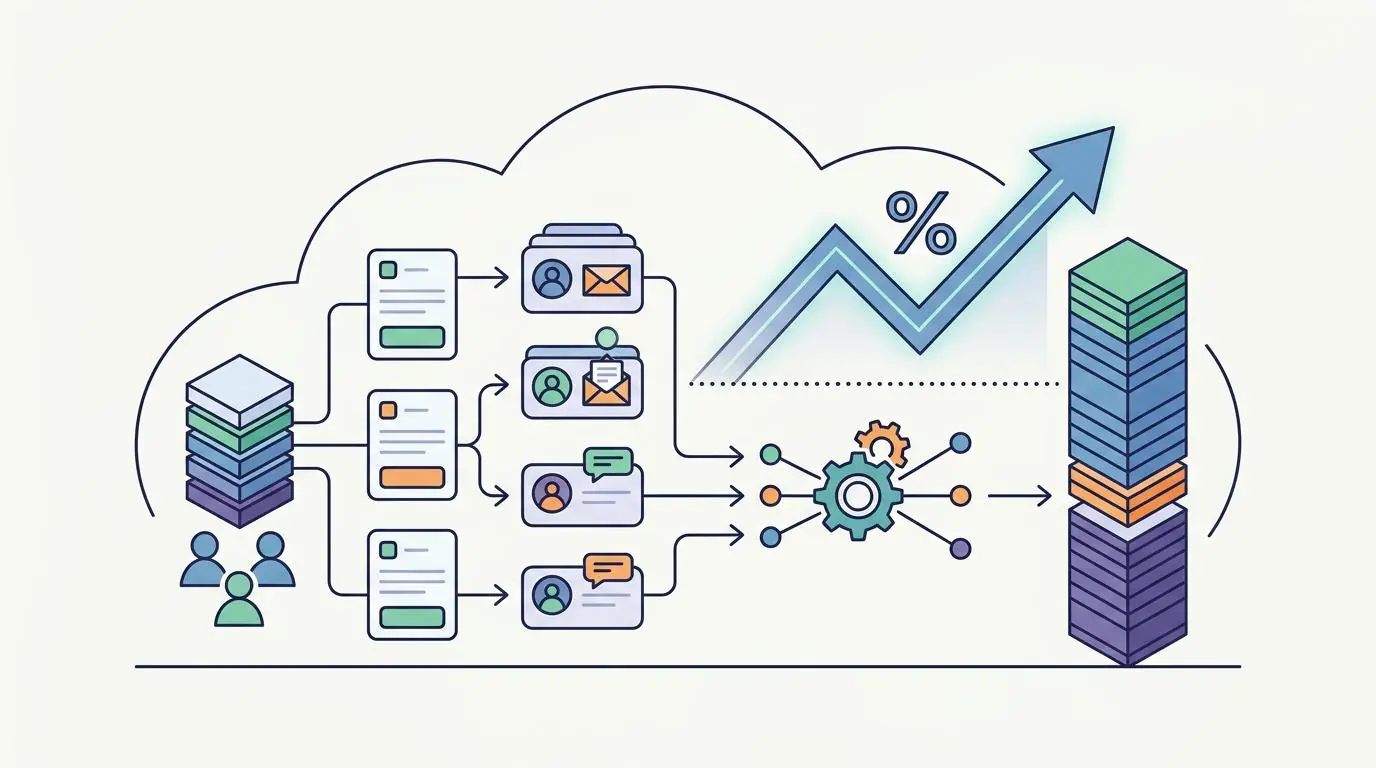
When you shift from manual guessing to programmatic targeting, the performance leap is undeniable. A 2026 Pitchbox industry analysis on personalized outreach revealed that emails leveraging dynamic API-injected episode data see an 18.4% higher positive response rate compared to static templates. This is not just about sounding polite; it is about proving relevance at scale.
Injecting recent episode themes directly into your pitch signals to the host that you are a genuine listener. This dynamic personalization bypasses the standard spam filters in a founder’s brain. It transforms a cold email into a warm, context-rich introduction.
Furthermore, the sheer volume of audio real estate available today is staggering. As of June 2026, the ListenNotes index has surpassed 3.2 million active podcasts, enabling hyper-niche programmatic targeting for specific SaaS founder keywords. Tapping into this massive database manually is practically impossible.
Routing this vast index through your automation architecture uncovers hidden gems that your competitors are ignoring. You can identify rising-star podcasts before they become saturated with generic PR pitches. This data-driven approach ensures your link acquisition strategy remains highly efficient and infinitely scalable.
Engineering the Digital PR Pipeline
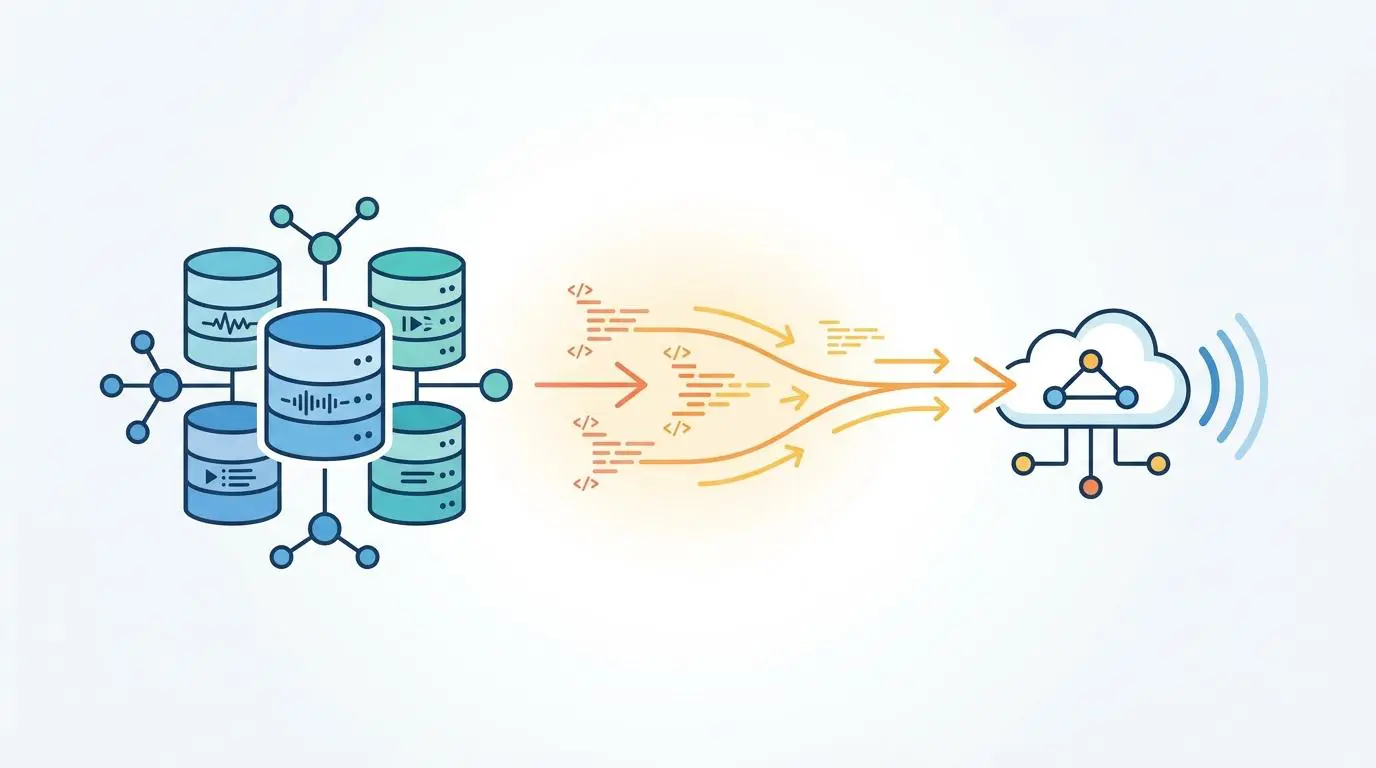
Building an automated digital PR pipeline requires integrating the ListenNotes search endpoints with cloud webhooks. This combination allows you to aggressively filter shows by their global score, ensuring you only target the top one percent of podcasts. You can also filter by language to guarantee perfect alignment with your target audience.
The ListenNotes global score utilizes a proprietary social-velocity algorithm that tracks real-time mention spikes across major networks. This makes it a more accurate predictor of SEO link potential than legacy domain rating metrics. You are targeting shows with actual human momentum rather than just inflated domain metrics.
However, the real-world friction lies in managing deduplication across massive podcast networks. Often, the same host manages multiple feeds or syndicates their content across different brands. Pitching the same host three times in one week for different shows is a fast track to being blacklisted.
To solve this, your programmatic architecture must include a robust deduplication layer within your CRM or database. Matching host names and primary contact emails before a webhook triggers the outreach sequence protects your brand’s reputation. This ensures your automated pitches remain professional, targeted, and highly effective.
Programmatic Prospect Expansion
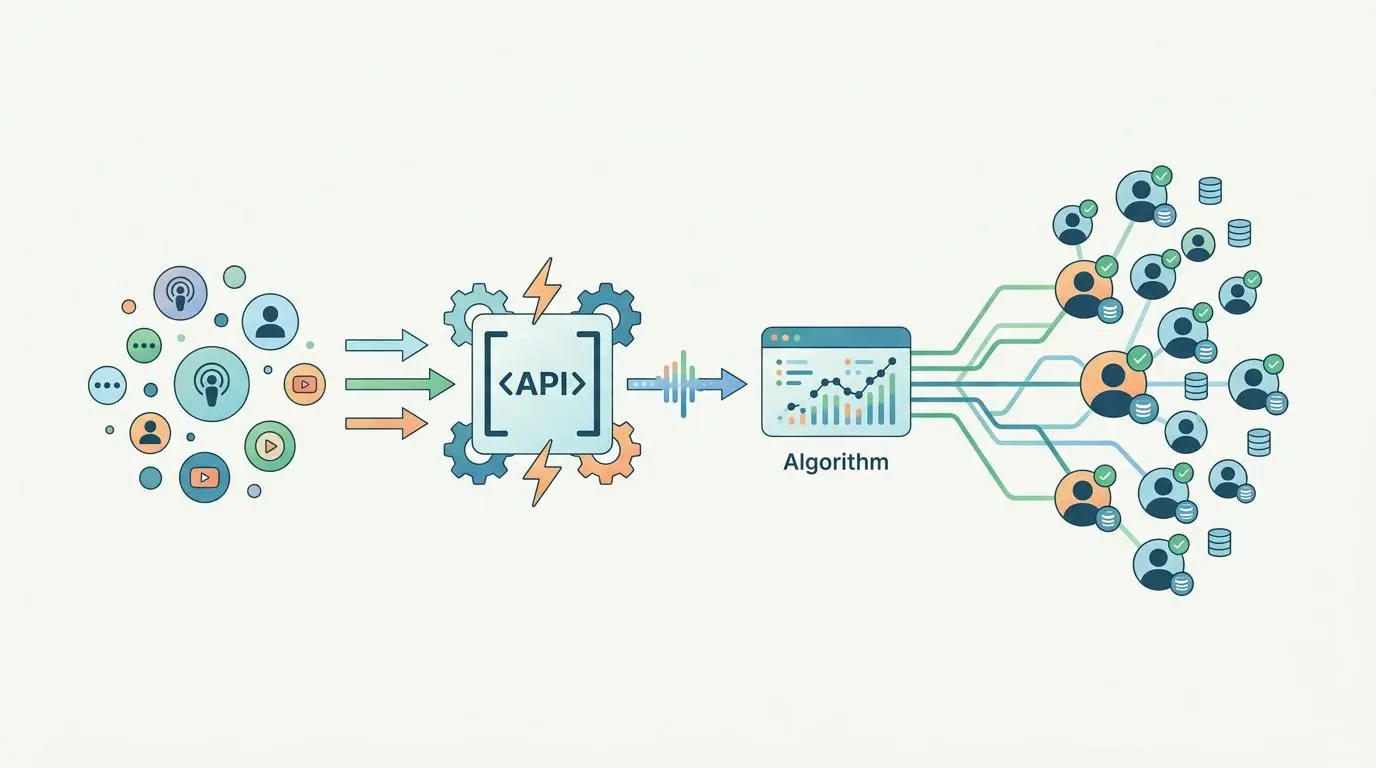
Once you secure placements on high-authority podcasts, you can use those wins to fuel further outreach. Utilizing similar-podcast endpoints allows you to programmatically expand your prospect lists. You simply feed your existing, successful podcast appearances back into the API as seed data.
The API then returns a curated list of shows that share the same audience demographics and topical clusters. It is like mapping a constellation of backlink opportunities based on a single bright star. This creates a self-sustaining loop of highly relevant outreach targets.
The primary friction here is maintaining API rate limits while attempting to scale outreach across massive founder databases. Professional plans typically cap monthly requests, which can vanish quickly if your automation runs unchecked. Hitting a rate limit mid-campaign will abruptly break your automated workflows.
To navigate this, you must implement intelligent pacing and caching strategies within your programmatic architecture. Storing previously queried similar podcasts in a local database prevents redundant API calls. Throttling your webhooks ensures you stay within your limits while maintaining a steady flow of fresh prospects.
Defending Against AI Pitch Hallucinations

Personalization at scale requires advanced artificial intelligence to craft the actual pitch copy. Passing the description field from the API into a modern language model generates highly contextual emails. The AI can be prompted to create unique, listener-first pitch angles that reference specific recent episode themes.
This transforms a dry API payload into a compelling narrative that resonates with the podcast host. The AI acts as a digital copywriter, analyzing the show’s tone and extracting the most relevant talking points for your proposed guest. It ensures your pitch feels handcrafted, even when generated by a machine.
The real-world friction is the high cost and latency of real-time inference when processing thousands of podcast episodes. Ensuring the pitch does not reference outdated or hallucinated guests requires strict quality assurance. If the AI hallucinates a previous guest or misinterprets an episode’s theme, the pitch will fail spectacularly.
To combat this, your architecture must include an AI verification pipeline before any email is sent. This might involve a secondary pass to verify facts against the raw API data, or a human-in-the-loop approval dashboard for high-tier targets. Balancing automation speed with rigorous hallucination checking is the key to sustainable success.
Automating Podcast Structured Data
Securing the podcast appearance is only half the battle; maximizing its SEO value is the final step. Programmatically generating JSON-LD for podcast and speakable entities on your press page is critical. This should happen automatically once a guest appearance is confirmed and the host’s RSS feed updates.
This structured data signals to search engines exactly what the audio content is about and who is speaking. It transforms a standard backlink into a rich, semantic entity that search engines can easily digest and display in rich results. It is the technical bow that ties your digital PR efforts together.
The technical difficulty lies in dynamically pulling the audio length and transcript via API to populate these rich results. RSS feeds are notoriously inconsistent, and extracting clean transcript data often requires secondary transcription APIs. If the structured data is incomplete or malformed, search engines will simply ignore it.
Your automation must be resilient enough to handle missing data gracefully. Combining podcast APIs with automated transcription services allows you to compile the necessary data points to build robust JSON-LD payloads. This ensures your press page becomes a powerful, structured hub for all your audio backlinks.
The Dawn of Agentic Audio Negotiation
The emergence of agentic audio negotiation will completely redefine digital PR in the near future. We will see AI agents autonomously negotiating do-follow backlink requirements in show notes and technical SEO parameters before a human founder even approves the recording date. These agents will handle the entire back-and-forth communication process.
Imagine a world where your AI outreach agent securely verifies the domain authority, negotiates the anchor text, and confirms the publication timeline in milliseconds. The human element will be reserved strictly for the actual podcast conversation. This shift will turn audio outreach into a highly predictable, programmatic science.
Navigating the intersection of technical SEO, programmatic architecture, and workflow automation requires a sharp strategy. To future-proof your site’s architecture and scale with precision, connect with Andres at Andres SEO Expert.
Frequently Asked Questions
What are the benefits of API-driven podcast outreach for SEO?
API-driven outreach eliminates manual prospecting bottlenecks by programmatically filtering shows based on topical relevance and authority. This architectural shift can improve positive response rates by 18.4% through data-injected personalization and ensures a more scalable link acquisition strategy.
How does the ListenNotes Global Score differ from legacy SEO metrics?
The ListenNotes Global Score utilizes a proprietary social-velocity algorithm that tracks real-time mention spikes on platforms like X and LinkedIn. This provides a more accurate predictor of human momentum and SEO link potential than legacy metrics such as Domain Rating.
How can AI hallucinations be prevented in automated podcast pitching?
To defend against hallucinations, outreach architectures must include a verification pipeline. This involves using a secondary LLM pass or a human-in-the-loop dashboard to cross-reference AI-generated pitches against raw API metadata before any emails are sent.
Why is JSON-LD structured data important for podcast guest spots?
Implementing JSON-LD for PodcastSeries and Speakable entities signals to search engines exactly what the audio content is about. This technical layer transforms standard backlinks into rich, semantic entities, maximizing the SEO value of every guest appearance.
What is Agentic Audio Negotiation in digital PR?
Agentic Audio Negotiation refers to the use of autonomous AI agents to negotiate technical SEO parameters, such as do-follow backlink requirements and anchor text, directly with podcast hosts before a human guest ever records the episode.
How do you manage deduplication when scaling podcast outreach?
A robust programmatic architecture uses a deduplication layer in the CRM to match host names and contact emails. This prevents sending redundant pitches to the same host who may manage multiple podcast feeds or network brands.