




Key Points
- Eliminate the Currency Latency Gap: Transitioning from manual Bloomberg terminal checks to real-time API rate feeds prevents the 1.5% to 3% transaction value loss caused by market slippage.
- Deploy Agentic Payment Routing: Leveraging AI agents allows systems to autonomously negotiate rates and select the most cost-effective payment routes during sudden market volatility.
- Enforce Slippage Tolerance Logic: Modern automation frameworks use visual logic to abort transactions and send instant Slack alerts if exchange rates fluctuate beyond a 0.1% threshold during execution.
Table of Contents
- The Hidden Tax of Manual Currency Management
- Quantifying the Global Shift to Automated Liquidity
- Eradicating the Latency Gap in Daily Operations
- Bypassing Legacy Banking with Visual Logic
- Deploying Autonomous Agents for Dynamic Routing
- Engineering Slippage Tolerance and Fail-Safes
- Structuring Data for Seamless ISO 20022 Compliance
- Flipping the Finance Workload from Entry to Strategy
- The Horizon of Atomic Cross-Border Settlement
The Hidden Tax of Manual Currency Management
The invisible cost of manual processing is staggering. It silently drains capital every time a finance team waits for an approval email.
When accounts payable manually processes B2B payments, the delay between viewing a rate and executing the transfer creates a dangerous window. This systemic operational failure is known as the Currency Latency Gap.
During this 24 to 48-hour processing window, optimal exchange rate opportunities vanish. Small and medium-sized enterprises routinely lose between 1.5% and 3% of their total transaction value to market slippage.
This financial leak is the equivalent of leaving the vault door open while a slow-moving train carries your cash away.
The ultimate solution to reclaim this lost capital is deploying real-time FX-triggered international supplier payments. Connecting live currency market feeds directly to payment gateways allows businesses to execute transfers instantly.
Transactions occur at the exact millisecond a favorable rate is hit. This entirely removes human hesitation from the equation and locks in profit margins automatically.
Quantifying the Global Shift to Automated Liquidity
Market Intelligence & Data
FX Automation Dominance
As of mid-2026, an incredible 92% of all global foreign exchange transactions are now handled by fully automated algorithmic systems according to Colibri Trader.
Treasury Automation Adoption
A 2026 J.P. Morgan report found that 87% of mid-to-large organizations have now implemented at least partial automation in their treasury and payment workflows.
AI-Driven Execution Boost
Human-AI collaboration in payment modernization is projected to lift execution speed and overall productivity by up to 50% throughout 2026 according to J.P. Morgan.
B2B Cross-Border Market Value
The total value of B2B cross-border payment transactions is expected to exceed $42 trillion by the end of 2026 as per global industry analysis from Juniper Research.
The realization that 92% of FX transactions are now algorithmic signals the absolute end of manual currency trading. Algorithms do not sleep, take lunch breaks, or miss critical market shifts.
They process complex market sentiment data in milliseconds. If your business relies on human eyes to spot a favorable EUR/USD rate, you are competing against supercomputers with an abacus.
Treasury automation has moved from a luxury to an operational baseline. Today, 87% of mid-to-large organizations have adopted these advanced workflows.
Forward-thinking financial directors are already upgrading their infrastructure to support private blockchain rails like J.P. Morgan’s Kinexys for near real-time tokenized settlement.
This transition eliminates the friction of legacy correspondent banking. It ensures capital moves exactly when the underlying logic dictates.
The integration of artificial intelligence is supercharging execution speed and delivering a 50% boost to overall productivity. AI does not just execute the payment blindly.
It analyzes historical volatility, predicts the optimal execution window, and prepares routing instructions in advance. This creates a zero-touch financial pipeline where human operators only intervene for strategic approvals.
The sheer scale of this transformation is undeniable. Industry projections expect B2B cross-border payment transaction values to exceed $42 trillion in 2026.
Managing a slice of a $42 trillion market with spreadsheets and manual data entry is a recipe for catastrophic reconciliation errors. Automated liquidity platforms ensure that as global trade volume scales, your operational overhead remains flat.
Eradicating the Latency Gap in Daily Operations
For decades, finance departments have treated manual monitoring of Bloomberg or Reuters terminals as a necessary evil. Analysts spend up to 80% of their day locked in a cycle of gathering data.
They manually key in transaction details across multiple platforms. This leaves virtually no time for strategic liquidity analysis or actual financial planning.
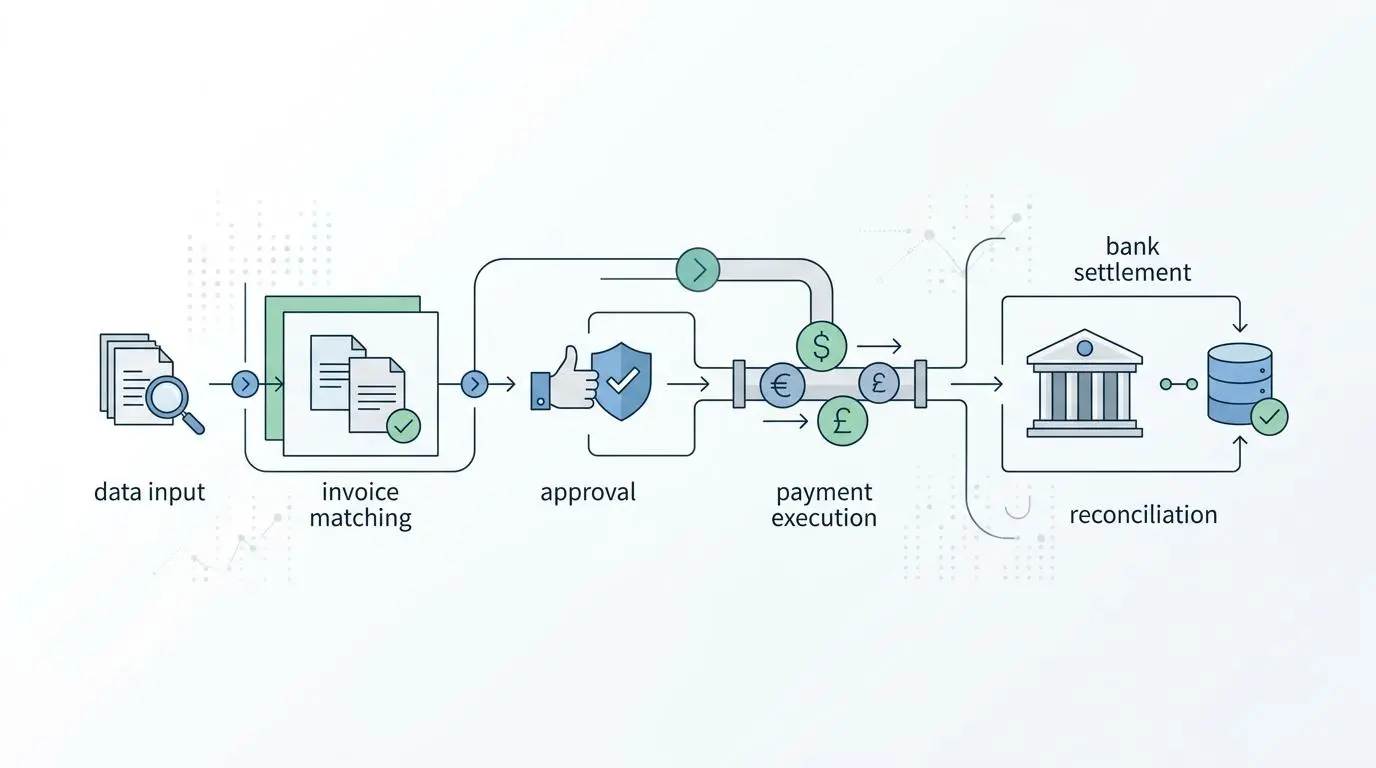
The modern shift toward a real-time treasury model completely shatters this bottleneck. Integrating direct API rate feeds from providers like Open Exchange Rates or OANDA transforms the system into a tireless digital watchtower.
The moment a target rate is hit, the API instantly fires settlement instructions to the banking portal.
Think of it like setting a digital mousetrap where the bait is your target exchange rate. The second the market touches your desired number, the trap snaps shut.
This locks in the rate and executes the payment before the market has a chance to breathe.
Bypassing Legacy Banking with Visual Logic

Historically, building custom SWIFT or ISO 20022 integrations required massive enterprise budgets and deep developer resources. This high barrier to entry forced smaller firms to rely on slower, fee-heavy traditional banking portals.
As a result, many mid-sized enterprises were effectively priced out of the automation revolution.
The no-code and low-code revolution has democratized access to institutional-grade payment logic. Platforms like n8n and Make now feature native modules for modern financial gateways.
These integrations support platforms like Wise Business, Airwallex, and Revolut Business. You can now drag and drop complex financial workflows directly onto a visual canvas.
This allows operations teams to build sophisticated limit order logic without writing a single line of custom banking software.
If the EUR/USD rate climbs above 1.12, the visual workflow automatically triggers a bulk payment to European suppliers. This bypasses legacy banking hurdles entirely.
Deploying Autonomous Agents for Dynamic Routing

Fixed, rules-based automation is powerful, but it struggles to adapt during sudden market volatility or flash crashes.
A static trigger price might execute a payment right before a massive market dip, resulting in a missed opportunity. This is exactly where traditional automation hits its ceiling.
The emergence of agentic payments introduces artificial intelligence as an autonomous actor in your treasury. These AI agents utilize large language models to conduct real-time macroeconomic sentiment analysis.
They do not just wait for a static trigger. Instead, they actively negotiate rates and select the most cost-effective payment route on the fly.
Innovations like scheduled conversions via API now allow businesses to lock in specific exchange rates for up to 365 days.
AI agents can autonomously manage the small upfront collateral required for these locks. This executes guaranteed FX strategies that were previously exclusive to Tier-1 investment banks.
Engineering Slippage Tolerance and Fail-Safes
In the world of automated finance, execution slippage is a critical failure point. API rate limits and stale price feeds can cause automated payments to be rejected outright.
Worse, they might execute at highly unfavorable rates. This happens due to millisecond-level market shifts during the API call sequence.
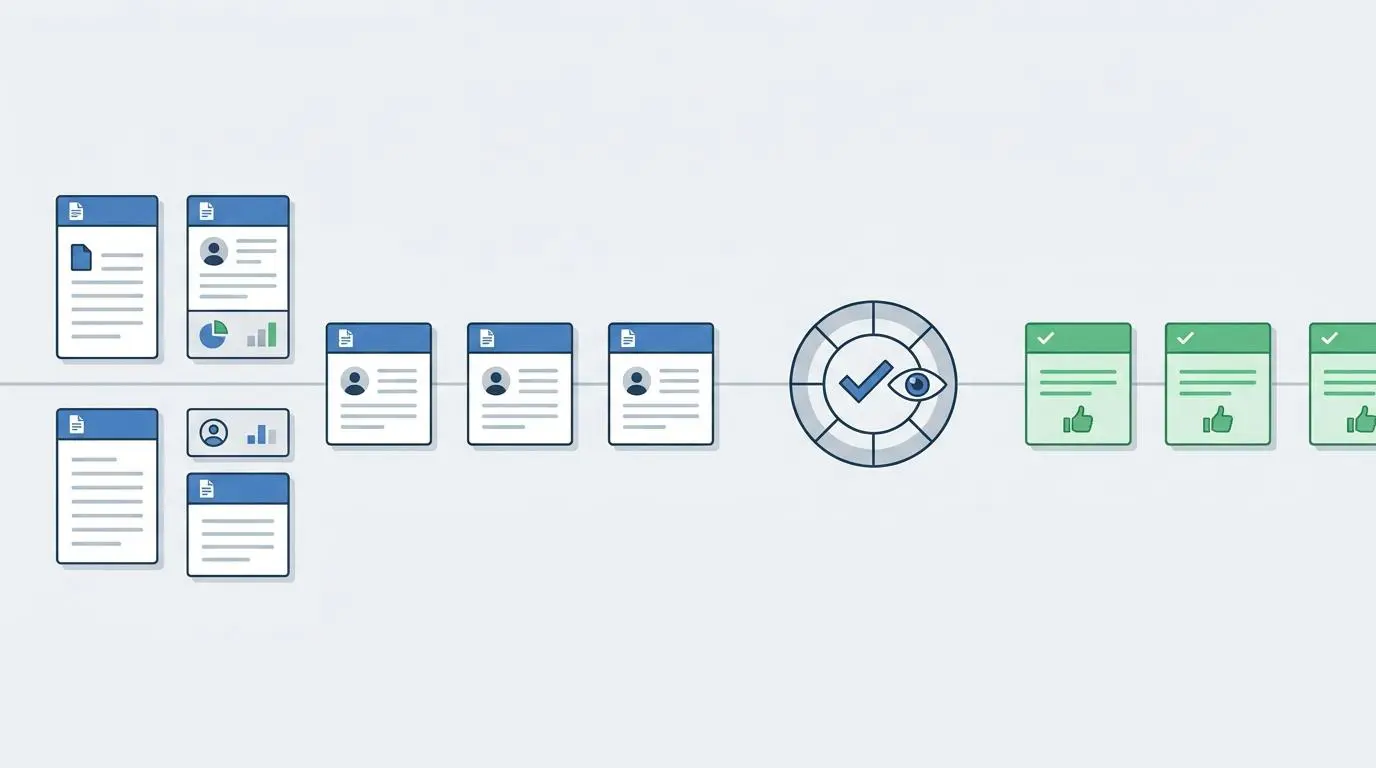
To combat this, advanced workflows incorporate strict slippage tolerance logic gates. These digital fail-safes act as a circuit breaker for your capital.
If the exchange rate moves unfavorably by more than 0.1% between the trigger and the execution, the system instantly aborts the transaction.
Once aborted, the workflow automatically routes an alert directly into your finance team’s Slack channel.
This ensures that extreme market volatility never drains your accounts. It keeps human operators informed only when an exception requires their strategic input.
Structuring Data for Seamless ISO 20022 Compliance
The global transition to the ISO 20022 standard fundamentally changes how cross-border messages are processed. It requires highly structured, granular data for every single transaction.
Currently, a vast majority of payment messages still carry unstructured data. This causes massive manual intervention rates for compliance screening.
When an automated system attempts to process unstructured data, it triggers a straight-through processing failure.
This flags the payment for manual anti-money laundering checks. Ultimately, it completely negates the speed benefits of real-time automation.
Modern automation architectures solve this by automatically validating and structuring address fields before the payment is ever initiated.
By cleaning the data payload at the source, your automated payments glide effortlessly through international compliance filters.
Flipping the Finance Workload from Entry to Strategy
The hidden cost of manual errors in account details or currency selection costs global businesses billions annually.
These errors result in exorbitant investigation fees, delayed supplier shipments, and damaged vendor relationships. Manual data entry is not just slow; it is a massive financial liability.
Automated liquidity management platforms are designed to eliminate this liability completely. By removing the human element from data transfer, the error rate drops to absolute zero.
The machine perfectly maps invoice data to payment gateways every single time.
This flips the traditional finance workload on its head. Instead of spending most of their time on data entry, modern finance teams focus on optimizing capital.
They transition seamlessly from data typists to strategic liquidity architects.
The Horizon of Atomic Cross-Border Settlement
The near future marks the definitive death of batch B2B processing. The future belongs to atomic settlement, where international payments migrate entirely to private blockchain rails using deposit tokens.
In this ecosystem, the exchange rate is locked and the transfer is settled simultaneously in under ten seconds. This provides 24/7 instant cross-border liquidity.
Navigating the intersection of technology, workflows, and operational efficiency requires a sharp strategy.
To future-proof your business architecture and scale with precision, connect with Andres at Andres SEO Expert.
Frequently Asked Questions
What is the Currency Latency Gap in B2B payments?
The Currency Latency Gap is a systemic operational failure caused by the 24 to 48-hour delay between identifying an exchange rate and executing a manual payment. This delay exposes businesses to market slippage, often resulting in a loss of 1.5% to 3% of the total transaction value.
How do FX-triggered international payments work?
FX-triggered payments connect live market data feeds directly to payment gateways. When a specific, favorable exchange rate is reached, the system automatically executes the transfer in milliseconds, removing human hesitation and locking in profit margins without manual intervention.
What are the benefits of AI-driven agentic payments?
Agentic payments utilize autonomous AI agents to perform real-time macro-economic sentiment analysis. Unlike static automation, these agents can negotiate rates, manage collateral for scheduled conversions, and dynamically select the most cost-effective routing paths during market volatility.
Why is ISO 20022 compliance critical for automated treasury?
The ISO 20022 standard requires highly structured and granular transaction data. Automated systems that fail to structure data correctly often trigger Straight-Through Processing (STP) failures and manual AML checks, which negate the speed and efficiency benefits of real-time automation.
What is slippage tolerance in automated financial workflows?
Slippage tolerance is a digital fail-safe or circuit breaker that aborts an automated transaction if the exchange rate moves unfavorably by a set threshold (such as 0.1%) between the trigger and execution. This prevents significant capital loss during flash crashes or extreme market shifts.
What is atomic settlement in the context of 2026 finance?
Atomic settlement refers to the simultaneous locking of exchange rates and the settlement of funds on private blockchain rails or deposit tokens. This eliminates traditional batch processing, allowing for near-instant, 24/7 cross-border liquidity and settlement in under ten seconds.