Key Takeaways
- Amazon Bedrock AgentCore runtime instances provide persistent compute, keeping AI agents alive up to 14 days with shared sessions and GPU support.
- Agents share state via a mounted filesystem, enabling multi-agent collaboration without custom handshake logic, as demonstrated by the code writer/reviewer demo.
- The new tier brings production-grade multi-agent systems within reach, with containerized deployment, familiar EC2 pricing, and native integration with EBS and AgentCore Memory.
Table of Contents
Amazon Bedrock Finally Ships Persistent Infrastructure for Production Agents
When AI agents step beyond a single API call — coordinating with teammates, holding state for days, demanding GPU cycles — the infrastructure beneath them either enables the ambition or kills it.
For organizations stuck bridging ephemeral serverless invocations and hand-rolled EC2 fleets, that choice has been a productivity tax no framework could eliminate.
On August 6, 2026, the AWS News team broke the news that Amazon Bedrock AgentCore is rolling out runtime instances, a managed compute option that keeps agents alive for up to 14 days while handling session persistence, multi-agent collaboration, and GPU acceleration on behalf of the developer.
Inside the New Runtime Instances: Shared Sessions, GPUs, and 14 Days of Uptime
Runtime instances sit alongside AgentCore’s existing microVMs, which already support fast-scaling invocations lasting up to eight hours.
The new tier extends that ceiling dramatically, targeting workloads where agents need to run continuously across multiple days or require direct access to the operating system and GPU hardware.
At its core, the service provisions AWS-managed EC2 capacity through a construct called a capacity provider.
Teams define the instance family, operating system, VPC, and storage, then deploy agents as zip files or container images — each with their own dependencies and artifact types — into runtimes that share that underlying host.
Once deployed, agents can call one another as tools within a shared session, iterating autonomously until a job completes.
A session preserves state for up to 14 days, and the infrastructure supports stop/restart cycles to curb costs during idle windows.
For durable knowledge that outlasts a session, the service pairs natively with Amazon EBS and AgentCore Memory, giving agents long-term recall across environments.
As detailed on the AWS News announcement, the engineering team demonstrated a two-agent system: a code writer and a code reviewer.
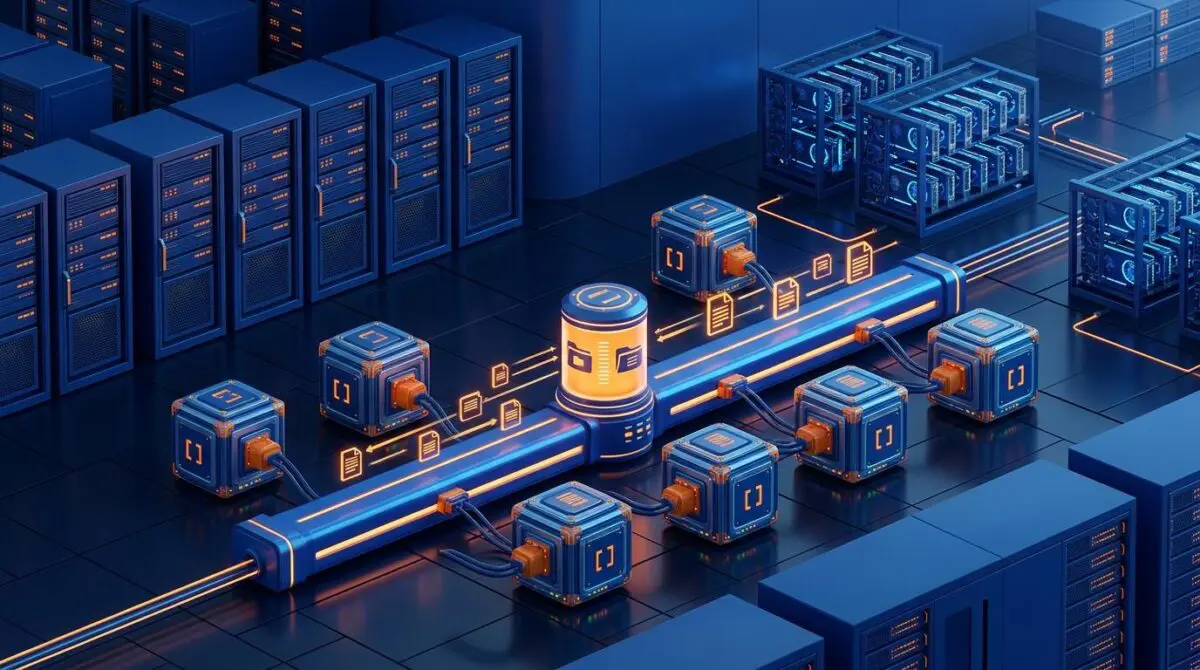
Both agents operated inside the same runtime instance, sharing a directory mounted under the session identifier.
The writer generated a Python module and placed it in the shared path; the reviewer read that file directly from the filesystem — no inter-agent API calls, no data transfer, no orchestration glue beyond the session context.
The demo underscores a design principle that seasoned agent developers will recognize immediately: when state lives in a shared mount, coordination collapses into filesystem I/O, eliminating entire categories of handshake logic.
Any number of agents — a test runner, a security scanner, a documentation generator — can join the same session and operate on the same artifacts.
For complex pipelines, a lightweight orchestrator running on a microVM can dispatch work to specialized workers on instances, combining the fast scaling of short-lived invocations with the heavyweight persistence of the new tier, all through the same AgentCore APIs and identity controls.
What Persistent Compute Signals About the Maturing of Autonomous Agents
The move from transient invocations to days-long persistence is not just an operational upgrade — it redefines which workloads are practical to agentize.
Tasks that demand compilation, security scanning, GUI automation, or GPU-accelerated inference have often been cordoned off from agentic flows because maintaining a warm, stateful environment required custom infrastructure.
With runtime instances, those workloads can move into the agent loop without a detour through separate compute platforms.
The economics also shift.
Standard EC2 pricing plus an AgentCore orchestration fee means teams can forecast costs using familiar compute billing, while the session hibernation mechanism prevents round-the-clock spending for workloads that ebb and flow.
The availability of GPU instance types, confirmed at launch, further signals that Bedrock is preparing for a wave of multi-agent systems where at least one specialist — a vision model, a local fine-tuner, a simulator — demands parallel processing.
Equally notable is the containerized deployment model, which allows independent teams to ship agents with their own dependency chains into the same runtime, preserving both isolation and co-tenancy.
For organizations that have experimented with CrewAI, LangGraph, LlamaIndex, or Strands, the message is unambiguous: you keep your framework, and Bedrock handles the difficult parts of scaling state, networking, and observability.
Closing the Gap from Prototype to Production
Runtime instances remove the last major infrastructure alibi for keeping multi-agent systems in perpetual demo mode.
For teams building autonomous agent pipelines that need to scale, the programmatic SEO and AI automation services at Andres SEO Expert offer a parallel discipline — turning agentic workflows into production-grade outputs — explore how orchestration meets content at scale, or talk to the team.
Frequently Asked Questions
What are Amazon Bedrock AgentCore runtime instances?
Runtime instances are a managed compute option in Amazon Bedrock AgentCore that keep AI agents alive for up to 14 days. They provide session persistence, support multi-agent collaboration, and offer GPU acceleration, all while handling the underlying EC2 infrastructure for you.
How do runtime instances differ from microVMs in AgentCore?
MicroVMs support fast-scaling invocations lasting up to eight hours, while runtime instances extend that ceiling to 14 days. Runtime instances also give agents direct access to the operating system and GPU hardware, making them suitable for continuous, stateful workloads that microVMs cannot handle.
How long can agents run on runtime instances?
Agents can run persistently for up to 14 days. The session preserves state throughout that period, and the infrastructure supports stop/restart cycles to reduce costs during idle windows.
Can multiple agents collaborate within the same runtime instance?
Yes, any number of agents can join the same shared session within a runtime instance. They can call each other as tools and operate on shared files mounted under the session identifier, eliminating the need for inter-agent API calls or complex orchestration glue.
How does pricing work for runtime instances?
Pricing uses standard EC2 rates plus an AgentCore orchestration fee. This means teams can forecast costs with familiar compute billing, while session hibernation prevents round-the-clock spending for workloads that ebb and flow.
What types of workloads are best suited for runtime instances?
Runtime instances are ideal for tasks that require compilation, security scanning, GUI automation, GPU-accelerated inference, or any multi-agent system that needs continuous, stateful execution across several days. The GPU instance types also support specialist agents like vision models and local fine-tuners.
How do teams deploy agents to runtime instances?
Teams define the instance family, operating system, VPC, and storage, then deploy agents as zip files or container images into runtimes that share the underlying host. This containerized model allows independent teams to ship agents with their own dependencies while preserving isolation and co-tenancy.