Executive Summary
- Foundation models represent a paradigm shift in AI, utilizing large-scale pre-training on vast datasets to enable broad, multi-task adaptability.
- These models serve as the underlying architecture for Generative Engine Optimization (GEO), dictating how entities are mapped within latent space.
- Optimization requires a shift from keyword density to semantic authority to ensure brand visibility within the model’s inference pathways.
What is a Foundation Model?
A Foundation Model is a large-scale artificial intelligence architecture, typically based on the Transformer framework, that is trained on a massive and diverse dataset. Unlike traditional AI, which was built for specific, narrow tasks (such as sentiment analysis or image classification), a foundation model is designed to be broad and adaptable. Through a process known as self-supervised learning, the model develops a deep understanding of patterns, logic, and context, which can then be fine-tuned for a wide array of downstream applications, including natural language processing, computer vision, and robotics.
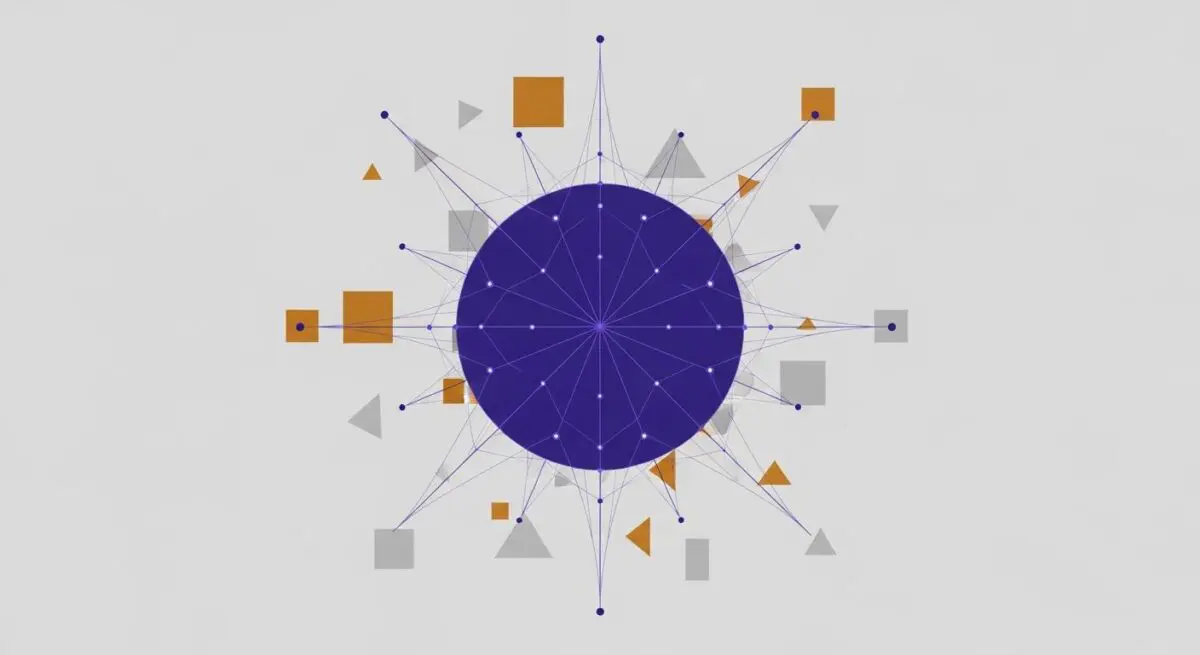
At its core, a foundation model functions as a centralized repository of computational intelligence. By processing petabytes of data, the model learns the statistical relationships between tokens (units of data). This results in emergent properties—capabilities like reasoning, coding, and translation that were not explicitly programmed but arose from the scale of the training. In the context of modern search, models like GPT-4, Claude, and Gemini act as the primary engines that interpret user intent and synthesize information from their internal weights or external retrieved sources.
The Real-World Analogy
Think of a foundation model as the structural foundation and utility grid of a massive skyscraper. The foundation provides the essential stability, while the grid provides the electricity, water, and connectivity. On its own, the foundation isn’t a finished office or a luxury apartment, but it provides the necessary infrastructure for any type of room to be built on top of it. A legal firm, a medical clinic, and a tech startup can all occupy different floors (downstream tasks), but they all rely on the same core infrastructure to function. Without that robust base, every single room would have to generate its own power and water from scratch, which is inefficient and limited in scale.
Why is Foundation Model Important for GEO and LLMs?
For professionals in Generative Engine Optimization (GEO), the foundation model is the gatekeeper of visibility. Because these models generate responses based on the probability of token sequences, a brand’s presence in an AI-generated answer depends on how strongly that brand is associated with specific concepts within the model’s latent space. If a foundation model has not internalized a brand’s authority or entity relationships during its training or through Retrieval-Augmented Generation (RAG), that brand effectively does not exist in the AI’s primary knowledge base.
Furthermore, foundation models prioritize semantic relevance and source trustworthiness. In the era of AI Search, the model evaluates the technical accuracy and contextual depth of content rather than simple keyword matches. Understanding the mechanics of these models allows SEO and AI-Search professionals to structure data in a way that aligns with the model’s attention mechanisms, ensuring that their entities are prioritized during the inference phase when a user asks a relevant query.
Best Practices & Implementation
- Entity Alignment: Use robust Schema.org markup and JSON-LD to explicitly define relationships between entities, making it easier for models to map your brand within their knowledge graphs.
- Semantic Density: Focus on creating high-information-gain content that provides unique technical insights, as foundation models are trained to identify and reward authoritative, non-redundant data.
- RAG Readiness: Ensure your technical infrastructure (like API endpoints and sitemaps) is optimized for retrieval-augmented generation, allowing foundation models to access your latest data in real-time.
- Contextual Citation: Structure content to be easily “chunkable” by AI scrapers, using clear headings and concise definitions that the model can easily extract and cite as a primary source.
Common Mistakes to Avoid
One frequent error is treating foundation models like traditional search engines; they do not “crawl” the web in real-time to update their core weights, meaning immediate SEO changes may only appear through RAG-enabled interfaces. Another mistake is producing high volumes of low-quality, AI-generated content, which can lead to model collapse or the model filtering out your domain as a low-authority noise source. Finally, many brands fail to monitor their “latent reputation,” or how the model describes them when prompted without external search access.
Conclusion
Foundation models are the bedrock of the next generation of digital discovery. Success in this landscape requires a deep technical understanding of how these models process information and a strategic commitment to becoming a high-authority entity within their computational ecosystems.