Key Points
- Orchestration Infrastructure: Smart capital is aggressively pivoting toward AI orchestration, solving the integration gap to create unified, autonomous workflows.
- Governed Knowledge Fabrics: Enterprises are utilizing advanced RAG frameworks to enforce brand-specific creative DNA, combating the crisis of distinctiveness in synthetic media.
- Real-Time Synthesis: The strategic horizon points toward hyper-personalized content streams, where assets are generated live based on granular user interaction data.
Table of Contents
The Core Friction: Escaping the Content Bottleneck
According to Gartner, worldwide spending on artificial intelligence is forecast to reach $2.52 trillion in 2026. This staggering 44% year-over-year increase signals a definitive shift from experimental pilots to institutional infrastructure.
The era of manual prompting and reactive chatbots is officially dead. In its place, the market is aggressively pivoting toward Agentic Multimodal Content Pipelines.
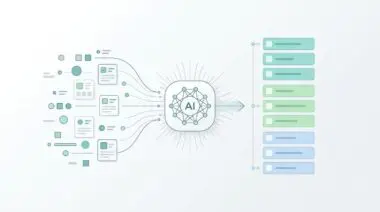
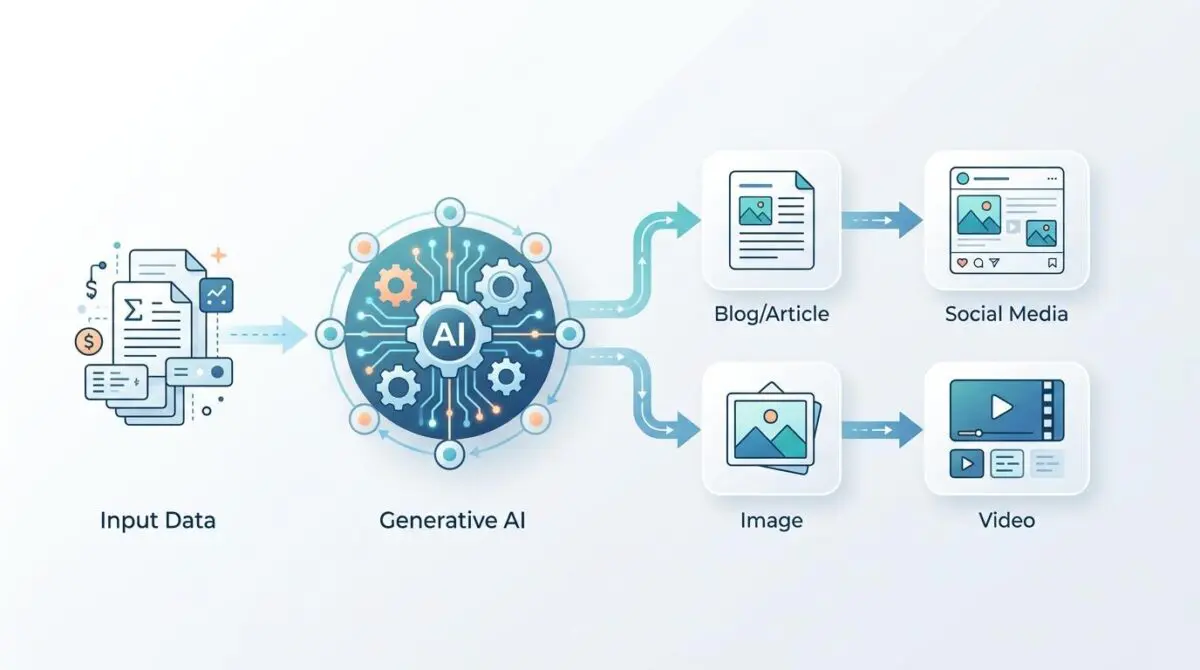
These pipelines represent a fundamental rewiring of enterprise production. They act as autonomous engines that ingest a single product brief and orchestrate a seamless workflow of creation and distribution.
By deploying these agentic layers, businesses are completely eradicating the traditional content bottleneck. The friction of managing disparate creative teams and fragmented software stacks is being replaced by unified, algorithmic efficiency.
Market Intelligence & Smart Capital
Market Intelligence & Data
Enterprise Agent Adoption
Data from the 2026 PwC AI Agent Survey reveals that nearly four-fifths of global companies have now integrated agentic AI into their core operational workflows.
Orchestration Market Value
Fortune Business Insights reports that the market for AI orchestration—the ‘connective tissue’ of content pipelines—has hit nearly $14 billion in 2026.
AI-Embedded Applications
Research from Accelirate indicates that 40% of all enterprise software applications now contain task-specific, autonomous AI agents by default.
Weekly Active AI Users
Internal metrics cited by Crescendo.ai show that the leading frontier model ecosystems have surpassed 900 million weekly active users as of March 2026.
The data clearly illustrates where the smart money is flowing across the technological landscape. Capital is rapidly pivoting from raw foundation models to the connective tissue that binds them together.
The Rise of Orchestration Infrastructure
It is no longer a secret that nearly four-fifths of global companies have now integrated agentic AI into their daily operations. The executive focus has shifted entirely toward execution, governance, and scale.
Venture capitalists and institutional investors are aggressively backing startups that solve the enterprise integration gap. They understand that isolated AI tools create fragmented, highly inefficient workflows.
This is precisely why the market for AI orchestration has surged to nearly $14 billion. Orchestration is the vital infrastructure required to connect siloed, single-task agents into unified, unstoppable production systems.
The Strategic Deep Dive: Sovereign Giants and Governed Fabrics
The technological landscape of 2026 is dominated by sovereign AI giants and a surging, highly specialized application layer. OpenAI recently reached an unprecedented $852 billion valuation following a massive round led by SoftBank and Amazon.
Meanwhile, Anthropic has scaled to $5 billion in annualized revenue. They have successfully positioned their architecture as the enterprise standard for constitutional AI workflows.
Despite these massive valuations, smart capital is moving toward inference economics. Visionary investors are aggressively funding startups that connect these frontier models into cohesive pipelines.
Solving the Crisis of Distinctiveness
While adoption is high, only 27% of enterprise applications are truly integrated at the protocol level. This fragmentation leads to a crisis of distinctiveness where corporate outputs feel generic and lack authentic brand identity.
As of May 2026, the AI data segment of the software market is growing at a staggering 278% year-over-year. Enterprises have realized that high-quality, structured internal data is the only remaining moat against the flood of generic synthetic content.
This realization has birthed the ultimate killer strategy of the decade: the Governed Knowledge Fabric. Retrieval-Augmented Generation is no longer just for factual accuracy and internal search.
RAG is now utilized to enforce brand-specific creative DNA across every synthetic asset. It acts as the ultimate gatekeeper, ensuring that automated outputs align perfectly with corporate guidelines.
The One Input, Every Format Paradigm
Automated pipelines solve the distinctiveness crisis by shifting to action-taking assistants that handle the entire content lifecycle. These systems manage strategic planning, creative execution, legal provenance tracking, and real-time performance optimization.
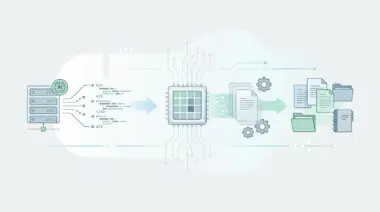
A single raw data set is ingested by an agentic layer that simultaneously generates high-resolution video via advanced models. It then produces localized voiceovers using specialized audio synthesis tools.
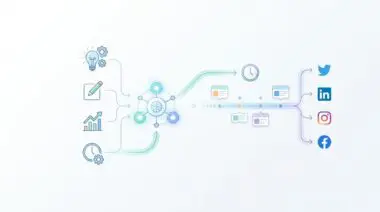
Finally, the pipeline formats multi-platform social carousels via integrated no-code environments. This sophisticated orchestration eliminates the vast majority of manual toil previously found in high-fidelity video production and global campaign localization.
The Executive Action Plan: Future-Proofing Production
Strategic Trajectory
- Prepare for the Superhuman Coder and Recursive Self-Improvement phase beginning in 2027.
- Pivot toward Hyper-Personalized Content Streams where assets are synthesized in real-time based on live interaction data.
- Anticipate the 2029 shift where AI agents generate 10x more data from physical environments than digital applications.
- Build Physical-to-Digital content pipelines to automate documentation and marketing for industrial operations.
The strategic trajectory is set for a monumental shift toward recursive self-improvement and superhuman coding capabilities. Executives must look beyond static asset generation and prepare their infrastructure for dynamic synthesis.
The immediate future belongs to hyper-personalized content streams. In this paradigm, assets are not merely pre-generated and stored in a database.
Instead, they are synthesized in real-time for the individual viewer based on live, granular interaction data. This creates a feedback loop of unprecedented engagement and conversion potential.
Physical-to-Digital Pipelines
Furthermore, the physical world is rapidly becoming the ultimate data source for generative models. By 2029, AI agents will generate exponentially more data from physical environments than from digital applications.
Businesses must begin building physical-to-digital content pipelines today. These systems will autonomously document and market industrial operations, bridging the gap between hardware execution and digital storytelling.
The leaders of tomorrow are currently mapping out how their autonomous agents will interpret sensor data, drone footage, and IoT metrics. They will transform this raw physical input into compelling, multi-format narratives without human intervention.
Conclusion
Agentic Multimodal Content Pipelines are not merely an operational upgrade or a temporary software trend. They are a profound reimagining of how digital value is created, distributed, and monetized globally.
The enterprises that dominate the next decade will be those that treat AI orchestration as core infrastructure rather than a novelty. They will build governed knowledge fabrics that protect their creative DNA while scaling their output infinitely.
Navigating the intersection of technology, capital, and market psychology requires a sharp strategy. To future-proof your business architecture and scale with precision, connect with Andres at Andres SEO Expert.
Frequently Asked Questions
What are Agentic Multimodal Content Pipelines?
Agentic Multimodal Content Pipelines are autonomous AI engines that ingest a single product brief and orchestrate an end-to-end workflow of content creation and distribution across various media formats, including 8K video, localized audio, and social assets.
How does AI orchestration solve the enterprise content bottleneck?
AI orchestration acts as the connective tissue for fragmented software stacks, binding siloed, single-task agents into a unified production system. This replaces manual project management with algorithmic efficiency, eliminating the friction of disparate creative teams.
What is a Governed Knowledge Fabric in the context of AI?
A Governed Knowledge Fabric uses Retrieval-Augmented Generation (RAG) to enforce brand-specific creative DNA across synthetic assets. It ensures that automated outputs remain distinct and aligned with corporate guidelines by leveraging high-quality internal data as a strategic moat.
Why is the market for AI orchestration expected to reach $14 billion by 2026?
The market is surging because enterprise adoption of agentic AI has reached nearly 80%. Strategic capital is shifting from foundation models to the infrastructure required for execution, governance, and the integration of autonomous agents into core operational workflows.
What is the “One Input, Every Format” production paradigm?
This paradigm describes a workflow where a single raw data set is ingested by an agentic layer to simultaneously generate multiple assets—such as high-definition video via Sora and localized voiceovers via ElevenLabs—reducing manual production toil by approximately 95%.
How do Physical-to-Digital content pipelines function?
Physical-to-Digital pipelines use AI agents to interpret sensor data, drone footage, and IoT metrics from industrial operations. These systems autonomously transform raw physical environmental data into compelling digital narratives and marketing documentation without human intervention.