Key Points
- Context Pruning Over Expansion: The enterprise standard has shifted from 10-million token windows to Progressive Context Loading, reducing inference costs by up to 1250x.
- Combating Context Rot: Implementing edge-loading and semantic caching prevents the 30% accuracy degradation that occurs when critical facts are buried deep within massive document payloads.
- Unified Enterprise Context: Forward-thinking organizations are abandoning siloed RAG pipelines in favor of Context as Shared Infrastructure and hardware-isolated Confidential Computing.
Table of Contents
The Core Friction: The Illusion of Infinite Context
According to Gartner’s May 2026 Worldwide AI Spending Guide, global AI investment is on track to reach $2.59 trillion this year. This represents a staggering influx of capital into frontier models, specialized agents, and computing infrastructure. Yet, a silent crisis is brewing beneath the surface of this technological gold rush.
Despite trillions in funding, an estimated 60% of enterprise AI projects face abandonment by 2027 due to critical failures in data readiness and contextual validation. The brute-force approach of stuffing massive context windows with uncurated data has reached its breaking point. Business leaders now realize that raw token expansion does not equate to intelligent reasoning.
This market friction has birthed a new operational mandate known as Effective Context Management (ECM) and Maximum Effective Context Window (MECW) Optimization. By mid-2026, the killer strategy for long document analysis has fundamentally shifted. The industry is moving away from token gluttony and toward surgical precision.
Instead of overwhelming million-token windows, modern enterprises utilize semantic layers to aggressively prune noise. This ensures high-precision retrieval before the reasoning engine even begins its work. The psychology of enterprise AI has evolved from simply hoarding data to mastering its intelligent flow.
Market Intelligence & Smart Capital Flow
Market Intelligence & Data
Global 2026 AI Investment
Gartner reports a 47% increase in total AI spending for 2026, driven primarily by infrastructure and specialized AI agent software.
RAG Cost Efficiency Gap
Real-world testing in 2026 shows highly optimized RAG pipelines cost 1,250x less than brute-force long-context inference for similar accuracy levels according to Medium analysis.
Max Token Window Benchmark
Models like Llama 4 Scout now advertise limits of 10M tokens, forcing a shift in focus toward managing context quality over quantity, as reported by Digital Applied.
AI Implementation Delays
The 2026 State of Context Management Report indicates that most organizations frequently delay AI initiatives due to a lack of trusted, governed context data.
The data presented above paints a clear picture of an industry in transition. Smart capital is no longer chasing the largest parameter count or the most expansive token window. Instead, venture capital is flowing aggressively into the Inference Economy.
Dominant players in 2026 include Anthropic with Claude 4.6 and Google with Gemini 3.5 Pro. However, true market disruption is being led by Context Infrastructure firms like Atlan and DataHub. These innovators understand that massive token limits are financially unsustainable for daily enterprise operations.
This massive influx of capital is paradoxically matched by high failure rates in deployment. In fact, major industry forecasts warn that enterprise AI projects are projected to be abandoned by 2027 if they cannot solve the context retrieval bottleneck. Pumping unfiltered corporate data into a language model remains a recipe for hallucinations and prohibitive cloud bills.
The Inference Economy and Edge Deployment
Significant venture capital interest is currently centered on local edge-deployment for 12B to 14B parameter models. These smaller, highly optimized models use advanced RAG frameworks to rival datacenter-level performance. Remarkably, they achieve this at a 1250x lower cost compared to brute-force long-context models.
This shift represents a democratization of enterprise AI. Startups focusing on Context Graphs and Model Context Protocol servers are allowing autonomous agents to browse governed metadata securely. They accomplish this without ever exhausting the primary token limits of the core reasoning model.
The smart money recognizes that the future belongs to those who can orchestrate data, not just ingest it. Maximum Effective Context Window Optimization is the critical bridge between theoretical AI capabilities and profitable business realities.
The Strategic Deep Dive: Modular RAG and Edge-Loading
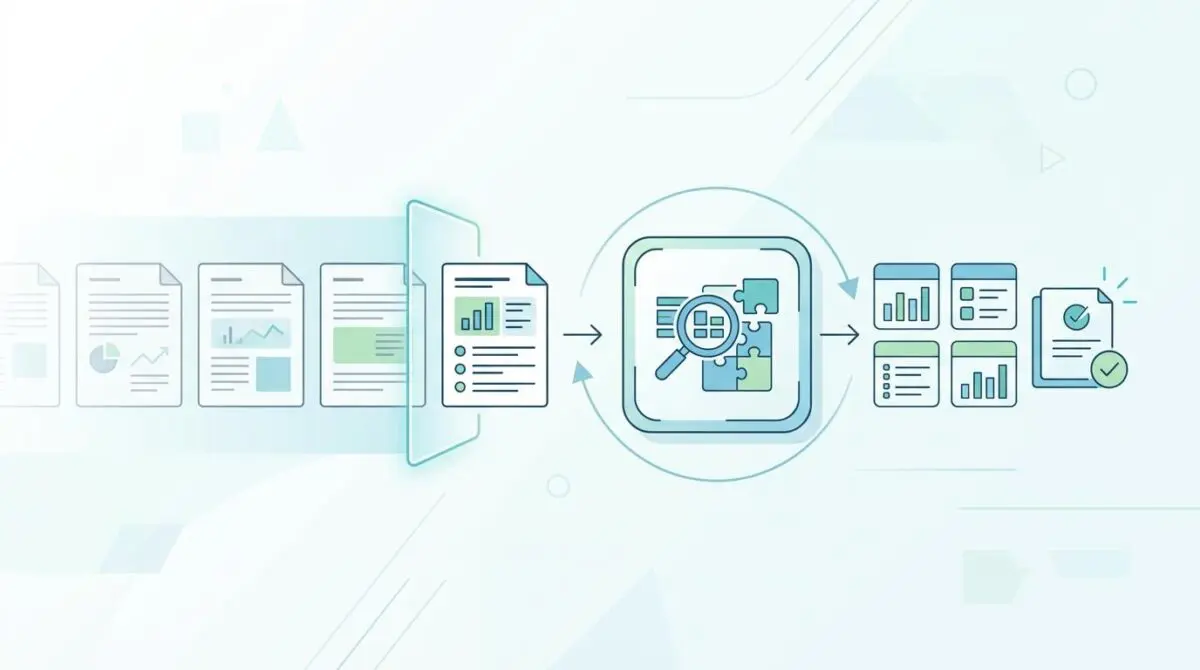
To understand the power of Effective Context Management, we must examine the architectural shifts happening inside top-tier engineering teams. The new standard is a two-pass architectural approach. This involves an initial pass via hierarchical summarization, followed immediately by targeted document injection.
This Modular RAG methodology reduces average context usage by 60 to 80 percent. More importantly, it maintains reasoning quality for high-value legal, medical, and technical workflows. It is a masterclass in computational efficiency.
Think of it as a highly skilled executive assistant. Instead of dropping a ten-thousand-page unread dossier on the CEO’s desk, the assistant provides a synthesized executive summary and only opens the specific pages required to answer immediate questions. This is Progressive Context Loading in action.
Combating Context Rot and Inference Latency
This progressive architecture solves the twin crises of Context Rot and Inference Latency. In 2026, businesses face a documented 30% accuracy degradation when vital facts are buried in the middle of a 100K+ token window. Models suffer from an attention deficit when overwhelmed with peripheral data.
ECM solutions solve this degradation by edge-loading prompts and utilizing aggressive semantic caching. This prevents models from relying too heavily on historical context over their own pretrained knowledge. It strikes the perfect balance between external grounding and internal logic.
This strategy allows for Infinite Context utility without the prohibitive ten-cent-plus per-query cost associated with brute-force long-context models. It is the ultimate arbitrage in the AI operational landscape.
The Truth About Maximum Effective Context Windows
The marketing departments of major AI labs have sold the public on the dream of limitless memory. However, the engineering reality tells a drastically different story. A 2026 report by Chroma and Atlan featuring a benchmark analysis revealed that Maximum Effective Context Window (MECW) performance falls short by over 99% compared to advertised limits in complex tasks like multi-document sorting.
This insight shatters the illusion that buying access to a larger token window will magically solve enterprise data challenges. When a model is asked to synthesize contradictory information across hundreds of documents, its effective reasoning capacity plummets. The advertised window is a theoretical void, not a functional workspace.
Maximum Effective Context Window Optimization is the science of finding a model’s true cognitive sweet spot. It is about understanding exactly how many tokens a specific architecture can process before its attention mechanism begins to fray. For most enterprise tasks, this optimal window is radically smaller than the advertised maximum.
The Executive Action Plan: Context as Infrastructure
Strategic Trajectory
- Transition from application-specific RAG pipelines to unified enterprise context layers as ‘Context as Shared Infrastructure’.
- Implement ‘Agentic RAG’ frameworks where sub-agents autonomously manage memory persistence across multi-day research tasks.
- Adopt ‘Confidential Computing’ environments to perform long-context analysis within hardware-isolated trusted execution environments (TEEs).
- Centralize context management infrastructure to align with the 93% of organizations moving away from siloed pipelines.
The next evolution in enterprise architecture is treating Context as Shared Infrastructure. Currently, 93% of leading organizations aim to move away from fragmented, application-specific RAG pipelines. They are consolidating their efforts into unified enterprise context layers.
Founders and Chief Technology Officers are aggressively preparing for the shift toward Agentic RAG. In this paradigm, specialized sub-agents autonomously manage their own memory persistence. They can execute multi-day research tasks, pruning and updating their context windows dynamically without human intervention.
Security is also driving this architectural revolution. Enterprises are adopting Confidential Computing environments at an unprecedented rate. Long-context analysis of sensitive financial or legal data now happens within hardware-isolated trusted execution environments.
This ensures that proprietary context never leaks into the broader model weights or external server logs. By centralizing context management, executives can enforce strict data governance while simultaneously lowering their aggregate inference costs.
Conclusion: Future-Proofing Enterprise AI
The era of brute-force token expansion is officially over. The future of enterprise AI belongs to organizations that treat context as a highly curated, governed, and optimized asset. Effective Context Management is no longer a niche engineering tactic; it is a foundational business strategy.
By embracing Maximum Effective Context Window Optimization, companies can bypass the prohibitive costs and latency issues that plague their competitors. They can unlock the true potential of local edge models and specialized autonomous agents.
Navigating the intersection of technology, capital, and market psychology requires a sharp strategy. To future-proof your business architecture and scale with precision, connect with Andres at Andres SEO Expert.
Frequently Asked Questions
Why are 60% of enterprise AI projects expected to be abandoned by 2027?
According to Gartner, many AI projects fail due to critical gaps in data readiness and contextual validation. Organizations often attempt to use brute-force token expansion with uncurated data, which leads to reasoning errors, hallucinations, and unsustainable operating costs.
What is the difference between an advertised token window and MECW?
While labs advertise million-token limits, the Maximum Effective Context Window (MECW) represents the actual range where a model maintains reasoning accuracy. Benchmarks suggest that for complex tasks, effective performance can be 99% lower than advertised theoretical maximums.
How does optimized RAG improve AI cost efficiency?
In 2026, real-world testing shows that highly optimized Retrieval-Augmented Generation (RAG) pipelines are approximately 1,250x more cost-efficient than brute-force long-context inference. This is achieved by pruning noise through semantic layers before data reaches the reasoning engine.
How does Modular RAG solve the problem of context rot?
Modular RAG uses a two-pass architecture involving hierarchical summarization followed by targeted document injection. This reduces context usage by 60% to 80%, preventing the 30% accuracy degradation typically seen when vital facts are buried in large data volumes.
Why are 12B to 14B parameter models becoming popular for enterprise edge deployment?
Smaller 12B to 14B models offer a democratized alternative to massive models. When paired with advanced RAG frameworks, they can rival datacenter-level performance while providing significantly lower latency and reduced cloud infrastructure expenses.
What are the benefits of Agentic RAG frameworks?
Agentic RAG involves sub-agents that autonomously manage memory persistence and prune their own context windows. This allows for complex, multi-day research tasks without human intervention and ensures only the most relevant metadata is utilized for reasoning.
What does ‘Context as Shared Infrastructure’ mean for executives?
This strategy moves organizations away from siloed RAG pipelines into unified context layers. By centralizing context management, enterprises can enforce stricter data governance, utilize confidential computing environments, and lower overall AI inference costs.