Key Points
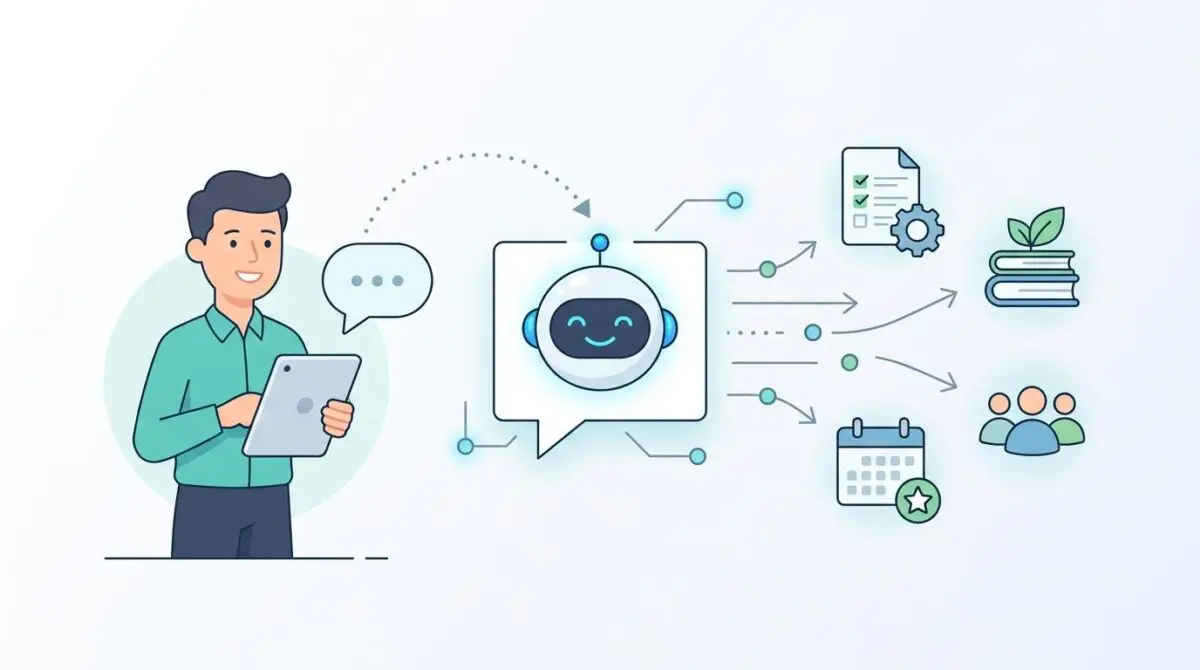
- Contextual RAG Integration: Server-side vector databases index internal documents to provide grounded, hallucination-free answers tailored to company policies.
- Agentic Workflow Automation: High-level orchestration layers enable chatbots to execute complex API calls, automating tasks like account creation and benefits enrollment.
- PII-Compliant Architecture: Technical mediation layers scrub sensitive employee data before processing, ensuring strict adherence to global privacy regulations.
Table of Contents
The AI Landscape
Recent industry surveys show that AI-led onboarding is a game-changer. In fact, many HR leaders report massive drops in administrative work and much happier new hires.
Using artificial intelligence in human resources is no longer just a futuristic idea. It has become a must-have tool for large companies looking to grow their teams quickly and efficiently.
At the center of this shift are smart AI onboarding systems. These advanced tools use large language models to turn boring employee handbooks into helpful, interactive chat guides.
By bringing together scattered company information, these systems create a smooth and personalized welcome journey. This ensures new employees have a great first day without needing constant help from human staff.
Because of this, the traditional role of the HR department is changing fast. Instead of just handling paperwork, HR professionals can now focus on helping talent grow and building a strong company culture.
This big change is driven by the need to manage complex, remote workforces. As hybrid work becomes the norm, giving employees instant access to accurate company knowledge is incredibly important.
Smart AI onboarding systems solve this by acting as a helpful, always-on digital assistant. They bridge the gap between confusing corporate rules and the employee’s need for clear answers.
Core Concepts & Capabilities
Core Architecture & Pillars
Contextual RAG Architectures
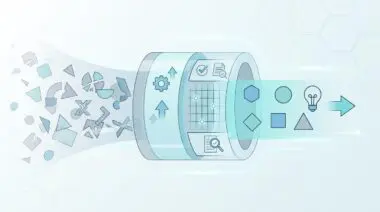
Server-side vector databases index internal PDFs, wikis, and policy manuals to provide grounded answers. This prevents hallucinations by constraining the LLM to verified corporate data via semantic search and retrieval before generation.
Cross-Platform Agentic Mesh
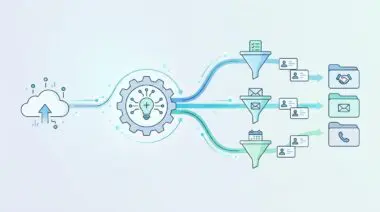
High-level orchestration layers allow the chatbot to act as an agent, triggering API calls into HCM (Human Capital Management) systems. It moves beyond text response to action-oriented task completion such as account creation.
PII-Compliant LLM Masking
A technical mediation layer ensures that Personally Identifiable Information is scrubbed or tokenized before processing by external LLM APIs. This maintains regulatory compliance with GDPR and CCPA at the data-flow level.
Hyper-Personalization Logic
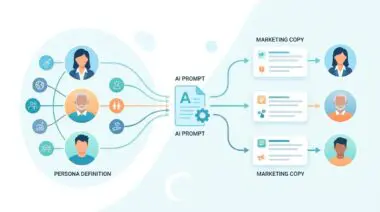
User-specific metadata is injected into the prompt context at runtime, allowing the model to adjust its persona and instructions based on the employee’s role, seniority, and geographic location.
To understand how powerful these systems are, we need to look at how they find and process information. Combining smart search with AI text generation creates a highly reliable tool for businesses.
Recent research shows a major shift toward these active AI agents. Many top companies are now replacing old intranet searches with unified HR bots that can directly update corporate databases.
Contextual RAG Architectures
At the core, Contextual RAG Architectures use special databases to organize internal PDFs, wikis, and manuals. This careful sorting process ensures the AI gives factual, grounded answers to employee questions.
By limiting the AI to verified company data, businesses eliminate the risk of the bot making things up. The system is strictly blocked from inventing fake benefits or sharing outdated rules.
This setup guarantees that the AI’s answers about company policies are always accurate. It uses math to find the most relevant pieces of documents before it even starts typing a response.
Cross-Platform Agentic Mesh
Going beyond just finding text, a smart control layer turns the chatbot into an independent agent. This system can trigger complex actions directly inside human resources software.
This allows the AI to actually do things, like automatically creating accounts or ordering laptops. It connects smoothly with existing software to update employee records instantly.
Moving from a simple chat window to an active tool is a huge step forward. Employees no longer just ask how to do something; the AI actually does it for them right away.
PII-Compliant LLM Masking
Data privacy is a massive concern when using AI in a large business. A strong privacy masking layer ensures that sensitive employee details are hidden before the AI processes them.
This technical filter catches personal information and removes it from the conversation. It guarantees that the company follows strict privacy laws right at the data level.
In an HR setting, this setup stops sensitive employee data from being used to train public AI models. It ensures that private details like home addresses and salaries are never exposed online.
Hyper-Personalization Logic
Finally, smart personalization adds specific user details into the AI’s memory in real time. The bot automatically changes its tone and instructions based on the employee’s job and location.
This means a developer in Berlin gets different tax and laptop info than a sales manager in New York. The entire experience is perfectly tailored within the exact same chat window.
By adjusting the chat based on who is asking, the AI saves the employee from reading useless information. They get exactly what they need to know, right when they need it.
Strategic Implementation
Implementation Roadmap
Internal Knowledge Vectorization
Audit and clean all internal HR documentation. Convert static files into embeddings using a model like text-embedding-3-small and store them in a high-performance vector database like Pinecone or Weaviate.
Agentic Workflow Mapping
Define the API endpoints for core HR tools. Map conversational triggers to specific actions, such as ‘I need to sign my NDA’ triggering a DocuSign API call through a LangChain or AutoGen framework.
Privacy Layer Implementation
Deploy a local or VPC-based PII gateway that intercepts user inputs, redacts sensitive information, and replaces it with temporary tokens before sending the query to the LLM provider.
Iterative RLHF and Feedback Loops
Launch a pilot program with a small cohort. Use Reinforcement Learning from Human Feedback (RLHF) where HR professionals rate bot responses to fine-tune the model’s tone and accuracy over time.
Setting up these smart HR systems requires a careful, step-by-step plan. Companies must move from messy file folders to highly organized, machine-readable databases.
The first step is checking and cleaning all internal HR documents to ensure they are perfectly accurate. These files are then converted into special data formats that the AI can easily understand.
This data is stored in fast databases for quick and easy access. This creates the core knowledge base that the AI will search through during live chats with employees.
Next, tech teams need to connect the AI to all the main HR tools and company platforms. They link specific chat phrases to real actions using advanced workflow orchestration tools.
For example, if a new hire says they need to sign a contract, the AI can instantly send the right document. This cuts out endless email chains and speeds up the whole process.
At the same time, setting up a secure privacy gateway is crucial for keeping company data safe. This gateway catches user messages and hides sensitive info before sending it to the AI.
The final step focuses on constant improvement using human feedback. Running a small test program lets HR staff rate the bot’s answers and make it smarter over time.
Real-World Impact & Use Cases
Using these advanced AI tools is completely changing how companies manage their internal knowledge. Businesses using these models are seeing new employees get up to speed faster than ever before.
New hires no longer waste their first week clicking through confusing company portals or waiting for IT help. Instead, they chat with a single AI assistant that guides them through everything smoothly.
This reliable, 24/7 support works perfectly across all time zones and remote offices. It ensures every single employee gets the exact same great welcome experience, no matter where they live.
Plus, the AI handles boring tasks like explaining rules and collecting documents all on its own. This huge drop in paperwork lets HR teams focus on keeping their best talent happy.
These systems have already proven they can handle complex tasks across payroll, IT setup, and benefits. The result is a highly efficient setup that empowers employees from the second they accept their job offer.
Companies are also noticing a direct link between AI onboarding and keeping employees long-term. When new hires feel supported and free from paperwork stress, their job satisfaction shoots up.
The AI system also gives the HR department valuable data about common problems. By looking at what questions get asked the most, companies can quickly fix confusing policies or improve their training.
Best Practices & Future Outlook
Strategic Best Practices
- Implement a ‘human-in-the-loop’ escalation path for complex emotional or legal HR queries that the AI is not trained to handle.
- Maintain strict data residency protocols to ensure employee data never leaves the organization’s sanctioned cloud environment.
- Regularly audit the LLM for algorithmic bias to ensure equitable onboarding experiences across all demographic groups.
As AI keeps evolving quickly, having strong safety rules is an absolute must. Companies need to make sure human staff can step in for complex emotional or legal questions.
While AI bots are great at routine tasks, sensitive employee issues still need human empathy and judgment. Setting clear limits for the AI ensures that delicate matters go straight to the right HR person.
Also, keeping strict data rules is vital for protecting company secrets. Businesses must ensure that employee data never leaves their secure servers or gets used to train public AI models.
Regularly checking the AI for bias is also critical for keeping the workplace fair. Constant monitoring guarantees that the onboarding experience is equal and unbiased for everyone.
The future of HR lies in the smooth blending of predictive AI and smart bots. As these tools get smarter, they will shift from just answering questions to actively helping employees grow their careers.
Navigating the fast-paced world of AI requires a clear and precise strategy. To stay ahead of the AI revolution and optimize your digital presence, connect with Andres at Andres SEO Expert.
Frequently Asked Questions
What is an Enterprise RAG-Based HR Onboarding Orchestrator?
An Enterprise RAG-Based HR Onboarding Orchestrator is a sophisticated AI system that uses Retrieval-Augmented Generation to transform static corporate data into interactive, conversational guides. It leverages Large Language Models and vector databases to automate administrative tasks and provide personalized support to new hires during the onboarding process.
How does RAG architecture prevent AI hallucinations in HR environments?
RAG architecture prevents hallucinations by indexing internal company documents, such as PDFs and wikis, into a vector database. The system performs a semantic search to retrieve verified corporate data before generating a response, ensuring the AI only provides factual information based on grounded source material.
What are the primary benefits of AI-led onboarding for large organizations?
According to industry research, AI-led onboarding can reduce administrative overhead by up to 45% while increasing new-hire satisfaction. Key benefits include 24/7 global support, accelerated time-to-productivity, and the ability to scale consistent onboarding experiences across distributed or hybrid workforces.
How do these AI systems ensure data privacy and PII compliance?
Enterprise AI orchestrators utilize a PII-compliant masking layer that intercepts and tokenizes sensitive employee data before it is processed by external LLM APIs. This ensures strict adherence to global data protection regulations like GDPR and CCPA while preventing sensitive information from training public models.
What is an Agentic Mesh in the context of HR technology?
An Agentic Mesh is a high-level orchestration layer that allows HR chatbots to act as autonomous agents. This mesh triggers API calls into Human Capital Management (HCM) systems like Workday or SAP, enabling the AI to complete tasks such as account creation, hardware provisioning, or document signing.
What steps are involved in implementing a RAG-based HR system?
The implementation process involves four key phases: vectorizing internal HR documentation, mapping agentic workflows to API endpoints, deploying a PII-compliant privacy gateway, and utilizing Reinforcement Learning from Human Feedback (RLHF) to fine-tune the model’s accuracy and tone.