Key Takeaways
- Event-driven coordination beats synchronous chains for real-time load, letting services scale independently on their own workload.
- Place an orchestration layer above microservices to keep choreography’s autonomy while gaining visibility, retries, and recoverability.
- Guard against event-storm chaos: version your schemas, enforce idempotency, and keep events lean and well-named.
Table of Contents
Why Synchronous Microservices Now Buckle Under Real-Time Load
Last week, the engineering team at n8n published a detailed breakdown of event-driven microservices that reframes a familiar architecture conversation: the limitation is not service size, but coordination style.
As request-driven chains grow, a single slow component can stall an entire system; shifting to asynchronous event flows releases that pressure.
For automation architects, the practical question is no longer whether to decouple, but where to place the orchestration layer without reintroducing tight coupling.
Inside Event-Driven Coordination: Producers, Brokers, and the Queue-Stream Divide
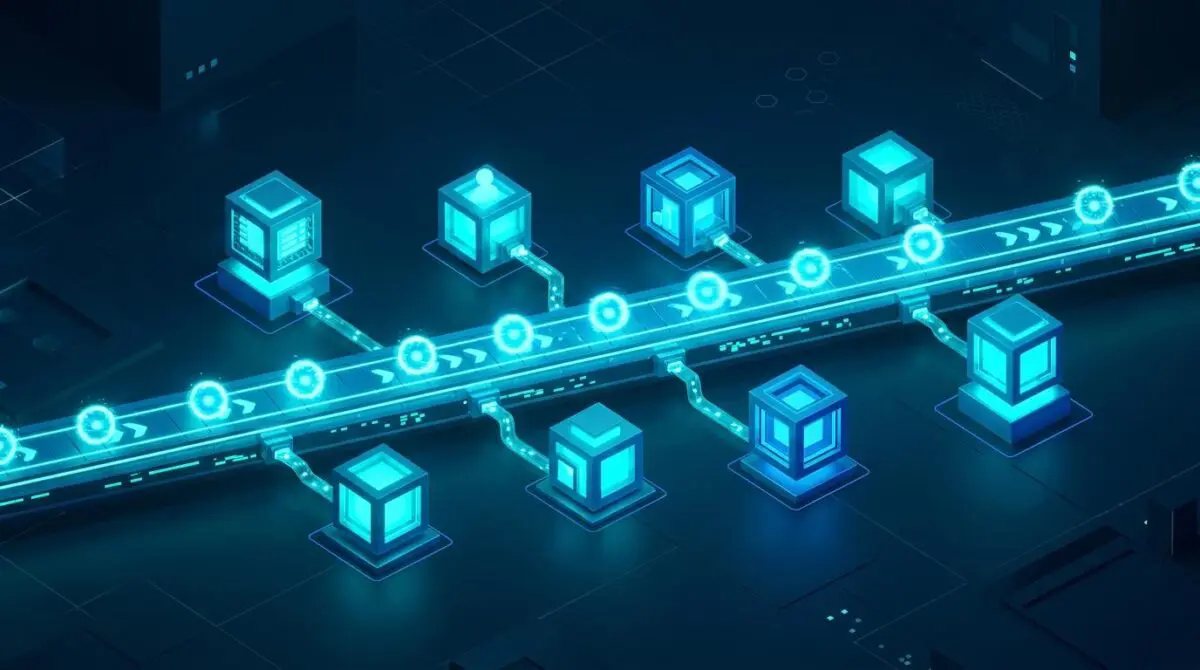
Event-driven architecture has three core components: producers that emit significant state changes, consumers that subscribe and apply business logic, and brokers that receive and hold events until delivery.
microservices define service boundaries, while event-driven architecture defines the communication style
In contrast to request-driven chains where one service calls another and waits, event-driven services announce what happened and continue processing.
Synchronous APIs still matter for interactions that need immediate feedback, such as checkout or payment authorization; asynchronous events then handle downstream tasks like invoicing, analytics, and cross-system notifications.
Although n8n is not a microservice framework itself, it operates as a practical companion for cross-service orchestration.
Queues Versus Streams
Message queues use point-to-point delivery and delete messages after consumption; event streams persist events for replay and support multiple independent consumers.
- Message queues: Task processing, job queues, typically one consumer per message, lower complexity.
- Event streams: Event sourcing, analytics, real-time systems, replayability, higher operational complexity.
n8n’s platform connects to both models through native RabbitMQ and Kafka nodes, AWS SQS support, webhooks, and HTTP request nodes.
The HTTP Request node acts as a flexible entry point for external systems, while webhook triggers let n8n receive and inspect event data without changing how microservices are deployed or scaled.
Benefits and Tradeoffs
Event-driven microservices deliver the most value in e-commerce order processing, real-time data processing, data synchronization, and financial services use cases such as fraud detection.
A single ‘order placed’ event can trigger payment confirmation, inventory updates, and shipping preparation simultaneously, allowing each service to scale independently.
The upside includes service-scale autonomy, resilience through failure containment, faster independent releases, and more precise infrastructure sizing.
- Scalability: Services scale on their own workload instead of upstream pressure.
- Resilience: Failures stay contained within individual consumers.
- Velocity: Teams release independently without cross-service coordination overhead.
- Cost control: Precise scaling reduces overprovisioning under uneven workloads.
The tradeoffs are real: eventual consistency, harder observability, debugging complexity, and additional broker and schema-management overhead.
- Eventual consistency: Data convergence takes time and may not suit every use case.
- Observability difficulty: Tracing an event across services requires correlation IDs and distributed tracing.
- Debugging complexity: Root-cause analysis across async chains takes more effort.
- Infrastructure overhead: Brokers, schemas, and monitoring add operational burden for small systems.
Production Anti-Patterns
Common failures emerge from event schemas, naming, and consumer behavior more often than from broker technology.
- Too many fine-grained events: Noise forces consumers to reconstruct state.
- Generic event names: Ambiguous names hide intent and force payload inspection.
- Complex dependency graphs: Cyclic event chains create unpredictable behavior.
- Synchronous event processing: Blocking consumers erases the benefits of async design.
- Missing idempotency: Duplicate deliveries can double-charge customers.
- Unversioned schema changes: Payload changes break consumers that expect older formats.
The n8n workflow layer listens to event streams, routes multi-step workflows, records every execution, and keeps AI-powered decision logic outside core microservices.
For teams adding AI, n8n’s LangChain nodes turn event payloads and business rules into LLM-driven workflows with built-in execution history, retries, and error handling.
Where Choreography Gets Dangerous and How to Design Around It
Microsoft Learn’s Azure Architecture Center documents the Choreography pattern as a decentralized model in which each service decides when and how to process a business operation, with no central orchestrator holding the full transaction state.
That decentralization creates genuine production risks: failure handling forces compensating transactions, sequential coordination becomes tangled, and observability at scale depends on distributed tracing and correlation IDs because no single component sees the entire flow.
Azure’s reference architecture also calls out event schema evolution, idempotency, event ordering, and event storms as explicit guardrails for teams adopting this style.
One Azure reference scenario uses a drone delivery workload on Azure Container Apps with Service Bus and Event Grid; an ingestion service turns HTTP requests into messages, while package, scheduler, and delivery services coordinate through topics, queues, and session identifiers.
Choreography suits independent fire-and-forget operations, serverless workflows, and loose coupling across bounded contexts; it is less appropriate when a complex application needs shared central logic or unavoidable point-to-point communication.
This is precisely the gap n8n’s orchestration layer aims to fill without turning a choreographed system into a tightly coupled one.
The platform sits one level above services, consuming events via triggers, executing multi-step workflows, and recording every execution — a practical compromise between decentralized autonomy and centralized visibility.
Automation teams get the benefit of choreography for independent services while retaining a single pane to trace, retry, and troubleshoot cross-service flows.
Events describe something that already happened; commands request a future action. Keeping that distinction clear helps avoid coupling business intent to delivery mechanics.
Automation design also hinges on how much data an event carries: thin event notifications force consumers to fetch additional context, while event-carried state transfer lets consumers process without dependency on the producer’s API.
Legacy migration playbooks increasingly pair event streaming with change data capture, schema registries, and gradual traffic shifting to avoid big-bang rewrites.
Reference implementations often pair dead-letter queues with saga-style compensation and idempotent upserts to recover from partial failures.
Some distributed-systems references warn that a central orchestrator can become a bottleneck; n8n’s approach sidesteps that by keeping the orchestration layer above the core microservices rather than inserting itself into the service path.
Building Resilient Automation on Top of Event Flows
Event-driven microservices are not a wholesale replacement for synchronous APIs; they are a coordination model for the asynchronous work that surrounds real-time user requests.
Teams that treat schemas, idempotency, and observability as first-class concerns will get the scalability without the chaos.
For teams building event-driven automation pipelines that need to scale without custom integration code, programmatic SEO AI automation is how Andres SEO Expert approaches the orchestration layer — contact us to map your flow.
Frequently Asked Questions
What is the difference between synchronous and event-driven microservices?
Synchronous microservices use request-driven chains where one service calls another and waits for a response, so a single slow component can stall the entire system. Event-driven microservices use asynchronous communication where services announce what happened and continue processing, reducing coupling and allowing independent scaling.
What are the benefits of event-driven microservices?
Event-driven microservices provide service-scale autonomy, resilience through failure containment, faster independent releases, and precise infrastructure sizing. They are especially valuable for e-commerce order processing, real-time data processing, data synchronization, and financial services like fraud detection.
What are the tradeoffs of event-driven architecture?
Tradeoffs include eventual consistency, harder observability, debugging complexity, and additional broker and schema-management overhead. Tracing events across services requires correlation IDs and distributed tracing, while root-cause analysis across async chains takes more effort.
What is the difference between message queues and event streams?
Message queues use point-to-point delivery and delete messages after consumption, making them ideal for task and job queues with lower complexity. Event streams persist events for replay and support multiple independent consumers, making them suitable for event sourcing, analytics, and real-time systems.
What are common anti-patterns in event-driven microservices?
Common anti-patterns include too many fine-grained events, generic event names, complex dependency graphs, synchronous event processing, missing idempotency, and unversioned schema changes. These issues arise more from event schemas, naming, and consumer behavior than from broker technology.
Why can choreography be dangerous in microservices?
Choreography creates genuine production risks because failure handling forces compensating transactions, sequential coordination becomes tangled, and observability at scale depends on distributed tracing and correlation IDs. Azure’s architecture guidance also calls out event schema evolution, idempotency, event ordering, and event storms as explicit guardrails.
How does n8n support event-driven microservices orchestration?
n8n operates as a practical companion for cross-service orchestration by consuming events via triggers, executing multi-step workflows, recording every execution, and providing built-in retries and error handling. Its LangChain nodes also allow event payloads and business rules to drive LLM-based workflows without putting AI logic inside core microservices.