Key Points
- Instant Verification: AI-powered computer vision systems eliminate manual scanning bottlenecks by instantly verifying pallet quantities and detecting damage at the dock door.
- Autonomous Workflows: Modern AI agents process visual data at the edge to autonomously file over, short, and damage claims directly into cloud ERP platforms.
- Rapid Financial Returns: Modular vision technology offers a low capital expenditure entry point, delivering a full return on investment in just six to nine months.
Table of Contents
- The Crushing Weight of the Inbound Bottleneck
- Decoding the Intelligence Behind the Dock
- Breaking the Manual Scanning Gridlock
- Deploying Autonomous AI Agents for Damage Control
- Piping Edge Visual Data Directly to Cloud ERPs
- Exposing the Dangerous Tax of Physical Audits
- Accelerating Payback with Modular Vision Tech
- Pioneering the Human-Optional Logistics Era
- The Visionary Path Forward
The Crushing Weight of the Inbound Bottleneck
Picture this: a 53-foot trailer backs into dock door four, unleashing thirty pallets of high-velocity SKUs into your receiving bay.
In a traditional setup, this triggers a chaotic sequence of manual barcode scanning, clipboard counting, and inevitable human error. Forklift operators are forced to dismount, verify labels, and visually inspect for crushed boxes while the clock ticks down.
This manual friction drains thousands of labor hours and severely limits your inbound throughput capacity. Deploying AI-powered computer vision pallet auditing systems is the ultimate solution to reclaim this lost time.
By transforming your dock doors into intelligent data gateways, you can instantly verify inventory and eliminate the crushing bottleneck of manual receiving.
Decoding the Intelligence Behind the Dock
Market Intelligence & Data
Inventory Accuracy Benchmark
According to a 2026 iFactory AI market analysis, computer vision auditing achieves 99.5% accuracy compared to the 63% industry average for manual processes.
Labor Cost Reduction
The 2026 Warehouse Automation Guide by ipec-group reports that facilities using CV for dock-to-stock auditing cut labor requirements by 65% within six months.
Average AI Return on Investment
A 2026 Mecalux executive survey of 300 supply chain leaders confirmed that AI-integrated operations yield an average ROI of 1.7x.
Robotics Adoption Forecast
The 2026 MHI Annual Industry Report predicts that 73% of warehouse facilities will adopt advanced robotics and automation by 2031.
Reaching a 99.5% accuracy benchmark is no longer a luxury but a fundamental necessity for modern supply chains. When human workers manually verify pallets, the industry average hovers around a dismal 63% accuracy rate. This massive discrepancy fuels a staggering global annual cost of nearly two trillion dollars in inventory distortion from stockouts and overstock.
Cutting labor requirements by 65% radically shifts warehouse economics. Facilities utilizing computer vision for dock-to-stock auditing free up their workforce from monotonous scanning routines. This transition aligns perfectly with the 2025-2026 WERC DC Measures Report, which highlights how logistics leaders are now prioritizing cost leadership and innovation over sheer customer service to survive economic uncertainty.
Securing an average AI return on investment of 1.7x proves that computer vision is a financially sound strategy. Supply chain executives are realizing that deploying smart cameras at the dock doors quickly pays for itself. By instantly detecting damaged goods and verifying quantities, companies prevent costly downstream fulfillment errors.
The forecast predicting 73% robotics adoption by 2031 underscores a permanent industry shift. Warehouses that fail to adopt automated auditing systems will soon find themselves unable to compete. Embracing these technologies today ensures your operations remain agile, scalable, and resilient against future labor shortages.
Breaking the Manual Scanning Gridlock

Manual dock auditing forces forklift operators to stop and scan pallets individually. This outdated workflow creates an immediate bottleneck at the receiving bay. The constant stopping and starting grinds inbound throughput to an absolute halt.
In a typical high-volume facility, this friction carries a severe financial penalty. A standard ten million dollar inventory warehouse often carries half a million dollars in misallocated stock purely due to human error. Operators under pressure frequently miscount layers or scan the wrong barcodes.
This creates a massive accuracy gap between warehouse management system records and physical shelf reality. In manual facilities, this discrepancy averages a 37% error rate. AI-powered computer vision pallet auditing systems eliminate this gap by capturing every detail instantly as the forklift drives through the dock door.
Deploying Autonomous AI Agents for Damage Control

The next evolution of dock automation relies on active agentic AI rather than passive cameras. Deployments in 2026 leverage powerful edge computing tools like NVIDIA Jetson AGX Orin paired with YOLOv11 models. These systems process high-resolution video streams in milliseconds right at the dock door.
These intelligent agents do not just detect a crushed box or a torn stretch wrap. They autonomously initiate over, short, and damage claims directly within the enterprise resource planning system. This eliminates the need for a receiving clerk to manually photograph and document the issue.
Transitioning from passive detection to active agents completely removes human intervention from the claims process. The AI captures the photographic evidence, logs the timestamp, and submits the paperwork seamlessly. Operations teams can finally resolve vendor disputes without spending hours digging through security footage.
Piping Edge Visual Data Directly to Cloud ERPs

Modern computer vision systems rely on robust edge-to-cloud pipelines to maintain absolute data integrity. Visual audit data is synced instantly via high-speed APIs to platforms like Oracle Fusion Cloud SCM or SAP S/4HANA. This creates a true perpetual inventory system that updates in real time.
Historically, the latency between a pallet arriving at the dock and appearing in digital inventory took hours or even days. This blind spot prevented sales teams from promising available stock to customers. Real-time synchronization completely erases this costly operational delay.
As soon as the computer vision array verifies the inbound load, the cloud ERP reflects the exact quantity available for allocation. Cross-docking operations become incredibly efficient when inventory data flows without friction. Warehouse managers gain total visibility into their actual stock levels at any given second.
Exposing the Dangerous Tax of Physical Audits

The hidden costs of manual warehouse labor extend far beyond simple hourly wages. Labor currently accounts for fifty to seventy percent of total warehousing budgets globally. Much of this expense is tied up in highly repetitive and physically demanding auditing tasks.
Manual auditing forces workers to climb racks or walk through high-traffic forklift zones with clipboards. This creates an extreme danger of injury in high-rack storage facilities. Safety incidents during cycle counts disrupt operations and trigger massive insurance liabilities.
Compounding this physical risk is the reality of escalating wage growth, which currently averages seven to nine percent annually. Relying on human labor for simple verification tasks is no longer financially sustainable. Automating the dock door immediately removes personnel from the most dangerous zones of the warehouse.
Accelerating Payback with Modular Vision Tech
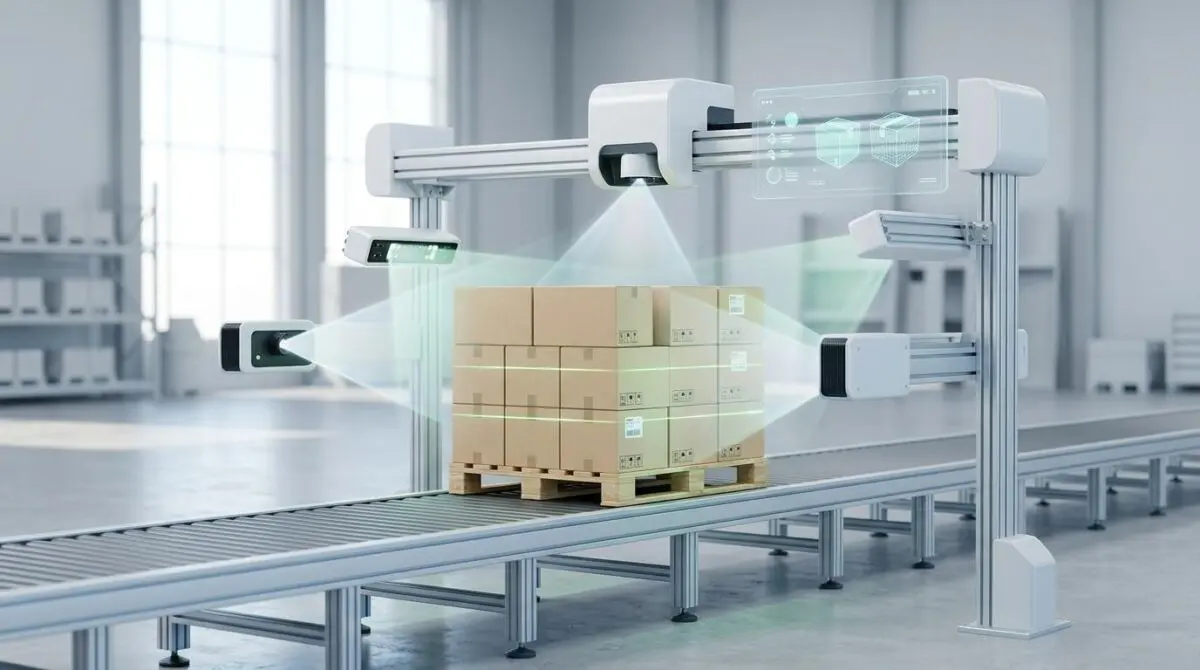
Many logistics leaders mistakenly believe that automation requires completely rebuilding their facility. However, a phased automation implementation using modular vision systems offers a much smarter approach. These scalable arrays can be mounted around existing dock doors without disrupting daily operations.
This modular strategy achieves return on investment forty percent faster than total facility overhauls. The high barrier to entry for full warehouse robotics is completely bypassed. Companies can start small, prove the concept at a single dock, and seamlessly scale across their network.
Most vision-only systems reach full financial payback in just six to nine months. This rapid justification makes computer vision an easy approval for cautious financial officers. The immediate reduction in misallocated stock easily covers the initial capital expenditure.
Pioneering the Human-Optional Logistics Era
The logistics sector is rapidly approaching a future defined by autonomous, self-optimizing operations. By 2030, Gartner predicts that fifty percent of new warehouses in developed markets will be entirely human-optional. This shift is driven by permanent labor shortages and highly volatile consumer demand.
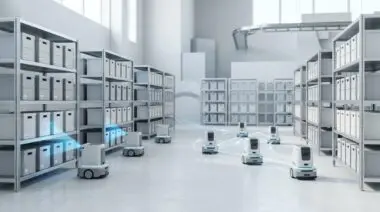
Static infrastructure is quickly being replaced by dynamic, mobile auditing solutions. Vision-equipped autonomous mobile robots and specialized drones are taking over the verification process. These machines perform continuous, motion-based pallet auditing while goods are in transit to storage.
The concept of a self-optimizing warehouse means that fixed camera gantries will eventually give way to roaming intelligent agents. Inventory verification will happen continuously across every square foot of the facility. Embracing AI-powered computer vision today lays the foundational data architecture required for this autonomous future.
The Visionary Path Forward
The era of manual dock scanning and clipboard audits is officially coming to an end. Supply chains that harness AI-powered computer vision pallet auditing systems are unlocking unprecedented levels of accuracy and speed. Transforming the receiving bay into an automated data gateway is the ultimate competitive advantage.
Navigating the intersection of technology, workflows, and operational efficiency requires a sharp strategy. To future-proof your business architecture and scale with precision, connect with Andres at Andres SEO Expert.
Frequently Asked Questions
What is the accuracy of computer vision versus manual pallet auditing?
According to 2026 market analysis, AI-powered computer vision achieves a 99.5% inventory accuracy benchmark. This is a significant improvement over the industry average of 63% for manual auditing processes, helping to eliminate the $1.77 trillion global cost of inventory distortion.
How much can AI automation reduce warehouse labor costs?
Facilities implementing computer vision for dock-to-stock auditing report cutting labor requirements by up to 65% within six months. By automating monotonous scanning tasks, warehouses can shift personnel to higher-value operational roles.
What technologies drive autonomous dock door auditing?
Modern systems utilize advanced edge computing hardware, such as NVIDIA Jetson AGX Orin, paired with YOLOv11 AI models. These technologies enable real-time processing of video streams to identify damages and autonomously initiate ERP claims without human intervention.
Can AI-powered vision systems integrate with existing ERP software?
Yes, computer vision arrays use edge-to-cloud pipelines and high-speed APIs to sync visual audit data directly with leading ERP platforms like SAP S/4HANA and Oracle Fusion Cloud SCM. This enables a perpetual inventory system with real-time stock updates.
What is the typical ROI for dock door computer vision systems?
AI-integrated warehouse operations yield an average ROI of 1.7x. Modular vision systems are particularly cost-effective, often reaching full financial payback within six to nine months due to reduced misallocated stock and decreased labor overhead.
How does dock door automation improve facility safety?
Automated auditing removes workers from high-traffic forklift zones and high-rack storage areas. By eliminating the need for manual cycle counts and physical clipboard audits in dangerous zones, facilities significantly reduce safety incidents and insurance liabilities.