Key Points
- Instant API Triggers: Geofence-Triggered Automated Cargo Locking eliminates the 35% manual failure rate by securing doors the millisecond a truck exits a facility.
- Zero Latency Execution: Transitioning to MQTT and 5G-RedCap protocols eradicates dangerous locking lag between the vehicle CAN bus and the cloud.
- Immutable Compliance: Automated event logging guarantees adherence to 2025 TAPA TSR standards and protects fleets against insurance claim denials.
Table of Contents
- The First-Mile Vulnerability
- The Invisible Cost of Unsecured Freight
- Overcoming the Burden of Manual Compliance
- Distinguishing Genuine Stops From Hijacking Threats
- Bridging the Gap Between Vehicle and Cloud
- Navigating Urban Canyons and Connectivity Dead Zones
- Meeting the Gold Standard of Immutable Security Logs
- Defeating Signal Jamming and GPS Spoofing
- The Era of Predictive Behavioral Security
The First-Mile Vulnerability
Every time a driver rolls out of a bustling port or distribution center, an invisible tax is levied on the supply chain in the form of human error. Drivers are under intense pressure to navigate heavy traffic, hit tight delivery windows, and manage complex manifests. In the chaotic environment known as “The First Mile,” manually engaging secondary padlocks or electronic bolts is frequently overlooked.
This simple oversight creates a massive security gap that organized crime rings exploit daily. When a driver forgets to manually secure the cargo hold, millions of dollars in freight are left entirely unprotected during the most vulnerable segment of the journey. The reliance on human memory for physical security is an outdated concept that actively bleeds revenue from modern logistics operations.
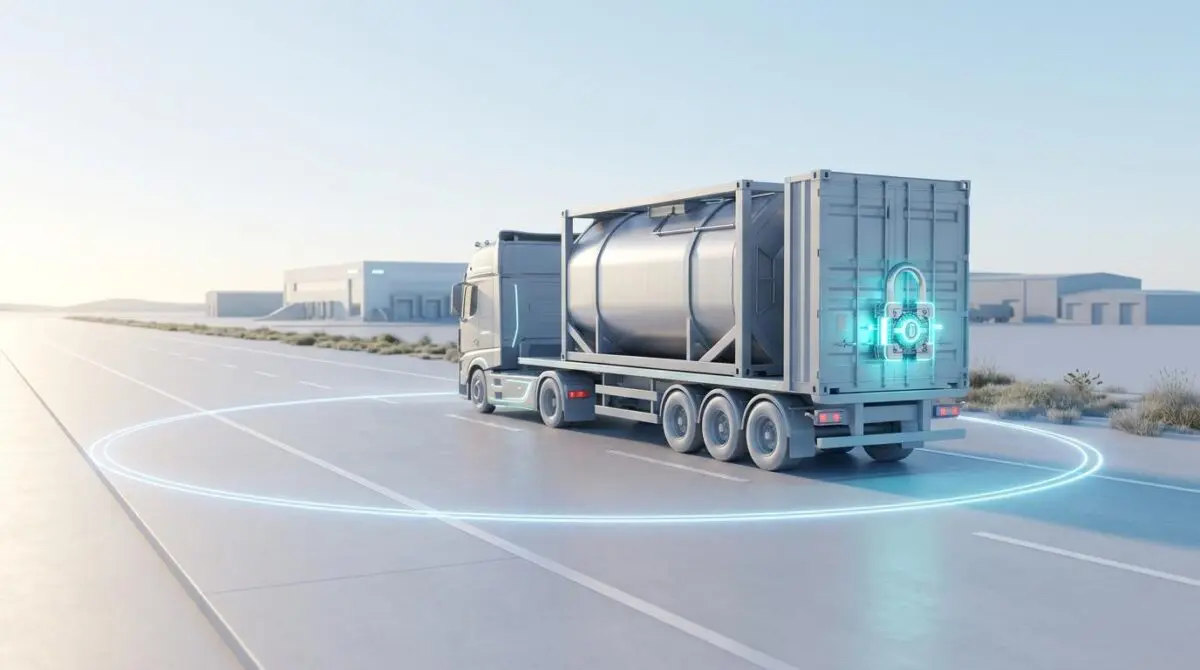
Geofence-Triggered Automated Cargo Locking (GTACL) eliminates this friction entirely by shifting the responsibility from the driver to the software. By tying the physical locking mechanism directly to real-time geographic boundaries, the cargo secures itself the exact millisecond the truck breaches the warehouse perimeter. This automation reclaims lost time, removes the cognitive burden from drivers, and mathematically seals the supply chain.
The Invisible Cost of Unsecured Freight
Market Intelligence & Data
2025 Cargo Theft Loss
According to the BSI and TT Club 2026 Annual Cargo Loss Report, global transit theft reached record highs due to unforced cargo access.
Insurance Premium Reduction
A 2025 Aon Logistics Study confirms that fleets implementing automated lock-state logging receive significant discounts on their cargo liability premiums.
Smart Lock Adoption Increase
FreightWaves 2026 research indicates a massive surge in fleet upgrades to IoT-integrated electronic locking systems compared to 2024 levels.
Automation Success Rate
A 2025 report from Transport Intelligence shows that automated locking triggers virtually eliminate the ‘forgotten lock’ human error found in manual protocols.
The sheer scale of financial hemorrhaging in the logistics sector is staggering. This is not about petty theft; it is about highly organized syndicates exploiting the precise moments when trucks idle near high-risk exits. The BSI and TT Club 2026 Annual Cargo Loss Report highlights how opportunistic thieves target these unforced cargo access points to drain billions from the global economy.
Insurance carriers are understandably exhausted by preventable claims and are rewarding companies that modernize their protocols. By proving that doors are digitally sealed without relying on a driver’s memory, logistics companies are slashing their overhead costs. Fleets can leverage these automated, tamper-proof logs to negotiate significantly better cargo liability rates and improve their bottom line.
The industry is rapidly waking up to the reality that traditional physical padlocks are a liability rather than a safeguard. FreightWaves data proves that carriers are aggressively pivoting toward IoT-integrated solutions to protect high-value loads. Forward-thinking fleets understand that tools like Samsara and Motive now automate this via API-driven triggers, fundamentally changing how freight is secured in transit.
This technological shift marks the absolute death of the “forgotten lock” excuse in modern transport. When a digital geofence dictates the security protocol, the failure rate plummets to near zero instantly. Drivers can focus entirely on navigating heavy traffic safely, knowing the cargo hold is automatically secured behind them without a second thought.
Overcoming the Burden of Manual Compliance

Standard operational procedures usually place the heavy burden of secondary locking squarely on the shoulders of the driver. This reliance on human compliance is a massive vulnerability, especially during peak transit hours when stress levels are highest. When a driver is navigating a 40-ton rig through a crowded port, a secondary electronic bolt is the last thing on their mind.
Driver cognitive load and physical fatigue lead to a startling 35% failure rate in manual lock engagement. This means that one in three high-value shipments leaves the facility completely exposed to opportunistic theft. The manual workflow is fundamentally broken because it expects perfect execution in an inherently chaotic environment.
GTACL shifts this critical responsibility from human memory to infallible code. By setting up API-driven exit-zone triggers, the lock engages automatically the moment the vehicle’s GPS coordinates breach the safe zone perimeter. This seamless automation guarantees compliance on every single dispatch.
Distinguishing Genuine Stops From Hijacking Threats
Traditional static geofences are incredibly binary and lack contextual awareness. They know when a truck leaves a designated zone, but they cannot differentiate between a legitimate traffic stop and a forced exit by unauthorized parties. This creates a terrifying loophole for modern carriers.
A compromised driver might be forced out of a geofence without triggering an alarm, simply because the system assumes all movement is authorized. The software sees the truck moving and assumes everything is fine, leaving the cargo entirely vulnerable to coordinated hijackings.
By integrating AI agents from platforms like Platform Science, fleets can now monitor real-time traffic anomalies and intent-to-stop indicators. This advanced intelligence allows the system to distinguish between a truck waiting at a red light and an unauthorized hijacking attempt, securing the doors dynamically based on threat context.
Bridging the Gap Between Vehicle and Cloud

In the past, latency in older 4G cellular networks caused a dangerous phenomenon known as locking lag. A truck could travel up to 500 meters outside a safe zone before the automated command actually processed and secured the physical doors. Half a kilometer is more than enough space for thieves to execute a swift cargo grab.
The automation logic was technically present, but the synchronization pipeline was fatally slow. This delay rendered the entire geofence concept useless, as the most critical vulnerability window remained wide open during the initial departure phase.
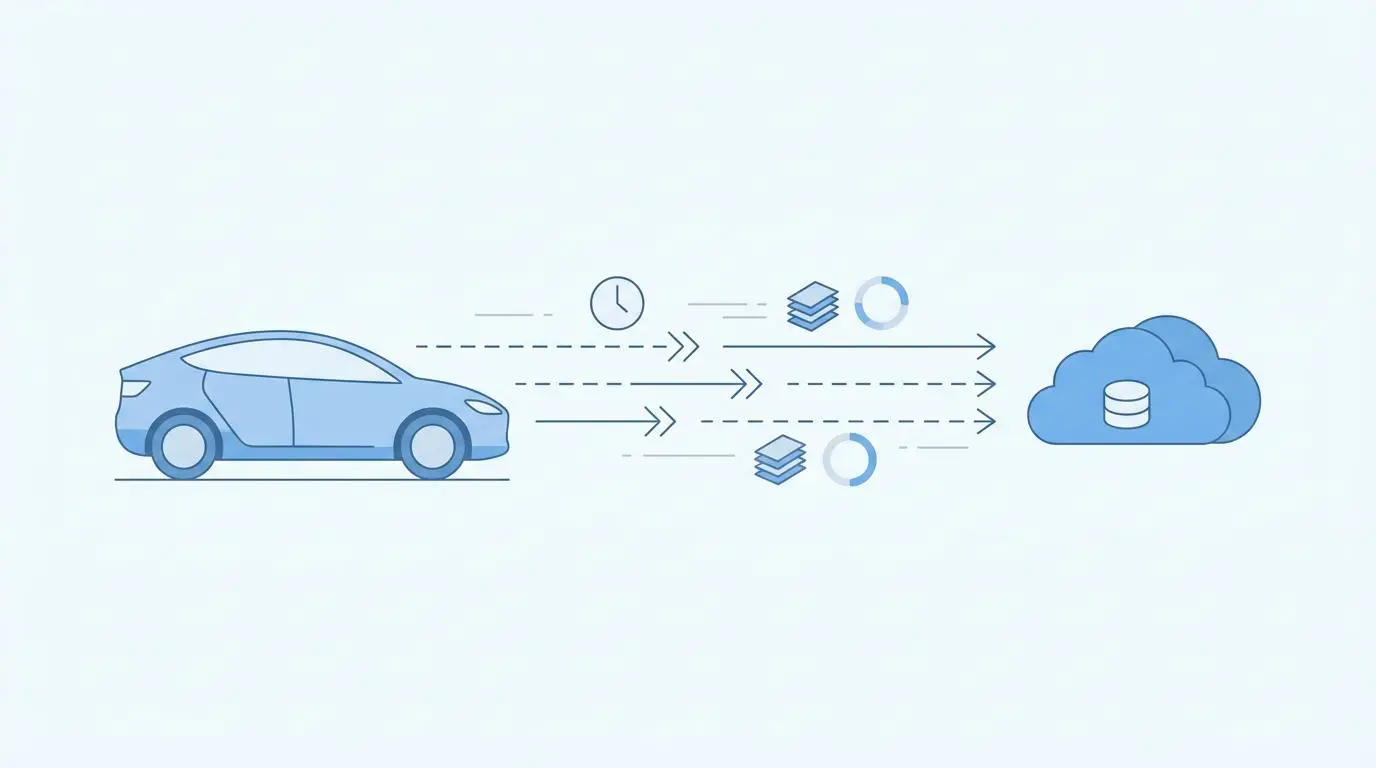
Modern GTACL setups utilize MQTT and 5G-RedCap protocols to completely eliminate this communication delay. These lightweight, high-speed protocols sync the lock status from the vehicle’s CAN bus directly to the carrier’s ERP system in a matter of milliseconds, ensuring the lock snaps shut instantly.
Navigating Urban Canyons and Connectivity Dead Zones

Relying purely on GPS coordinates introduces the severe risk of GPS drift, especially in dense urban canyons surrounded by towering skyscrapers. This signal bounce can trick the telematics system into triggering false unlocks, exposing the cargo in the middle of a busy, high-risk city street.
Conversely, hardware and software misalignment can result in nightmare lock-out scenarios for the operators. Drivers can find themselves trapped outside their vehicles in remote, rural areas where cellular coverage drops completely, causing massive delivery delays.
To solve this friction, modern automated flows use dual-factor verification at the hardware level. They combine standard GPS data with Bluetooth Low Energy beacons stationed at dock exits, ensuring the lock only triggers when both proximity and location data align perfectly.
Meeting the Gold Standard of Immutable Security Logs
The inability to provide immutable logs of a lock’s status at the exact moment of departure is a massive financial liability for carriers. Without hard data, it frequently leads to the immediate denial of insurance claims after a theft occurs. Adjusters demand proof that the cargo was secured, not just a promise.
Compliance with the stringent 2025 TAPA TSR Level 1 standards requires far more than just a locked door. It demands automated, tamper-proof logs of all security events, which is an absolute necessity when transporting high-value electronics and pharmaceuticals.
GTACL automatically writes these critical events to a secure cloud ledger without any human intervention. Every lock, unlock, and geofence breach is precisely time-stamped and recorded, providing undeniable proof of compliance to auditors and insurance adjusters.
Defeating Signal Jamming and GPS Spoofing
Organized crime rings are becoming highly sophisticated, frequently utilizing GPS spoofing tools to trick standard telematics systems. They can broadcast fake coordinates, convincing the truck’s onboard computer that it is safely inside a warehouse while it is actually being unloaded miles away.
Traditional geofencing is increasingly vulnerable to these advanced attacks without encrypted signal verification. A spoofed signal completely bypasses standard location-based triggers, rendering basic automated locks entirely useless against coordinated syndicates.
The transition toward Quantum-Resistant Telematics is the ultimate countermeasure against this threat. This emerging technology prevents signal jamming and spoofing, ensuring that the geographic triggers controlling the cargo locks cannot be manipulated by external hardware.
The Era of Predictive Behavioral Security
By late 2026, cargo security will evolve far beyond simple geographic boundaries and static perimeters. We are rapidly entering the age of Predictive Behavioral Locking, where the vehicle itself acts as an intelligent security agent. Onboard AI will analyze driver stress levels, sudden route deviations, and vehicle trajectory in real-time.
If a recognized hijacking signature is detected by the onboard systems, the protocol will automatically lock the doors and alert local authorities even before a geofence boundary is crossed. Furthermore, dynamic geofencing will integrate real-time crime heatmaps from local law enforcement APIs to automatically increase the locking radius in known high-risk zones.
Navigating the intersection of technology, workflows, and operational efficiency requires a sharp strategy. To future-proof your business architecture and scale with precision, connect with Andres at Andres SEO Expert.
Frequently Asked Questions
What is Geofence-Triggered Automated Cargo Locking (GTACL)?
GTACL is an automated security protocol that uses real-time geographic boundaries to trigger physical locking mechanisms on cargo holds. It removes the risk of human error by ensuring the vehicle is secured the exact millisecond it exits a warehouse or port perimeter.
How does automated cargo locking affect insurance premiums?
Fleets that implement automated lock-state logging can reduce cargo liability premiums by approximately 22%. Insurance carriers reward these modernizations because they provide tamper-proof, immutable logs that prove cargo was secured, reducing the likelihood of claims related to unforced cargo access.
Why is manual lock compliance a major vulnerability in logistics?
Manual compliance relies on driver memory, which is often compromised by high cognitive load and stress during peak transit hours. This results in a 35% failure rate in manual lock engagement, creating a massive security gap that organized crime syndicates exploit during the first mile of transit.
How do 5G and MQTT protocols improve automated locking security?
These high-speed, lightweight protocols eliminate “locking lag,” which previously allowed vehicles to travel up to 500 meters outside a safe zone before a command was processed. Modern GTACL setups ensure the lock snaps shut instantly by syncing the CAN bus status to the cloud in milliseconds.
How does GTACL technology solve the problem of GPS spoofing?
Advanced GTACL systems are moving toward Quantum-Resistant Telematics and dual-factor verification. By combining standard GPS coordinates with Bluetooth Low Energy (BLE) beacons at dock exits, the system ensures that locking triggers cannot be manipulated by external signal jamming or spoofing hardware.
What is the future of Predictive Behavioral Security for freight?
By late 2026, cargo security will integrate onboard AI to analyze driver stress, route deviations, and hijacking signatures in real-time. This allows the system to act as an intelligent agent, locking doors and alerting authorities based on behavioral context even before a geofence boundary is breached.