Key Points
- Instant Regional Relevance: Leveraging edge computing allows apps to resolve user locations in under 50 milliseconds to eliminate UI flicker and deliver immediate localized content.
- Privacy-First Orchestration: Modern workflows integrate real-time consent banners to ensure strict compliance with tightening global regulations like GDPR and the 2026 Oregon Consumer Privacy Act.
- No-Code Agility: Platforms like Make and n8n empower marketing teams to build complex fallback logic for VPN users without relying on overstretched engineering resources.
Table of Contents
The High Cost of Generic First Impressions
Imagine a local tapas bar owner in Madrid trying to process WhatsApp orders from tourists using a rigid English-only menu. Now picture an enterprise developer managing a massive data pipeline that sends generic, unlocalized welcome modals to users across thirty different countries. Both face the exact same operational bottleneck. They are losing engagement because they are forcing users to manually bridge the gap between global software and local reality.
Language and currency misalignment in global apps results in a massive and immediate drop in international user engagement. When an app fails to establish real-time local relevance upon the first open, users simply abandon the session. This creates a frustrating experience for the customer and an administrative nightmare for marketing teams who waste hours manually segmenting users into regional lists.
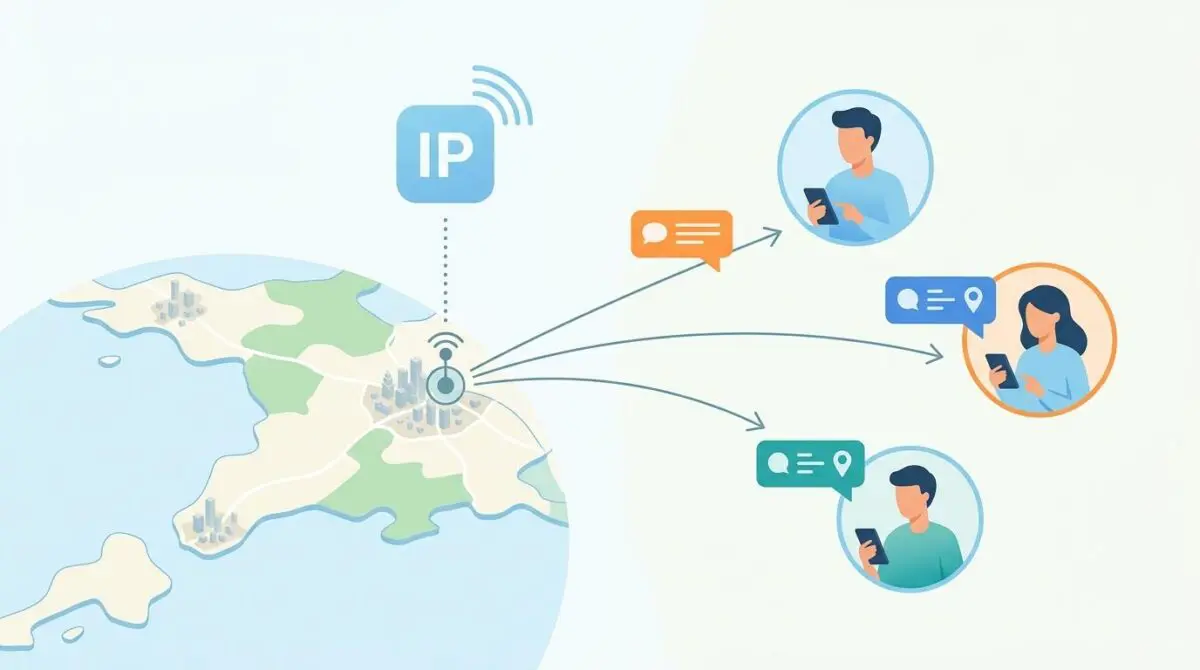
The ultimate solution to reclaim this lost time and scale operations seamlessly is the deployment of IP Geolocation-Triggered In-App Messaging Workflows. By automatically detecting a user location at the network edge, systems can instantly swap languages, adjust currencies, and tailor promotions before the screen even renders. This eliminates manual errors, drastically reduces bounce rates, and creates a frictionless experience that feels natively built for every individual user.
The Data Behind Real-Time Regional Relevance
Market Intelligence & Data
Conversion Rate Growth
According to a 2026 Expand in Asia report, companies implementing full localization strategies see up to a 70% increase in conversion rates compared to generic experiences.
Non-Native Language Bounce Rate
A 2026 study by Mind.com indicates that 40% of global consumers will never purchase from a website or app that does not offer information in their native language.
Positive Localization ROI
According to 2025 research from DeepL and Localize, 96% of B2B leaders reported a positive ROI from their automated localization and translation efforts.
IP Geolocation Market Value
The global IP Geolocation Services market is projected to grow to $12.76 billion by 2035, with significant growth in real-time application sectors as of a 2026 Spherical Insights report.
The 70 percent conversion rate growth highlighted by the Expand in Asia report underscores a fundamental shift in user expectations. When software automatically adapts to regional nuances, it removes the cognitive load from the buyer. This seamless transition directly correlates with higher checkout completion rates and deeper product adoption.
Ignoring these regional preferences carries a heavy penalty for global brands. A staggering number of users will simply abandon a session if they feel alienated by the interface, which makes perfect sense when you consider that 40% of consumers will never purchase from websites in other languages. Automating this initial touchpoint acts as a critical safety net against preventable churn.
Investing in these automated workflows is no longer a speculative technical experiment. The financial returns are highly predictable and well-documented across enterprise sectors, validating the fact that 96% of B2B leaders reported a positive ROI from localization efforts. By removing manual translation bottlenecks, teams can deploy global campaigns faster and cheaper.
The projected 12.76 billion dollar valuation of the IP Geolocation market by 2035 reflects the sheer infrastructure demand for real-time personalization. As more companies realize the cost savings of automated in-app messaging, reliance on high-speed geolocation APIs will become as standard as hosting itself. This data proves that location-aware automation is the foundation of modern digital commerce.
Customer Experience (CX) Automation

Modern customer experience stacks like Braze, Intercom, and Reteno have evolved far beyond basic email triggers. They now utilize real-time IP resolution to dynamically adjust in-app modals the exact moment a user opens the application. This ensures that a customer in Tokyo sees a welcome sequence in Japanese with pricing in Yen, rather than a generic English greeting.
A 2026 Infobip report highlights that 98 percent of brand interactions are now omnichannel. This requires location data to be synchronized flawlessly across mobile push notifications and in-app triggers to maintain a cohesive narrative. When systems fail to sync this data, users are met with generic, non-localized sequences that feel disconnected and robotic.
Automating these CX touchpoints eliminates the friction of manual user profiling. Instead of asking users to select their region from a clunky dropdown menu, the system anticipates their needs instantly. This proactive approach builds immediate trust and dramatically accelerates the user journey toward conversion.
GEO Automation

The technical backbone of instant localization relies heavily on Edge Computing tools like Cloudflare Workers and Vercel Edge Functions. These platforms allow for sub-50 millisecond geolocation lookups by processing the data geographically closer to the user. This incredible speed ensures that localized UI components are triggered before the primary application logic even finishes loading.
APIs such as ipstack and MaxMind GeoIP2 provide high-precision mapping that can identify a user down to their specific city, region, and Internet Service Provider. This granular data feeds directly into the automation pipeline. It allows developers to serve highly specific regional content without bogging down the main server architecture.
Historically, real-world friction occurred when server-side latency in geolocation lookups caused a jarring flicker effect on the screen. Users would see the default language for a split second before the localized popup appeared, breaking the illusion of a seamless app experience. Edge-driven GEO automation completely eradicates this delay, delivering a flawless first impression.
Security, Privacy & Compliance
As geolocation tracking becomes more sophisticated, global privacy regulations have tightened aggressively. In 2026, strict enforcement of GDPR and CCPA/CPRA has reshaped how data is collected. Furthermore, Oregon Consumer Privacy Act bans the sale of precise geolocation data within a 1,750-foot radius, setting a new standard for domestic privacy compliance.
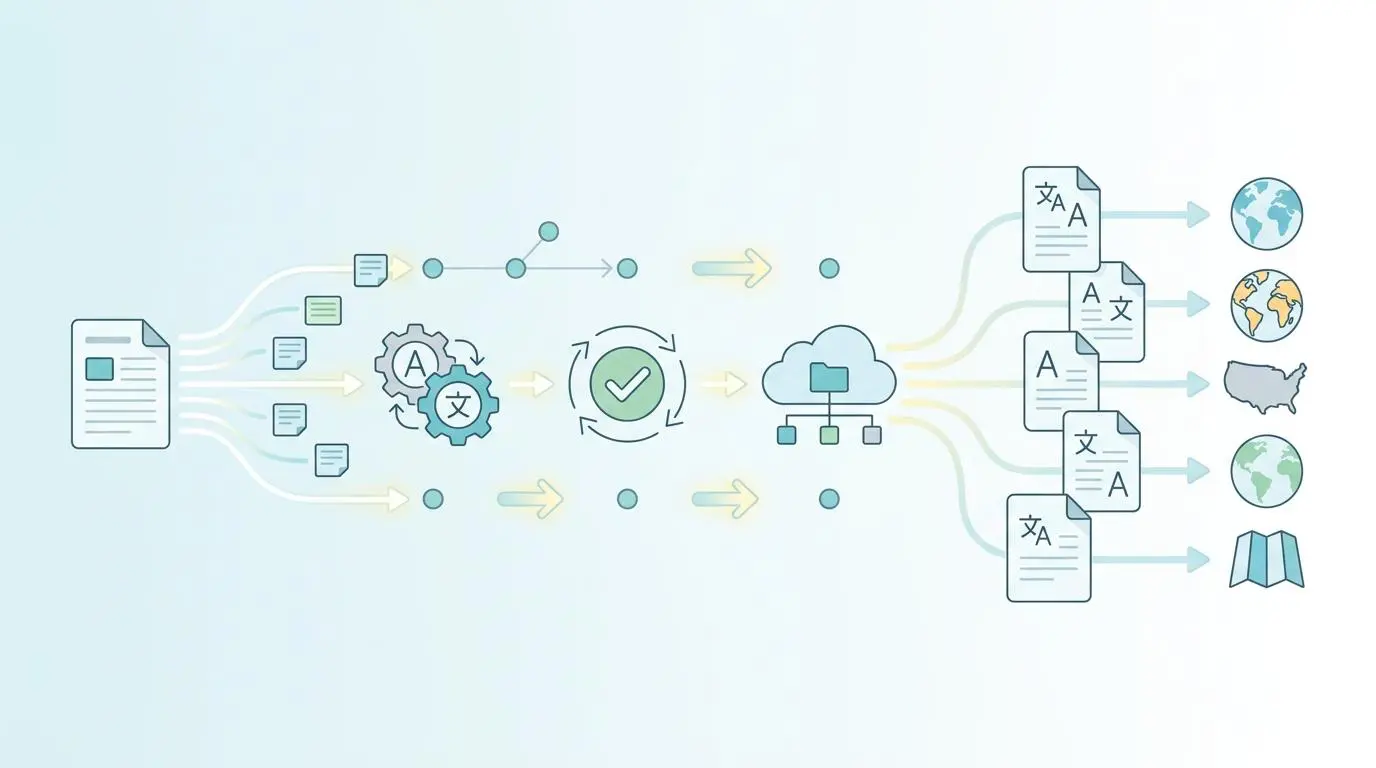
To navigate this minefield, automation tools now natively integrate Privacy-by-Design filters. Platforms like iubenda and OneTrust are wired directly into the IP resolution workflow. This ensures that IP tracking and localization only occur after explicit consent is verified via real-time geo-banners.
Failing to automate these compliance checks exposes companies to the risk of multi-million dollar fines for non-compliant tracking. By embedding consent management directly into the geolocation trigger, brands can safely personalize experiences for EU and US-based users without violating regional privacy mandates.
ROI & Time-Saving Metrics
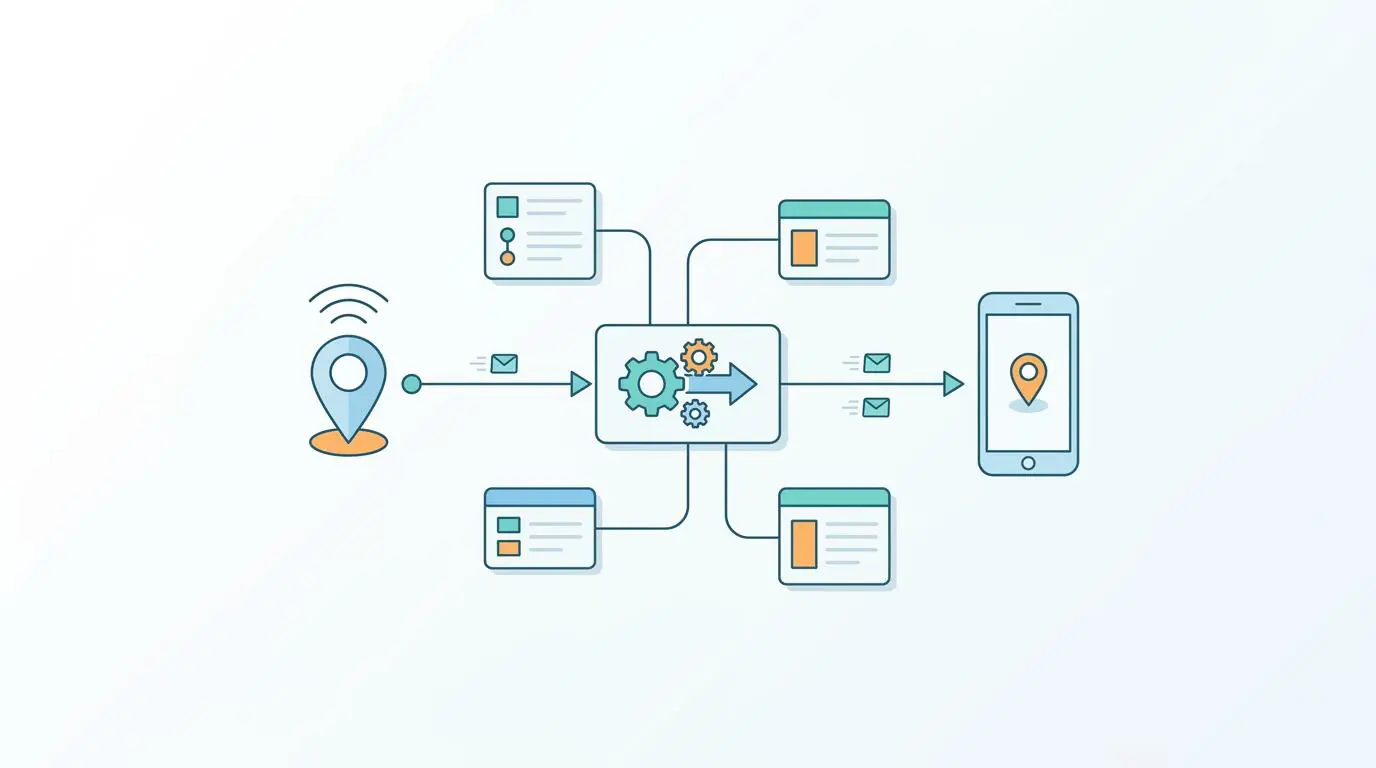
Automating localization workflows completely eliminates the need for manual copy-paste marketing campaigns across different regions. Marketing teams no longer have to waste hundreds of hours manually segmenting users into static regional lists. The automation handles the heavy lifting, routing the right message to the right user based on live network data.
According to 2026 research, brands using automated localization saw an 80 percent reduction in time-to-market for global feature releases. This agility allows companies to launch international promotions simultaneously without waiting for localized lists to be processed manually. It represents a massive leap in operational efficiency.
Furthermore, these automated systems consistently maintain a three times or higher return on localization spend. By drastically reducing the overhead associated with campaign management, businesses can reinvest those saved hours into creative strategy and product development.
Common Pitfalls & Broken Flows
Despite the power of IP geolocation, it is not infallible. With global VPN and proxy usage exceeding 35 percent, standard IP detection can easily be spoofed. This leads to the frustrating scenario of showing region-locked promotions to users who cannot actually redeem them, driving up support tickets and damaging brand trust.
To combat this, advanced workflows now incorporate Proxy Detection headers into their automation logic. If the system detects a VPN or if the geolocation accuracy falls below a 90 percent confidence threshold, the workflow instantly pivots. It intercepts the automated localized message and deploys a safe alternative.
This fallback messaging layer usually takes the form of a manual language and currency selector. By gracefully degrading the experience rather than guessing incorrectly, the automation protects the user experience and prevents broken flows from derailing the customer journey.
The No-Code & Low-Code Revolution
The democratization of automation means that building complex geolocation workflows no longer requires an army of software engineers. No-code and low-code platforms like Make and n8n now feature native integrations with tools like ipinfo.io and Google Maps. This puts immense power directly into the hands of marketing managers and operations teams.
These visual builders allow teams to construct hyper-specific localization logic using simple drag-and-drop interfaces. A marketing manager can easily build a rule that says if a user is in Paris and the weather API reports rain, show an umbrella promotion. This level of granular control was previously locked behind months of development sprints.
This revolution eliminates the dependency on overstretched developer teams for minor changes to regional marketing messages. By empowering non-technical staff to tweak and deploy UI changes instantly, organizations can iterate faster and respond to local market trends in real time.
Zero-Latency Edge Personalization
The 2026 horizon is defined by a massive shift toward Zero-Latency Edge Personalization. We are moving away from relying solely on cloud-based geolocation databases and moving toward Edge AI Small Language Models. These SLMs generate hyper-local, context-aware messaging entirely on the device edge, ensuring absolute privacy and zero latency.
As of 2026, the market is moving away from simple notifications toward Agentic AI that uses real-time geolocation to autonomously orchestrate complex multi-channel customer journeys. According to the Infobip Messaging Trends Report 2026, these autonomous agents will craft experiences without pre-defined rules, adapting dynamically to the user environment.
This evolution will transform apps from static software into living, breathing entities that understand their users contextually and geographically. Embracing these advanced workflows today is the only way to remain competitive in a landscape where instant relevance is the baseline expectation.
Navigating the intersection of technology, workflows, and operational efficiency requires a sharp strategy. To future-proof your business architecture and scale with precision, connect with Andres at Andres SEO Expert.
Frequently Asked Questions
What are IP Geolocation-Triggered In-App Messaging Workflows?
IP Geolocation-Triggered Workflows are automated systems that detect a user’s location at the network edge the moment an app is opened. This allows the software to instantly customize languages, currencies, and promotions before the screen renders, eliminating the need for manual user segmentation.
How does automated localization impact conversion rates and ROI?
Research indicates that full localization strategies can grow conversion rates by up to 70%. Furthermore, 96% of B2B leaders have reported a positive ROI from automated localization, as it removes manual translation bottlenecks and reduces user bounce rates caused by language misalignment.
Which technical tools enable sub-50ms geolocation lookups?
To achieve near-instant localization without UI flickering, developers use Edge Computing platforms like Cloudflare Workers and Vercel Edge Functions. These are paired with high-precision APIs such as ipstack and MaxMind GeoIP2 to process location data geographically closer to the end user.
How do global privacy laws like GDPR and CCPA affect geolocation tracking?
Strict regulations require that geolocation tracking only occurs after explicit consent is verified. Automation tools now integrate Privacy-by-Design filters and consent management platforms like OneTrust to ensure compliance with GDPR, CCPA, and the Oregon Consumer Privacy Act before any IP resolution takes place.
How do apps handle geolocation errors caused by VPNs or proxies?
Because over 35% of users use VPNs, advanced workflows utilize Proxy Detection headers. If the system detects a VPN or a low confidence threshold in the location data, it pivots to a fallback messaging layer, such as a manual language and currency selector, to protect the user experience.
What is Zero-Latency Edge Personalization?
Zero-Latency Edge Personalization is an emerging standard for 2026 that uses Edge AI Small Language Models (SLMs) to generate context-aware messaging directly on the device. This ensures absolute privacy and immediate response times by removing the need for cloud-based geolocation database lookups.