Key Points
- Protocol Unification: Multi-Agent AI Orchestration (MAO) eliminates the agent silo syndrome by utilizing protocols like MCP and A2A to unify fragmented research bots into a cohesive workflow.
- Persistent Memory: Deploying vector memory layers such as Pinecone prevents context drift in LLMs, ensuring accurate data retention across complex, long-horizon synthesis tasks.
- Workflow Redesign: Escaping the incremental experiment trap requires re-engineering end-to-end workflows for silicon workforces, a strategy proven to reduce operational costs by up to 80 percent.
Table of Contents
- The Hidden Cost Of Siloed Research
- Quantifying The Silicon Workforce Shift
- Connecting The Cognitive Dots Across Systems
- Breaking The Engineering Wall With Low-Code
- Eliminating Context Drift In Long-Horizon Tasks
- Preventing Recursive Loop Death And Runaway Costs
- Escaping The Experiment Scale Trap For Real ROI
- Deploying Sovereign Agent Clouds For Privacy
- The Next Frontier Of Autonomous Operations
The Hidden Cost Of Siloed Research
The harsh truth about modern market research is that brilliant analysts often function as highly-paid data janitors. They spend countless hours manually cross-referencing siloed, high-velocity data streams instead of generating strategic insights. This massive operational bottleneck creates a severe divide across the industry, causing most isolated AI pilots to fail before reaching production maturity.
The ultimate solution to reclaim this lost time and scale operations is Multi-Agent AI Orchestration (MAO). By deploying specialized bots that communicate and execute tasks in unison, MAO transforms fragmented data gathering into a seamless assembly line. This eliminates manual errors and empowers your team to focus strictly on high-level synthesis and strategic decision-making.
Quantifying The Silicon Workforce Shift
Market Intelligence & Data
Enterprise Agent Embedding
According to a 2025 Gartner report, 40% of enterprise applications will feature task-specific AI agents by the end of 2026, a significant jump from less than 5% in 2024.
Market Valuation
Ringly.io and Fortune Business Insights confirm the global AI agents market reached a valuation of $10.91 billion in early 2026, growing at a 43% year-over-year rate.
Average Agent Inventory
A 2026 study by ConvertMate of 1,800 teams found that the average organization now manages 12 distinct AI agents, highlighting the urgent need for cross-agent orchestration.
Research Output Gain
The Stanford HAI 2026 AI Index meta-analysis reports that multi-agent orchestration has driven a 50% increase in measurable productivity for complex data analysis and report generation.
The rapid adoption of autonomous workflows is fundamentally reshaping how companies handle complex intelligence gathering. A recent Gartner report predicting 40% of enterprise applications will feature task-specific AI agents highlights a massive leap from the mere 5% integration seen just two years prior. This metric proves that isolated chatbots are being aggressively replaced by embedded systems capable of executing multi-step research without human prompting.
This technological shift is backed by serious financial momentum, with the global AI agents market hitting a staggering $10.91 billion valuation early this year. Growing at a 43% year-over-year rate, this explosion in capital reflects a desperate industry need to eliminate the cognitive overload associated with manual data synthesis. Organizations are heavily investing in orchestration layers to ensure their digital workforce operates seamlessly and scales efficiently.
As teams deploy more specialized bots, managing the resulting agent silo syndrome becomes the next major operational hurdle. The average organization now juggles 12 distinct AI agents, making horizontal delegation and communication critical for success. To solve this fragmentation, technical standards like Anthropic’s Model Context Protocol (MCP) for system connections have emerged to unify these disparate bots into a single cohesive research engine.
The ultimate payoff for mastering this orchestration is a dramatic acceleration in actionable market intelligence. The Stanford HAI meta-analysis reveals a 50% increase in measurable productivity for complex data analysis when multi-agent systems are properly deployed. This output gain allows research teams to process larger datasets faster, entirely bypassing the traditional bottlenecks of manual report generation.
Connecting The Cognitive Dots Across Systems
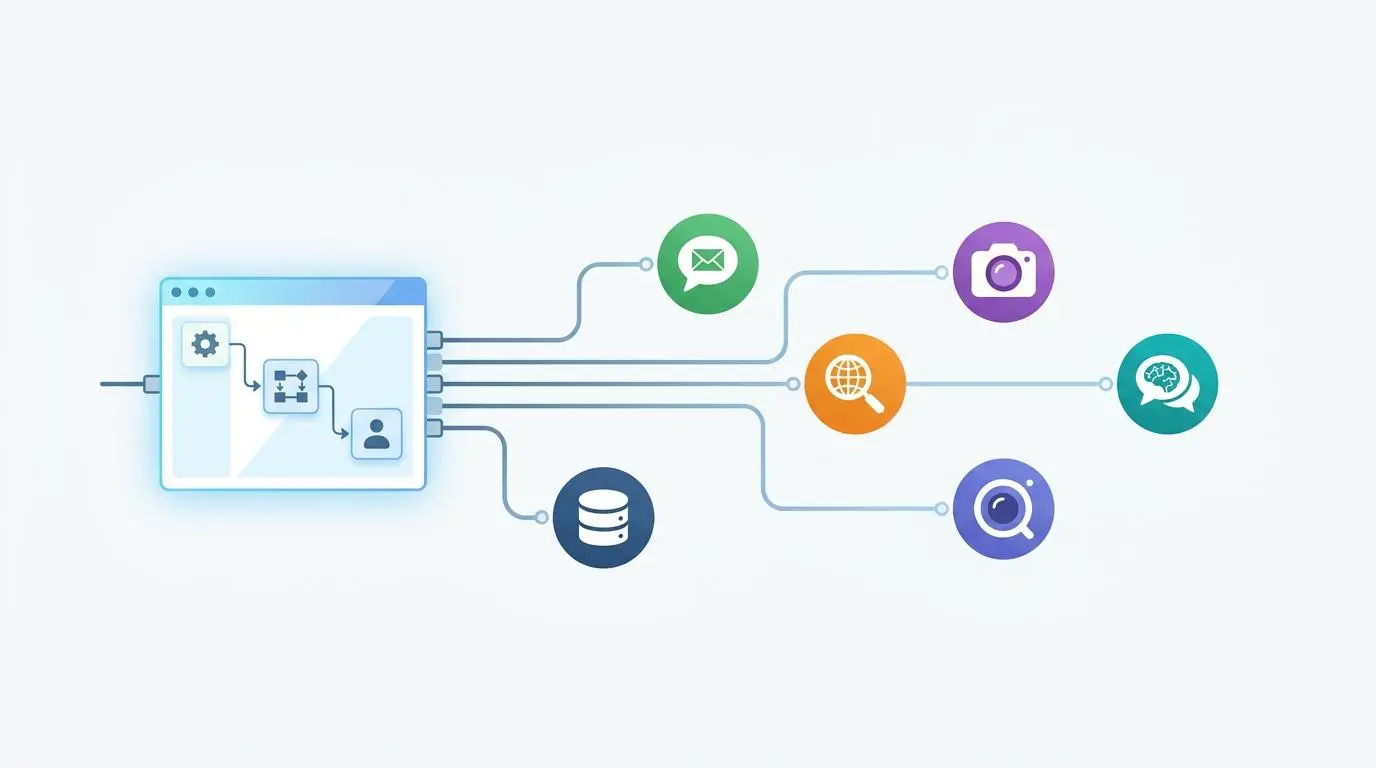
The current landscape is dominated by sophisticated frameworks like LangGraph for graph-based deterministic flows and CrewAI for role-based execution. These tools allow distinct AI personas to handle highly specific parts of a market research pipeline. However, the real-world friction often manifests as cognitive overload and the dreaded agent silo syndrome.
Individual bots might successfully scrape a competitor’s pricing page, but they fail to communicate those findings to the downstream financial analysis agent. Overcoming this requires robust system connections like Google’s Agent-to-Agent protocol. By standardizing how these silicon workers share data, you eliminate the need for human intervention between workflow steps.
Breaking The Engineering Wall With Low-Code
Historically, building complex agent logic required advanced Python skills and a dedicated engineering team. This created an engineering wall that prevented domain experts in market research from designing their own custom synthesis pipelines. Analysts knew exactly what data they needed but lacked the technical syntax to build the automated flow.
Platforms like CrewAI Cloud and LangGraph Cloud have completely lowered this barrier to entry. Alongside modern SDKs, these tools provide intuitive, native orchestration layers for non-technical teams. Now, a senior market researcher can visually map out a multi-agent workflow, effectively democratizing the power of autonomous data synthesis.
Eliminating Context Drift In Long-Horizon Tasks
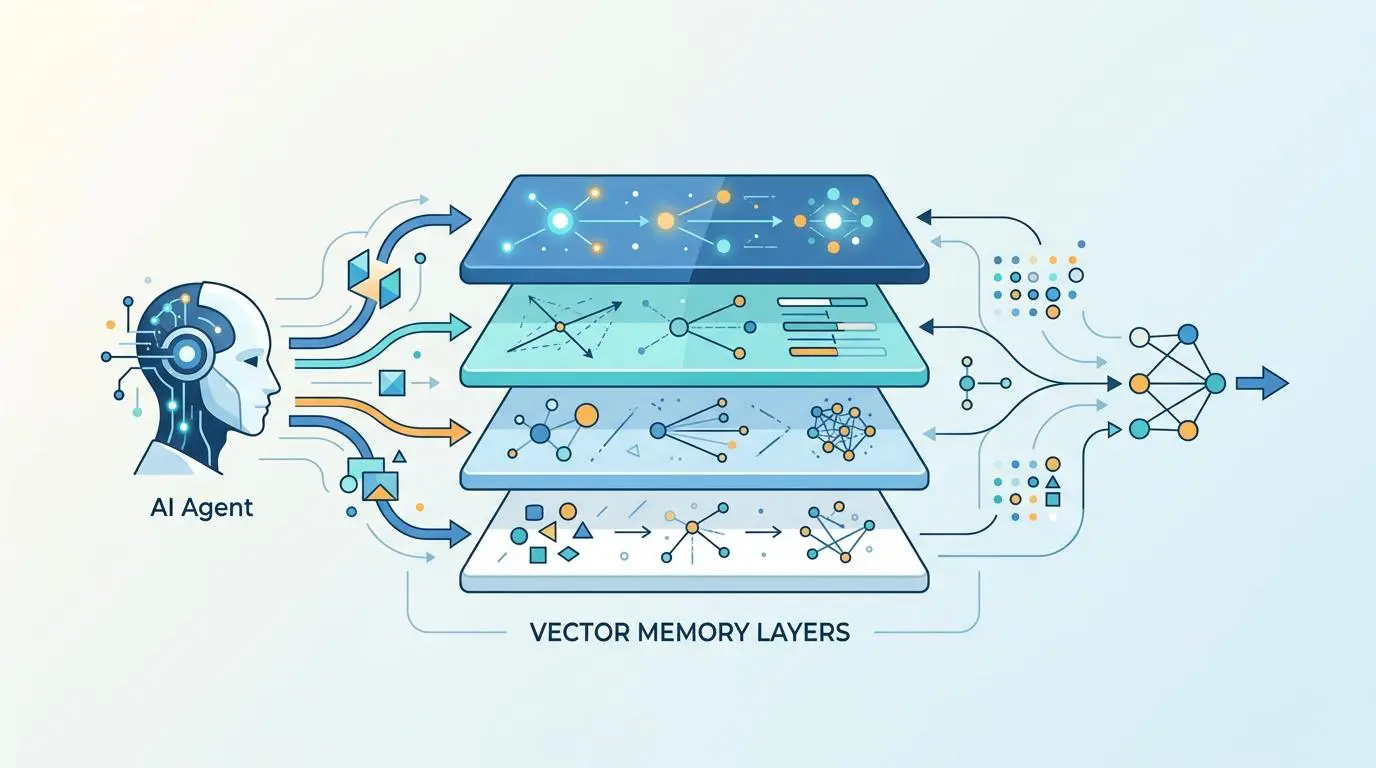
Modern Multi-Agent AI Orchestration relies heavily on robust vector memory layers and retrieval-augmented generation. Tools like Pinecone or Weaviate act as the central nervous system for your automated workforce. They ensure that information remains accessible and accurate across complex, multi-step operations.
Without these persistent memory layers, language models suffer from severe context drift and memory loss during long-horizon research tasks. Agents would frequently forget early research findings by the time they reached the final synthesis cycle. By anchoring your bots to a shared vector database, you guarantee that every piece of scraped data is perfectly retained and cross-referenced.
Preventing Recursive Loop Death And Runaway Costs
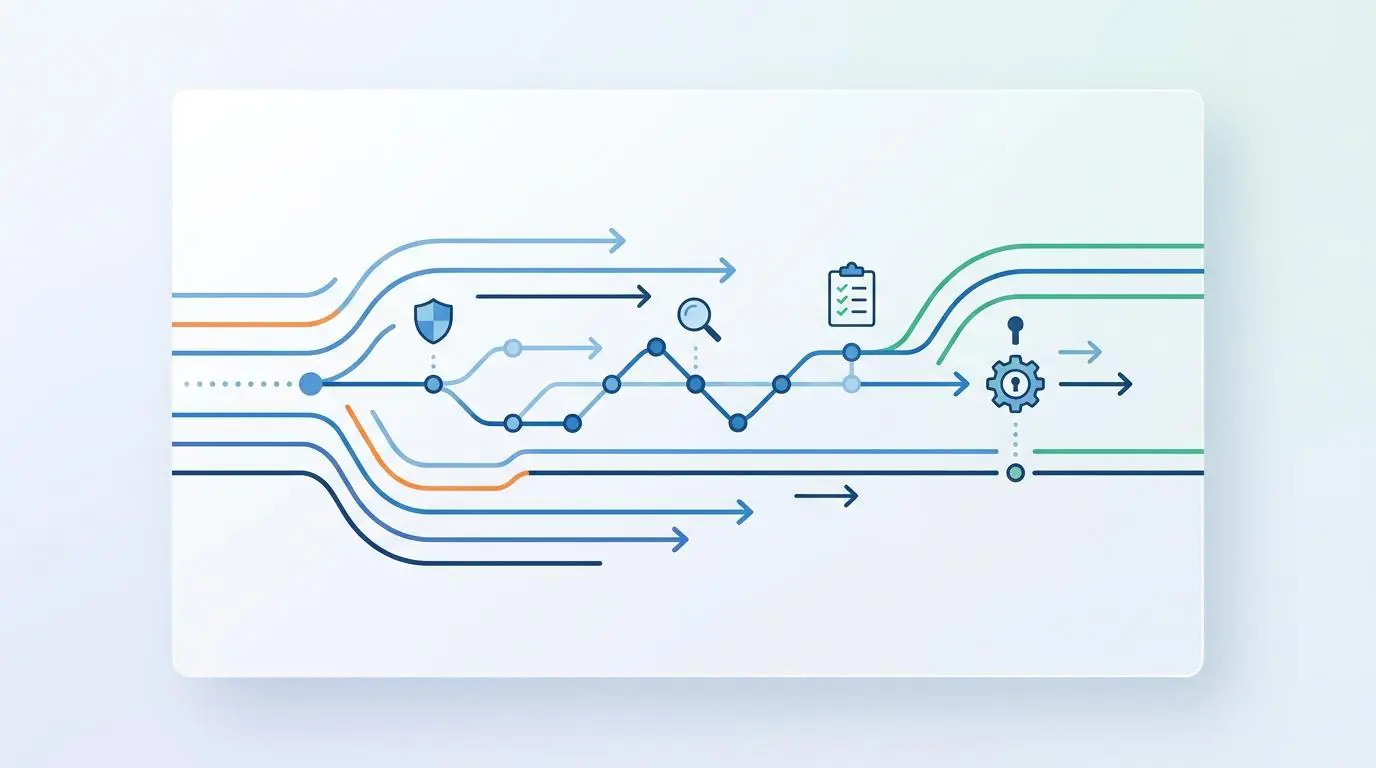
Scaling an autonomous workforce is not without its technical hazards, particularly when governance models are either over-restrictive or dangerously loose. Industry reports warn that many projects face decommissioning due to these binary governance failures. When agents lack proper guardrails, they can fall into recursive loop death, repeatedly querying the same API endpoint without progressing.
Financial analysts identified a massive increase in token consumption caused directly by these broken agentic loops. To prevent these expensive workflow failures, engineering teams must implement strict operational guardrails. A resilient orchestration layer requires three core components:
- Real-time observability: Monitoring token usage across all active agents to catch anomalies instantly.
- Timeout protocols: Hard-coding limits to automatically terminate recursive loops before they drain API budgets.
- Outcome-focused evaluation: Scoring production runs dynamically to ensure agents are actually progressing toward the synthesis goal.
Escaping The Experiment Scale Trap For Real ROI
Many businesses fall into the experiment scale trap, where they use AI for tiny, incremental tasks without re-engineering the end-to-end workflow. This fragmented approach almost always results in zero net return on investment. High-performing organizations understand that you must redesign the entire process specifically for an agentic workforce.
Early adopters in the finance and software sectors who fully integrated silicon workforces into their research pipelines have seen operational costs plummet significantly. By stepping back and orchestrating a holistic Multi-Agent AI Orchestration strategy, you transform isolated parlor tricks into a highly profitable, scalable data synthesis engine.
Deploying Sovereign Agent Clouds For Privacy
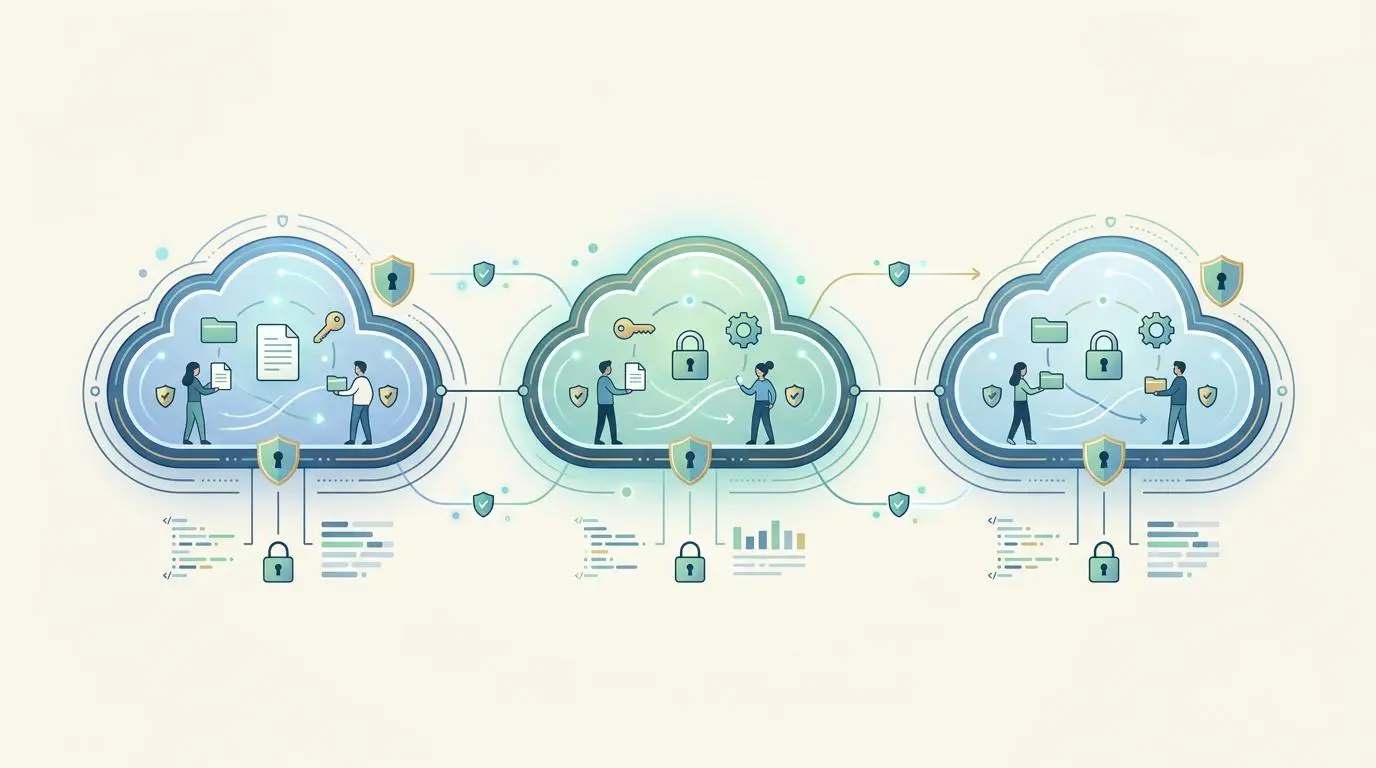
As we move toward the next evolution of automated intelligence, the focus is rapidly shifting toward sovereign agent clouds. Managing data sovereignty and strict compliance is a massive risk when sending proprietary market intelligence through third-party cloud providers. Organizations need a way to keep their most sensitive data entirely in-house.
The solution lies in localized orchestration using highly capable models that handle complex tool-calling at high success rates on-premise. Furthermore, the emergence of agent swarm modes allows the system to autonomously launch sub-agents. This effectively doubles autonomous task durations without relying on external dependencies.
The Next Frontier Of Autonomous Operations
The landscape will soon fully transition from isolated, task-based agents to thriving agentic ecosystems. In these advanced networks, system governance will scale proportionally with the autonomy levels of the bots. We are already seeing the rise of outcome-focused evaluation endpoints that score production runs in real-time to guarantee continuous workflow alignment.
Embracing Multi-Agent AI Orchestration is no longer just an operational upgrade; it is a fundamental requirement for staying competitive in complex market research. Those who build resilient, interconnected silicon workforces will command an unparalleled advantage in data synthesis and strategic decision-making.
Navigating the intersection of technology, workflows, and operational efficiency requires a sharp strategy. To future-proof your business architecture and scale with precision, connect with Andres at Andres SEO Expert.
Frequently Asked Questions
What is Multi-Agent AI Orchestration (MAO)?
Multi-Agent AI Orchestration (MAO) is a framework where specialized AI bots communicate and execute tasks in unison. Unlike isolated chatbots, MAO creates an automated assembly line for data, allowing organizations to scale research operations and eliminate manual bottlenecks in data synthesis.
How does multi-agent orchestration improve research productivity?
According to the Stanford HAI 2026 AI Index, multi-agent systems drive a 50% increase in measurable productivity for complex data analysis. By automating high-velocity data cross-referencing, teams can bypass manual data janitorial work and focus on high-level strategic decision-making.
What is the “Engineering Wall” in AI development?
The Engineering Wall is a barrier where advanced technical skills, like Python, were required to build complex agent logic. This barrier has been lowered by low-code platforms and SDKs like CrewAI Cloud and LangGraph Cloud, which allow domain experts to visually map and deploy autonomous workflows.
How do organizations prevent “recursive loop death” and runaway AI costs?
To prevent expensive recursive loops that can increase token consumption by 24 times, organizations implement strict operational guardrails. These include real-time observability for token monitoring, hard-coded timeout protocols to terminate stuck loops, and outcome-focused evaluation scoring to ensure progress.
What role does vector memory play in autonomous AI research?
Vector memory layers, using tools like Pinecone or Weaviate, act as a central nervous system for AI agents. They eliminate context drift in long-horizon tasks by ensuring that research findings from early cycles remain accessible and accurately cross-referenced throughout the entire operation.
Why are Sovereign Agent Clouds becoming important for enterprises?
Sovereign Agent Clouds allow organizations to maintain data sovereignty and GDPR compliance by running orchestration on-premise. Using localized models like Qwen or Mistral, businesses can process sensitive proprietary market intelligence without sending it to third-party cloud providers.