Key Points
- Automated POS-to-CMS syncing instantly removes sold-out items from digital displays, completely eliminating customer disappointment loops at the counter.
- Modern webhook pipelines and API integrations replace manual manager interventions, recovering over an hour of leadership time per week per location.
- Emerging AI models and edge-computing failsafes are shifting the industry from reactive screen updates to predictive inventory management.
Table of Contents
The 86 Bottleneck
Picture this scenario during a Friday night dinner rush. The kitchen is firing on all cylinders, but your signature brisket just sold out.
A customer stares at a glowing digital menu board, completely unaware of the kitchen’s reality. They wait in line and make their choice, only to be hit with the dreaded news that their desired meal is unavailable.
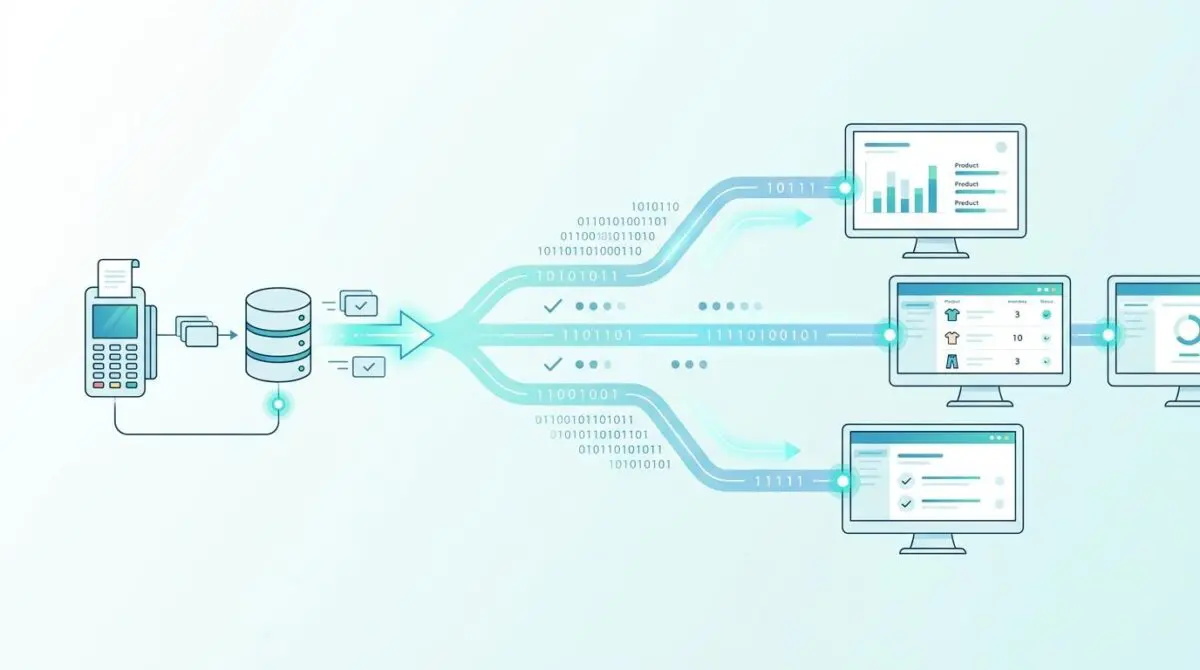
This disappointment loop is entirely avoidable through dynamic inventory syncing. By bridging the gap between point-of-sale data and front-of-house displays, restaurants can reclaim their operational flow and eliminate manual screen overrides.
The Financial Impact of Screen Accuracy
Market Intelligence & Data
Waste Reduction Impact
According to the Toast 2025 Restaurant Success Report, restaurants that automate inventory management reduce food waste by 31% on average.
Market Expansion
A 2025 market intelligence report projects the global digital menu board market to grow to $9.6 billion by 2030 at a CAGR of 7.8%.
AI Adoption Rate
Research from Popmenu in 2026 indicates that 44% of restaurant operators have already adopted AI tools for functions like automated menu management.
Food Cost Optimization
The 2026 Guide to AI ROI for Restaurant Operators notes that inventory automation typically delivers a 2-5% improvement in total food costs.
The ability to dynamically adjust what customers see directly influences kitchen production and waste management. When digital boards reflect exact stock levels, operators stop over-prepping buffer inventory to cover potential communication gaps.
Modern systems that reduce food waste by 31% on average prove that real-time visibility is crucial. It is just as much about saving raw materials as it is about customer satisfaction.
The sheer scale of the digital menu board market highlights a massive shift in restaurant infrastructure. Operators are moving away from glorified static PDFs toward highly responsive, data-driven canvases.
This incredible growth rate reflects an industry-wide realization. Screens must act as active sales agents rather than passive posters.
Artificial intelligence is rapidly moving from a buzzword to a back-of-house necessity for scaling operations. With nearly half of operators already leaning into AI-driven menu management, the competitive baseline has fundamentally shifted.
Restaurants that fail to automate these inventory updates risk falling behind peers. Competitors are already using machine learning to optimize their digital storefronts in real-time.
Beyond just lowering food costs, automated inventory syncing fundamentally changes how managers spend their shifts. Instead of running back and forth to manually update screens, leadership can focus entirely on hospitality.
This simple workflow shift recovers roughly 1.2 full-time management hours per week per location. It drastically lowers the hidden tax of constant context-switching.
Erasing the Daily Menu Friction
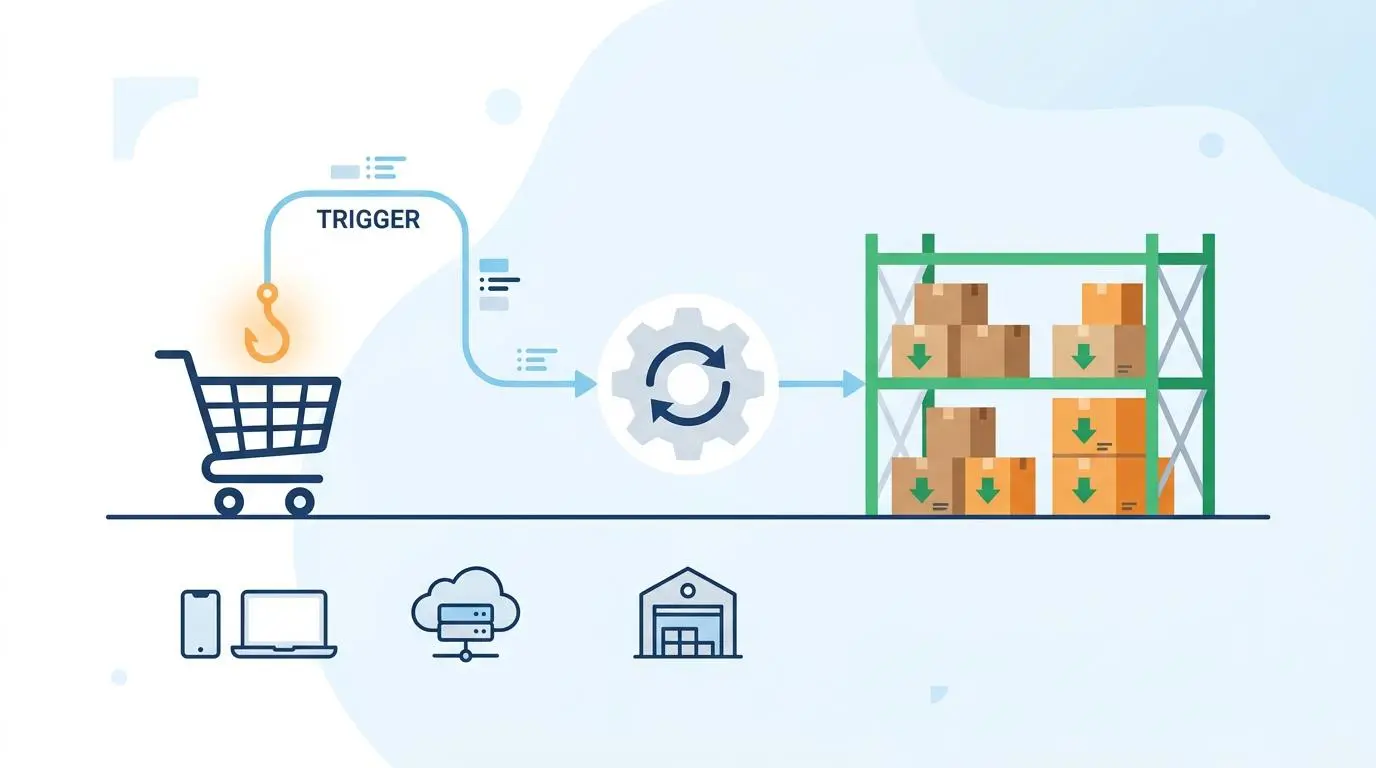
Manual menu updates are a breeding ground for human error and dangerous price-drift across locations. The traditional bottleneck forces a manager to step away from active service just to log into a back-office computer.
They must manually update an item while customers are already viewing the stale information on-screen. This delay guarantees a service failure at the point of sale, frustrating both the guest and the cashier.
Tools like Toast and Square now offer real-time API push notifications to digital signage providers. This ensures that screen availability matches the kitchen’s reality instantly, completely removing the need for manager intervention.
Building Real-Time Data Pipelines
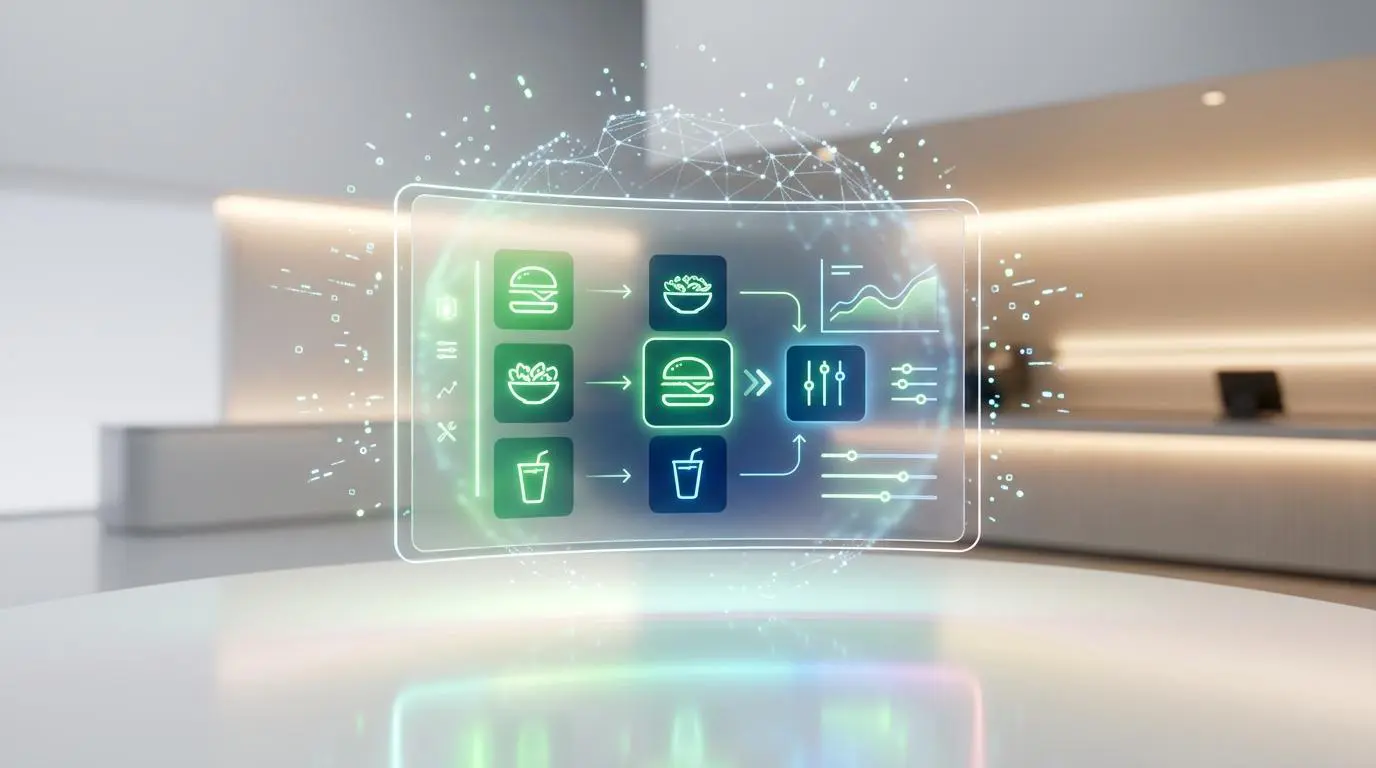
The lag between a physical stock-out and its digital representation often takes 15 to 30 minutes in non-automated systems. This delay is an operational eternity during a busy lunch rush.
Modern data pipelines completely eliminate this gap by utilizing intelligent webhooks. These automated triggers fire the exact moment a POS registers an item-out event.
These JSON payloads are instantly processed by middleware or native CMS integrations in the cloud. They automatically toggle visibility attributes on the digital menu board’s canvas, ensuring the screen is always a perfect reflection of the pantry.
Recovering Lost Management Hours
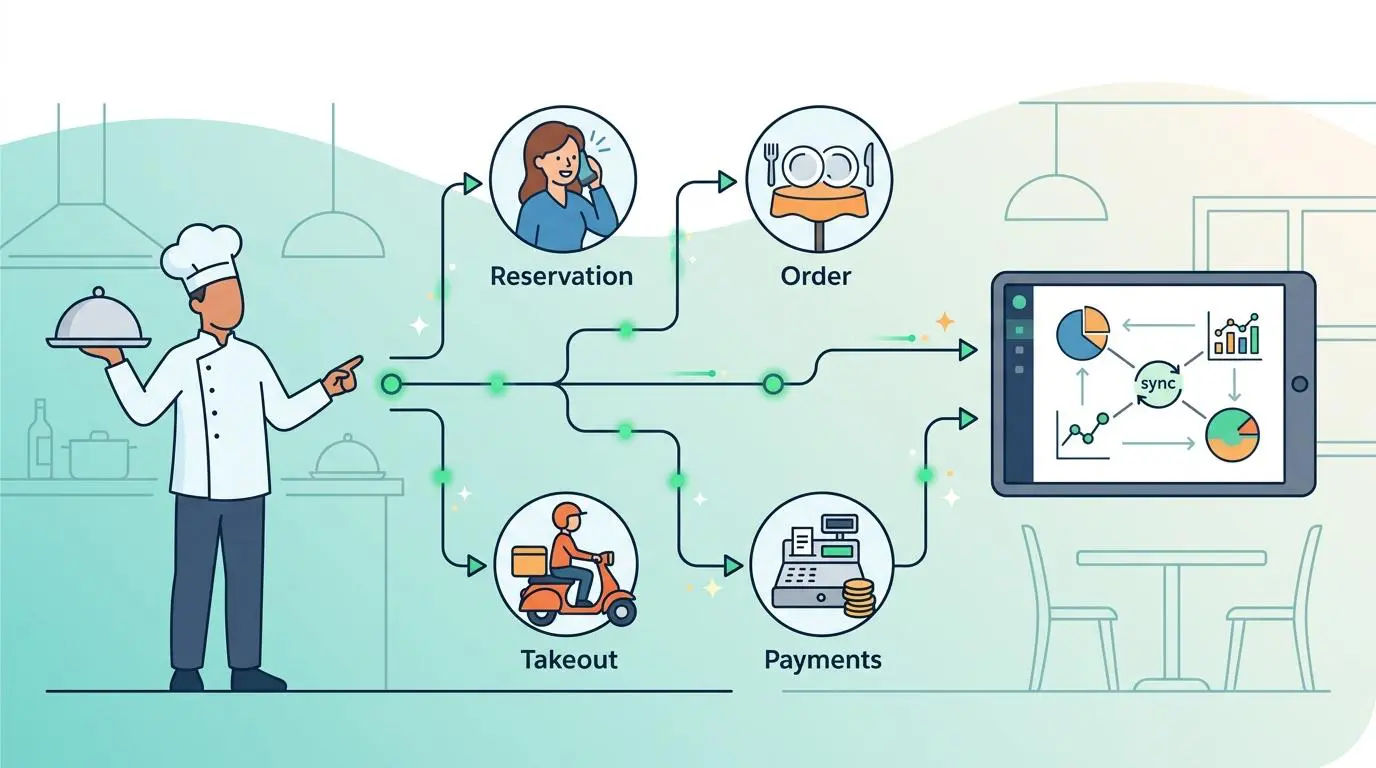
The labor cost of manual screen management is heavily compounded by a high context-switching tax on your staff. Managers are often forced to reconcile inventory across three or more disparate digital platforms.
This fragmented approach pulls them away from the dining room floor, draining morale and inflating payroll costs. Managing multiple screens manually is simply not a scalable business model.
Integration tools solve this by streamlining multi-location menu pushes into a single automated trigger. One update at the POS cascades across all digital touchpoints simultaneously, reclaiming valuable management hours for higher-impact tasks.
Automating the Customer Experience
The disappointment loop is a direct threat to your brand reputation and customer loyalty. When a customer chooses an item, waits in line, and is rejected at the counter, they rarely return.
Diners today expect seamless, transparent interactions from the moment they walk in. Recent data shows that consumers anticipate technology will proactively inform them of availability before they even attempt to order.
Dynamic menus solve this by utilizing self-service logic to offer immediate alternatives when a primary item sells out. Instead of a frustrating rejection, the customer is gently guided toward a high-margin substitution.
The No-Code Restaurant Revolution
Historically, custom enterprise-grade integrations presented an insurmountable entry barrier for small operators. Independent restaurants simply could not afford the heavy development costs required to sync their legacy systems.
That paradigm has entirely shifted thanks to modern automation tools. Platforms like Make and n8n now serve as accessible bridges for operators of any size.
They connect legacy POS systems via simple exports to affordable digital signage APIs. This allows single-location operators to deploy sophisticated syncing architecture without hiring developers.
- Webhook Triggers: Instant payload delivery upon stock depletion.
- API Endpoints: Direct connections to CMS canvases for real-time toggling.
- Edge Computing: Local failsafes that prevent blank screens during offline moments.
Predicting the Last-Mile Stock-Out
The most frustrating service failure is the last-mile stock-out. This occurs when an item is technically in stock at the start of an order but sells out before the transaction is finalized.
The industry focus is rapidly shifting from reactive syncing to predictive removal. AI models are stepping in to analyze order velocity in real-time.
They preemptively pull items from the board when only a few units remain, intelligently accounting for in-flight orders. Furthermore, the rise of rugged infrastructure ensures that if a cloud connection fails, digital menu boards use local edge-computing logic.
The Future of Contextual Menus
The evolution from static synchronization to contextual demand menus represents a fundamental shift in hospitality technology. Soon, artificial intelligence will adjust menu board layouts based entirely on current prep-time capacity and inventory velocity.
This proactive approach will maximize kitchen throughput while entirely eliminating stock-out frustration for the guest. The screens of tomorrow will not just display food; they will actively manage the flow of your restaurant.
Navigating the intersection of technology, workflows, and operational efficiency requires a sharp strategy. To future-proof your business architecture and scale with precision, connect with Andres at Andres SEO Expert.
Frequently Asked Questions
What is POS-to-CMS Dynamic Inventory Syncing?
POS-to-CMS Dynamic Inventory Syncing is a technical bridge that connects real-time point-of-sale data with digital menu displays. It ensures that when an item sells out in the kitchen, it is automatically removed from the customer-facing screens without manual intervention.
How does automated menu management impact restaurant food waste?
Research shows that automating inventory management can reduce food waste by an average of 31%. By providing real-time visibility into stock levels, operators can optimize their prep levels and avoid over-purchasing buffer inventory.
Can independent restaurants sync their POS without hiring developers?
Yes, through the no-code revolution, platforms like Make and n8n allow small operators to connect legacy POS systems to digital signage APIs using simple webhooks or CSV exports, eliminating the need for expensive custom development.
How many labor hours are saved by automating digital menu boards?
Automating inventory syncing recovers approximately 1.2 full-time management hours per week per location. This reduction in the context-switching tax allows managers to spend more time on the floor supporting staff and guests.
What is a last-mile stock-out?
A last-mile stock-out is a service failure where an item sells out after a customer has viewed it on the menu but before they complete their transaction. Predictive AI models solve this by removing items from the board when only a few units remain.
Do digital menu boards stop working if the internet goes out?
Modern systems utilize edge computing and retail-rugged infrastructure to prevent blank screens. These tools store the last-known inventory state locally, ensuring the menu remains functional even during a cloud connection failure.