Executive Summary
- Automated Insight Discovery: Utilizes machine learning algorithms to identify patterns, trends, and anomalies in large datasets without manual intervention.
- Natural Language Processing (NLP): Enables non-technical stakeholders to query complex databases using conversational language, democratizing data access across the enterprise.
- Predictive and Prescriptive Capabilities: Shifts the focus from descriptive historical reporting to forward-looking simulations and actionable strategic recommendations.
What is Augmented Analytics?
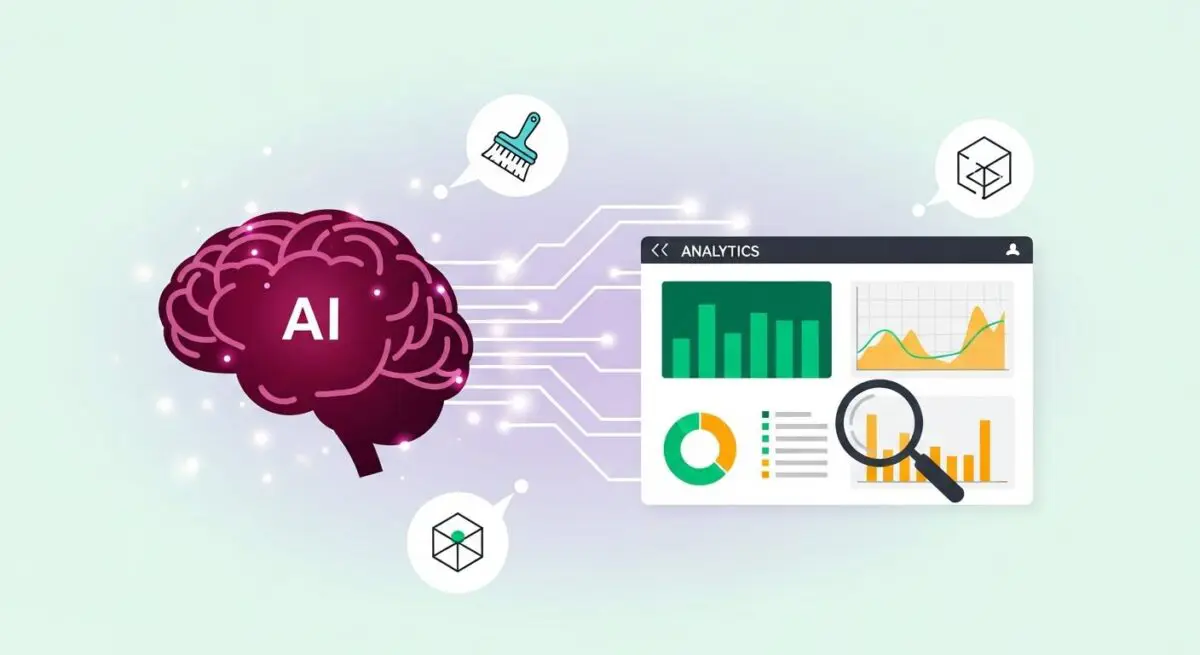
Augmented analytics represents the next evolution in business intelligence by integrating artificial intelligence (AI) and machine learning (ML) directly into the data analytics workflow. This technology automates the processes of data preparation, insight generation, and insight sharing, effectively reducing the reliance on specialized data scientists for routine analysis.
At its core, augmented analytics leverages Natural Language Processing (NLP) and Natural Language Generation (NLG) to bridge the gap between complex data structures and human understanding. It allows users to interact with data through conversational interfaces, receiving narrative-based explanations rather than just static charts or tables.
In a modern enterprise tech stack, augmented analytics functions as a sophisticated layer above the data warehouse or data lake. It continuously scans integrated data sources to find statistically significant correlations that a human analyst might overlook due to cognitive bias or time constraints.
The Real-World Analogy
Imagine a commercial airline pilot operating a modern cockpit equipped with an advanced autonomous flight management system. In traditional analytics, the pilot must manually scan dozens of gauges, interpret weather radar, and calculate fuel consumption to make every course correction.
With augmented analytics, the system acts as an intelligent co-pilot that constantly monitors every sensor simultaneously. It doesn’t just show the pilot a flashing light; it analyzes the atmospheric pressure, engine temperature, and wind speed to proactively suggest the most fuel-efficient flight path to avoid an upcoming storm before the pilot even sees it on the horizon.
How Augmented Analytics Drives Strategic Growth & Market Competitiveness?
Augmented analytics significantly reduces the “Time to Insight” (TTI), which is a critical metric for maintaining market competitiveness. By automating the heavy lifting of data crunching, organizations can pivot their strategies in real-time based on emerging market signals rather than waiting for end-of-month reports.
From a marketing perspective, this technology directly impacts Customer Acquisition Costs (CAC) and Lifetime Value (LTV) through hyper-segmentation. Machine learning models can automatically identify micro-segments of customers who are most likely to convert, allowing for more precise budget allocation and higher conversion rates.
Furthermore, augmented analytics enhances data integrity by identifying outliers and data quality issues at the point of ingestion. This ensures that strategic decisions are based on clean, validated data, reducing the risk of expensive strategic missteps caused by faulty reporting.
The democratization of data through NLP interfaces allows department heads in sales, HR, and finance to perform their own deep-dive analyses. This decentralized approach fosters a data-driven culture where decisions are backed by empirical evidence rather than intuition or seniority.
Scalability is another major growth driver, as augmented systems can process petabytes of data across distributed networks far faster than any human team. This allows enterprise brands to maintain a granular understanding of their operations even as they expand into new global markets and complex product lines.
Strategic Implementation & Best Practices
- Establish Robust Data Governance: Ensure that all data sources are cleaned, standardized, and governed by strict access controls before connecting them to an augmented analytics platform to prevent the propagation of errors.
- Prioritize Integration with Existing Workflows: Select tools that offer seamless API integrations with your current CRM, ERP, and marketing automation platforms to ensure insights are delivered where decisions are actually made.
- Focus on User Literacy: Invest in training programs that teach non-technical staff how to ask the right questions and critically evaluate the narrative insights generated by the AI.
- Implement Iterative Feedback Loops: Regularly audit the machine learning models to ensure they remain aligned with changing business objectives and to mitigate the risk of algorithmic drift over time.
Common Pitfalls & Strategic Mistakes
One frequent error is treating augmented analytics as a “black box” solution where the underlying logic is never questioned. Enterprise brands often fail to maintain human oversight, leading to correlations being mistaken for causation, which can result in misguided marketing spend.
Another significant mistake is ignoring data silos; if the AI only has access to a fraction of the company’s data, the insights will be inherently biased and incomplete. Organizations must ensure a unified data architecture to allow the augmented engine to see the full picture of the customer journey.
Finally, many firms over-invest in the technology while under-investing in the cultural shift required to use it. Without a top-down mandate to prioritize data-backed insights over “gut feelings,” the most advanced augmented analytics platform will remain underutilized and fail to deliver ROI.
Conclusion
Augmented analytics is a fundamental shift in business intelligence that replaces manual data exploration with automated, AI-driven discovery. By integrating these capabilities, modern enterprises can achieve unprecedented levels of operational efficiency and strategic agility in an increasingly data-saturated market.