Key Points
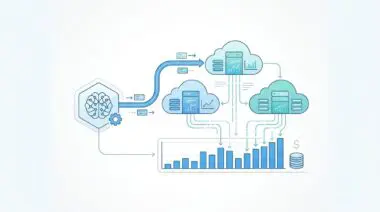
- Intelligent Middleware: ALO acts as a semantic bridge between monolithic systems and modern generative applications without requiring a full rewrite.
- Cost Reduction: Leveraging AI agents to wrap legacy cores reduces modernization costs by 30-50% while converting technical debt into a competitive moat.
- Hybrid RAG Integration: Unifying structured SQL data with modern vector stores allows AI agents to orchestrate high-accuracy, context-aware enterprise decisions.
Table of Contents
The AI Landscape: Bridging the Generative Divide
By May 2026, Gartner projects that 70% of AI-led mainframe exit projects will fail due to overestimating the capability of generative AI to autonomously refactor legacy code without rigorous data foundations. This stark reality highlights a critical bottleneck in modern enterprise architecture. Organizations are rushing to adopt Large Language Models without addressing the monolithic systems that house their most valuable data. The traditional approach of ripping and replacing these mainframes is no longer a viable strategy for risk-averse institutions.
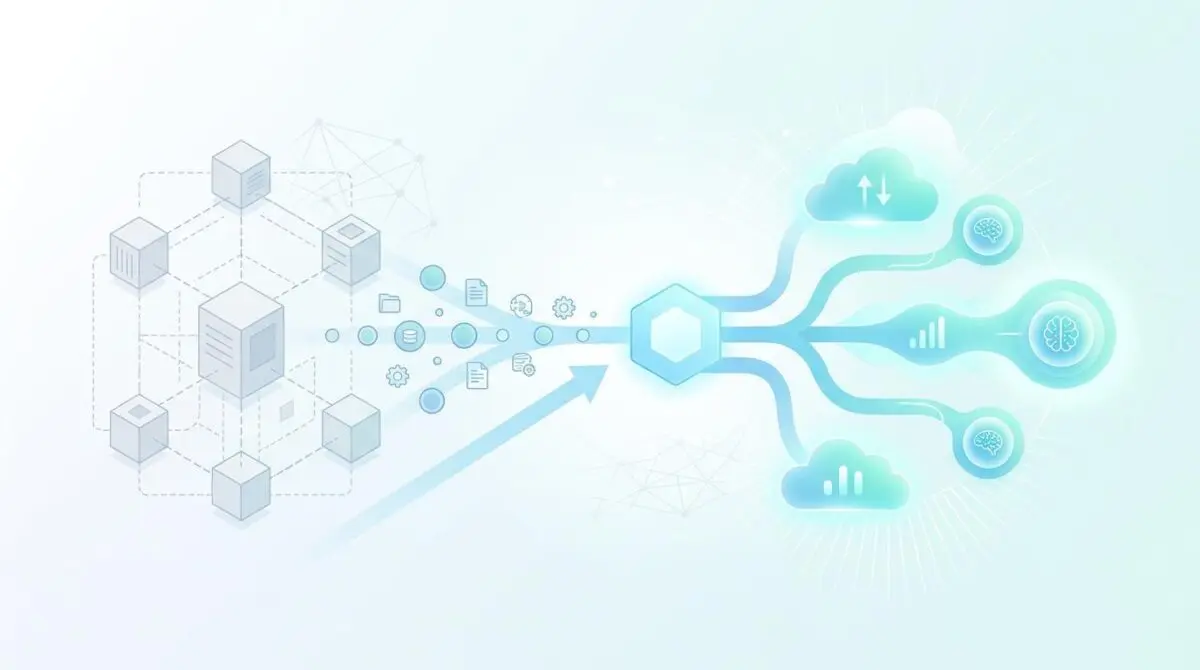
Instead, the industry is pivoting toward a more sophisticated paradigm known as Agentic Legacy Orchestration. This approach recognizes that legacy systems are not merely technical debt, but rather foundational systems of record that require intelligent translation. By deploying autonomous AI agents, enterprises can bridge the vast chasm between decades-old infrastructure and modern generative applications. These agents act as intelligent intermediaries that understand both the rigid syntax of legacy code and the fluid nature of natural language prompts.
The strategic value of this orchestration lies in its ability to extend the lifecycle of older ERP systems and mainframes indefinitely. Rather than embarking on multi-year migration projects that disrupt core operations, organizations can layer AI capabilities directly on top of their existing stack. This semantic wrapping allows modern microservices to interact with legacy databases as if they were cloud-native applications. Consequently, enterprises can achieve the agility of a modern tech startup while maintaining the robust security of a traditional financial institution.
Furthermore, this architectural shift fundamentally alters how organizations approach digital transformation. It moves the focus away from hardware modernization and toward semantic interoperability. By treating the legacy core as an immutable source of truth, AI agents can safely query, retrieve, and synthesize data without risking system stability. This paradigm ensures that the massive investments made in legacy infrastructure continue to yield dividends in the era of artificial intelligence.
Core Concepts and Capabilities of ALO
Core Architecture & Pillars
Autonomous Logic Discovery
This pillar utilizes specialized LLMs to perform deep-code analysis on undocumented legacy languages like COBOL or Fortran. The agents reverse-engineer business logic, creating a semantic knowledge graph that maps functional dependencies at the server level.
Agentic API Synthesis
Rather than manual coding, AI agents dynamically generate and maintain wrapper APIs around legacy functions. These ‘just-in-time’ interfaces allow modern microservices to call mainframe routines without refactoring the underlying hardware logic.
Hybrid Retrieval-Augmented Generation (hRAG)
hRAG architectures unify legacy structured SQL data with modern unstructured vector stores. AI agents act as the orchestrator, determining when to query a precise legacy record and when to pull contextual information from a vector database.
Governance-First Refactoring
This strategy involves a phased, AI-assisted migration where agents monitor the ‘delta’ between legacy performance and modern code output. It uses automated unit testing to ensure that AI-generated code mirrors original system behavior exactly.
The architecture of Agentic Legacy Orchestration relies on a sophisticated interplay between specialized Large Language Models and deterministic business logic. At the heart of this system is the concept of autonomous logic discovery. Specialized neural networks are trained specifically on undocumented legacy languages like COBOL, Fortran, and older iterations of Java. These models perform deep-code analysis to reverse-engineer decades of accumulated business rules into a coherent semantic knowledge graph.
This knowledge graph serves as the foundational intelligence layer for all subsequent agentic operations. It maps functional dependencies at the server level, providing AI agents with a comprehensive understanding of how different legacy modules interact. Researchers are already pioneering methods for extracting business logic into behavioral specification graphs to map these ancient architectures. By transforming procedural code into graph-based representations, agents can navigate complex legacy environments with unprecedented precision.
A 2026 report from Altimi reveals that global enterprises are currently allocating an average of 72% of their total IT budgets merely to maintaining and operating existing legacy systems, leaving only 28% for AI innovation. Agentic API synthesis directly addresses this financial imbalance by automating the creation of integration layers. Rather than relying on massive teams of developers to manually code middleware, AI agents dynamically generate and maintain wrapper APIs around legacy functions.
These just-in-time interfaces are crucial for enabling modern microservices to communicate with mainframe routines. The agents translate RESTful API calls or GraphQL queries into the specific protocols required by the legacy hardware. This dynamic translation occurs in real-time, ensuring that modern applications can access legacy data without experiencing latency bottlenecks. The underlying hardware logic remains untouched, preserving the integrity of the original system while drastically expanding its accessibility.
Another critical capability is the implementation of Hybrid Retrieval-Augmented Generation architectures. Traditional RAG pipelines struggle with the highly structured, relational nature of legacy SQL databases. Agentic orchestration solves this by unifying these structured repositories with modern unstructured vector stores. The AI agent acts as a sophisticated query router, determining the optimal data source for any given natural language prompt.
Strategic Implementation of Agentic Frameworks
Implementation Roadmap
Diagnostic AI Readiness Audit
Conduct a comprehensive audit of technical debt using automated discovery agents to catalog all legacy assets and undocumented logic. Identify the ‘72% maintenance cost’ nodes to prioritize which systems provide the highest ROI for AI augmentation.
Semantic Knowledge Graph Mapping
Deploy LLMs to ingest legacy documentation and codebases to build a centralized Knowledge Graph. This creates a machine-readable ‘source of truth’ that AI agents will use to understand the system’s operational constraints.
Agentic Integration Pilot
Implement a ‘Sidecar’ agentic layer that observes legacy workflows without modifying the core. Use this layer to generate real-time APIs for a single, high-value use case, such as automated customer support reconciliation or predictive maintenance.
Scale via Centralized Orchestration
Deploy a formal AI Orchestration Platform to manage multiple agents across the enterprise. Flush all legacy object caches and adjust RankMath/SEO settings to ensure the new AI-augmented data is discoverable by generative engines and internal RAG systems.
Orchestrating the Transition
Deploying Agentic Legacy Orchestration requires a highly disciplined, phased approach to mitigate operational risk. The first critical step is conducting a diagnostic AI readiness audit using automated discovery agents. These specialized models crawl the enterprise network to catalog all legacy assets, identifying undocumented logic and orphaned code paths. The goal is to pinpoint the specific nodes that consume the majority of the maintenance budget and prioritize them for AI augmentation.
Once the audit is complete, the focus shifts to semantic knowledge graph mapping. Large Language Models ingest massive volumes of legacy documentation, technical specifications, and raw codebases. This ingestion process creates a centralized, machine-readable source of truth that defines the operational constraints of the legacy environment. Without this foundational graph, AI agents would lack the contextual awareness necessary to interact safely with mission-critical systems.
Following the mapping phase, organizations must execute an agentic integration pilot using a sidecar architecture. This involves deploying a passive agentic layer that observes legacy workflows in real-time without modifying the core system. The sidecar agent monitors data flows and API calls, learning the intricate nuances of the enterprise’s specific business logic. Engineering teams can leverage agentic software modernization patterns and tooling to standardize this phased integration.
This observational period allows the AI models to calibrate their understanding before taking any active orchestration role. Organizations typically select a single, high-value use case for this pilot, such as automated customer support reconciliation. By limiting the scope of the initial deployment, enterprises can validate the accuracy of the AI-generated APIs in a controlled environment. Success in this phase builds the institutional confidence required for broader system integration.
The final phase involves scaling the technology via centralized orchestration platforms. This platform manages fleets of specialized agents across the entire enterprise, ensuring synchronized operations and consistent data governance. During this scale-up, IT teams must flush all legacy object caches and adjust internal search settings to ensure the newly augmented data is discoverable. This comprehensive integration transforms the legacy system into a dynamic participant in the modern AI ecosystem.
Real-World Impact and Enterprise Use Cases
The deployment of Agentic Legacy Orchestration is fundamentally transforming enterprise intelligence and operational efficiency. By unlocking the 80% of institutional data previously trapped in monolithic silos, organizations are achieving unprecedented levels of analytical depth. This wealth of historical data is now seamlessly integrated into modern Retrieval-Augmented Generation pipelines. Consequently, AI agents can cross-reference decades of transaction history with real-time market data to execute high-accuracy decision-making.
This technological shift has a profound impact on internal AI Overviews and enterprise search capabilities. Employees can now query complex business metrics using natural language, and the orchestration layer will autonomously fetch the required data from the mainframe. The AI translates the legacy output into easily digestible summaries, complete with contextual insights and predictive forecasting. This capability democratizes access to legacy data, empowering non-technical stakeholders to leverage historical trends for strategic planning.
Strategically, this approach converts massive technical debt into a formidable competitive moat. Organizations that successfully synthesize their historical data with generative capabilities can outmaneuver competitors who are still struggling with multi-year migration projects. Furthermore, by automating the integration layer, enterprises are reducing their modernization costs by 30 to 50 percent. These capital savings can then be aggressively reallocated toward cutting-edge AI innovation and product development.
Mitigating Agentic Drift in Legacy Environments
Despite the immense benefits, the integration of autonomous agents into legacy systems introduces unique operational challenges. The most significant risk is the phenomenon known as agentic drift, where AI models gradually misinterpret or deviate from rigid legacy rules over time. Legacy systems operate on deterministic logic with zero tolerance for ambiguity, whereas generative models inherently rely on probabilistic reasoning. This fundamental mismatch can lead to catastrophic data corruption if left unmanaged.
To combat this, enterprises must implement strict guardrails within the orchestration layer. Advanced AI architects rely on markov state-aware frameworks to tame agentic drift and ensure deterministic outputs. These frameworks force the AI agents to validate their probabilistic assumptions against the deterministic rules encoded in the semantic knowledge graph. If an agent’s proposed action violates a legacy constraint, the orchestration platform automatically blocks the execution and alerts human operators.
Additionally, continuous automated unit testing is deployed to monitor the delta between legacy performance and modern code output. Every AI-generated API call is rigorously tested against historical benchmarks to verify absolute functional parity. This obsessive focus on validation ensures that the AI-augmented system mirrors the original mainframe behavior exactly. Maintaining this strict operational fidelity is non-negotiable for industries operating under heavy regulatory scrutiny.
Best Practices and Future Outlook
Strategic Best Practices
- Always maintain ‘Human-in-the-Loop’ (HITL) validation for AI-generated refactoring to prevent the ‘hallucination of business rules.’
- Implement robust data masking and PII filters at the API gateway layer to ensure sensitive legacy data never leaves the secure perimeter during model training or inference.
- Prioritize modular ‘agentic’ wrappers over full system rewrites to minimize operational risk and maximize speed to market.
Navigating the complexities of Agentic Legacy Orchestration requires a steadfast commitment to strategic best practices and robust governance. Foremost among these is the absolute necessity of maintaining Human-in-the-Loop validation for all AI-generated refactoring. While autonomous agents excel at mapping dependencies and generating boilerplate code, they lack the contextual business intuition required for mission-critical architectural changes. Human oversight is essential to prevent the hallucination of business rules and ensure regulatory compliance.
Security architecture must also evolve to protect the newly exposed legacy endpoints. Implementing robust data masking and Personally Identifiable Information filters at the API gateway layer is mandatory. These filters guarantee that sensitive legacy data never leaves the secure enterprise perimeter during model training or real-time inference. By anonymizing data before it interacts with external language models, organizations can leverage cloud-based AI capabilities without compromising their security posture.
Looking ahead, the future of enterprise IT will be defined by those who master the art of modular orchestration. Prioritizing modular agentic wrappers over full system rewrites minimizes operational risk while maximizing speed to market. As Large Language Models continue to advance in reasoning capabilities, these agentic layers will become increasingly autonomous, eventually capable of self-healing legacy code in real-time. The era of the monolithic rip-and-replace is ending, replaced by an era of intelligent, continuous augmentation.
Navigating the rapid evolution of Large Language Models and AI infrastructure requires a precise strategy. To stay ahead of the AI revolution and optimize your digital presence, connect with Andres at Andres SEO Expert.
Frequently Asked Questions
What is Agentic Legacy Orchestration (ALO)?
Agentic Legacy Orchestration is a modern architectural paradigm that uses autonomous AI agents to bridge the gap between legacy systems (like COBOL-based mainframes) and modern generative applications. It acts as an intelligent intermediary, translating rigid legacy code into semantic knowledge that can be accessed by modern microservices.
Why do Gartner and industry experts predict high failure rates for AI-led mainframe exits?
Gartner projects that 70% of AI-led mainframe exit projects will fail by 2026 due to overestimating the ability of generative AI to autonomously refactor legacy code. Many organizations fail to establish the necessary rigorous data foundations and ignore the complex, undocumented business logic inherent in monolithic systems.
How does Hybrid Retrieval-Augmented Generation (hRAG) work with legacy systems?
hRAG unifies structured relational data from legacy SQL databases with modern unstructured vector stores. AI agents act as orchestrators, determining whether to pull precise historical records from the legacy mainframe or contextual information from a vector database to provide accurate, real-time responses.
What is agentic drift and how can enterprises prevent it?
Agentic drift occurs when probabilistic AI models gradually misinterpret or deviate from rigid, deterministic legacy business rules. It can be prevented by using Markov state-aware frameworks that validate AI actions against a semantic knowledge graph and by maintaining continuous automated unit testing to ensure functional parity.
How does Agentic API Synthesis reduce IT maintenance costs?
With global enterprises spending an average of 72% of IT budgets on maintaining legacy systems, Agentic API Synthesis automates the creation of integration layers. This eliminates the need for manual middleware coding, reducing modernization costs by 30% to 50% and freeing up capital for AI innovation.
What are the four key stages of implementing an ALO framework?
The implementation roadmap includes: 1) A Diagnostic AI Readiness Audit to catalog technical debt, 2) Semantic Knowledge Graph Mapping to build a machine-readable source of truth, 3) An Agentic Integration Pilot using sidecar architecture to observe workflows, and 4) Scaling via a centralized AI Orchestration Platform.