Key Points
- Risk-Based Vulnerability Management filters out the 95% of non-exploitable security flaws to focus engineering efforts on critical, real-world threats.
- Generative AI and automated remediation tools reduce mean time to repair by actively generating contextual, non-breaking patches for developers.
- Transitioning to continuous exposure management saves expensive engineering hours, drastically lowering operational costs and ransomware risks.
Table of Contents
- The Invisible Drain of Vulnerability Fatigue
- Quantifying the Real Cost of Unpatched Systems
- Escaping the Endless Loop of CVE Noise
- Deploying Smart Fixes with Generative AI
- Surviving the Ransomware Threat Landscape
- Gamifying Security Across Engineering Squads
- Reclaiming Expensive Human Capital
- Entering the Era of Self-Healing Infrastructure
- Building Resilient Tech for Tomorrow
The Invisible Drain of Vulnerability Fatigue
The invisible tax of manual patching is quietly bleeding your engineering department dry right now. Highly paid developers are being turned into glorified alert-clearers, chasing down endless security tickets that offer zero actual risk reduction. This operational drag creates massive friction between security teams trying to lock down the perimeter and engineering teams trying to ship new features.
Every time a new vulnerability scanner runs, it dumps thousands of theoretical flaws into the backlog. Security teams are suffering from severe vulnerability fatigue, paralyzed by an unmanageable volume of alerts. When 95% of identified flaws pose no actual risk to your specific environment, traditional manual patching processes completely fail to distinguish between background noise and critical threats.
This is where Risk-Based Vulnerability Management (RBVM) and Automated Remediation step in to rescue your tech stack. By shifting from a reactive panic to a calculated, context-aware strategy, businesses can prioritize the exact vulnerabilities hackers are actually weaponizing. It is the ultimate evolution of modern system security, allowing teams to secure data and modernize infrastructure without the operational headache.
Quantifying the Real Cost of Unpatched Systems
Market Intelligence & Data
Priority Gap
According to a 2025 Forrester report, 82% of security professionals admit they cannot keep up with the current volume of vulnerabilities using traditional manual methods.
Average Breach Cost
The 2025 IBM Cost of a Data Breach Report found that the average global cost of a breach has risen to $5.13 million, often triggered by unpatched software.
The Weaponization Ratio
Data from the 2026 CISA Known Exploited Vulnerabilities catalog indicates that only 5% of all published vulnerabilities are ever actually used by hackers in real-world attacks.
AI Remediation Efficiency
A 2026 Gartner study highlights that organizations implementing AI-driven automated remediation have reduced their mean time to repair (MTTR) by 45% over the last 12 months.
The 82% priority gap highlights a systemic failure in how modern IT departments operate. Security professionals are drowning in spreadsheets and fragmented dashboards, completely unable to process the sheer volume of alerts manually. When teams cannot keep up, critical vulnerabilities inevitably slip through the cracks, leaving the digital front door wide open.
This operational failure carries a devastating financial penalty. The 2025 IBM Cost of a Data Breach Report demonstrates exactly how expensive unpatched software has become. At over five million dollars per incident, businesses are paying the ultimate price for slow remediation cycles and fragmented security strategies.
Yet, the reality of threat execution is surprisingly narrow. According to the CISA Known Exploited Vulnerabilities catalog, the vast majority of software flaws are purely theoretical. By ignoring the noise and focusing only on the tiny fraction of weaponized threats, organizations can drastically reduce their workload while simultaneously improving their actual security posture.
To handle this targeted workload, artificial intelligence is proving to be the ultimate force multiplier. The 45% reduction in mean time to repair shows that AI-driven automated remediation is not just a buzzword, but a practical necessity. By letting algorithms write and test the patches, human engineers are freed up to focus on complex architectural challenges.
Escaping the Endless Loop of CVE Noise
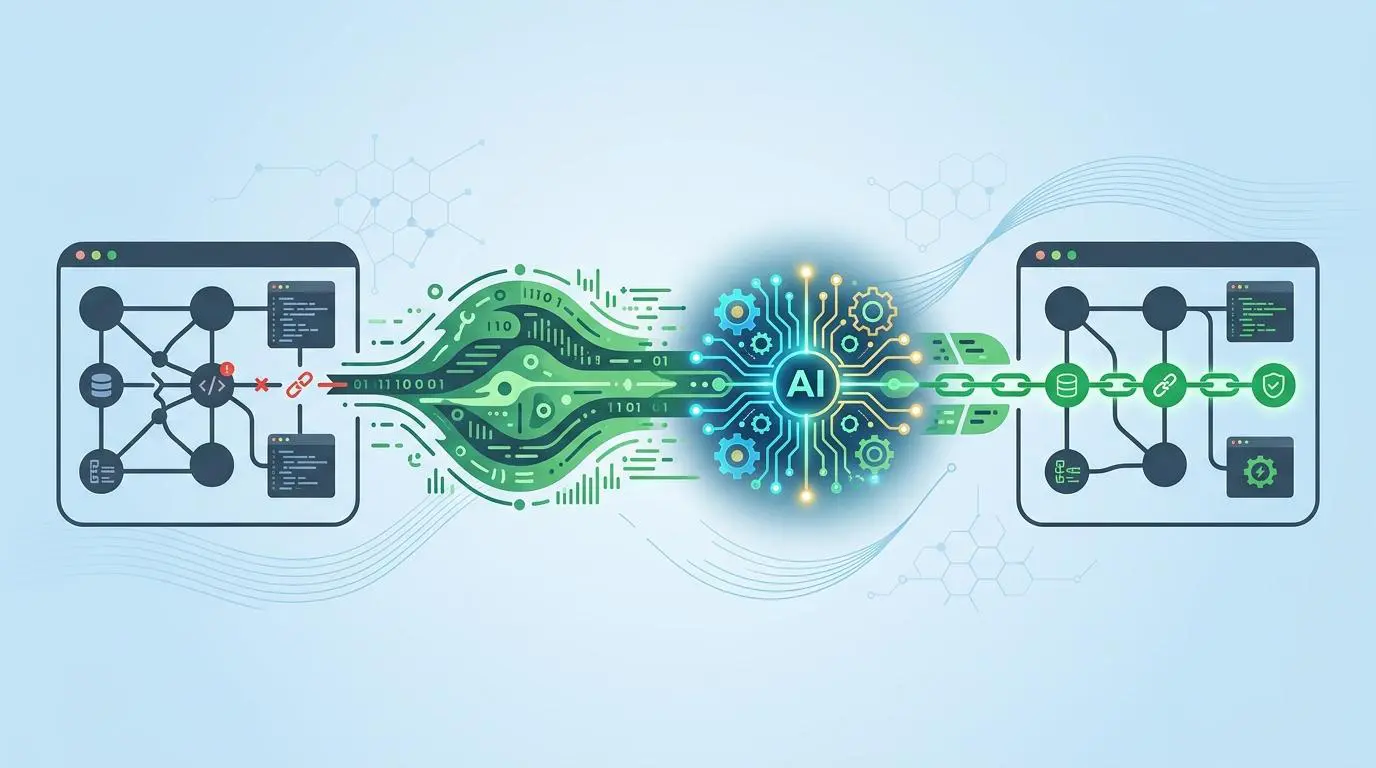
IT departments are currently managing over 25,000 new vulnerabilities discovered annually. This sheer volume of Common Vulnerabilities and Exposures (CVEs) creates a chaotic environment where everything is labeled as an emergency. The real-world friction lies in the inability to distinguish between a critical score on a theoretical level and a critical risk in a specific business context.
To combat this, enterprise tools like Tenable and Qualys are shifting away from discovery-only models. They are evolving into platforms that offer Exploit Prediction, analyzing threat intelligence to determine which flaws are most likely to be attacked. This context-aware approach acts like a smart filter for your security alerts.
For example, a vulnerability might carry a maximum severity score on paper, but if that specific server is isolated behind layers of internal firewalls without internet access, the actual risk is near zero. RBVM platforms analyze this environmental context, allowing teams to safely ignore theoretical flaws and focus entirely on the exposed, exploitable gaps.
Deploying Smart Fixes with Generative AI
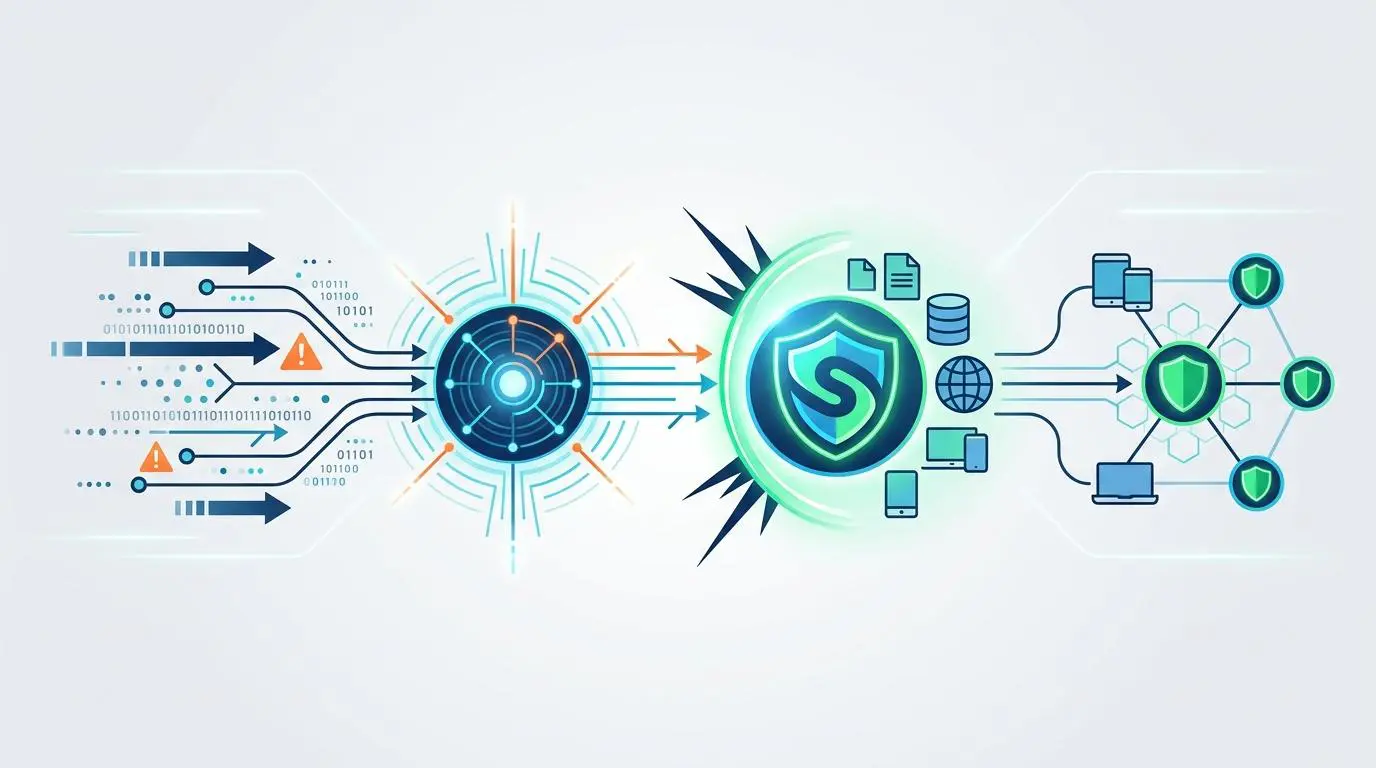
Historically, developers have ignored security tickets because they lack the specific context or the time required to write a fix that will not break existing functionality. Security teams would throw alerts over the fence, and engineering teams would push them to the bottom of the sprint backlog. This standoff is rapidly dissolving thanks to generative artificial intelligence.
Large Language Models are now being actively integrated into the development pipeline to auto-generate remediation code and patches. Products like Snyk DeepCode AI and GitHub Copilot are revolutionizing the workflow by suggesting reachable fixes directly within the developer’s environment. They do not just flag the error; they write the solution.
More importantly, these AI tools verify if a vulnerable code path is even executable in production. By confirming active reachability, the AI ensures developers only spend time fixing code that an external attacker could actually trigger. This creates a frictionless remediation process that respects the developer’s time and maintains product stability.
Surviving the Ransomware Threat Landscape
The exploitation of known vulnerabilities remains the absolute primary vector for ransomware attacks globally. When companies fail to prioritize their patching based on active threat intelligence, they are essentially playing Russian roulette with their infrastructure. Relying solely on outdated CVSS scores is no longer a defensible security strategy.
Recent cyber-insurance data paints a grim picture for organizations clinging to manual processes. Companies that ignore risk-based prioritization face a three times higher likelihood of suffering a catastrophic breach. The cost of this ignorance extends far beyond the immediate technical recovery.
Beyond the ransom payments, businesses face crippling regulatory fines and severe reputational damage. When a breach occurs through a known flaw for which a patch was readily available but simply not applied, stakeholders and auditors show zero mercy. Implementing automated remediation is now a baseline requirement for corporate survival.
Gamifying Security Across Engineering Squads

The traditional friction between security professionals who want to lock everything down and engineers who want to build features fast has always been a cultural bottleneck. To solve this, the industry is embracing Remediation Campaigns. This UX-driven approach gamifies the security process, transforming a tedious chore into an interactive, trackable goal.
Modern platforms like Wiz have completely revolutionized this dynamic by providing a visual Security Graph. Instead of reading through dry spreadsheets, developers can visually trace the exact attack path a hacker would take through their cloud architecture. Seeing the physical route of a potential breach makes the abstract threat feel incredibly real.
By tracking the closing of security gaps across different engineering squads, leadership can foster healthy competition. Dashboards highlight which teams are leading the charge in automated patching, driving organic adoption of security best practices without the need for constant managerial nagging.
Reclaiming Expensive Human Capital
Transitioning to a Risk-Based Vulnerability Management model has a profound impact on the corporate bottom line. By eliminating the endless busywork associated with low-risk vulnerabilities, organizations can reduce their cost per remediation by an average of 40%. This is a massive financial win for any IT department.
The current waste of expensive human capital on fixing non-exploitable security bugs is a hidden drain on profitability. When a senior software engineer spends three hours patching a server that cannot even be reached by the public internet, the company loses valuable momentum. That is time stolen directly from product innovation.
Automated remediation allows organizations to confidently reallocate those high-cost engineering hours back to revenue-generating products. Security becomes a silent, automated background process rather than a daily operational roadblock, driving both safety and business growth simultaneously.
Entering the Era of Self-Healing Infrastructure
Looking toward 2026 and beyond, we are rapidly entering the era of self-healing infrastructure. The industry is shifting from traditional vulnerability management to Continuous Exposure Management. This holistic approach focuses on the entire attack surface, including dangerous misconfigurations and identity risks, rather than just isolated software bugs.
In this near future, AI agents will autonomously simulate attacks in real-time to validate exactly which holes need plugging first. These autonomous systems will identify flaws, test the generated patches in a secure sandbox, and deploy them directly to production environments. All of this will happen without human intervention for non-breaking changes.
This automated future will completely eliminate the dangerous lag time between vulnerability discovery and patch deployment, which currently averages over 60 days for many enterprises. By allowing systems to heal themselves instantly, businesses will finally outpace the speed of modern cyber threats.
Building Resilient Tech for Tomorrow
The transition from reactive manual patching to intelligent, automated remediation is no longer optional for businesses that want to scale securely. By embracing risk-based prioritization and AI-driven fixes, organizations can finally eliminate vulnerability fatigue and protect their most critical assets. The future belongs to systems that are smart enough to defend themselves.
Navigating the intersection of modern technology, software architecture, and business growth requires a sharp strategy. To future-proof your tech stack and scale with precision, connect with Andres at Andres SEO Expert.
Frequently Asked Questions
What is Risk-Based Vulnerability Management (RBVM)?
Risk-Based Vulnerability Management is a cybersecurity strategy that prioritizes software flaws based on their actual risk and exploitability. Rather than treating all vulnerabilities as equal, RBVM uses threat intelligence to focus on the 5% of flaws that hackers are actively weaponizing.
Why is manual patching considered an “invisible drain” on engineering?
Manual patching turns high-paid developers into alert-clearers, wasting expensive human capital on fixing theoretical flaws that pose no actual risk. This creates operational friction and slows down product innovation by forcing teams to chase thousands of non-exploitable security tickets.
How much does a data breach cost on average in 2025?
According to the 2025 IBM Cost of a Data Breach Report, the average global cost of a data breach has risen to $5.13 million. These high costs are often the result of slow remediation cycles and unpatched software flaws.
How does Generative AI assist in vulnerability remediation?
Generative AI and Large Language Models (LLMs) help by auto-generating remediation code and patches directly within the developer’s workflow. AI tools like Snyk DeepCode and GitHub Copilot can verify if a code path is reachable in production, ensuring engineers only fix code that is actually exploitable.
What is self-healing infrastructure in cybersecurity?
Self-healing infrastructure represents the next evolution of security where AI agents autonomously simulate attacks, identify gaps, test patches in sandboxes, and deploy fixes without human intervention. This approach aims to eliminate the 60-day lag time typically seen between vulnerability discovery and patch deployment.