Executive Summary
- Agentic Governance Shift: The SBOM has evolved from a static compliance document into a dynamic observability layer, enabling AI agents to perform autonomous dependency remediation.
- Economic ROI: Organizations implementing automated SBOM orchestration report a 76% reduction in Mean Time to Remediate (MTTR) and significant discounts on cyber insurance premiums.
- Market Consolidation: Major infrastructure players like Google and ServiceNow are integrating SBOM generation directly into runtime environments, making software transparency a core valuation driver.
The Evolution of Digital Transparency
In the current technological landscape of 2026, the concept of software transparency has transitioned from a niche security requirement to a fundamental pillar of corporate governance. At its core, a Software Bill of Materials (SBOM) is a formal, machine-readable record containing the details and supply chain relationships of various components used in building software. However, for the modern executive, viewing an SBOM as a mere inventory list is a strategic oversight. It is the foundational data layer that allows an organization to understand its digital risk, operational resilience, and long-term scalability.
As software ecosystems become increasingly fragmented, the ability to map every dependency—from open-source libraries to proprietary APIs—has become the primary differentiator between agile market leaders and those vulnerable to systemic supply chain collapses. The shift we are witnessing is one from visibility to agentic governance, where the SBOM serves as the ground truth for both human auditors and autonomous AI systems.
Defining the Strategic Utility of an SBOM
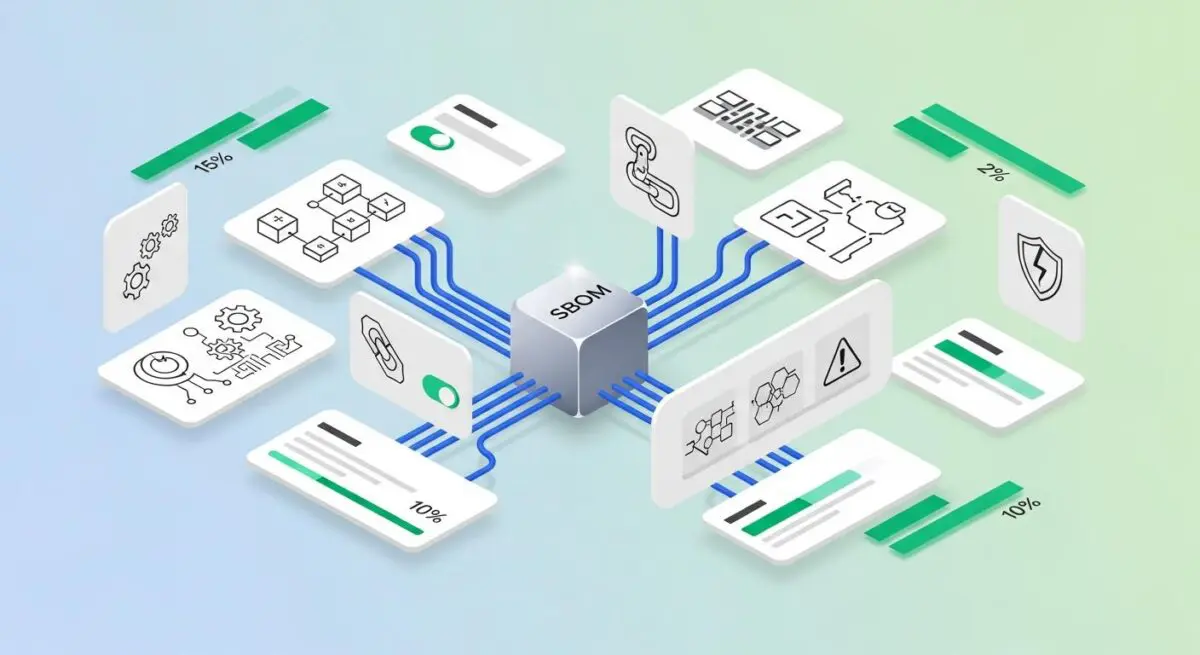
To understand the business impact, one must first grasp the technical composition of an SBOM. It is a nested inventory that identifies every component within a software product, including versions, licenses, and patch status. Think of it as a nutritional label for software, but with the added complexity of tracking how those ingredients interact in real-time. In the context of 2026, these documents are primarily delivered in standardized formats like SPDX or CycloneDX, ensuring they can be ingested by automated security platforms without manual intervention.
The strategic value of this data lies in its ability to facilitate rapid response. When a new vulnerability is discovered in a common library, an organization with a mature SBOM infrastructure can identify its exposure across thousands of applications in seconds, rather than weeks. This capability transforms the security department from a cost center into a high-velocity operational unit.
Market Dynamics and the Shift to CompOps
The global market for SBOM management has reached a valuation of $2.03B, driven by a move toward Component Operations, or CompOps. This framework treats software components as dynamic assets that require continuous monitoring throughout their lifecycle. We are seeing significant consolidation in this space, exemplified by major acquisitions where cloud-native providers are integrating SBOM generation directly into the runtime environment. This ensures that the bill of materials is never out of date, reflecting the actual state of the software as it executes.
Furthermore, the integration of the Model Context Protocol (MCP) has allowed autonomous AI agents to query SBOM data directly. These agents are now performing nearly a third of all enterprise dependency upgrades autonomously, significantly reducing the burden on engineering teams. This automation is not just a technical convenience; it is a necessity in an era where adversaries use generative tools to automate exploit development at unprecedented speeds.
Think of an SBOM not as a static receipt, but as the real-time telemetry system of a commercial aircraft. Just as a pilot needs to know the origin and health of every bolt and turbine blade to ensure safety mid-flight, a CEO needs the SBOM to verify the integrity of every line of code—whether human-written or AI-generated—to prevent a systemic collapse of the enterprise digital infrastructure.
Economic Impact and Operational ROI
The financial implications of SBOM adoption are profound. Organizations that have successfully bridged the gap between compliance and operations report a 30–35% gain in productivity within their DevSecOps teams. By automating the signing and validation of software artifacts, these firms have reduced the costs associated with audit-ready documentation by up to 80%. This efficiency directly impacts the bottom line by freeing up high-value engineering talent to focus on innovation rather than manual vulnerability triage.
Beyond internal efficiencies, the SBOM is becoming a critical asset for B2B Customer Lifetime Value. AI-powered procurement agents now use SBOM data to synthesize trust scores for potential vendors. A transparent, queryable SBOM acts as a signal of maturity, often leading to faster sales cycles and higher contract values. Additionally, the insurance market has begun to take notice, with premiums seeing double-digit discounts for firms that provide insurers with real-time access to their software supply chain metadata.
The Regulatory Catalyst and Global Standards
While the business case for SBOMs is strong, regulatory pressure has accelerated adoption. The EU Cyber Resilience Act (CRA) has established the SBOM as a mandatory requirement for software products, effectively turning it into a digital CE Mark. This regulation mandates that manufacturers not only maintain an SBOM but also use it to facilitate 24-hour incident notifications. For global enterprises, this means that non-compliance is no longer an option, as the fines for failing to maintain these standards can reach a significant percentage of global annual turnover.
This regulatory environment has solidified SPDX and CycloneDX as the dominant standards. These formats are enriched with Vulnerability Exploitability eXchange (VEX) data, which filters out the noise of non-exploitable vulnerabilities. By focusing only on what truly poses a risk, organizations can reduce their manual triage workload by over 60%, allowing them to meet strict regulatory windows without inflating their headcount.
Andres’ Masterclass: The Big Picture
From my perspective in the strategy room, the SBOM is the most undervalued asset in the modern enterprise portfolio. Most executives still view it through the lens of risk mitigation, but the real opportunity lies in capital allocation and competitive moats. When you have a granular, real-time map of your software supply chain, you aren’t just securing your perimeter; you are gaining deep insights into your technical debt and the efficiency of your development lifecycle. This is the data that allows a CEO to make informed decisions about where to invest in proprietary development versus where to leverage open-source ecosystems.
We believe that the next frontier for SBOMs is their role in Generative Engine Optimization (GEO). As AI agents become the primary interface for B2B procurement, your SBOM will serve as the ground truth that these engines use to verify your reliability. If your software supply chain is opaque, you will simply be filtered out of the selection process by autonomous buyers. The SBOM is no longer a technical manual; it is your company’s digital resume in an AI-driven economy. Building a robust, automated SBOM pipeline is not just a security upgrade—it is a strategic imperative for long-term market relevance.
Future-Proofing the Digital Supply Chain
The transition to a transparent software ecosystem is inevitable. As the speed of exploit development increases and regulatory frameworks tighten, the SBOM will remain the central nervous system of enterprise security and operations. Organizations that embrace this shift today will find themselves with a significant advantage in speed, cost, and trust.
Navigating the intersection of generative search and operational efficiency requires more than just tools—it requires a roadmap. If you’re ready to evolve your strategy through specialized SEO, GEO, Adavanced Hosting Environments, or AI-driven automation, connect with Andres at Andres SEO Expert. Let’s build a future-proof foundation for your business together.”