Key Points
- Deploying Agentic AI and predictive failure mitigation protocols can recover up to 70% of soft declines autonomously without human intervention.
- Transitioning to real-time payment rails like FedNow and PIX guarantees instant settlement finality and drastically reduces involuntary churn.
- Modern billing stacks must evolve into zero-latency monetization engines that adjust pricing dynamically based on real-time customer health scores.
Table of Contents
The Involuntary Churn Crisis
The global subscription economy is projected to reach $859 billion by the end of 2026, according to Fortune Business Insights. This explosive growth is fueled by an accelerating 18.5% compound annual growth rate in digital service adoption.
However, this massive liquidity opportunity remains severely bottlenecked by legacy payment infrastructure. The industry faces a silent revenue leakage crisis driven primarily by technical payment failures and outdated collection methodologies.
To eliminate this friction, institutional capital is heavily backing Autonomous Subscription Revenue Lifecycle Management systems. These advanced technological frameworks fundamentally transform how enterprise companies automate recurring billing and manage dunning.
By treating the modern billing stack as a real-time data primitive, organizations can eradicate operational friction. This strategic shift guarantees settlement finality while preserving the underlying customer relationship.
Historically, billing was viewed merely as a back-office utility. Today, it is widely recognized as a strategic revenue-optimization engine that directly influences enterprise valuations and market dominance.
Market Intelligence and Capital Flow
Market Intelligence & Data
Involuntary Churn Impact
The portion of total subscription churn attributed to payment failures rather than customer intent, as documented in Recurly’s 2026 State of Subscriptions report.
Annual Revenue Leakage
The total estimated global revenue lost to failed subscription payments in 2025, according to a 2026 market analysis by Just Pricing.
Projected Market Ceiling
The expected total value of the global subscription economy by 2033, with 2026 representing the critical pivot toward AI-integrated recovery, per Grand View Research.
Enterprise RTP Share
The percentage of real-time payments revenue generated by large enterprises in 2026 as they migrate recurring billing to instant settlement rails, according to Resolve Pay.
The data above illustrates a structural shift in how institutional capital views subscription revenue. Technical payment failures are no longer dismissed as a mere operational nuisance. Instead, they represent a critical vulnerability within the modern financial technology stack.
As documented in Recurly’s 2026 State of Subscriptions report, involuntary churn severely impacts enterprise valuations across the board. Founders and venture capitalists now realize that fixing the revenue loop is mathematically more lucrative than endlessly acquiring new users.
This realization pushes industry valuations rapidly toward the expected total value of the global subscription economy by 2033. The aggressive migration of recurring billing to instant settlement rails serves as a foundational step in this inevitable evolution.
Capital is actively flowing away from static SaaS platforms and pouring into dynamic, AI-driven billing architectures. Investors specifically target solutions capable of autonomously compressing Days Sales Outstanding and reclaiming lost human capital hours.
The FinTech Deep Dive into Agentic AI
The financial technology landscape has officially transitioned away from rigid, rule-based engines. We are now entering the era of Agentic AI workflows designed to manage the entire revenue loop autonomously.
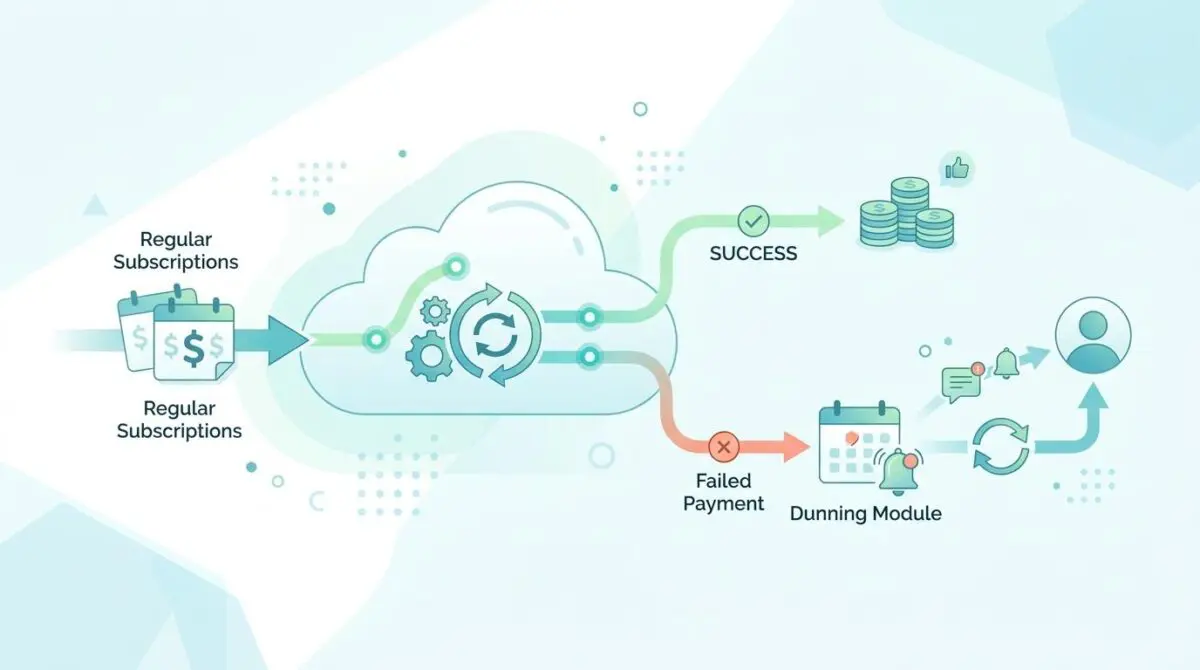
These sophisticated systems integrate predictive failure mitigation to rescue transactions before they ever reach a hard decline. They operate by analyzing historical payment success windows and issuer-specific behavioral patterns in real time.
This technology directly addresses the massive involuntary churn crisis caused by legacy banking friction. It effectively eliminates the silent revenue leakage that typically costs subscription businesses up to 9% of their annual recurring revenue.
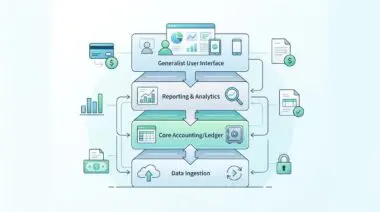
To understand the mechanics of this disruption, we must examine the specific technological layers powering these modern billing stacks. The architecture relies on three core pillars.
- Predictive Failure Mitigation: Algorithms that analyze historical transaction data to predict and prevent payment declines before they occur.
- Agentic AI Workflows: Autonomous systems that execute multi-step revenue recovery strategies without human intervention.
- Zero-Latency Monetization: The instant processing of billing events at the exact moment a digital service is consumed.
Bifurcation of the Billing Stack
Market dominance is currently bifurcated between incumbent infrastructure providers and highly specialized AI-native disruptors. Industry giants have deeply integrated machine learning to execute smart retries on a massive scale.
Conversely, agile challengers utilize autonomous agents to handle complex multi-channel dunning. They are moving beyond traditional email recovery by deploying AI-voice and messaging protocols to engage users naturally.
Significant venture capital is also flowing into Vertical SaaS FinTech hybrids. These platforms focus entirely on the complex, hybrid usage-based monetization models required for the emerging AI economy.
These hybrid models require billing systems to calculate costs based on API calls, token usage, and computing power consumption. Traditional flat-rate subscription billing engines simply cannot handle this level of granular, high-frequency data processing.
Edge Computing and Silent Recovery
Modern billing stacks leverage edge computing to analyze issuer-specific success patterns without latency. This allows the system to route transactions through real-time payment rails to ensure immediate settlement finality.
Recent industry reports reveal that AI-driven dunning models now achieve recovery rates exceeding 70% on soft declines. They accomplish this by analyzing dozens of transaction-level variables, including issuer response codes and historical payment success windows.
This concept of Silent Recovery means the consumer experiences absolutely zero friction during a failed payment event. The AI reroutes, retries, and settles the transaction in the background before the user even realizes a banking error occurred.
By automating the extraction of unstructured data from B2B invoices, firms are compressing their Days Sales Outstanding by an average of three to seven days. This creates massive liquidity advantages for enterprises operating at scale.
Vertical SaaS and Usage Based Models
The integration of global e-invoicing mandates will force these sophisticated billing systems to become compliance-native by default. Regulatory frameworks are evolving to require strict cross-border data residency without slowing down transaction velocity.
Beyond compliance, the true value of Vertical SaaS lies in its ability to parse complex consumption metrics. As artificial intelligence services become commoditized, businesses are charging customers based on the exact computational load they generate.
This requires a billing architecture that functions as a high-speed data ingestion engine. It must meter usage, apply dynamic pricing tiers, and generate accurate invoices in milliseconds.
The legacy batch-processing models of the past decade are entirely obsolete in this environment. Financial architects must deploy real-time ledgers that sync instantaneously with both the product database and the payment gateway.
The Strategic Action Plan for Zero Latency
Strategic Trajectory
- Transition toward ‘Zero-Latency Monetization’ by processing billing events instantly at the point of consumption rather than in monthly batches.
- Adapt to global e-invoicing mandates by deploying billing systems that are compliance-native by default.
- Reposition the billing stack as a strategic revenue-optimization engine rather than a back-office utility.
- Implement dynamic pricing models that adjust automatically based on real-time customer health scores.
The industry is moving rapidly toward the standard of Zero-Latency Monetization. Executives must prepare their infrastructure to process billing events instantly at the point of consumption.
Leadership teams must stop viewing the billing stack as a simple back-office utility. It is now a highly strategic revenue-optimization engine capable of adjusting pricing dynamically based on real-time customer health scores.
Implementing these dynamic pricing models requires deep integration between your CRM, product analytics, and payment gateway. When a customer’s engagement score drops, the billing system should automatically trigger retention-focused pricing adjustments.
Furthermore, deploying compliance-native architecture ensures that as your enterprise scales globally, you remain insulated from regional regulatory friction. This allows your growth team to launch in new markets without waiting for extensive legal restructuring.
Conclusion
Eliminating the silent revenue leakage that typically costs subscription businesses a significant portion of their annual recurring revenue is no longer optional. It is the baseline requirement for survival in the autonomous digital economy.
By leveraging Agentic AI, predictive failure mitigation, and real-time payment rails, enterprises can permanently solve the involuntary churn crisis. The technology exists today to transform your billing stack into your most powerful retention tool.
Founders who embrace Autonomous Subscription Revenue Lifecycle Management will capture unprecedented market share. Conversely, those who rely on legacy batch-processing will slowly bleed capital through technical inefficiencies.
Navigating the intersection of financial technology, institutional capital, and market psychology requires a sharp strategy. To future-proof your FinTech architecture and scale with precision, connect with Andres at Andres SEO Expert.
Frequently Asked Questions
What is involuntary churn in the subscription economy?
Involuntary churn refers to subscription cancellations caused by technical payment failures, such as expired cards or banking friction, rather than customer intent. It accounts for 20% to 40% of total subscription churn and is a primary driver of revenue leakage.
How much revenue is lost annually to failed subscription payments?
Global revenue leakage from failed subscription payments is estimated at $129 billion annually. For many digital service providers, this silent loss can account for up to 9% of their total annual recurring revenue (ARR).
What is Autonomous Subscription Revenue Lifecycle Management?
This is a technological framework that uses Agentic AI to automate the entire revenue loop. It replaces legacy manual dunning with predictive failure mitigation and autonomous recovery strategies to ensure settlement finality without human intervention.
How does “Silent Recovery” work in modern billing systems?
Silent Recovery utilizes edge computing and AI to analyze transaction-level variables and issuer patterns. It reroutes and retries failed payments through real-time rails like FedNow or UPI in the background, ensuring the customer experiences zero friction during banking errors.
What is Zero-Latency Monetization?
Zero-Latency Monetization is the practice of processing billing events instantly at the point of digital service consumption. It moves away from traditional monthly batch processing to support granular, usage-based pricing models required for the AI economy.
Why are enterprises migrating to real-time settlement rails?
Enterprises are migrating to real-time rails like FedNow, PIX, and UPI to achieve immediate settlement finality. This reduces Days Sales Outstanding (DSO) and eliminates the latency inherent in legacy banking infrastructure, providing superior liquidity.