Executive Summary
- Passage extraction allows search engines to index and rank specific segments of a document independently of the overall page’s primary focus.
- It serves as a foundational mechanism for Retrieval-Augmented Generation (RAG), providing LLMs with precise context for generating accurate responses.
- Optimization for passage extraction requires granular content structuring and the elimination of ambiguous pronouns to ensure semantic clarity.
What is Passage Extraction?
Passage extraction is a sophisticated information retrieval technique where search engines and Large Language Models (LLMs) identify, isolate, and rank specific segments or chunks of text within a larger document. Unlike traditional indexing, which evaluates the relevance of an entire URL based on its primary theme, passage extraction utilizes deep learning models—such as BERT and its successors—to understand the semantic intent of individual paragraphs. This allows a specific section of a page to surface for a niche query even if the overall document covers a broader or slightly different topic.
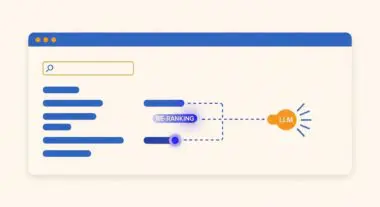
In the context of Generative Engine Optimization (GEO), passage extraction is the process by which an AI system selects the most relevant data points to feed into its context window. By analyzing the linguistic structure and factual density of a passage, the engine determines if that specific snippet contains the necessary information to satisfy a user’s prompt. This granular approach to indexing ensures that high-quality information is not buried within long-form content, making it accessible for direct citation in AI-generated overviews.
The Real-World Analogy
Imagine you are looking for a specific legal clause regarding “subletting rights” within a 200-page commercial lease agreement. Instead of a librarian simply handing you the entire book and telling you the information is somewhere inside, passage extraction is the equivalent of the librarian opening the book to the exact page, highlighting the specific paragraph, and reading it aloud to you. It transforms a massive, undifferentiated block of data into a series of precise, actionable answers.
Why is Passage Extraction Important for GEO and LLMs?
Passage extraction is the backbone of Retrieval-Augmented Generation (RAG). When a user queries an AI engine like Perplexity or ChatGPT (via Search), the system does not process your entire website; it retrieves the most relevant passages to construct its answer. If your content is not structured for easy extraction, the AI may overlook your data in favor of a competitor whose content is more modular and semantically clear. Furthermore, passage extraction directly influences Source Attribution. AI engines are more likely to cite and link to sources that provide concise, self-contained answers that fit perfectly into the generative response’s logic. For GEO professionals, this means that visibility is no longer just about page-level authority, but about the precision and extractability of individual content blocks.
Best Practices & Implementation
- Implement Semantic Header Hierarchies: Use
and
tags to clearly define the boundaries of different topics. Each section should ideally address a single, specific sub-query.
- Adopt the “Standalone Paragraph” Rule: Write each paragraph so that it makes sense even if read in isolation. Avoid using vague pronouns like “this” or “it” when referring to the main subject; instead, repeat the entity or concept name to maintain semantic context for the extractor.
- Optimize for Factual Density: Ensure that the first two sentences of a passage contain the core answer or definition. AI models prioritize passages that provide high information value with minimal linguistic fluff.
- Utilize Schema Markup: While passage extraction is algorithmic, using Speakable or FAQ schema can help signal to search engines which parts of your content are intended to be concise answers.
Common Mistakes to Avoid
One frequent error is the use of context-dependent transitions. Phrases like “As mentioned above” or “In the previous section” break the utility of a passage when it is extracted and presented in an AI overview. Another mistake is burying the lead, where the actual answer to a query is placed at the end of a long, narrative-driven section, making it harder for the extraction algorithm to identify the segment’s relevance quickly. Finally, many brands fail to maintain topical consistency within a section, mixing multiple unrelated entities in a single paragraph, which confuses the semantic signals used by the LLM.
Conclusion
Passage extraction represents a shift from document-level ranking to granular, intent-based retrieval. By optimizing for extractability, we at Andres SEO Expert ensure that our technical insights are prioritized by generative engines and served directly to the user.