Executive Summary
- Perplexity SEO focuses on optimizing for Retrieval-Augmented Generation (RAG) to ensure content is selected as a primary citation.
- Visibility depends on factual density, entity clarity, and the ability of the engine to parse structured and unstructured data in real-time.
- Success is measured by citation frequency and the prominence of the brand within the AI-generated response interface.
What is Perplexity SEO?
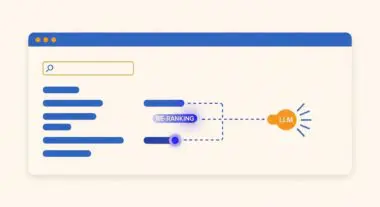
Perplexity SEO is the strategic process of optimizing digital content to increase its probability of being retrieved, synthesized, and cited by Perplexity AI’s answer engine. Unlike traditional search engine optimization which focuses on blue-link rankings, Perplexity SEO targets the Retrieval-Augmented Generation (RAG) pipeline. This involves ensuring that content is easily discoverable by Perplexity’s crawlers—which often utilize third-party search indices like Bing or Google—and is structured in a way that the underlying Large Language Model (LLM) can accurately extract relevant facts for user queries.
At its core, Perplexity SEO requires a shift from keyword-centric strategies to entity-based and factual-density strategies. The engine prioritizes sources that provide direct, verifiable answers to complex natural language questions. Technical optimization in this context involves enhancing the “cite-ability” of a page by maintaining high topical authority, clear information architecture, and rigorous factual accuracy, which minimizes the risk of the LLM disregarding the source due to conflicting data or hallucinations.
The Real-World Analogy
Imagine a world-class research librarian tasked with answering a complex question for a high-profile client. The librarian doesn’t just hand the client a list of books; they read through dozens of sources, summarize the most accurate information, and provide a final report with footnotes. In this scenario, Perplexity is the librarian. Perplexity SEO is the process of writing your book so clearly, accurately, and authoritatively that the librarian chooses your chapters as the primary evidence for their report, specifically citing your work in the footnotes to prove their answer is correct.
Why is Perplexity SEO Important for GEO and LLMs?
Perplexity SEO is a foundational pillar of Generative Engine Optimization (GEO) because it directly influences source attribution. In the AI-search era, being the “first link” is less valuable than being the “cited source” that informs the AI’s generated response. Perplexity’s interface prominently displays citations, and users often click these to verify the AI’s claims. High visibility in these citations establishes immediate entity authority and trust.
Furthermore, Perplexity SEO mitigates the “zero-click” trend by positioning a brand as the definitive source of truth. Because Perplexity synthesizes information from multiple top-tier results, failing to optimize for its RAG process means a brand risks being excluded from the conversation entirely, even if they rank well in traditional SERPs. For LLMs, clear and structured data reduces the computational cost of processing information, making well-optimized content more “attractive” for the model to include in its final output.
Best Practices & Implementation
- Implement Comprehensive Schema Markup: Use JSON-LD to define entities, relationships, and factual data points, allowing Perplexity to parse the context of your content without ambiguity.
- Adopt the Inverted Pyramid Writing Style: Place the most critical, factual answers at the beginning of the content to facilitate easy extraction by the RAG pipeline.
- Enhance Factual Density: Increase the ratio of verifiable facts to filler text. Perplexity prioritizes information-rich content that provides direct answers to “how,” “why,” and “what” queries.
- Optimize for Conversational Long-Tail Queries: Structure content to mirror the natural language questions users ask AI engines, using H2 and H3 tags as question headers followed by concise, direct answers.
- Maintain High Citation Authority: Ensure your content is referenced by other authoritative domains, as Perplexity often uses existing search indices to determine which sources are trustworthy enough to synthesize.
Common Mistakes to Avoid
One frequent error is the use of “fluff” or marketing-heavy language that lacks substantive data; LLMs are trained to extract information, and excessive adjectives can obscure the factual value of a page. Another mistake is neglecting technical performance, such as slow crawlability or poor mobile rendering, which prevents the engine’s bots from indexing the most recent updates. Finally, many brands fail to update legacy content, leading to factual inconsistencies that cause AI engines to favor more recent, accurate sources.
Conclusion
Perplexity SEO is an essential discipline for maintaining brand visibility in an AI-first search landscape, focusing on factual precision and RAG-friendly content structures. By prioritizing citation-worthy data, organizations can ensure their expertise is recognized and synthesized by leading generative engines.