Executive Summary
- Source seeding involves the strategic distribution of authoritative data across high-trust digital nodes to influence LLM training and RAG retrieval.
- It directly impacts the frequency and accuracy of source attribution in AI-generated responses like ChatGPT and Perplexity.
- Effective seeding requires semantic consistency and placement within domains that possess high topical authority and crawl frequency.
What is Source Seeding?
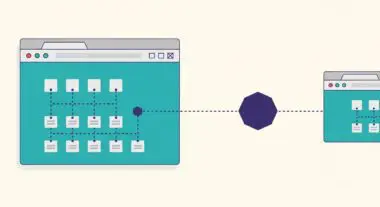
Source seeding is a technical Generative Engine Optimization (GEO) strategy focused on the intentional distribution of high-quality, factually dense content across a network of authoritative digital platforms. The primary objective is to ensure that this data is ingested into the training sets of Large Language Models (LLMs) or prioritized within the indices used for Retrieval-Augmented Generation (RAG). By placing information in seed locations—such as academic journals, industry-specific repositories, and high-authority news outlets—organizations can influence the foundational knowledge base of an AI.
Unlike traditional SEO, which focuses on ranking for specific keywords on a Search Engine Results Page (SERP), source seeding focuses on the provenance and persistence of information. It leverages the way LLMs weigh information based on the authority and frequency of the source. When an AI engine encounters the same consistent entity data across multiple trusted nodes, it assigns a higher confidence score to that information, increasing the likelihood of its inclusion in generated outputs.
The Real-World Analogy
Imagine a world-renowned chef who creates recipes by visiting only the most prestigious farmers’ markets. If a specialty produce grower wants their unique heirloom tomato to be featured in the chef’s signature dish, they cannot simply leave the tomato on a random street corner. They must ensure their tomatoes are stocked at the specific, high-end markets where the chef sources ingredients. In this analogy, the chef is the LLM, the farmers’ markets are high-authority digital platforms, and the heirloom tomato is your branded content. Source seeding is the logistical process of getting your ingredients into the right markets so the AI chef naturally selects them.
Why is Source Seeding Important for GEO and LLMs?
Source seeding is critical because AI models do not treat all data equally. In the context of GEO, visibility is determined by the model’s ability to retrieve and cite a source. If an entity’s information is only present on its own domain, it lacks the cross-referenced validation required for high-confidence attribution. Source seeding builds a semantic footprint that establishes entity authority across the web.
Furthermore, for RAG-based systems like Perplexity or Google’s Search Generative Experience (SGE), source seeding ensures that the most accurate and favorable data is available in the vector databases these systems query. By seeding content in diverse, high-trust environments, brands can mitigate the risk of AI hallucinations and ensure that the citations provided to users lead back to authoritative, controlled assets.
Best Practices & Implementation
- Target High-Authority Niche Repositories: Distribute technical whitepapers and data sets to industry-specific repositories (e.g., arXiv for tech, PubMed for health) to ensure ingestion into specialized training sets.
- Maintain Semantic Consistency: Ensure that entity names, facts, and figures are identical across all seeded locations to strengthen the LLM’s knowledge graph associations.
- Utilize Structured Data: Implement Schema.org markup on all seeded content to provide clear, machine-readable context that simplifies the extraction process for AI crawlers.
- Prioritize Diverse Media Formats: Seed information through text, structured tables, and technical diagrams, as multimodal LLMs increasingly prioritize diverse data types for comprehensive understanding.
- Leverage High-Crawl Frequency Nodes: Focus seeding efforts on platforms with high refresh rates, such as major news aggregators and active developer forums, to ensure rapid updates to RAG indices.
Common Mistakes to Avoid
One frequent error is low-quality flooding, where brands distribute content to low-authority link farms or spammy directories; LLMs are trained to filter out low-signal noise, rendering this effort useless. Another mistake is semantic fragmentation, where different versions of a fact or brand story are seeded across various platforms, leading to conflicting data points that lower the AI’s confidence score in the entity.
Conclusion
Source seeding is a foundational pillar of GEO that shifts the focus from keyword rankings to data provenance. By strategically placing authoritative content across the digital ecosystem, brands can directly influence the knowledge base and citation behavior of modern AI search engines.