Key Points
- Automated PR Blocking: Leveraging the GitHub Checks API prevents assets over 200KB from merging into production.
- Vision AI Integration: AI models ensure automated compression maintains a structural similarity (SSIM) loss margin below 0.05.
- Edge-Optimized Fail-Safes: Dynamic routing prevents origin-server bloat while maintaining strict Core Web Vitals compliance.
Table of Contents
The Invisible Weight of Staging Environments
The invisible tax of a high-velocity publishing schedule is always paid in milliseconds. Every day, development teams push massive visual assets into staging environments. Without rigorous automated checks, these unoptimized images silently bypass manual quality assurance.
They inevitably slip into production environments, slowly suffocating your Largest Contentful Paint (LCP) scores. Think of it like packing a suitcase for a flight. If you fail to weigh your bags at home, you face massive penalty fees at the airport.
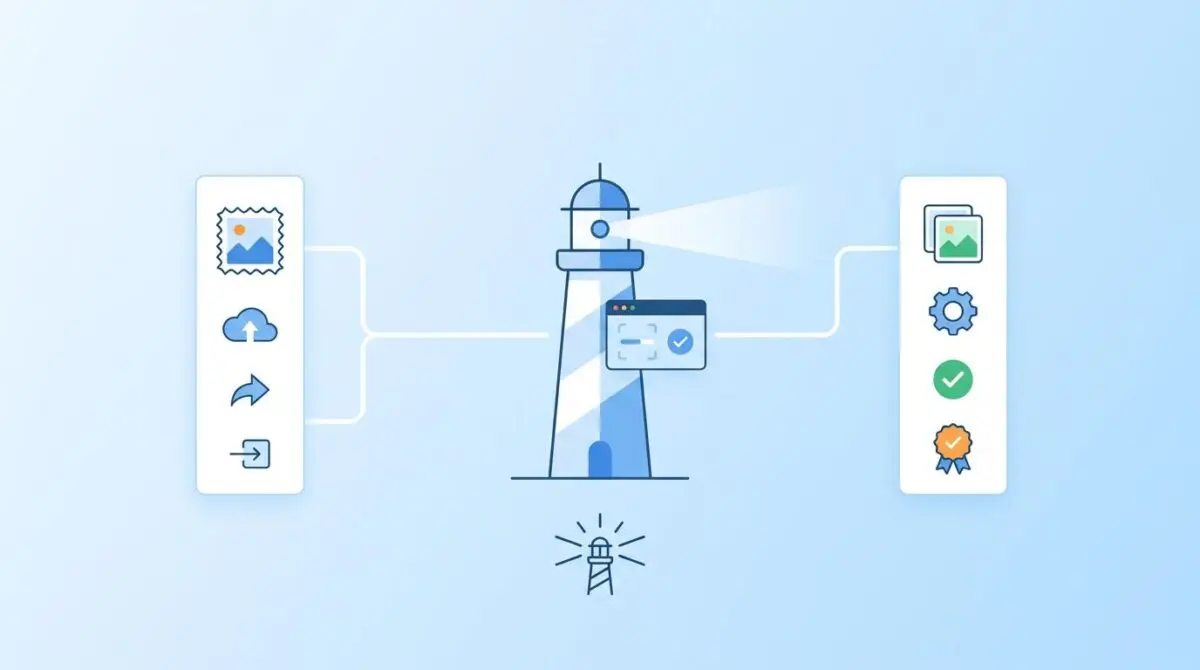
In the digital landscape, those fees translate to lost search rankings and abandoned user sessions. The ultimate architectural solution is Lighthouse CI Image Performance Regression Testing. By moving the scale directly into the development pipeline, we catch overweight assets before they ever reach production.
Quantifying the Speed Dividend
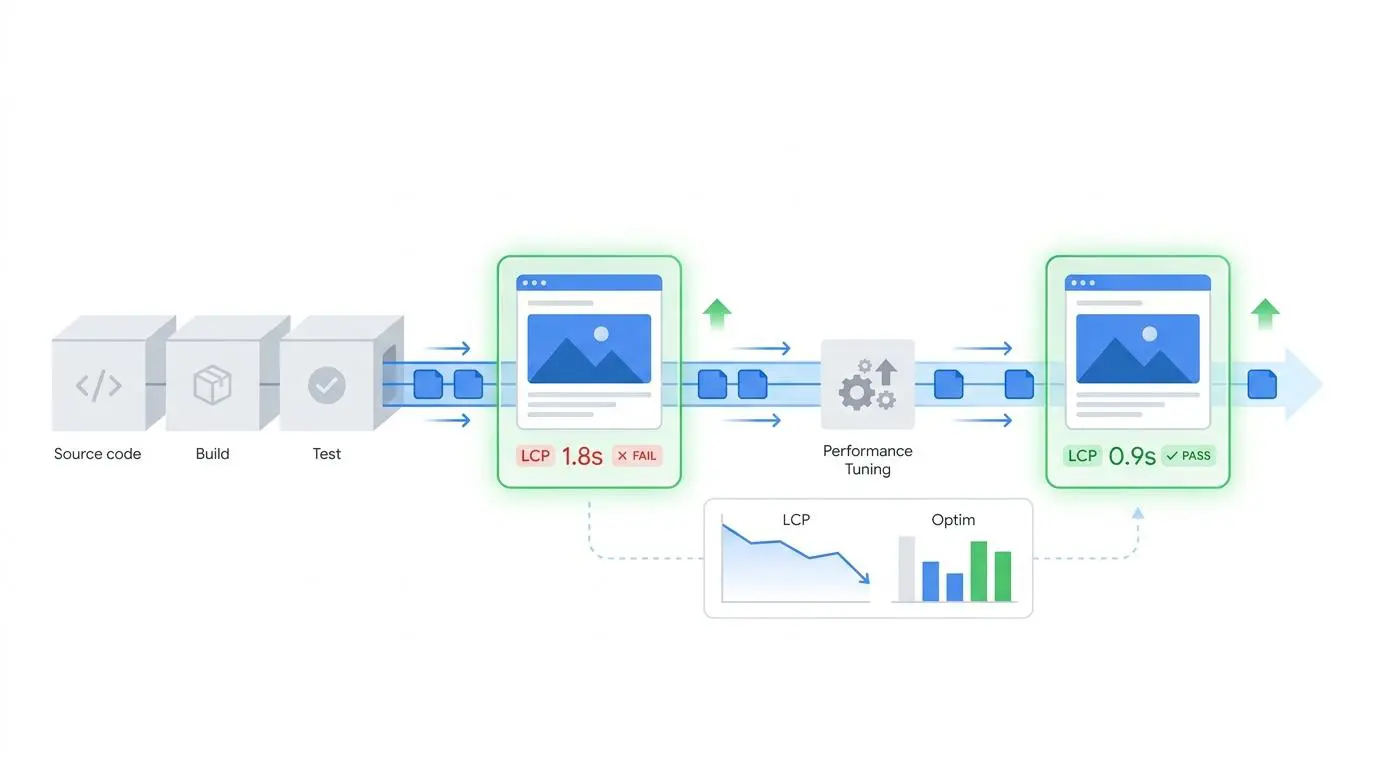
Implementations of these automated pipelines are fundamentally changing how servers handle heavy traffic loads. According to recent HTTP Archive Core Web Vitals data, sites gating their images before deployment saw an average LCP improvement of 350ms. This massive reduction occurs because the server no longer wastes compute cycles delivering bloated files to mobile rendering engines.
This speed dividend is further supported by industry reports on enterprise repositories. Data reveals that a vast majority of enterprise-level SEO repositories now rely on automated performance blockers. By integrating Lighthouse CI for performance monitoring directly into the build process, teams maintain strict Core Web Vitals compliance without manual oversight.
Furthermore, recent Lighthouse updates introduced powerful new diagnostic tools. A hidden priority hint check alerts developers via the GitHub API if an LCP image with a high fetchpriority is missing its critical attribute during the staging build. This ensures the critical rendering path of the browser is perfectly orchestrated before the code ever reaches production.
Programmatic Media Optimization at Scale
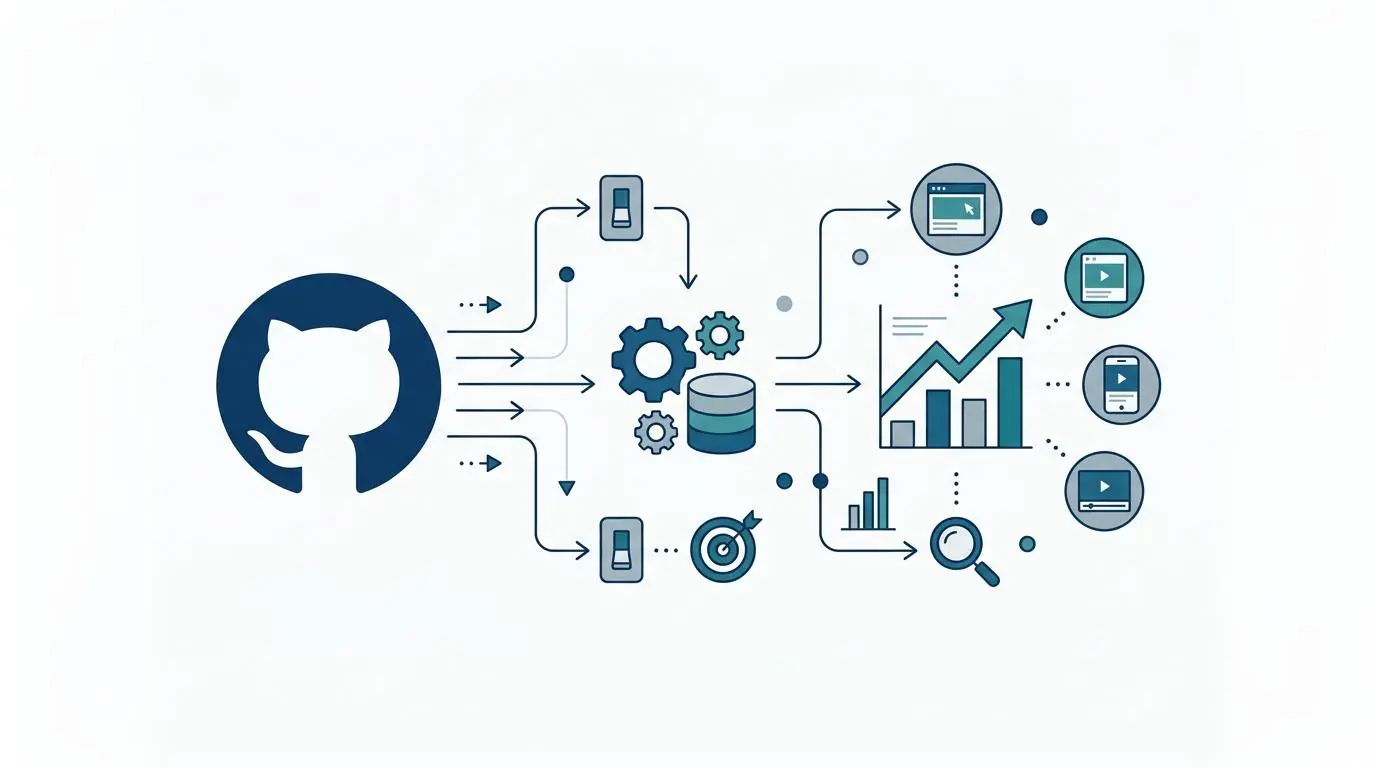
Manual image auditing is practically impossible for programmatic sites launching thousands of pages daily. Without an automated gatekeeper, severe LCP failures are only discovered weeks later when organic traffic begins to plummet.
To solve this bottleneck, modern pipelines integrate the GitHub API with Lighthouse CI and advanced compression tools. This technical stack automatically compares image compression metrics against a strict budget threshold.
Advanced Vision AI APIs are now being woven into these pipelines to guarantee visual quality. They ensure that automated compression algorithms never introduce visual artifacts beyond a minimal structural similarity index loss.
Enforcing Boundaries with the GitHub Checks API
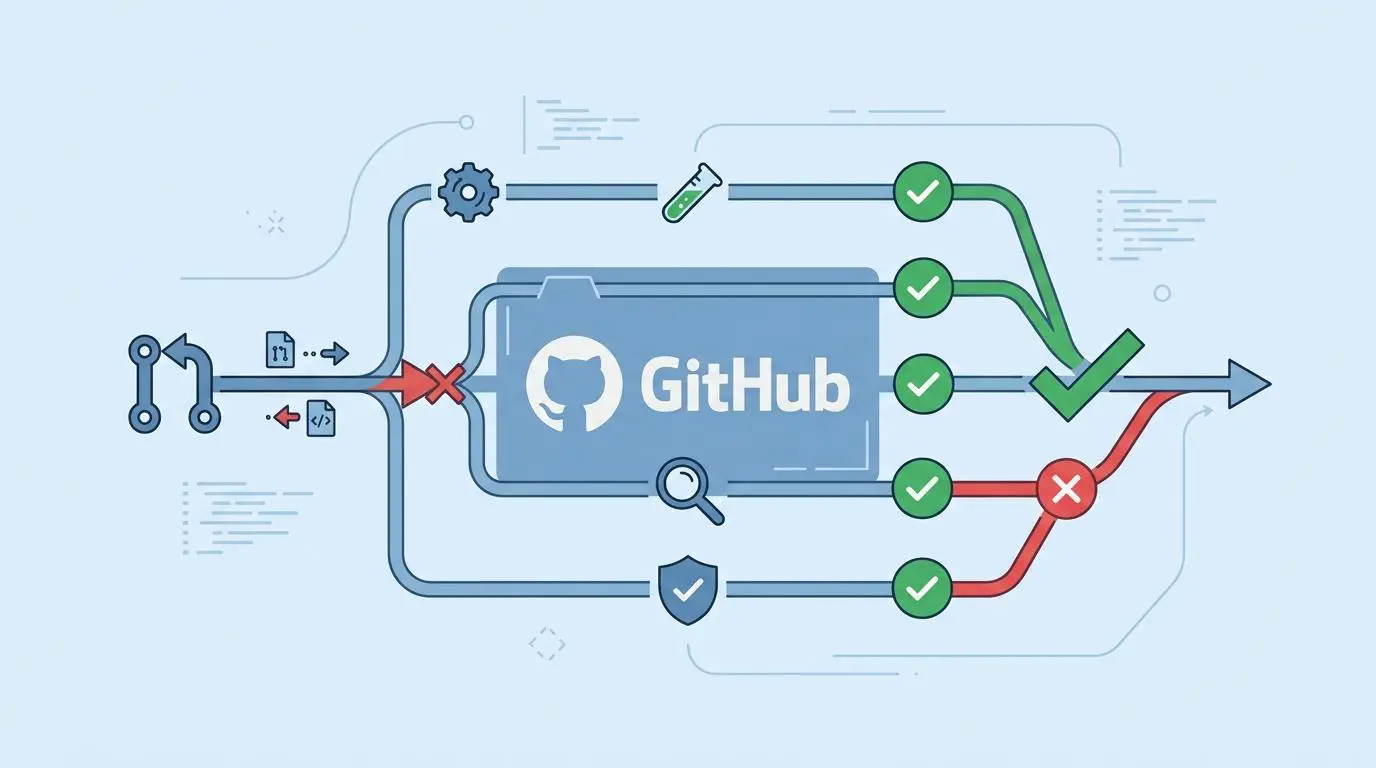
Development teams naturally prioritize feature velocity over performance optimizations. This mindset creates a mountain of performance debt, where unoptimized images eventually require expensive and tedious retrospective refactoring.
We can eliminate this friction by leveraging the GitHub Checks API. This system acts as a rigid gatekeeper, automatically blocking pull request merges if Lighthouse CI detects any mobile viewport image exceeding strict size limits.
Modern Lighthouse API capabilities enhance this by supporting direct WebP and AVIF delta reports. The system instantly compares the current asset size against an auto-optimized version, calculating potential bandwidth savings in real-time.
Edge Routing as a Secondary Fail-Safe
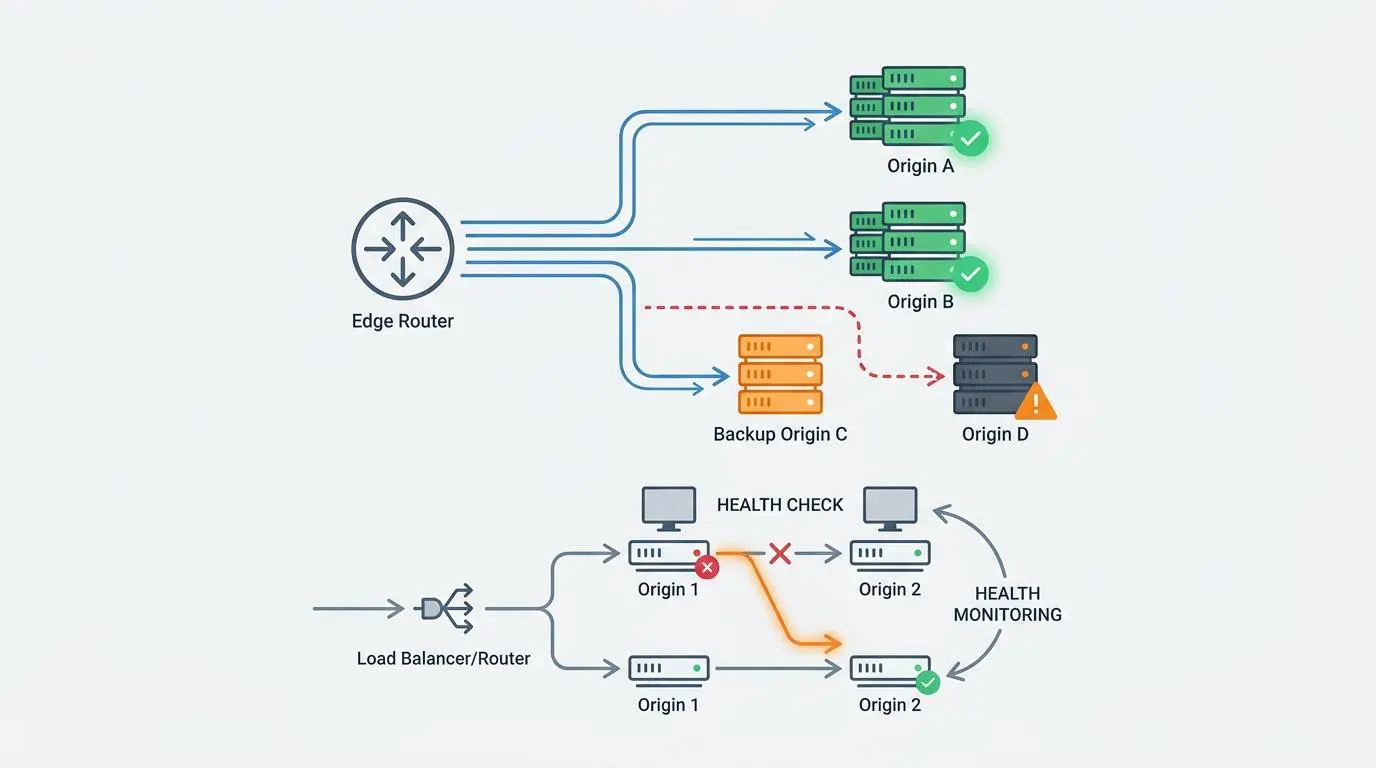
Relying entirely on staging detection can still leave gaps, but over-reliance on edge optimization creates its own problems. It often leads to origin-server bloat, where massive source files consume excessive storage and drastically increase database backup latency.
If staging detection fails, edge routing tools act as a secondary fail-safe. They dynamically resize assets on the fly based on the incoming user agent header.
To balance this architecture, advanced CI pipelines now simulate both edge-optimized and raw-origin LCP scores. This dual-testing validates that the origin server remains lean and is not overly dependent on third-party content delivery networks.
Visual QA Through AI Vision Models
Aggressive automated compression algorithms are notorious for destroying small-print legal disclaimers or thin-line iconography. These visual degradations lead to severe compliance risks and frustrating user experiences.
To combat this issue, teams are utilizing advanced AI vision models directly within the CI runner. This integration acts as an intelligent visual quality assurance layer that perfectly complements raw technical scores.
The AI scans the compressed output to verify that no critical text or essential branding elements have been obscured. It ensures that the relentless pursuit of speed never compromises the integrity of your core message.
The Dawn of Self-Healing Pull Requests
The technical SEO industry is rapidly shifting from mere detection to self-healing pull requests. Continuous integration runners will no longer just flag an unoptimized image and wait for a human developer to fix it.
Instead, they will automatically trigger cloud-based optimization microservices. These intelligent systems will compress the file, convert it to next-generation formats, and commit the optimized asset back to the branch without any human intervention.
Navigating the intersection of technical SEO, programmatic architecture, and workflow automation requires a sharp strategy. To future-proof your site architecture and scale with precision, connect with Andres at Andres SEO Expert.
Frequently Asked Questions
What is image performance regression testing in CI/CD?
Image performance regression testing is an automated process within the development pipeline that uses tools like Lighthouse CI to audit visual assets before deployment. It identifies unoptimized images in staging environments to prevent Largest Contentful Paint (LCP) degradation in production.
How does Lighthouse CI improve Largest Contentful Paint (LCP)?
Lighthouse CI improves LCP by enforcing strict performance budgets. According to recent data, sites using automated image gating saw an average LCP improvement of 350ms, as servers no longer waste compute cycles delivering bloated files to mobile rendering engines.
Can the GitHub Checks API block unoptimized image merges?
Yes, the GitHub Checks API acts as a gatekeeper in modern CI/CD workflows. It can automatically block pull request merges if Lighthouse CI detects mobile viewport images exceeding specific thresholds, such as a strict budget limit.
Why are Vision AI APIs used in automated image optimization?
Vision AI APIs are used for automated visual quality assurance. They ensure that aggressive compression algorithms do not introduce visual artifacts or obscure critical branding and legal text beyond a safe structural similarity index threshold.
What is the role of edge routing as a performance fail-safe?
Edge routing services act as a secondary defense by dynamically resizing assets based on user agent headers. This ensures fast delivery even if staging detection fails, though developers must balance this to avoid origin-server storage bloat.
What are self-healing pull requests in SEO architecture?
Self-healing pull requests represent an advanced CI runner capability where the system automatically optimizes the asset, converts it to next-generation formats, and commits the improved file back to the branch without human intervention.