Key Points
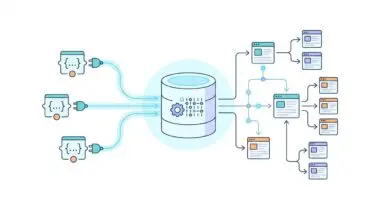
- Real-Time Synchronization: Bypassing traditional crawl delays by pushing WordPress updates directly to search engines via Make.com webhooks.
- Crawl Budget Preservation: Shifting from passive discovery to active payload batching, saving server resources and preventing automated ping storms.
- AI Grounding Integration: Feeding real-time data directly into AI synthesis layers and vector databases for immediate generative search visibility.
Table of Contents
The Invisible Waiting Room
There is an invisible tax levied on every piece of content you publish today: the agonizing, unquantifiable wait for search engine discovery. High-velocity WordPress updates frequently sit in the dark for hours or even days, completely invisible to the platforms that drive user traffic. This creates a massive 11,122-to-1 crawl-to-referral ratio for AI bots that still rely on outdated, traditional discovery methods.
The ultimate architectural solution to this bottleneck is the IndexNow API Real-time Push Protocol. Instead of waiting passively for a search engine crawler to stumble upon your newly published page, this protocol actively alerts the search engines the exact millisecond a change occurs. Think of it like handing an urgent, certified letter directly to the postmaster, rather than dropping it in a mailbox and hoping the mail carrier decides to check it this week.
By shifting from a passive pull model to an active push architecture, you completely bypass the traditional crawling queue. Your digital infrastructure becomes a proactive broadcaster, ensuring that every content update, price change, or new article is immediately injected into the global search ecosystem. This fundamentally changes how your server interacts with the open web.
The Data Behind the Push
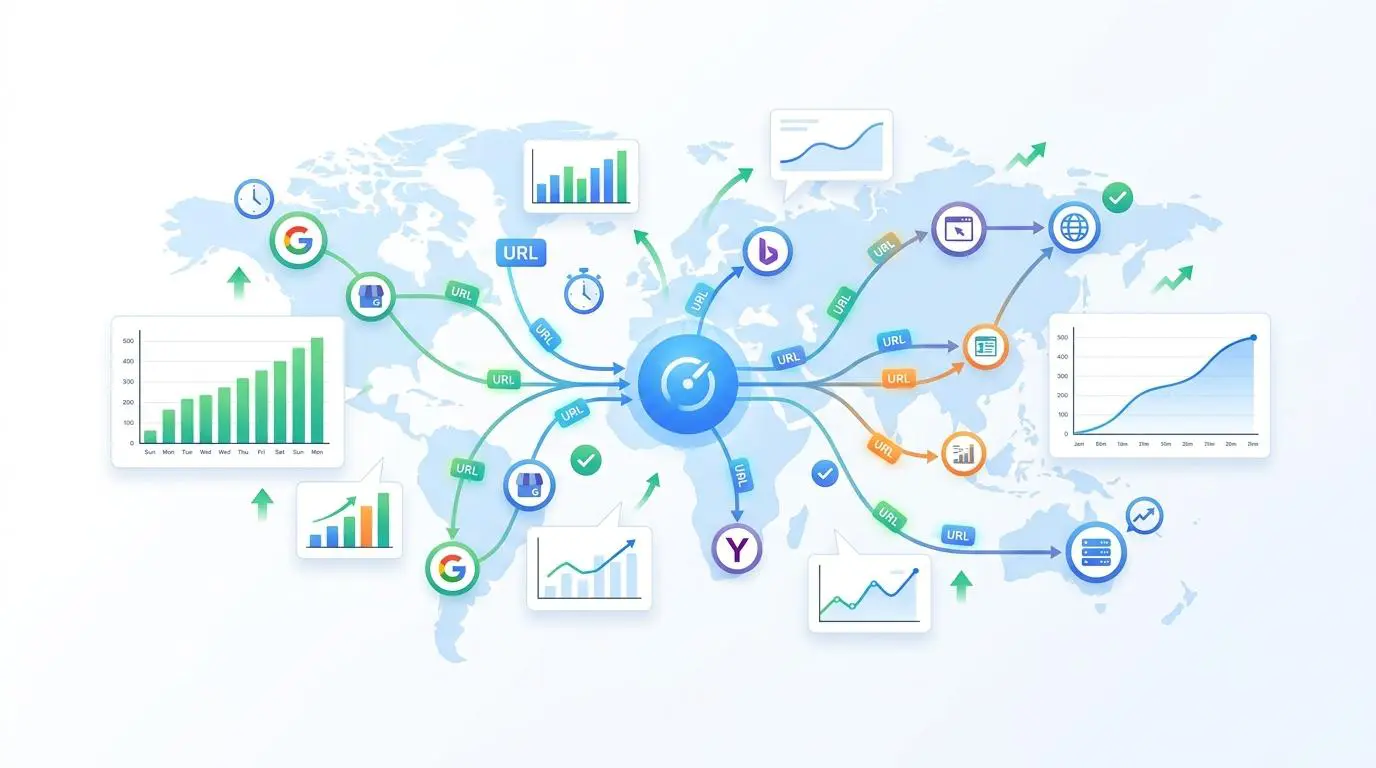
The sheer scale and volume of the modern web have made traditional crawling entirely unsustainable for major search engines. The internet is simply too vast to constantly monitor every single URL for minute changes. As a result, IndexNow processes over 5 billion URLs daily, signaling a permanent and industry-wide shift toward active data pushing.
This staggering adoption rate directly impacts how quickly your fresh content can generate actual user engagement and revenue. The speed of indexation is no longer just a technical metric; it is a competitive advantage. In fact, roughly 22% of all clicked URLs within major search engine grounding API results originated from pages submitted via this real-time protocol, according to recent operational metrics.
For enterprise site owners, this translates into massive operational efficiency at the server level. By explicitly and programmatically telling search engines exactly what has changed, your servers no longer waste precious CPU and memory rendering unchanged pages for wandering, blind bots. You regain control over your server resources while simultaneously achieving faster visibility.
Architecting the Indexing Pipeline

The IndexNow 2.0 protocol empowers websites to ping a single, central endpoint which then automatically propagates the URL across a massive search consortium including Bing, Yandex, Seznam, and Yep. Integrating this powerful protocol with Make.com allows you to leverage HTTP Request modules to POST specific JSON payloads containing your host domain, API key, and the updated urlList.
This automated pipeline acts as a certified digital manifest, instantly broadcasting your content updates to the global search network without manual intervention. However, managing the unique API key verification files at the server root introduces significant real-world friction for technical SEOs. These simple text files are the gatekeepers of the entire indexing process.
These verification files frequently break automated pings across complex staging and production environments. If the file is not served perfectly as plain text with a strict 200 OK HTTP status, the entire indexing pipeline halts immediately. This leaves your critical updates stranded in the pipeline, completely invisible to the search engines waiting for verification.
Taming Webhook Triggers
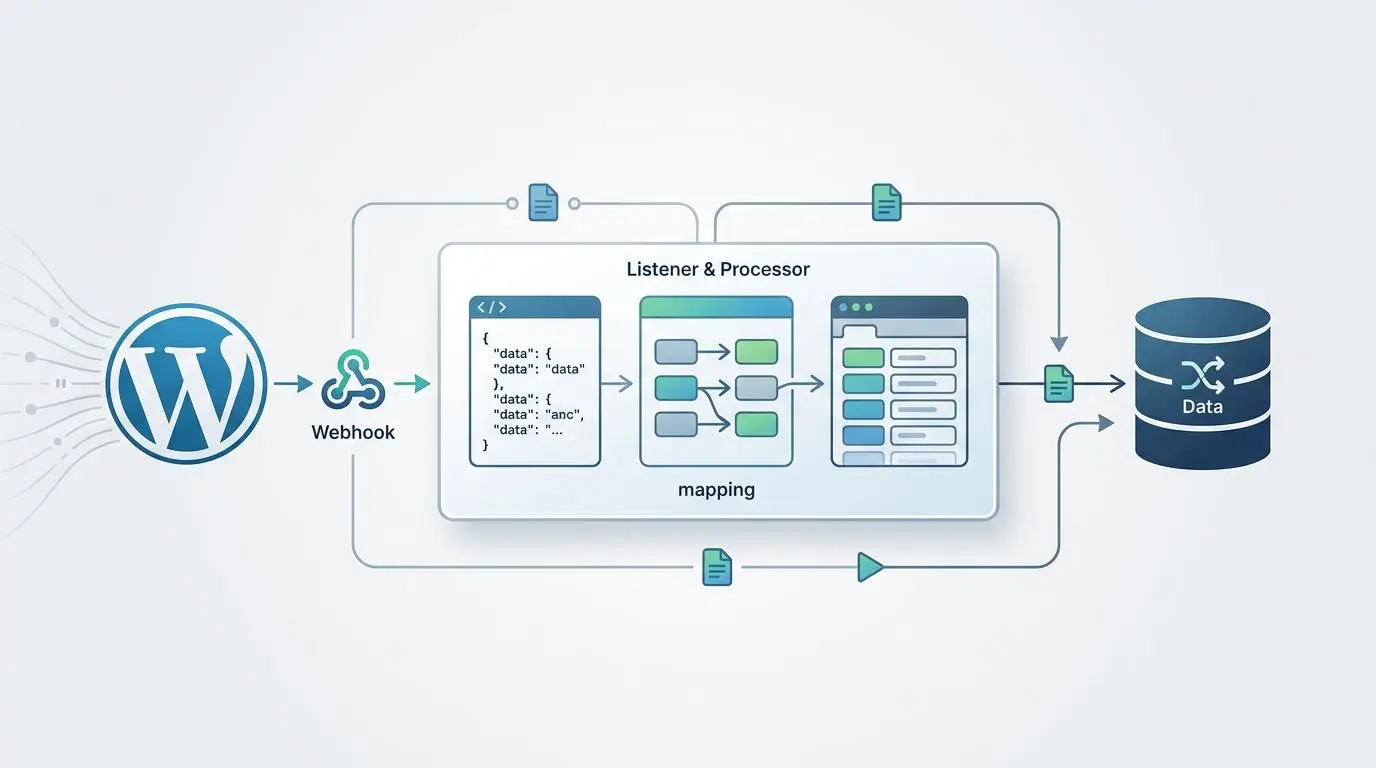
Modern WordPress architectures seamlessly trigger external workflows via the WP Webhooks plugin or native REST API save_post hooks. Make.com captures these instantaneous events via custom Webhook listeners, instantly mapping the permalink field directly from the incoming WordPress payload. The system then formats this raw data to match the strict, required IndexNow API structure.
Yet, a highly common payload mismatch occurs when WordPress post_status changes trigger multiple, overlapping webhooks for a single, minor content update. This happens because WordPress saves revisions, drafts, and autosaves in rapid succession behind the scenes. This redundancy is exactly like ringing a doorbell fifty times for a single package delivery.
Without proper debouncing logic built directly into your Make.com scenario, these redundant pings will trigger temporary HTTP 429 rate limiting from the search engines. This rate limiting acts as a penalty box, temporarily blocking your site from submitting any further updates until the threshold resets. Implementing a delay or a data store check in Make.com ensures only the final published URL is pushed.
Rescuing Your Crawl Budget

Pushing updates proactively drastically reduces your server’s heavy dependency on aggressive discovery crawling by resource-hungry bots like BingBot and ClaudeBot. By explicitly defining what has changed on your site, you can safely serve lower-frequency crawl requests to these automated agents. This architectural shift preserves critical CPU, bandwidth, and memory resources for your actual human users.
However, large-scale programmatic sites often suffer from dangerous ping storms during bulk content updates or automated product imports. When thousands of URLs are pushed simultaneously through the Make.com webhook, search engines will simply ignore the overwhelming requests to protect their own infrastructure. They view this sudden influx as a localized denial of service attack.
To survive bulk updates and maintain indexing integrity, these requests must be intelligently batched into a single urlList payload within your Make.com logic. This is much like loading a massive, organized cargo ship instead of launching thousands of chaotic, tiny canoes into the ocean. Batching ensures your crawl budget is utilized with absolute surgical precision.
Edge Caching and AI Synthesis
While Cloudflare offers native IndexNow integration at the edge, building custom Make.com workflows unlocks incredibly powerful secondary processing capabilities. For example, you can automatically purge the Cloudflare CDN cache via the Cloudflare API immediately after an IndexNow ping is confirmed successful. This synchronization guarantees that the moment a search engine requests the new URL, the edge server delivers the freshest possible content.
By 2026, ChatGPT’s Shopping Assistant began using Bing’s IndexNow-indexed content as its primary source for real-time product availability and price changes. This evolution transformed the protocol from a simple search utility into a critical grounding API for commercial AI synthesis. Your real-time pings are now feeding directly into the brains of conversational AI models.
Despite this incredible speed, there is a distinct latency gap between the IndexNow submission and actual AI synthesis layer availability. A page may be technically indexed by the search engine, but it will not be citable by generative search models for another fifteen to thirty minutes. This delay is due to the massive computational requirements of generating new vector embeddings for the AI’s database.
The Dawn of Predictive Indexing
By 2027, the technical SEO industry will pivot entirely to Predictive Indexing Agents operating within advanced automation platforms like Make.com. These intelligent agents will analyze historical WordPress update patterns to pre-reserve indexing bandwidth for high-authority URLs before a user even clicks publish. We anticipate the total consolidation of IndexNow with AI-native Retrieval-Augmented Generation endpoints.
In this near future, a single automated ping will not only update traditional search engine indexes but will simultaneously refresh the private vector databases of major LLM agents like GPT-5 and Claude 4. The concept of waiting for discovery will be entirely eradicated, replaced by instantaneous, programmatic knowledge synchronization across the entire artificial intelligence ecosystem.
Navigating the intersection of technical SEO, programmatic architecture, and workflow automation requires a sharp strategy. To future-proof your site’s architecture and scale with precision, connect with Andres at Andres SEO Expert.
Frequently Asked Questions
What is the IndexNow protocol and why is it important for WordPress?
IndexNow is a real-time push protocol that allows WordPress sites to instantly notify search engines like Bing and Yandex when content is created or updated. By shifting from a passive pull model to an active push architecture, it eliminates discovery delays and ensures content is indexed within milliseconds rather than days.
How does real-time indexing impact server performance and crawl budget?
Implementing IndexNow reduces the need for aggressive bot crawling. By explicitly telling search engines which URLs have changed, servers avoid wasting CPU and memory resources rendering unchanged pages for automated agents, preserving critical infrastructure for human users.
Can Make.com be used to automate IndexNow submissions?
Yes, Make.com can be used to build sophisticated indexing pipelines. It captures WordPress webhook triggers and uses HTTP modules to POST JSON payloads to IndexNow endpoints, allowing for advanced secondary processing like debouncing, batching, and synchronized CDN cache purging.
What causes 429 rate-limiting errors during automated IndexNow pings?
Rate limiting occurs when a site sends redundant pings or excessive requests, often triggered by WordPress autosaves or bulk content imports. To prevent this, developers implement debouncing logic or batch multiple URLs into a single payload manifest within their automation workflows.
How does IndexNow influence AI search and LLM grounding?
Modern AI assistants use search engine grounding APIs to access real-time data. IndexNow serves as a primary feed for these models, ensuring that updated information like product availability and price changes is citable by generative search models shortly after the content is published.
Why are API key verification files critical for automated indexing?
Verification files are plain text gatekeepers at the server root that prove ownership. If these files are missing, incorrectly formatted, or fail to return a strict 200 OK status, the search engine will reject the pings, leaving critical content updates stranded in the indexing pipeline.