Key Points
- Instant Deployment: Launch fully configured developer environments in under 15 minutes, bypassing physical hardware shipping delays entirely.
- Dynamic Security: Enforce strict data sovereignty automatically by terminating sessions if a developer moves outside approved legal jurisdictions.
- Cost Optimization: Reduce Total Cost of Ownership by up to 40% using AI-driven predictive resource allocation and ephemeral cloud workspaces.
Table of Contents
- The Heavy Cost of Manual Onboarding
- The Financial Reality of Virtual Desktops
- Bypassing the Global Logistics Bottleneck
- Smart Scaling with Predictive AI
- Enforcing Borders in a Borderless World
- Reclaiming Capital from Idle Hardware
- Navigating Latency and Automation Traps
- The Next Era of Connected Ecosystems
- Building Ephemeral Workspaces
The Heavy Cost of Manual Onboarding
Every time a new developer joins your global team, an invisible tax drains your budget while they sit idle waiting for a secure laptop. This manual onboarding process is a logistical nightmare of tracking shipments and configuring local environments. It is a slow, fragile system that punishes fast-moving tech companies.
Instead of shipping physical machines across borders, forward-thinking teams are changing the paradigm entirely. They are treating workspaces as code, delivering high-performance environments through the cloud in a matter of minutes. This eliminates the friction of global logistics and instantly connects talent to the tools they need.
The ultimate solution to this operational drag is Automated Geo-fenced VDI Provisioning. By tying virtual desktop infrastructure directly to a developer’s real-time physical location, companies can instantly deploy secure workstations anywhere on earth. It is like teleporting a fully loaded corporate office directly to a remote worker’s desk.
The Financial Reality of Virtual Desktops
Market Intelligence & Data
TCO Reduction
Organizations moving to cloud-native VDI architectures report significant savings on management and infrastructure costs according to Cybele Software 2025.
North American Market Size
The virtual desktop infrastructure market in North America reached this valuation in 2026 as remote work became a permanent corporate fixture, per Fortune Business Insights.
Security Threat Perception
Nearly all IT specialists surveyed in 2026 believe that the shift to remote and hybrid work has directly increased organizational cyber threats, according to ElectroIQ.
Remote Breach Premium
Data breaches involving remote workers cost firms over a million dollars more than in-office incidents due to containment delays, based on 2024-2026 IBM and SentinelOne data.
Shedding the physical hardware lifecycle translates directly into a massive 25-40% reduction in Total Cost of Ownership. By shifting to cloud-native VDI architectures, organizations no longer pay for stranded capital sitting in closets. Elastic pricing means you only pay for the compute power your developers actively consume.
This financial efficiency is driving a permanent structural shift, pushing the North American VDI market to a massive $7.35 billion valuation in 2026. Virtual infrastructure is no longer a temporary remote work bandage. It is the foundational architecture for modern enterprise scaling, providing borderless access to corporate resources.
However, this borderless access comes with intense risk, reflected by the 92% of IT specialists who view remote work as a direct amplifier of cyber threats. Unvetted home networks and public Wi-Fi act as open doors for malicious actors looking to compromise source code. This wild west of remote connectivity is exactly why engineering teams are urgently deploying cryptographically verifiable geofencing for data sovereignty to lock down intellectual property.
When those defenses fail, the financial fallout is devastating. Incident containment in distributed networks is notoriously slow and complex. In fact, the remote work factor increased data breach costs by $1.07 million compared to strictly in-office incidents. This proves that automated, location-aware security is a financial necessity.
Bypassing the Global Logistics Bottleneck
Global supply chain volatility in 2026 has turned the simple act of issuing a company laptop into a major operational bottleneck. Shipping hardware to international developers now routinely takes 14 to 21 days, leaving highly paid engineers waiting. This delay stalls critical project timelines and creates a frustrating first impression for new hires.
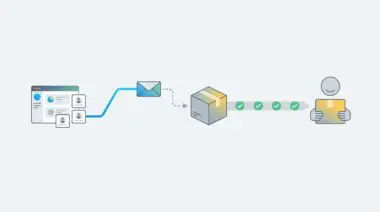
Automated VDI solutions completely bypass this physical supply chain. Tools like Microsoft Azure Dev Center and Omnissa Horizon utilize infrastructure-as-code to spin up fully configured environments in under 15 minutes. A developer simply logs into a secure portal from their personal device and instantly accesses a pristine workspace.
This workflow transforms onboarding from a multi-week logistical headache into a seamless, zero-touch automation. By routing user provisioning through tools like Zapier or Make, HR systems can automatically trigger the creation of a VDI the moment an employment contract is signed.
Smart Scaling with Predictive AI
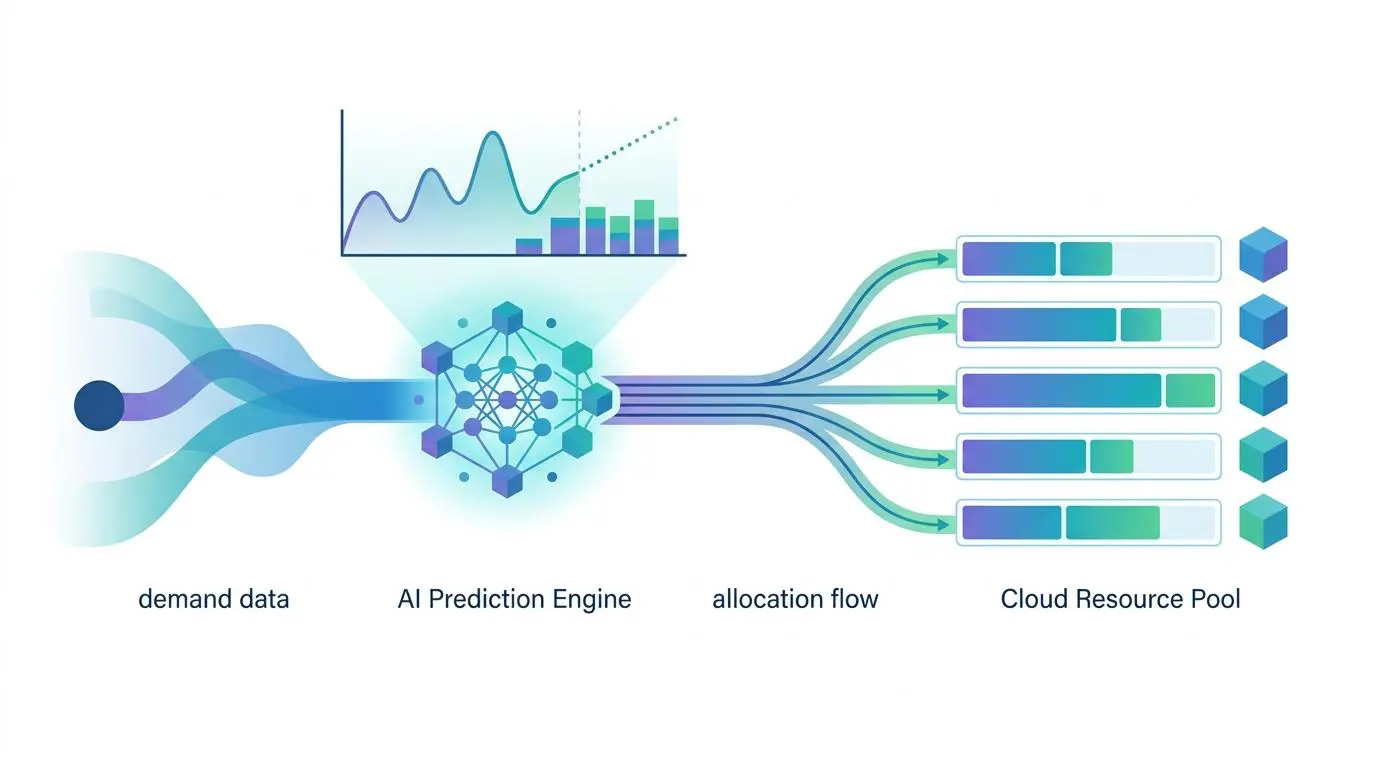
Historically, static VDI instances presented a lose-lose scenario for IT budgets. Companies either over-provisioned resources, wasting massive amounts of money on idle compute, or they under-provisioned, leaving developers frustrated with severe lag. Balancing this equation manually across a global team is virtually impossible.
Modern 2026 architectures solve this by integrating AI-driven predictive resource allocation. Using orchestration tools like Pulumi and Crossplane, the infrastructure dynamically scales its performance based on the real-time complexity of the developer’s tasks. If an engineer initiates a heavy machine learning compilation, the AI agent instantly routes more RAM and CPU to that specific virtual desktop.
Once the intensive task is complete, the automation scales the resources back down to baseline levels. This ensures developers always have the horsepower they need without the company paying for unused capacity during downtime.
Enforcing Borders in a Borderless World
As developers embrace the digital nomad lifestyle, companies face massive legal and compliance risks. Accessing sensitive source code or customer data from high-risk or unauthorized global regions can trigger severe GDPR penalties. Traditional VPNs simply cannot guarantee the physical location of the user accessing the data.
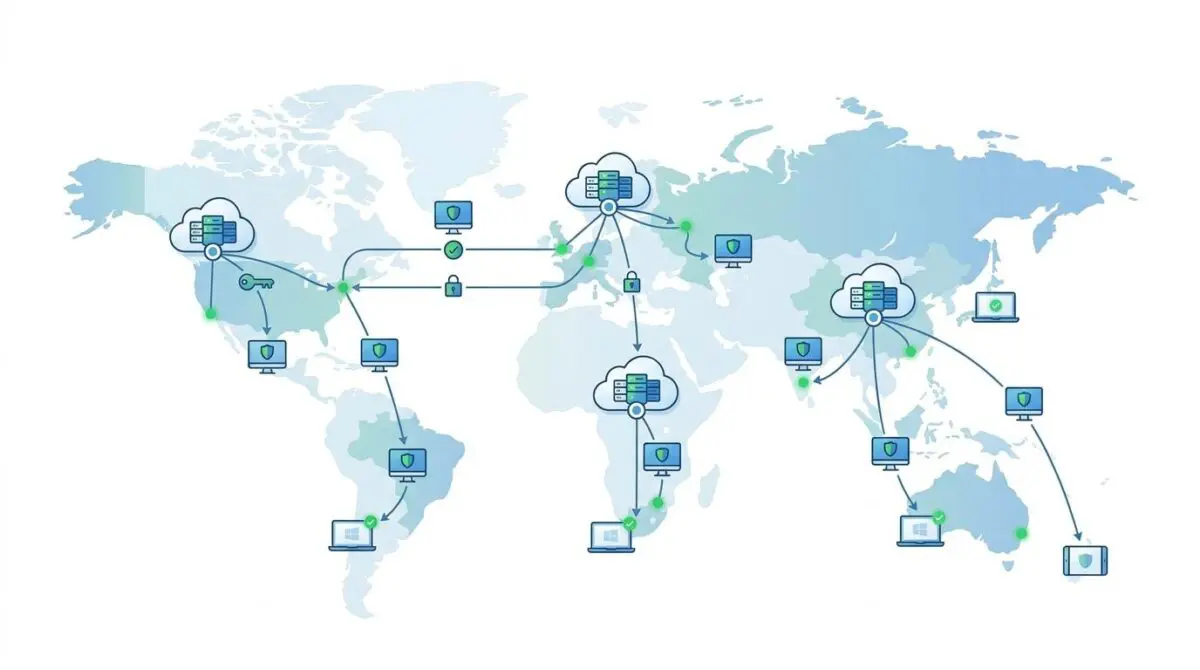
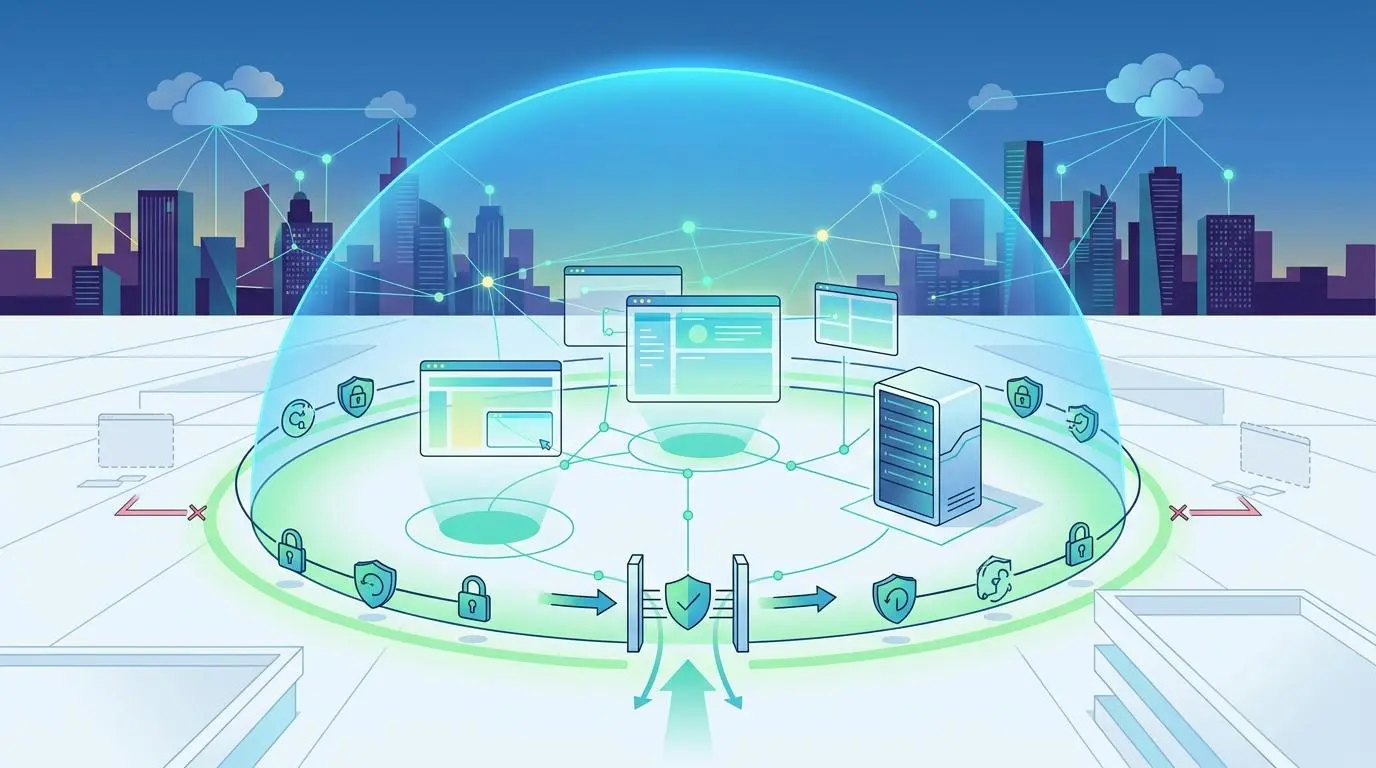
Automated Geo-fenced VDI Provisioning acts as a digital drawbridge, enforcing strict data sovereignty through real-time location tracking. By utilizing Zero Trust Network Access protocols, the system continuously monitors the physical IP address of the developer. If a user crosses into an unauthorized legal jurisdiction, the automation instantly terminates the session and locks the virtual environment.
This ensures that sensitive intellectual property never legally leaves approved borders, even if the employee does. It provides peace of mind for compliance officers while still offering flexibility for the engineering team.
Reclaiming Capital from Idle Hardware
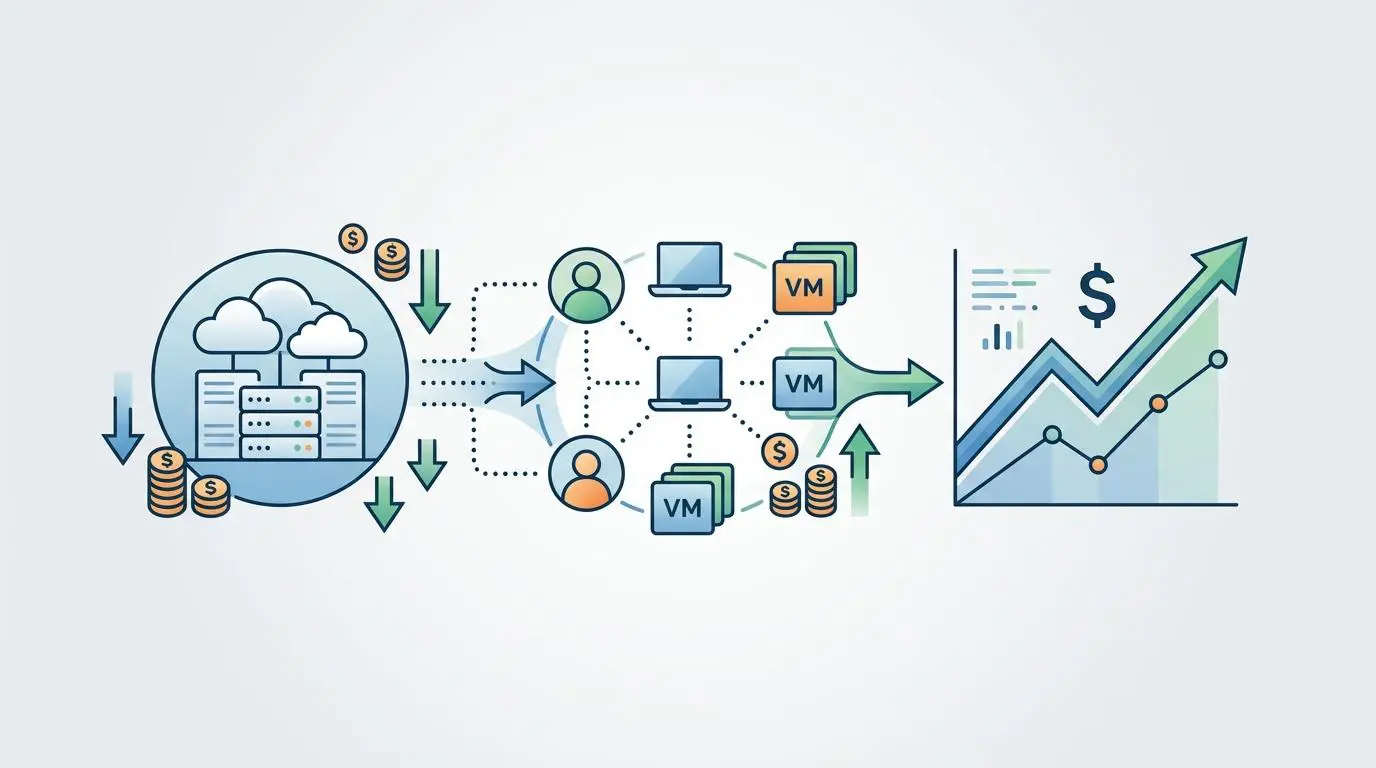
Maintaining a global fleet of physical laptops creates massive overhead and traps capital in rapidly depreciating assets. Every time a developer leaves the company, that expensive hardware must be shipped back, wiped, and stored. This creates a graveyard of unused technology that drains enterprise resources.
The shift to automated VDI is becoming a critical financial maneuver, especially given recent market shocks. In March 2026, major hardware manufacturers implemented price hikes of up to 17% due to AI-driven memory shortages. This makes the shift to automated VDI a financial necessity rather than just an operational choice.
By virtualizing the workspace, companies transition from a heavy capital expenditure model to a lean operational expenditure model. You only pay for the active compute time, completely eliminating the financial burden of hardware maintenance and replacement cycles.
Navigating Latency and Automation Traps
Despite the massive benefits, deploying automated VDIs is not without its hurdles. Fragmented automation tools can quickly turn a streamlined workflow into a tangled mess of broken API calls and failed provisioning sequences. Industry experts recently warned of poorly integrated AI agents creating more noise and system errors than actual productivity.
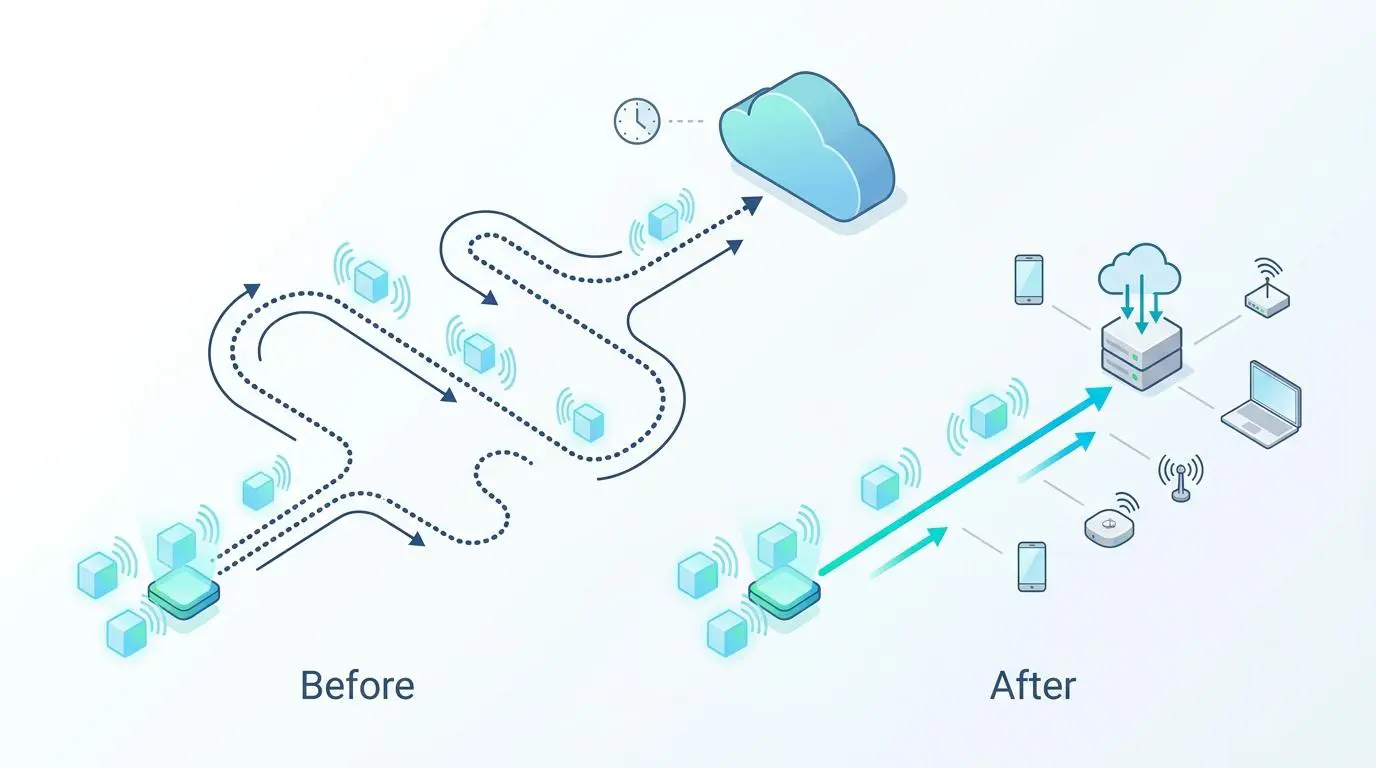
Furthermore, network latency remains the silent killer of virtual desktop adoption. If the delay between a developer typing a keystroke and seeing it on screen exceeds 40ms, the environment feels sluggish and unusable. This latency is a primary cause for developer abandonment, forcing them back to unsecure local environments.
To solve this, automation architects must design workflows that prioritize edge computing. Provisioning logic must automatically route the VDI instance to the data center geographically closest to the developer’s current location, ensuring a crisp, responsive coding experience.
The Next Era of Connected Ecosystems
The concept of a static office is rapidly evolving into what industry experts call Workplaces as Connected Ecosystems. As remote workers travel, relying on fixed data center locations causes severe performance degradation. The future of VDI relies on fluid, nomadic infrastructure.
By late 2026, automated workflows will seamlessly migrate active VDI snapshots between global edge nodes in real-time. If a developer boards a flight in New York and lands in London, the automation will detect the location change and instantly move their virtual desktop to a UK server.
This ensures that sub-10ms latency is maintained regardless of where the employee chooses to work. The infrastructure actively follows the talent, adapting to their physical reality without any manual intervention.
Building Ephemeral Workspaces
The ultimate destination for remote engineering is the concept of Ephemeral Function-based Workspaces. In this near-future paradigm, the virtual desktop does not exist as a persistent entity. Instead, it is spun up instantly via 5G-enabled edge nodes only during active code execution, and destroyed the moment the developer logs off.
This zero-waste approach represents the pinnacle of operational efficiency and security. There is no idle infrastructure to hack, and no wasted compute cycles to pay for. It is a frictionless, invisible layer of technology that empowers developers to build the future from anywhere on the globe.
Navigating the intersection of technology, workflows, and operational efficiency requires a sharp strategy. To future-proof your business architecture and scale with precision, connect with Andres at Andres SEO Expert.
Frequently Asked Questions
What is Automated Geo-fenced VDI Provisioning?
Automated Geo-fenced VDI Provisioning is a cloud-native security and deployment architecture that delivers high-performance virtual workstations to developers based on their real-time physical location, ensuring immediate productivity and data sovereignty.
How much can companies save by switching to cloud-native VDI?
Organizations moving to automated VDI architectures report a 25-40% reduction in Total Cost of Ownership (TCO) by eliminating hardware maintenance, depreciating assets, and the logistical overhead of shipping physical machines.
Why is geofencing necessary for remote developer teams?
Geofencing uses real-time location tracking and Zero Trust protocols to enforce legal and compliance borders. If a developer enters an unauthorized jurisdiction, the system automatically terminates the session to protect sensitive source code from legal exposure.
How does automated VDI speed up the developer onboarding process?
Automated VDI bypasses the 14-21 day global logistics bottleneck associated with hardware shipments. Instead, HR-triggered automations can provision a fully configured, secure workspace in under 15 minutes.
How does AI improve the performance of virtual desktops?
Modern VDI systems use predictive AI and orchestration tools like Pulumi to dynamically scale resources. This ensures developers have optimal CPU and RAM for intensive tasks like machine learning compilations without over-paying for idle compute capacity.
What is the financial impact of remote work on data breaches?
Data breaches involving remote workers cost firms an average of $1.07 million more than in-office incidents. This ‘remote breach premium’ is driven by the complexity of containing threats across unvetted home networks and public Wi-Fi.