Key Points
- Service Account Rotation: Utilize n8n task runners to rotate Google Cloud Service Accounts, bypassing standard query limits to monitor thousands of URLs daily.
- Automated Traffic Throttling: Dynamically adjust robots.txt and sitemap priorities based on real-time API alerts to maintain good web citizenship and server health.
- LLM Quality Scoring: Route unindexed page HTML through Anthropic Claude 3.5 to automatically detect and resolve commodity content patterns lacking unique information gain.
Table of Contents
The Invisible Cost of Ignored Pages
There is an invisible tax levied on every large-scale website today, paid entirely in wasted crawl budget and lost revenue from unindexed pages.
Large sites are quietly bleeding organic potential because their newest, most critical pages are being discovered by search engines but left to gather dust in the crawling queue.
This silent failure creates a massive gap between what you publish and what actually drives traffic.
To stop this bleed, we must shift from passive observation to aggressive, programmatic intervention.
The Google Search Console URL Inspection API serves as the ultimate architectural solution to this problem.
By treating indexation as a data pipeline rather than a waiting game, we can force search engines to process our most valuable content on our schedule.
When you integrate this API with powerful automation platforms like n8n, you stop relying on hope.
Instead, you build a deterministic machine that tracks, diagnoses, and resolves indexation roadblocks before they impact your bottom line.
Decoding the Data Behind the Crawl Queue
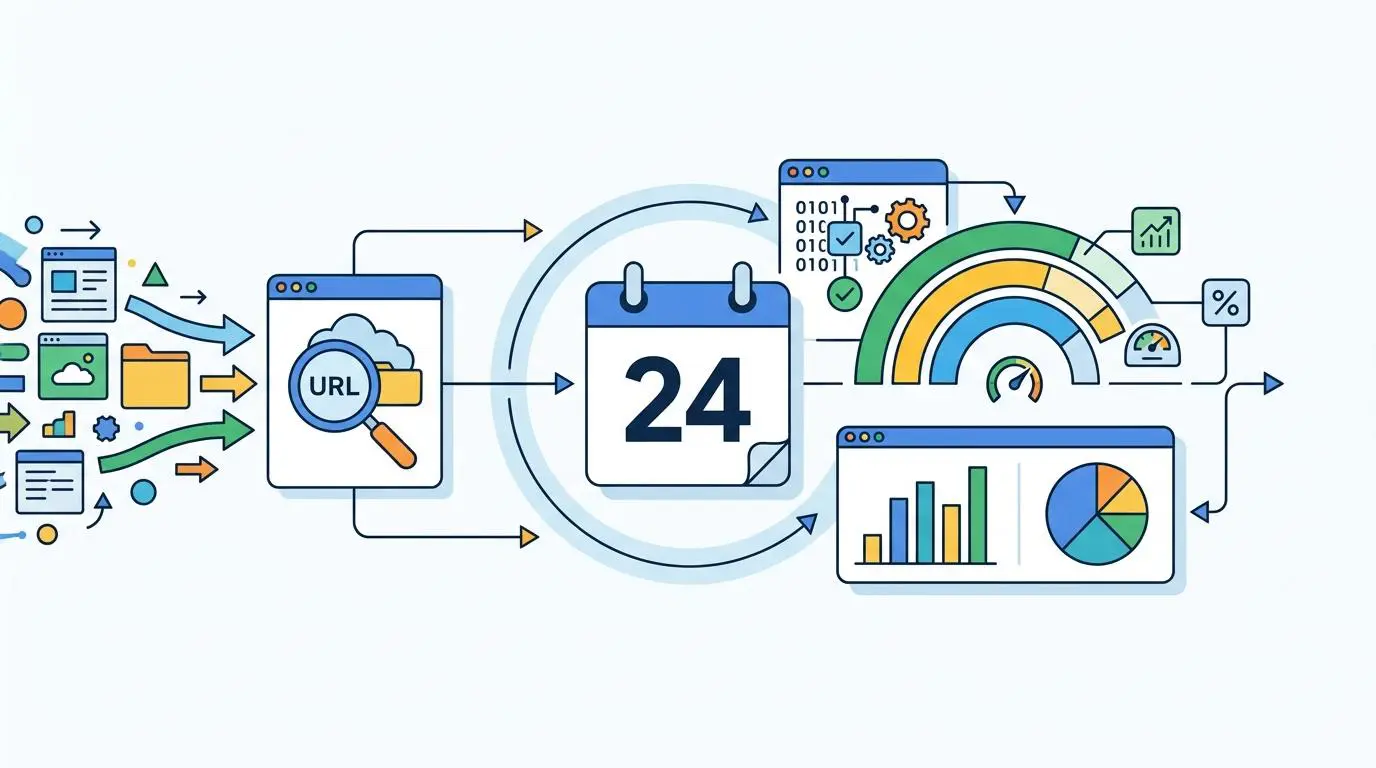
Scaling your indexation efforts requires a deep understanding of the mathematical constraints placed on your website.
The 2,000 daily query limit per property remains the critical bottleneck for programmatic SEO monitoring as outlined in recent Google Developer documentation.
This strict quota forces a tough strategic trade-off for technical SEOs managing massive domains.
Webmasters are constantly forced to choose between monitoring large-scale URL discovery and the immediate identification of the dreaded “Discovered – currently not indexed” status.
This specific error state is no longer just a technical glitch.
It now serves as Google’s primary quality gate, actively filtering out redundant, AI-generated commodity content from the search results.
However, when you successfully engineer your way around these bottlenecks, the competitive advantage is undeniable.
Properly structured programmatic pages index 60% faster than manual entries when utilizing automated API discovery signals.
According to Marketing Enigma AI’s 2026 report, bridging the gap between discovery and indexation is the single highest-ROI activity for enterprise sites today.
Architecting the Automated Discovery Engine
Building a resilient SEO infrastructure means moving beyond manual checks and embracing programmatic workflows.
Let us explore the core architectural pillars required to automate your indexation pipeline using n8n.
Engineering Closed-Loop Indexing Pipelines
Think of your website as a massive, bustling airport where flights are scheduled but never assigned a runway.
The planes exist, but they are trapped indefinitely on the tarmac.
Large sites often enter this exact discovery death loop where new URLs are found by search bots but never crawled due to a lack of a prioritized feedback mechanism to the edge.
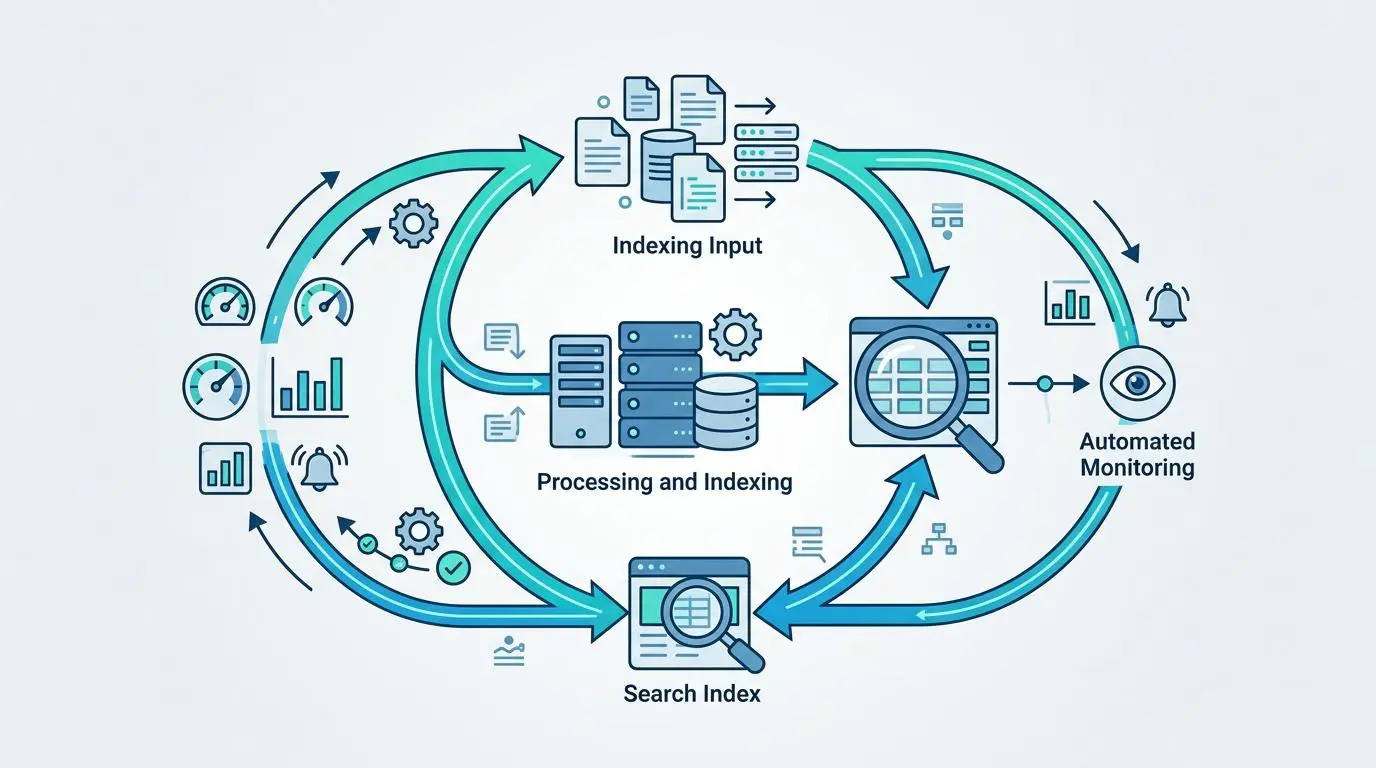
To build a runway, we utilize n8n to connect the GSC URL Inspection API directly with IndexNow endpoints.
This creates a closed-loop monitoring system that constantly listens for stalled pages.
As soon as a page is flagged as ignored, the automation immediately pings the edge networks to re-evaluate the URL.
This continuous feedback loop ensures that your high-priority pages are never left waiting.
By automatically routing fresh signals back to the search engines, you force the algorithm to acknowledge and process your most critical digital assets.
Throttling Server Load for Good Web Citizenship
Search engines operate on strict budgets, and they severely penalize websites that waste their time.
Googlebot’s 2026 policy of good web citizenship dictates that slow servers cause immediate spikes in ignored pages.
If your infrastructure struggles to respond quickly, the crawler simply abandons the attempt and moves on.
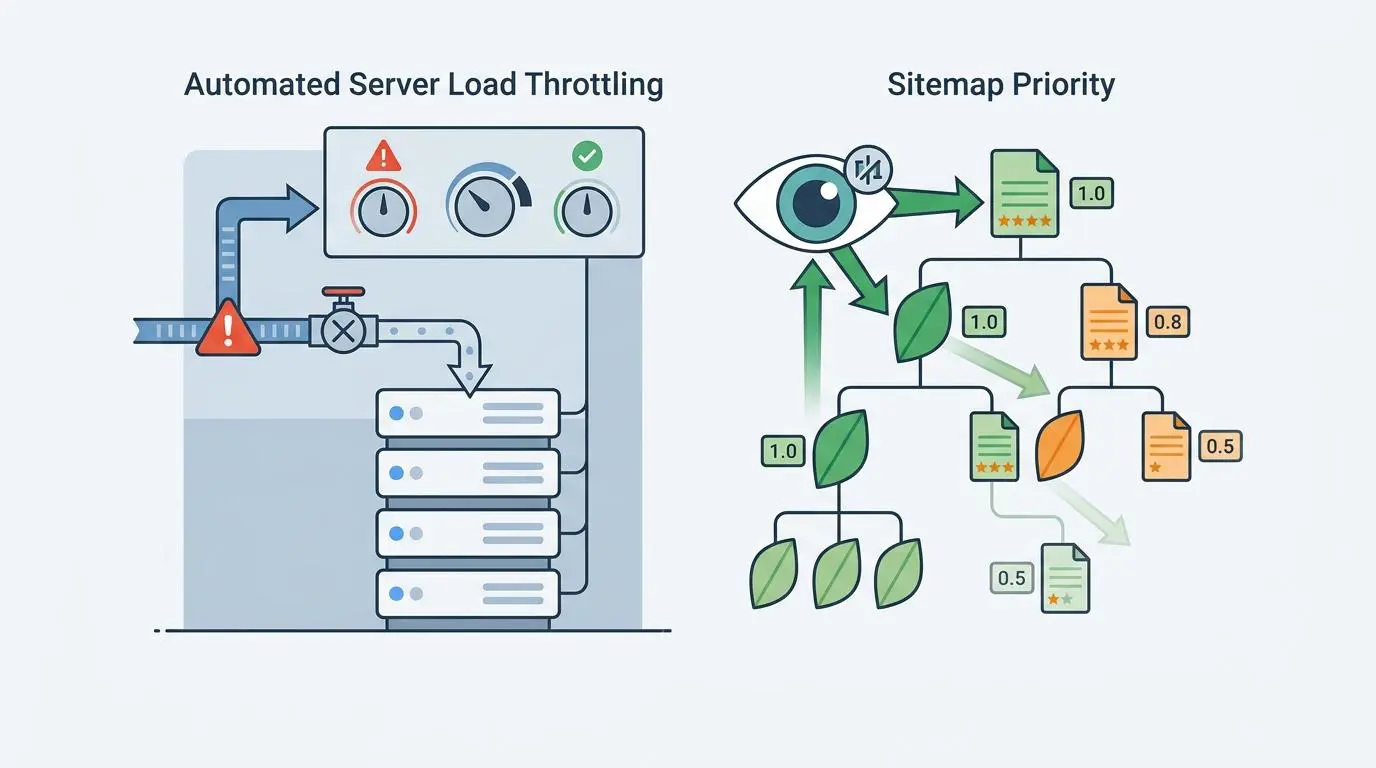
To prevent this, we must implement automated server-load throttling.
By using n8n to monitor real-time API alerts, we can dynamically adjust our robots.txt directives and sitemap priorities on the fly.
When the server approaches maximum capacity, the automation temporarily restricts crawler access to low-value sections of the site.
Think of this like a bouncer at an exclusive club, carefully managing the line at the door to ensure the VIPs get immediate entry.
By protecting your server’s resources, you guarantee that search bots always experience lightning-fast load times when crawling your money pages.
Orchestrating Service Accounts at Scale
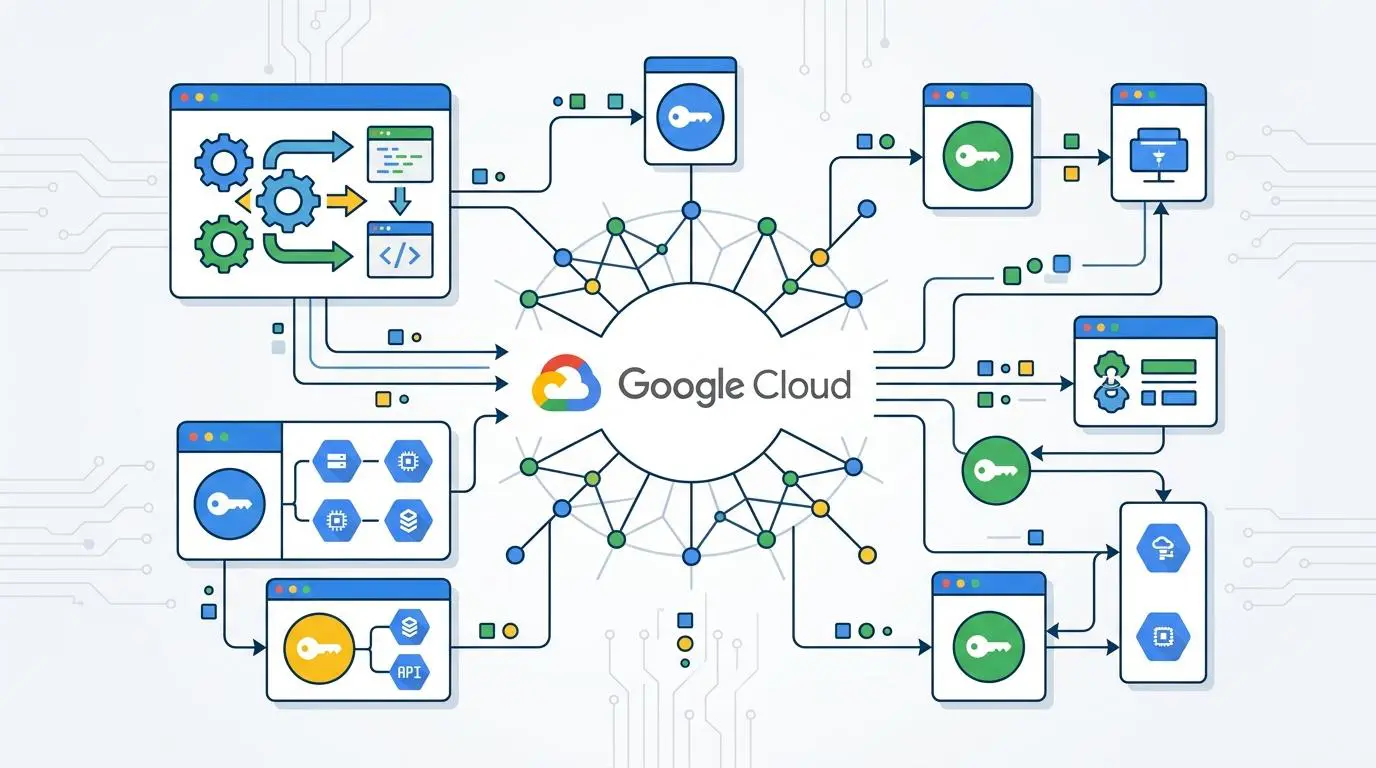
Relying on the manual Search Console interface is a fool’s errand for enterprise domains.
The manual interface is capped at approximately 12 requests per day, making it entirely impossible to diagnose indexing failures for large product catalogs.
You simply cannot fix what you cannot measure.
The solution is the programmatic orchestration of n8n Task Runners.
By configuring these runners to rotate multiple Google Cloud Service Accounts, you can entirely bypass the single-user API limit.
This architectural leap allows you to monitor over 10,000 URLs daily without ever hitting a quota wall.
Imagine this process as a relay race.
When one service account reaches its exhaustion point, the baton is seamlessly passed to the next runner.
This ensures your monitoring marathon never stops, providing total visibility into your site’s technical health at all times.
Deploying LLMs as Content Quality Gatekeepers
In June 2026, Google representatives confirmed that the “Discovered – currently not indexed” status has evolved into a soft quality filter for commodity content.
This means technical fixes are now secondary to proving unique information gain.
If your page does not add net-new value to the internet, it will not be indexed.
To combat this, we pass the HTML of ignored pages directly to Anthropic Claude 3.5 nodes within our n8n workflows.
The LLM acts as a ruthless editor-in-chief, scanning the text to detect the exact commodity content patterns that trigger Google’s selective indexing filters.
By quantifying information gain through automated competitive analysis, we can flag low-quality pages before they permanently damage our domain’s topical authority.
The automation then sends an alert to the content team, detailing exactly what unique insights must be added to force indexation.
The 2027 Shift to Agentic Indexing
The days of passively waiting for search engines to crawl your site are rapidly coming to an end.
By 2027, the industry will pivot entirely toward Agentic Indexing.
We will see Google Search Console move away from a pull-based API toward a push-based Webhook architecture, providing real-time quality-score feedback the moment a URL is evaluated.
This shift will transform SEO from a reactive discipline into a proactive engineering challenge.
Websites that fail to build automated, responsive architectures will simply disappear from the index.
The future belongs to those who control their own discovery pipelines.
Navigating the intersection of technical SEO, programmatic architecture, and workflow automation requires a sharp strategy.
To future-proof your site’s architecture and scale with precision, connect with Andres at Andres SEO Expert.
Frequently Asked Questions
What is the daily query limit for the Google Search Console URL Inspection API?
As of June 2026, the Google Search Console URL Inspection API maintains a strict limit of 2,000 daily queries per property.
For large-scale sites, this necessitates strategic trade-offs between monitoring URL discovery and identifying specific indexing errors.
How can enterprise sites bypass GSC API request limits?
Enterprise domains can bypass standard API quotas by orchestrating programmatic Task Runners using platforms like n8n to rotate multiple Google Cloud Service Accounts.
This architectural approach allows for the monitoring of over 10,000 URLs daily by distributing the request load across the account relay.
What does the “Discovered – currently not indexed” status mean in 2026?
In the current search landscape, “Discovered – currently not indexed” has evolved into a soft quality gate.
It typically signals that search bots have found the URL but have filtered it out as commodity content that lacks significant unique information gain compared to existing indexed pages.
How does server load impact search engine crawl budget?
Search engines prioritize good web citizenship, meaning slow or overtaxed servers can cause immediate spikes in ignored pages.
Implementing automated server-load throttling via n8n ensures that crawlers experience lightning-fast load times, protecting your crawl budget for high-priority pages.
How can LLMs like Claude 3.5 be used to improve indexation?
LLMs can be integrated into automated n8n workflows to act as content quality gatekeepers.
By analyzing the HTML of ignored pages, LLMs can detect commodity patterns and provide specific recommendations for increasing unique information gain to satisfy modern indexing filters.
What is Agentic Indexing and why is it important for the future of SEO?
Agentic Indexing represents a shift from a pull-based API model to a proactive, push-based Webhook architecture.
This transition will allow search engines to provide real-time quality-score feedback, transforming SEO into a proactive engineering discipline focused on discovery pipelines.