Key Points
- Self-Referencing Canonicals: Force localized URLs to self-reference to prevent Google from collapsing regional variants into a single global master page.
- Entity Differentiation: Inject region-specific Schema.org markup and localized metadata to lower similarity scores beneath Google’s deduplication threshold.
- Edge Cache Fragmentation: Ensure CDN configurations fragment HTML caching by Accept-Language headers to prevent serving stale cross-regional canonicals to Googlebot.
Table of Contents
The Core Conflict: Localized Deduplication Anomalies
Recent technical SEO studies indicate that nearly 28% of international websites experience localized canonicalization errors. This directly correlates with a massive loss in potential regional traffic as Google consolidates diverse landing pages into a single global result. When configuring localized architectures, search engines must understand that regional variations are distinct entities rather than mere duplicates.
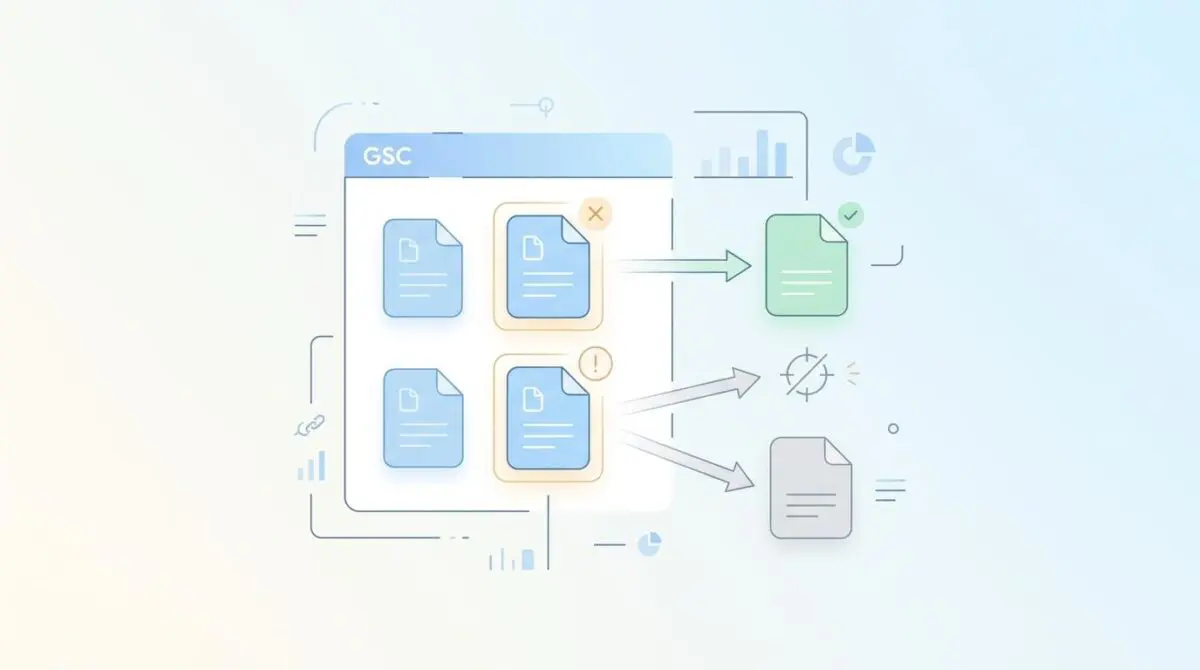
The ‘Duplicate, Google chose different canonical than user’ error occurs when Google’s indexing algorithm disregards your specified canonical tag. Instead, it selects a completely different URL as the authoritative version. In localized SEO, Google often views regional variations like en-US and en-GB as near-identical duplicates.
This creates a severe conflict where Google consolidates indexing signals into a single winner URL. Consequently, it effectively hides the other regional versions from their respective search results. The impact on crawl budget is massive, as Googlebot repeatedly crawls these variants only to discard them from the index.
From a Generative Engine Optimization perspective, this error is catastrophic. It prevents AI-driven search agents from retrieving region-specific data such as localized pricing, availability, or legal disclaimers. This ultimately leads to the hallucination of incorrect regional information for the end-user.
Diagnostic Checkpoints & Root Causes
This canonicalization error is rarely a simple tag mismatch. It is usually a deep desynchronization across the server, edge, or application layers.
Diagnostic Checkpoints
High Content Similarity Threshold
Content similarity score exceeds the technical deduplication threshold.
Conflicting Hreflang and Canonical Signals
Conflicting regional signals cause Google to override user canonicals.
Internal Linking Power Imbalance
Disproportionate internal link equity favors the primary language version.
Rendering and JavaScript Injection Delays
Metadata injection delays lead to indexing of raw HTML.
Similarity Thresholds and Signal Conflicts
Google’s deduplication engine uses MinHash or SimHash algorithms to compare page similarity. If the difference between localized pages is only minor, the similarity score remains above the deduplication threshold. This leads Google to consolidate the pages regardless of your declared tags.
Furthermore, conflicting signals easily trigger the Google Search Console ‘Duplicate, Google chose different canonical than user’ error. If a page uses hreflang to point to regional variants but the canonical tag points to a central master page, the signals conflict. Google will bypass your directives and default to its own canonical choice.
Internal linking imbalances also play a critical role. If the primary version of a page has significantly more internal links than the localized version, Google perceives the primary version as the true canonical. This starves localized subdirectories of link equity and forces unwanted deduplication.
The Engineering Resolution Roadmap
Resolving this requires a systematic approach to technical differentiation and signal alignment. You must force the search engine to recognize the unique value of each regional node.
Engineering Resolution Roadmap
Enforce Self-Referencing Canonicals
Audit all localized pages to ensure that the ‘rel=canonical’ tag points to the URL itself, not to a ‘master’ or ‘global’ version. For WordPress, use a filter in functions.php to force the canonical to match the current permalink for all non-primary languages.
Inject Regional Entity Differentiation
Increase the ‘delta’ between pages by injecting regional-specific Schema.org markup (PostalAddress, Currency), local phone numbers, and unique regional headers. This lowers the similarity score and signals to Google that the pages serve distinct user intents.
Validate Hreflang Cluster Bidirectionality
Every page in a localized cluster must link to every other page and itself using hreflang. Use a tool to verify that the ‘x-default’ is set and that there are no ‘return tag’ errors, which often cause Google to fall back to its own canonical logic.
Audit Internal Link Architecture
Adjust the WordPress menu logic to ensure that visitors (and bots) on the localized site primarily see internal links to other localized pages, balancing the link equity across the regional cluster.
Contextualizing the Architecture Fix
Every page in a localized cluster must link to every other page and itself using bidirectional hreflang attributes. Missing return tags will immediately break the cluster logic. Implementing international SEO and hreflang implementation best practices ensures Google maps the regional entity correctly.
You must also increase the delta between localized pages by injecting regional-specific Schema.org markup. Adding distinct PostalAddress, Currency, and local phone numbers lowers the similarity score. This signals to Google that the pages serve distinct, non-overlapping user intents.
Resolution Execution: WordPress Canonical Override
In many WordPress environments utilizing translation plugins, canonical tags are improperly mapped to the default language. This requires a programmatic override at the application layer.
Fixing via WordPress PHP
By hooking into the SEO plugin’s canonical generation sequence, we can force the system to output a self-referencing canonical for the current permalink. This bypasses the flawed global canonicalization logic.
add_filter('wpseo_canonical', 'fix_localized_canonicals'); function fix_localized_canonicals($canonical) { if (is_singular()) { return get_permalink(); } return $canonical; }Deploy this code via a custom functionality plugin or a child theme. Ensure that you flush the application cache immediately after deployment to propagate the new HTTP headers and HTML tags.
Validation Protocol & Edge Cases
Once the application layer is patched, you must verify that Googlebot can parse the updated directives without interference from middleware.
Validation Protocol
- Verify detected ‘User-declared canonical’ via GSC Live Test tool.
- Match server-side Link headers with on-page tags via curl -I.
- Audit localized metadata rendering via Google Rich Result Test.
Edge Caching and CDN Anomalies
In a Headless WordPress environment using a CDN like Varnish or Cloudflare, the edge layer might be configured to cache everything, including the HTML. If the cache is not fragmented by country or language headers, critical errors occur.
The CDN might serve a US-canonicalized page to a UK visitor and to Googlebot-UK. This leads Google to believe the UK page is an exact duplicate of the US page. You must configure your CDN to respect the Vary: Accept-Language header to ensure localized bots receive the correct HTML payload.
Autonomous Monitoring & Prevention
Manual spot-checks are insufficient for enterprise-grade localized architectures. You must implement automated SEO monitoring using custom Python scripts or API pipelines that flag discrepancies daily.
Perform regular server log analysis to ensure Googlebot is hitting regional URLs and receiving a 200 OK status with correct headers. Consider using Edge SEO via Cloudflare Workers to inject canonical and hreflang tags at the edge. This bypasses application-layer errors entirely.
At Andres SEO Expert, we recommend deploying automated entity integrity alerts. This ensures that any desynchronization between user-declared and Google-selected canonicals is flagged before it impacts search visibility.
Conclusion
Resolving localized deduplication errors requires strict alignment of hreflang tags, canonical directives, and server-side caching rules. By enforcing self-referencing canonicals and injecting distinct regional schema, you force search engines to respect your localized architecture.
Navigating the intersection of technical SEO, server architecture, and generative search requires a precise roadmap. If you need to future-proof your enterprise stack, resolve deep-level crawl anomalies, or implement AI-driven SEO automation, connect with Andres at Andres SEO Expert.
Frequently Asked Questions
What is the ‘Duplicate, Google chose different canonical than user’ error in international SEO?
This error occurs when Google’s indexing algorithm disregards your specified canonical tag and selects a different URL as the authoritative version. In localized SEO, Google often views regional variations—like en-US and en-GB—as near-identical duplicates, leading to the consolidation of indexing signals into a single URL and hiding other regional versions from search results.
How does content similarity affect localized canonicalization?
Google uses algorithms like MinHash or SimHash to calculate page similarity. If localized versions of a page are too similar, they exceed a technical deduplication threshold. To resolve this, engineers must increase the ‘delta’ between pages by injecting region-specific Schema.org markup, local phone numbers, and unique regional headers to signal distinct user intents.
Why should international websites use self-referencing canonical tags?
Self-referencing canonical tags signal to search engines that each regional URL is its own authoritative entity. If regional pages point to a central ‘master’ or ‘global’ version, Google will consolidate the pages, resulting in a loss of regional traffic and incorrect data retrieval for localized search queries.
How do conflicting hreflang and canonical signals impact search visibility?
When hreflang tags suggest regional variants but the canonical tag points to a different ‘master’ page, Google faces a signal conflict. In these scenarios, Google typically overrides user directives, chooses its own canonical, and may stop indexing the localized versions entirely, which starves those subdirectories of crawl budget and link equity.
How can CDN caching and the ‘Vary’ header cause localization errors?
If a CDN like Cloudflare or Varnish is not configured to respect the ‘Vary: Accept-Language’ header, it may serve a cached version of a page from one region to a visitor (or Googlebot) in another. This leads Google to believe the pages are exact duplicates. Fragmenting the cache by language or country headers ensures that localized bots receive the correct, unique HTML payload.
How do localized deduplication errors affect AI search and GEO?
Localized deduplication errors are catastrophic for Generative Engine Optimization (GEO). They prevent AI-driven search agents from accurately retrieving regional data such as localized pricing or legal disclaimers. This often leads to the hallucination of incorrect information because the AI model can only access the single ‘consolidated’ version of the page indexed by Google.