Key Points
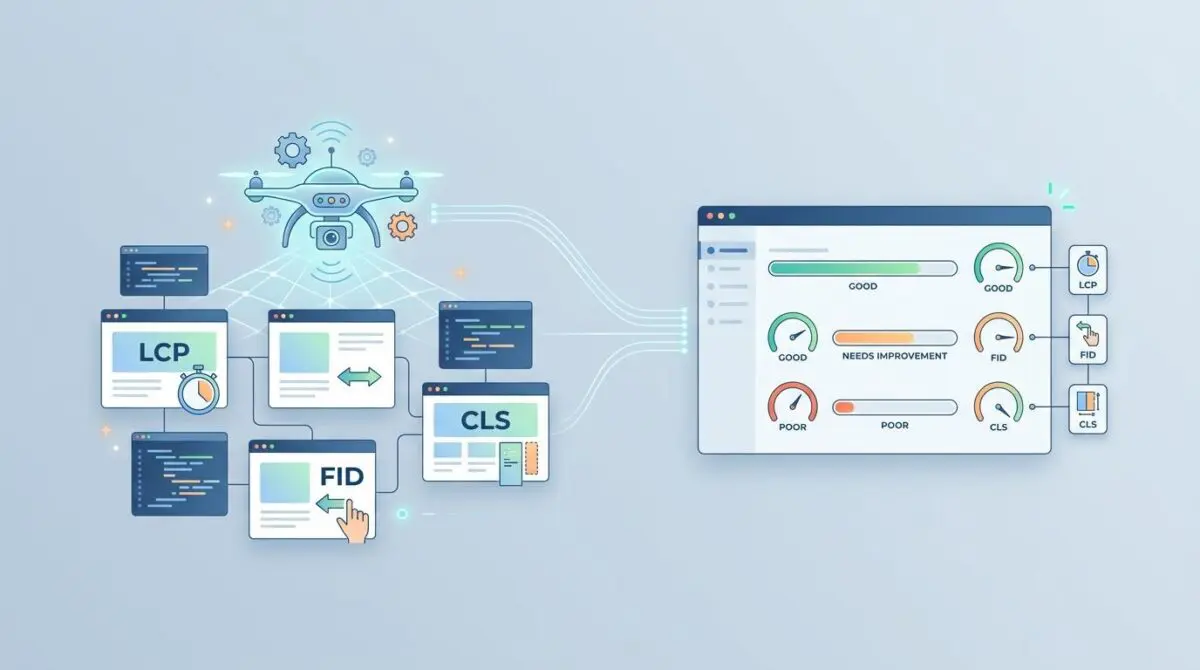
- Automated Detection: Leveraging daily Pipedream CRON triggers drastically cuts the feedback loop for layout shifts from weeks to hours.
- Edge Remediation: Cloudflare Workers can dynamically inject layout-stabilizing CSS properties at the edge without harming server response times.
- Crawl Efficiency: Correlating rendering success rates with layout stability in BigQuery ensures Googlebot indexing remains unhindered by shifting DOM elements.
Table of Contents
The Invisible Tax of Delayed Feedback
The invisible cost of manual SEO execution is the excruciating wait for performance data. Relying on the standard 28-day rolling average for Core Web Vitals in Search Console creates a massive feedback loop delay. It is the digital equivalent of driving a high-speed sports car while only looking through a rear-view mirror.
This structural lag prevents technical SEO teams from identifying and reverting deployment-driven layout shifts before the damage is done. By the time a regression shows up in your field data, your p75 scores have already tanked. Subsequent ranking drops are already in motion, leaving you to clean up a mess instead of preventing one.
The ultimate architectural solution to this bottleneck is the CrUX API Real-Time CLS Alerting Pipeline. Think of this pipeline as an early warning radar system for your website interface. By programmatically extracting live performance data, you can catch layout instabilities the moment they occur and deploy fixes before search engines register the flaw.
Decoding the Metrics of Visual Stability

To truly understand the value of this automated pipeline, we must look at the numbers governing visual stability. The p75 threshold for Cumulative Layout Shift must remain below 0.10 to be categorized as ‘Good’ and qualify for the maximum ranking benefit, according to Google’s Core Web Vitals documentation on Cumulative Layout Shift. Crossing this critical threshold means elements on your page are jumping around unpredictably.
This erratic behavior destroys user trust and signals a poor page experience to search algorithms. When engineering teams deploy new features, this 0.10 metric is often the first casualty of unoptimized code. However, automated monitoring completely changes the defensive landscape.
By utilizing the CrUX History API documentation for fetching cumulative_layout_shift, teams can pull daily distributions rather than waiting for monthly aggregates. This shift in data retrieval methodology yields staggering operational benefits.
Automated CrUX monitoring via Pipedream reduces the Mean Time to Detect (MTTD) layout shift regressions from 28 days to under 24 hours for enterprise domains. That massive MTTD reduction rate transforms your SEO strategy from a reactive scramble into a proactive, precision-guided operation.
Orchestrating the API Data Flow
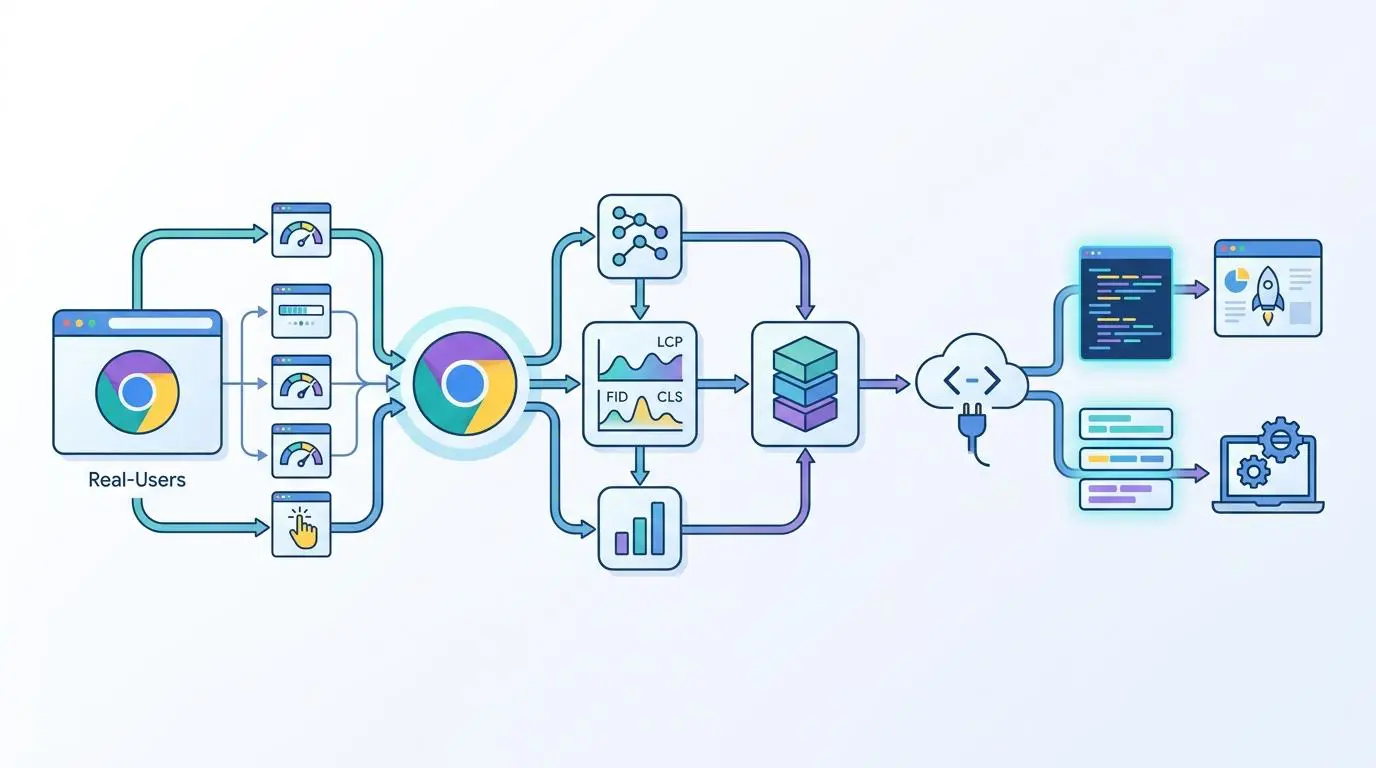
Building this radar system requires a robust programmatic architecture to handle constant data streams. We achieve this by leveraging the CrUX History API via Pipedream daily CRON triggers. These triggers automatically fetch layout shift distributions across specific URL and origin scopes, acting as a tireless digital sentinel.
The real-world friction here lies in orchestrating high-concurrency API calls for thousands of enterprise-level URLs. You must carefully manage Google quota limits while simultaneously flattening deeply nested JSON responses into actionable alerts. If the data is not parsed cleanly, your alerting system will drown your engineering team in noisy data.
Fortunately, the technology stack is evolving to make this easier. The Chrome team updated the Layout Instability API to include attribution metadata in the field data reports. This allows Pipedream workflows to identify the specific DOM selector responsible for the shift.
This granular attribution significantly reduces the root cause analysis phase of SEO troubleshooting. It means your alerts now point directly to the exact line of code causing the problem.
Edge Computing for Instant Remediation
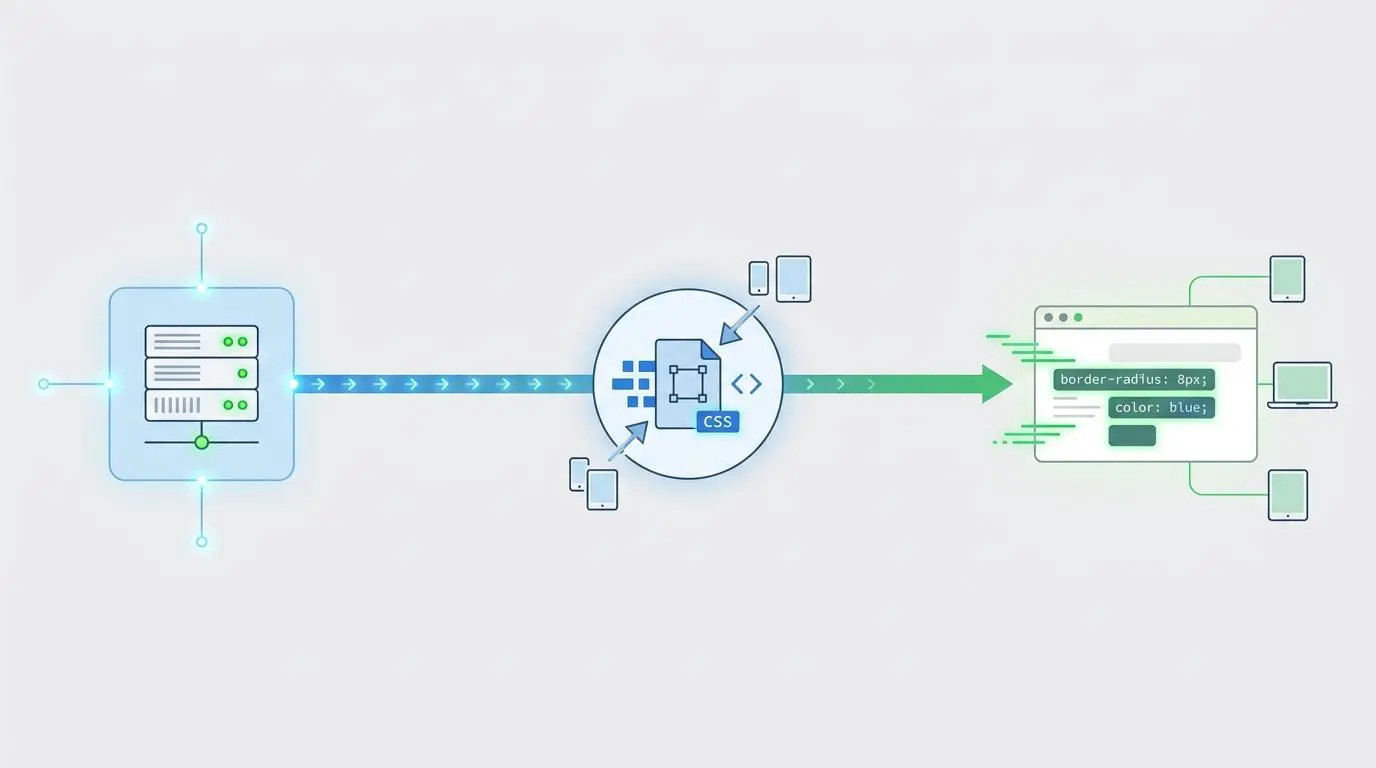
Once an alert is triggered, the next step is stopping the bleeding immediately. This is where we integrate Pipedream webhooks with Cloudflare Workers to execute server-side automation. When the API signals a layout shift above the 0.1 threshold, the edge server can dynamically inject stabilizing CSS properties directly into the HTML response.
Think of the edge server as a digital paramedic, patching the wound before the patient even reaches the hospital. By injecting properties like aspect-ratio or content-visibility, the browser is forced to reserve the correct amount of space for an element before it even loads. This neutralizes the layout shift instantly.
The technical challenge is calculating and applying these layout stability fixes at the edge without introducing significant Time to First Byte (TTFB) latency. Furthermore, you must ensure these dynamic injections do not break hydration in React-based frameworks. By keeping the worker logic lightweight and highly targeted, you can maintain lightning-fast server responses while guaranteeing a rock-solid DOM.
Taming Wild Media at Scale
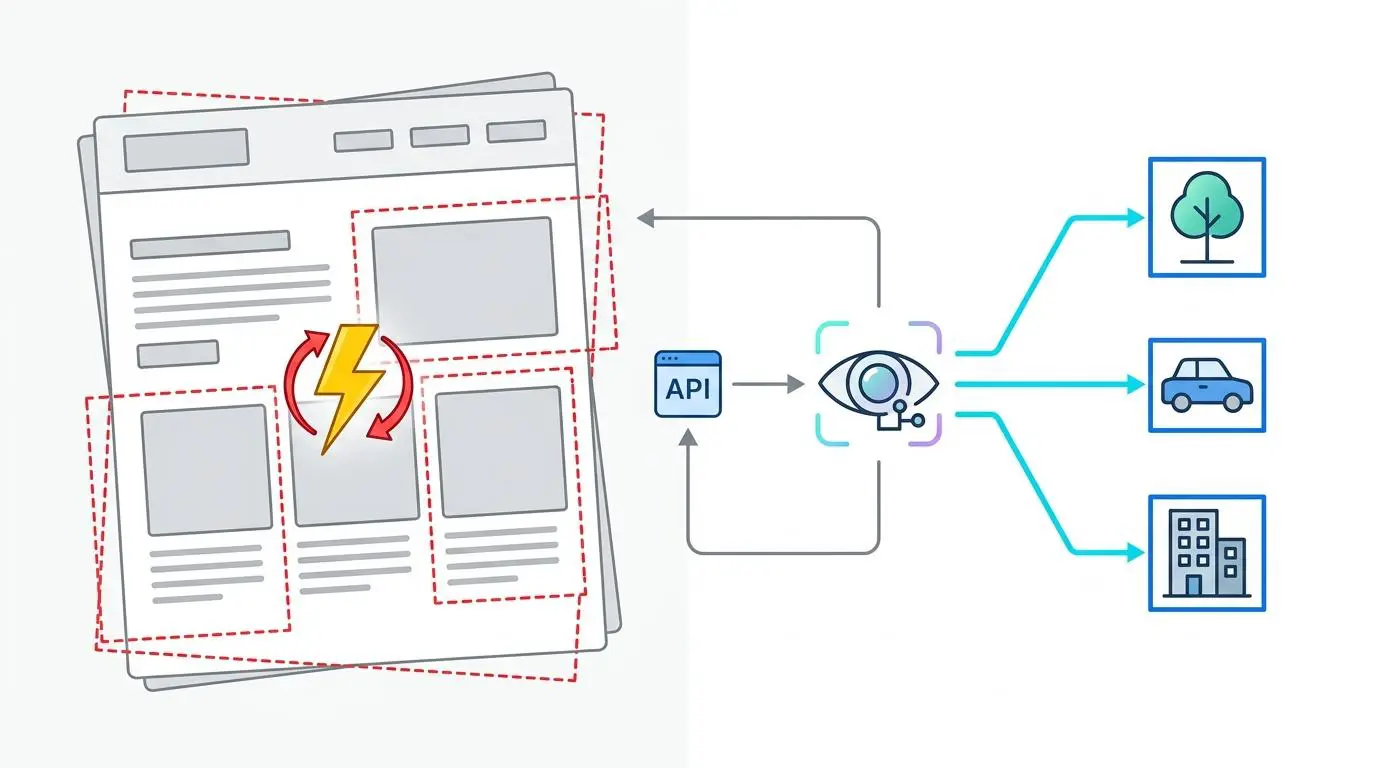
One of the most notorious culprits of visual instability is the unpredictable behavior of dynamic media. To combat this, our pipeline utilizes automated detection of unsized-media triggers via the Layout Instability API. We then pipe this data through Vision AI models to determine the mathematically correct bounding boxes for dynamic content.
This AI-driven approach is crucial because modern web pages are battlegrounds between core content and third-party scripts. There is a constant clash between lazy-loading scripts and third-party ad-tech wrappers. These external wrappers often aggressively bypass standard CSS constraints, causing massive shifts on mobile viewports.
By programmatically defining strict bounding boxes based on AI analysis, we build an impenetrable fence around these ad-tech wrappers. The browser knows exactly how much space to allocate, regardless of how slowly the third-party script executes. This ensures the user reading experience remains entirely uninterrupted.
Protecting Your Crawl Budget from Shifts
Visual instability does not just annoy human users; it actively sabotages search engine bots. A highly shifting page acts like a moving target for a crawler. We monitor this by tracking the correlation between high CLS scores and Googlebot rendering success rates, using server-side log analysis piped directly into BigQuery.
When elements shift drastically during the rendering phase, Googlebot often fails to map the content accurately. Googlebot-Desktop and Googlebot-Mobile frequently encounter completely different layout shift triggers due to varied viewport rendering. This leads to wildly inconsistent indexing.
Valuable content hidden or moved by shifting elements is simply ignored by the crawler. By aligning our real-time alerting pipeline with our server logs, we can spot exactly when layout shifts begin to degrade bot rendering.
Fixing these issues promptly ensures that our crawl budget is spent efficiently on indexing high-value content. It prevents wasting resources trying to parse a chaotic, shifting interface.
The Dawn of Self-Healing Architecture
The trajectory of programmatic SEO points toward a future where manual intervention becomes entirely obsolete. The evolution of self-healing DOMs will allow SEO automation to move from mere alerting to autonomous remediation. Edge-based agents will use generative CSS to patch layout instabilities in real-time based on live CrUX attribution data.
This means fixing the page before the user session even ends. Navigating the intersection of technical SEO, programmatic architecture, and workflow automation requires a sharp strategy. To future-proof your site architecture and scale with precision, connect with Andres at Andres SEO Expert.
Frequently Asked Questions
How can I get real-time CLS data instead of waiting 28 days?
By utilizing the CrUX History API and daily CRON triggers via automation platforms like Pipedream, you can fetch daily performance distributions. This methodology reduces the Mean Time to Detect (MTTD) layout shifts from the standard 28-day rolling average to under 24 hours.
What is the ideal Cumulative Layout Shift (CLS) threshold for SEO?
To maintain a ‘Good’ rating and qualify for maximum search ranking benefits, the p75 threshold for Cumulative Layout Shift must remain below 0.10. Crossing this threshold signals poor page experience to search algorithms.
How do edge servers help fix layout shifts instantly?
Edge computing platforms like Cloudflare Workers can dynamically inject stabilizing CSS properties, such as aspect-ratio or content-visibility, directly into the HTML response. This ensures the browser reserves the correct space for elements before they load, neutralizing shifts server-side.
Does Cumulative Layout Shift (CLS) affect crawl budget?
Yes. High visual instability can cause Googlebot to fail at mapping content accurately during rendering. This results in inconsistent indexing and wastes crawl budget on pages where the interface is too chaotic for the bot to parse efficiently.
How does the Layout Instability API improve troubleshooting?
The Layout Instability API now includes attribution metadata in field data reports. This allows Pipedream workflows to identify the specific DOM selector responsible for a layout shift, pointing developers directly to the code causing the problem.
What is a self-healing DOM in technical SEO?
A self-healing DOM is an autonomous architecture where edge-based agents use generative CSS to patch layout instabilities in real-time based on live CrUX attribution data, remediating the page before the user session ends.