Executive Summary
- Babel serves as a JavaScript transcompiler that converts modern ECMAScript 2015+ code into backwards-compatible versions for legacy browser support.
- It is a critical component of the WordPress Gutenberg (Block Editor) development workflow, enabling the use of JSX and advanced React patterns.
- Proper Babel configuration optimizes front-end performance by managing polyfills and reducing the execution overhead of client-side scripts.
What is Babel?
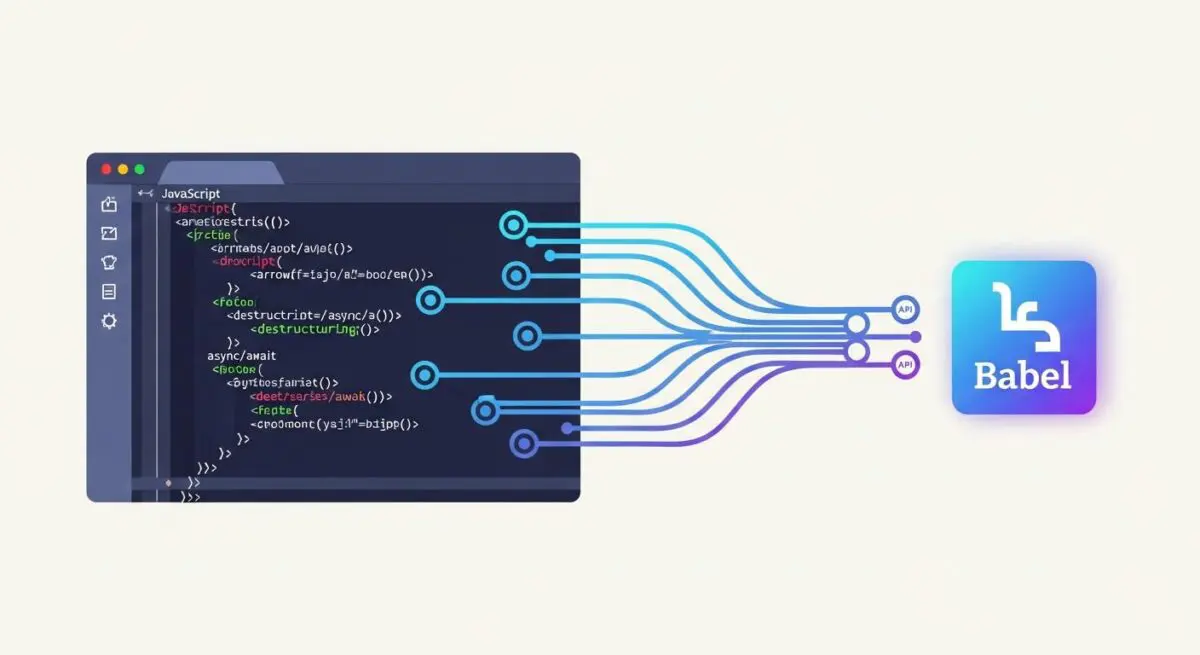
Babel is a sophisticated, open-source JavaScript transcompiler primarily utilized to convert modern ECMAScript 2015+ (ES6+) source code into a version of JavaScript that maintains functional parity in older browser environments. Within the WordPress ecosystem, Babel is the industry standard for processing modern syntax, allowing developers to utilize the latest language features without sacrificing compatibility for users on legacy software. It operates as a bridge between the rapid evolution of the JavaScript language and the slower adoption cycle of client-side rendering engines.
In a WordPress context, Babel is typically integrated into the build pipeline via task runners like Webpack or Gulp. It is indispensable for developing custom blocks for the Gutenberg editor, as it handles the transformation of JSX (JavaScript XML) into standard React.createElement calls. By decoupling the development environment from the production environment, Babel ensures that enterprise-grade WordPress applications remain both innovative and accessible.
The Real-World Analogy
Think of Babel as a highly skilled diplomatic translator at an international summit. A young delegate may speak in a modern, highly efficient technical shorthand (ES6+), but the older delegates in the room only understand a traditional, formal dialect (ES5). The translator (Babel) listens to the modern shorthand and instantly rewrites it into the traditional dialect so that every person in the room, regardless of their age or background, receives the exact same message and can act upon it without confusion.
How Babel Impacts Server Performance & Speed Engineering?
While Babel is a build-time tool and does not run directly on the server during a page request, its configuration has a profound impact on Time to Interactive (TTI) and Total Blocking Time (TBT). By using @babel/preset-env, developers can target specific browser versions, ensuring that only the necessary polyfills and transformations are included in the final JavaScript bundle. This prevents “code bloat,” where unnecessary scripts are sent to modern browsers that already support the native features.
From a speed engineering perspective, Babel enables Tree Shaking and Code Splitting when paired with a bundler. This allows a WordPress site to serve smaller, modular JavaScript files that are only loaded when needed, significantly reducing the initial payload. Efficient transpilation ensures that the client-side execution is as lean as possible, which directly improves Core Web Vitals scores, particularly for mobile users on constrained hardware.
Best Practices & Implementation
- Implement @babel/preset-env: Use this preset to automatically manage which transforms and polyfills are required based on your project’s browserslist configuration.
- Optimize Polyfill Loading: Set the useBuiltIns option to ‘usage’ to ensure that only the polyfills actually used in your code are imported, minimizing bundle size.
- Exclude node_modules: Always configure your loader to exclude the node_modules directory to prevent redundant transpilation of already-compiled third-party libraries, which accelerates build times.
- Utilize plugin-transform-runtime: This plugin helps reduce code duplication by aliasing internal Babel helpers to a single module, preventing them from being injected into every file.
Common Mistakes to Avoid
A frequent error in WordPress development is “over-transpilation,” where developers target extremely old browsers like Internet Explorer 11 without a specific business requirement. This results in massive polyfill injections that degrade performance for the 99% of users on modern browsers. Another common mistake is failing to synchronize the Babel configuration with the browserslist file, leading to inconsistent behavior where some modern features are transpiled while others are not, causing silent failures in specific environments.
Conclusion
Babel is a foundational pillar of modern WordPress architecture, enabling developers to leverage advanced JavaScript while ensuring universal compatibility. When configured with precision, it balances developer productivity with high-performance asset delivery.