




Executive Summary
- Webhooks facilitate event-driven communication via HTTP POST requests, enabling real-time data synchronization without the overhead of constant polling.
- They are foundational to stateless automation, allowing AI agents and content pipelines to trigger actions immediately upon specific system events.
- Proper implementation requires robust security measures, including HMAC signatures and idempotent processing, to ensure data integrity and system reliability.
What is Webhook?
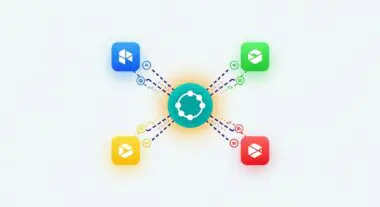
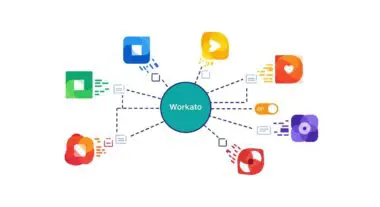
A webhook is an HTTP-based callback mechanism that enables real-time, event-driven communication between decoupled software applications. Unlike traditional APIs where a client must repeatedly poll a server to check for updates (a resource-intensive process), a webhook allows the source system to “push” data to a destination URL as soon as a specific event occurs. This architectural pattern is often referred to as a “reverse API” because the server initiates the request to the client’s listener endpoint.
In the context of AI automations and programmatic workflows, webhooks typically transmit data in JSON payloads. When an event is triggered—such as a new lead generation, a completed AI content generation task, or a status change in a CRM—the source system sends an HTTP POST request containing the relevant data to a pre-configured URL. This allows for near-instantaneous synchronization across distributed systems and serverless architectures.
The Real-World Analogy
To understand the difference between traditional APIs and webhooks, imagine you are waiting for an important package delivery. Polling (Traditional API) is like walking to your front door every five minutes to see if the package has arrived; it is exhausting, inefficient, and wastes time. A Webhook is like having a doorbell. You can go about your work in another room, and the moment the delivery person arrives, they ring the bell to notify you. You only react when there is an actual event to handle, saving energy and ensuring you respond the second the package arrives.
Why is Webhook Critical for Autonomous Workflows and AI Content Ops?
Webhooks are the connective tissue of modern autonomous workflows. In AI Content Ops, they eliminate the latency inherent in batch processing. For instance, when an SEO tool detects a ranking drop, a webhook can immediately trigger an AI agent to analyze the competitor’s content and draft a revision. This event-driven architecture ensures that AI agents operate on the most current data available without manual intervention.
Furthermore, webhooks are essential for stateless automation. Because they provide the necessary context within the payload, the receiving system does not need to maintain a persistent connection or store extensive session state. This scalability is vital for programmatic SEO and GEO (Generative Engine Optimization) where thousands of content updates may be processed simultaneously across serverless functions like AWS Lambda or Google Cloud Functions.
Best Practices & Implementation
- Implement Security Handshakes: Always verify the authenticity of incoming webhooks using HMAC (Hash-based Message Authentication Code) signatures to ensure the data originated from a trusted source.
- Ensure Idempotency: Design your receiver to handle the same webhook multiple times without unintended side effects, protecting your workflow against network retries or duplicate transmissions.
- Asynchronous Processing: Upon receiving a webhook, return a 2xx status code immediately and move the payload to a message queue (like RabbitMQ or SQS) for background processing to avoid timeout errors.
- Maintain Detailed Logs: Log all incoming payloads and response codes to facilitate debugging when data mismatches or delivery failures occur.
Common Mistakes to Avoid
One frequent error is performing heavy computational tasks, such as calling an LLM or updating a large database, directly within the webhook listener script. This causes the source system to time out and potentially mark the webhook as failed. Another critical mistake is failing to use SSL/TLS encryption (HTTPS), which exposes sensitive JSON data to man-in-the-middle attacks during transit.
Conclusion
Webhooks represent the gold standard for high-efficiency, event-driven AI automations, providing the real-time data triggers necessary for truly autonomous content and SEO operations.