Executive Summary
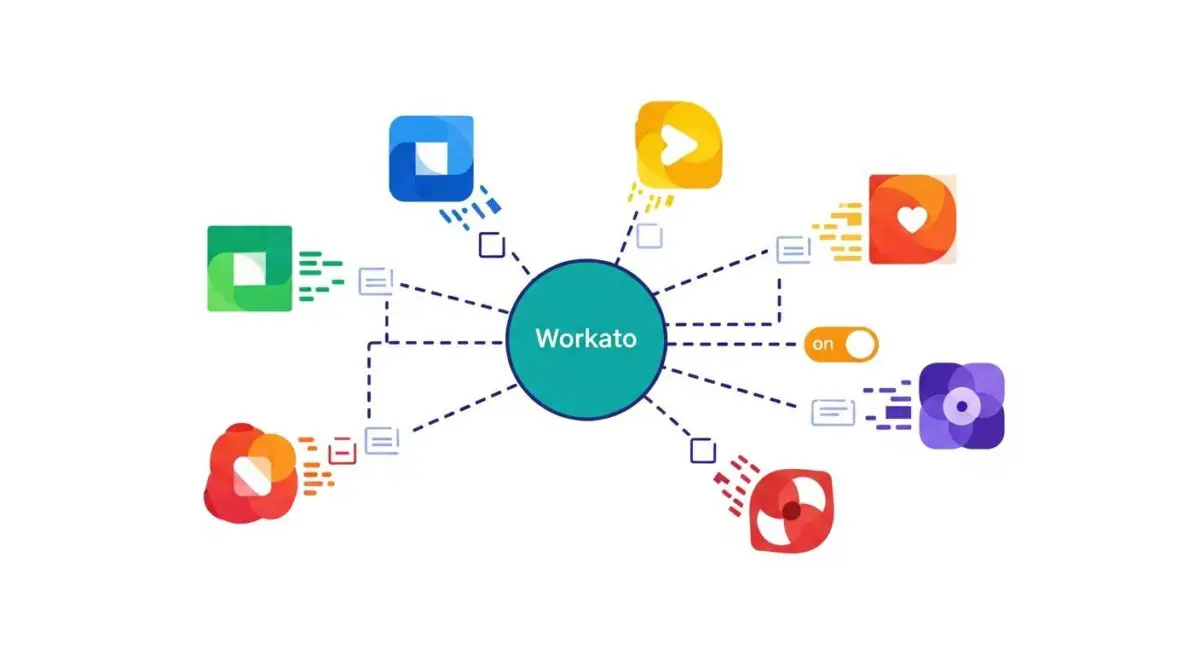
- Workato functions as an Enterprise Integration Platform as a Service (iPaaS) that orchestrates complex, multi-step workflows across disparate SaaS ecosystems.
- The platform utilizes a ‘recipe’ architecture to handle stateless automation, JSON payload transformations, and conditional logic at scale.
- It provides native support for high-volume data pipelines, essential for programmatic SEO and AI-driven content operations.
What is Workato?
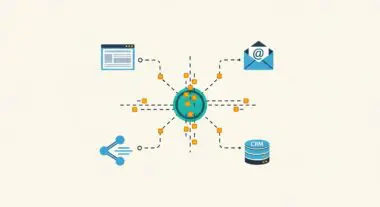
Workato is an enterprise-grade Integration Platform as a Service (iPaaS) designed to orchestrate complex, multi-application workflows through a low-code environment. Unlike basic automation tools, Workato provides a robust infrastructure for handling sophisticated logic, long-running processes, and high-volume data synchronization. It operates on a “recipe” model—a set of instructions that define how data moves between applications based on specific triggers and actions.
From a technical standpoint, Workato acts as a middleware layer that abstracts API complexities. It manages authentication, handles rate limiting, and ensures data integrity through built-in error handling and retry mechanisms. For AI and SEO professionals, Workato serves as the backbone for programmatic data pipelines, allowing for the seamless ingestion of SEO metrics into LLMs or the automated deployment of AI-generated content across diverse CMS platforms.
The Real-World Analogy
Imagine a master air traffic control system for a global logistics network. It doesn’t just track planes; it automatically reroutes cargo based on real-time weather data, updates customs manifests across different international databases, and triggers ground crew schedules the moment a landing gear touches the tarmac. Workato is that control system for your digital infrastructure, ensuring that every piece of data (the cargo) reaches its destination (the application) while navigating the specific rules and requirements of every airport (the API) it encounters.
Why is Workato Critical for Autonomous Workflows and AI Content Ops?
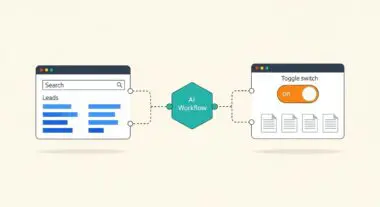
Workato is essential for scaling autonomous workflows because it provides the necessary governance and reliability for enterprise-level operations. In AI content ops, the platform facilitates the orchestration of stateless automations where JSON payloads must be transformed and passed between webhooks, vector databases, and LLM endpoints. Its ability to handle asynchronous processing ensures that high-latency AI tasks do not bottleneck the entire pipeline. Furthermore, Workato’s support for programmatic SEO allows teams to automate the generation of thousands of landing pages by syncing data from structured sources directly into headless CMS architectures with minimal manual intervention.
Best Practices & Implementation
- Adopt a Modular Recipe Architecture: Break down complex workflows into smaller, callable recipes to improve maintainability and facilitate debugging across the automation stack.
- Implement Robust Error Handling: Utilize Workato’s “Error Report” and “Retry” blocks to manage API timeouts or transient network failures without losing data integrity.
- Optimize Payload Efficiency: Only map the specific data fields required for the target application to minimize memory usage and improve execution speed.
- Leverage Custom Connectors: When native integrations are insufficient, use the Workato SDK to build custom connectors that interact directly with proprietary APIs or niche SEO tools.
Common Mistakes to Avoid
One frequent error is the creation of “monolithic recipes”—single, massive workflows that are difficult to troubleshoot and prone to failure. Another common mistake is ignoring the rate limits and concurrency constraints of the source and target APIs, which can lead to throttled requests and data gaps. Finally, many organizations fail to implement proper version control and documentation within their Workato workspace, leading to technical debt as the automation ecosystem grows.
Conclusion
Workato provides the enterprise-grade orchestration required to bridge the gap between disparate SaaS tools and advanced AI-driven content strategies. By mastering its recipe logic and API management capabilities, organizations can build resilient, scalable autonomous workflows.