Executive Summary
- Enables the conversion of high-volume unstructured data into structured JSON schemas for downstream API consumption.
- Reduces latency in decision-making loops by integrating LLM-based parsing directly into stateless automation pipelines.
- Facilitates programmatic SEO and content optimization by identifying semantic patterns and entity relationships at scale.
What is Automated Insight Extraction?
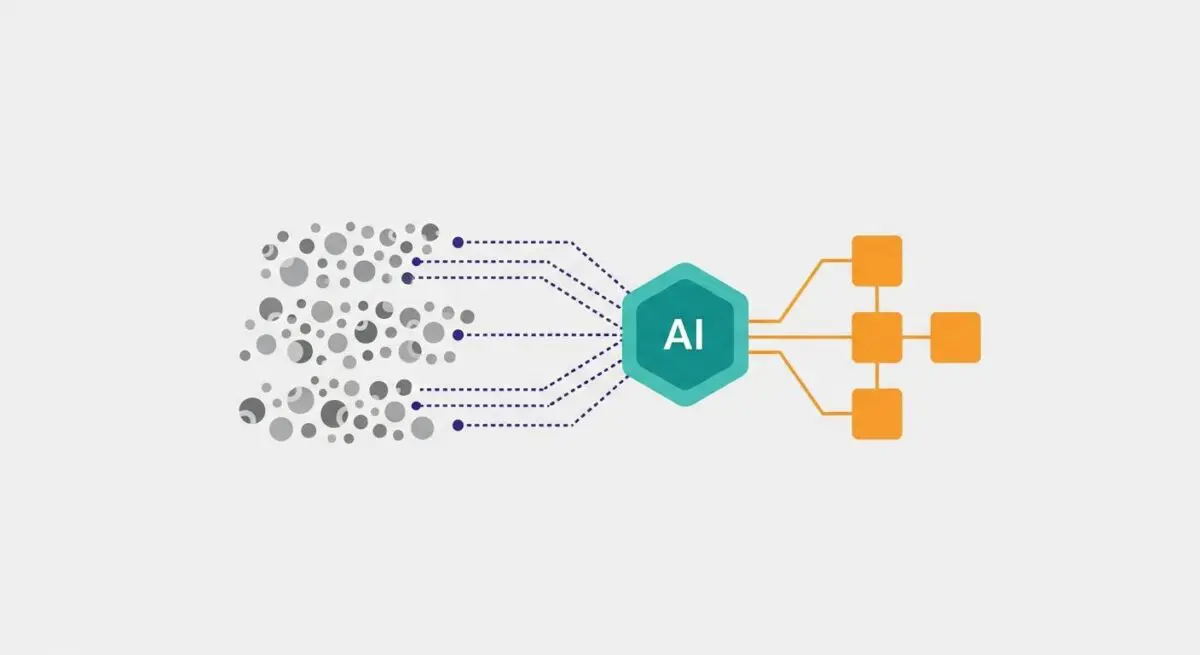
Automated Insight Extraction is the systematic process of utilizing Large Language Models (LLMs) and Natural Language Processing (NLP) algorithms to identify, categorize, and export meaningful data points from unstructured or semi-structured sources. In the context of AI Automations, this involves transforming raw inputs—such as customer feedback, competitor content, or server logs—into structured formats like JSON or XML. This transformation allows autonomous systems to execute logic-based decisions without human intervention.
Technically, the process relies on prompt engineering or fine-tuned models to perform entity recognition, sentiment analysis, and summarization. By defining a strict output schema, engineers ensure that the extracted insights are compatible with database architectures and API endpoints. This creates a bridge between qualitative data and quantitative execution, enabling high-velocity data processing within serverless environments.
The Real-World Analogy
Imagine a massive international airport where thousands of passengers arrive every hour, each carrying a unique, handwritten travel diary. Automated Insight Extraction is like a sophisticated scanning system that instantly reads every diary, ignores the fluff about the weather, and immediately extracts only the critical data: flight numbers, hotel names, and dietary requirements. It then neatly files this data into a digital spreadsheet for the airport staff to act upon instantly, rather than having a human read every page manually.
Why is Automated Insight Extraction Critical for Autonomous Workflows and AI Content Ops?
In modern AI Content Ops, the volume of data generated exceeds human processing capacity. Automated Insight Extraction is the engine that drives stateless automation by providing the context needed for subsequent steps in a pipeline. For instance, in programmatic SEO, extracting “user intent” or “primary entities” from top-ranking SERP results allows an automation to dynamically adjust content templates. This ensures that the generated output is not just grammatically correct but strategically aligned with real-time market data.
Furthermore, it optimizes API payload efficiency. Instead of passing massive blocks of raw text between services—which increases latency and token costs—only the extracted, high-value insights are transmitted. This lean data architecture is essential for scaling serverless functions and maintaining high throughput in complex, multi-step workflows.
Best Practices & Implementation
- Define Strict JSON Schemas: Always provide the AI with a specific structure (e.g., Pydantic models or JSON Schema) to ensure the extracted data is programmatically valid and ready for database ingestion.
- Implement Multi-Stage Validation: Use secondary LLM passes or regex patterns to verify the accuracy and integrity of the extracted insights before they enter the production environment.
- Optimize Token Usage: Pre-process raw text to remove noise, such as HTML tags and boilerplate, before extraction to reduce costs and improve model focus on relevant data.
- Leverage Few-Shot Prompting: Provide 2-3 examples of the desired extraction format within the prompt to significantly increase the reliability of the output in production environments.
Common Mistakes to Avoid
One frequent error is failing to handle “hallucinations” where the model extracts data that does not exist in the source text; this requires robust validation logic. Another common mistake is ignoring the rate limits and latency of the extraction API, which can bottle-neck the entire automation pipeline. Finally, many brands fail to sanitize the input data, leading to inconsistent extraction results or security vulnerabilities like prompt injection.
Conclusion
Automated Insight Extraction is the foundational layer for intelligent, data-driven automation, turning raw information into the structured intelligence required for scalable AI operations.